Uncharted territory in southern Poland
It is the kind of fixture that still looks slightly out of place printed on a match ticket. Crystal Palace against Shakhtar Donetsk. A Europa Conference League semi-final.
For decades, European football was something that happened to other clubs in London. Palace supporters were conditioned to accept a completely different reality. The annual scramble for safety, the mid-table stagnation, the fleeting cup runs that usually ended in a damp squib away at a northern ground. Now, roughly 6,000 Palace fans are making the pilgrimage to southern Poland for a first leg that represents the absolute pinnacle of their modern history.
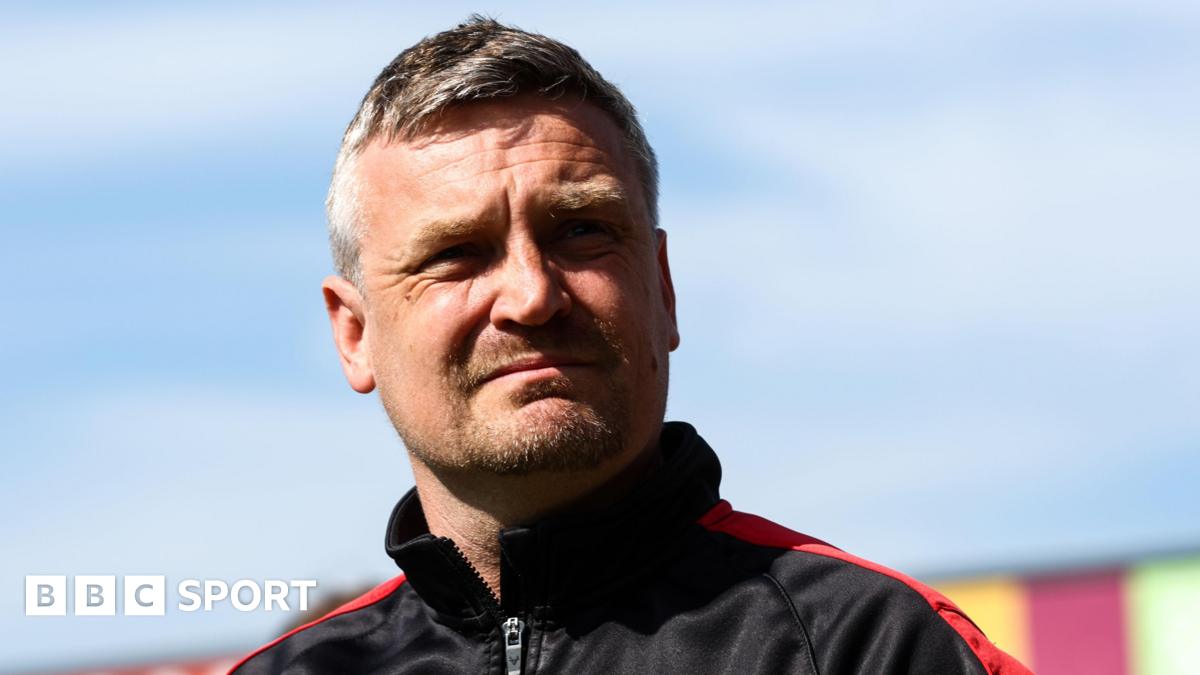
The logistical nightmare of arranging travel, navigating unfamiliar transit routes, and finding accommodation is entirely secondary to the sheer joy of the away trip. These fans are carrying the weight of decades of frustration, suddenly replaced by dizzying optimism. They are witnessing a team completely transformed under Oliver Glasner.
The Austrian manager has not merely helped his squad rediscover their collective form; he has completely rewired their tactical identity from the ground up. As noted in the build-up, there is talk within the camp of wanting to give Glasner a fitting farewell in Europe. Regardless of what the summer holds, the immediate motivation is singular. Palace are not here to act as tourists. They are here to reach a major European final.
The mechanics of Glasner's machine
To understand how Palace navigated their way to this semi-final, you have to look at how Glasner manages space without the ball. His preferred 3-4-2-1 system is not just a formation on a whiteboard; it is a meticulously choreographed set of pressing triggers and positional rules.
Under previous regimes, Palace were primarily a reactive side. They sat in a rigid low block, absorbed pressure, and relied heavily on individual brilliance in transition. Glasner threw that defensive playbook out the window. He pushes his defensive line aggressively high, compressing the pitch into a tiny battleground in the middle third.
When the opposition goalkeeper rolls the ball out, Palace’s front three immediately condense the center. The two attacking midfielders operate exclusively in the half-spaces out of possession. Their job is not just to close down the opposing center-backs, but to mathematically cut off the passing lanes to the midfield pivot. It is an incredibly demanding system that requires immense physical endurance.
It also requires complete synchronicity. If one forward jumps to press a second too early, the trap is broken. If the wing-backs fail to push up and lock onto the opposition full-backs, the out-ball is left wide open. But when it functions correctly, it is devastating. Palace force high turnovers and create immediate goal-scoring opportunities against unsettled defensive lines.
The inherent structural flaw
Yet, the system is far from bulletproof. In fact, Palace have repeatedly shown a glaring vulnerability when facing technically proficient sides who simply refuse to panic under intense pressure.
The fundamental issue lies in the vast expanses of grass left behind the wing-backs. Because Glasner demands his wide men push high up the pitch to maintain the suffocating press, it leaves the wide center-backs heavily exposed. They are frequently dragged out of position and forced to defend one-on-one in wide channels with zero cover.
If an opponent can successfully bypass that frantic initial wave of pressure—usually via a clipped diagonal pass or a brave, line-breaking ball from a dropping central midfielder—Palace are suddenly scrambling. The central midfield pivot is often caught too high up the pitch, leaving a massive vacuum of space directly in front of the back three.
Palace have conceded numerous high-quality chances this season purely because a smart, composed team bypassed the press and ran directly at an isolated, back-pedaling defender. It is a high-risk, high-reward approach. Against average domestic opposition, the reward usually outweighs the risk. Against seasoned European campaigners, those risks multiply exponentially.
The midfield battleground
The true war will be waged in the center of the park. Palace’s midfield pivot operates with a frantic, destructive energy. Their primary directive out of possession is to hunt the ball, frequently stepping aggressively out of their zones to engage ball-carriers. It is a proactive approach that suffocates opponents who take too many touches.
But Shakhtar’s midfield operates on a completely different frequency. They do not rely on raw physicality; they rely on sharp angles and spatial awareness. Their central midfielders are masters of the blind-side run and the quick, disguised pass. They constantly scan the pitch, receiving the ball on the half-turn to instantly eliminate a pressing opponent.
If Palace’s midfielders dive in blindly, Shakhtar will simply pop the ball around them, instantly taking two or three Palace players out of the game. This dynamic places an enormous burden on Palace’s defensive line to step up and close the gaps. If the center-backs hesitate for even a fraction of a second, Shakhtar will ruthlessly exploit the space between the lines.
Shakhtar's European pedigree
Which brings us directly to Shakhtar Donetsk. On paper, they are the absolute worst stylistic matchup for a team that relies heavily on pressing traps. Shakhtar are essentially a Champions League side operating in the Conference League. They possess vast European experience and are remarkably comfortable manipulating the ball in extremely tight spaces.
Exiled to southern Poland due to the ongoing war in Ukraine, Shakhtar have managed to turn their adopted home into a formidable fortress. They lack a traditional home advantage, yet they play with the icy composure of a team that has seen it all before. They are resilient, technically gifted, and incredibly patient during the build-up phase.
Their progression relies heavily on creating artificial numerical superiorities in their own defensive third. They frequently drop a midfielder between the center-backs, inviting the opposition's attacking midfielders to step forward. Once the pressing trap is sprung, Shakhtar use rapid, one-touch passing triangles to slice through the lines.
If Palace attempt to press Shakhtar with the same blind, uncalibrated aggression they have occasionally used this season, they will be picked apart clinically. Shakhtar’s wingers are exceptional at holding maximum width, stretching the pitch as far as possible, and isolating full-backs.
The tactical adjustment
This semi-final will ultimately be decided in the half-spaces. Shakhtar will deliberately try to draw Palace's wing-backs forward to exploit the channels left behind. Palace, conversely, will attempt to physically bully Shakhtar into central turnovers within striking distance of the penalty area.
Expect Glasner to make a subtle, pragmatic adjustment. Instead of utilizing his typical man-oriented high press from the very first whistle, he might opt for a slightly more conservative mid-block. By dropping the wing-backs five yards deeper to form a temporary, rigid back five out of possession, he can force Shakhtar to break them down organically.
Shakhtar can occasionally struggle when denied space in behind. If Palace force them to pass horizontally in front of a set defense, frustration could creep in. Palace must dictate the physical tempo of the match. If it becomes a clean, technical passing exercise, Shakhtar’s superiority in tight areas will give them the edge. Palace need to make it gritty. They need to disrupt the rhythm, break up play intelligently with tactical fouls, and aggressively utilize their obvious height advantage on attacking set-pieces.
The final verdict
This is a monumental step up in class for a Palace squad navigating completely foreign waters. Shakhtar are not easily intimidated by hostile atmospheres, and they certainly will not be rattled by an aggressive pressing scheme. The Ukrainians are battle-hardened and notoriously difficult to break down in these grinding, two-legged knockout ties.
However, Palace carry genuine, undeniable momentum. The sheer athletic power of their frontline is something Shakhtar rarely encounter in their domestic league. The raw intensity of Glasner's setup will undoubtedly cause panic in the opening exchanges, especially with a vocal traveling support pushing them forward.
Palace will likely grab an early lead by forcing a turnover high up the pitch, but Shakhtar's patience and superior technical quality will eventually dictate the flow of the game. Expect the Ukrainians to ruthlessly exploit the spaces out wide as Palace's pressing intensity inevitably drops in the final twenty minutes.
Prediction: 1-1. A cagey, fascinating tactical draw that leaves everything hanging in the balance for the return leg at Selhurst Park. Shakhtar will dominate the ball, but Palace will look incredibly dangerous on the break. It is a pragmatic result that Glasner would likely accept without hesitation.