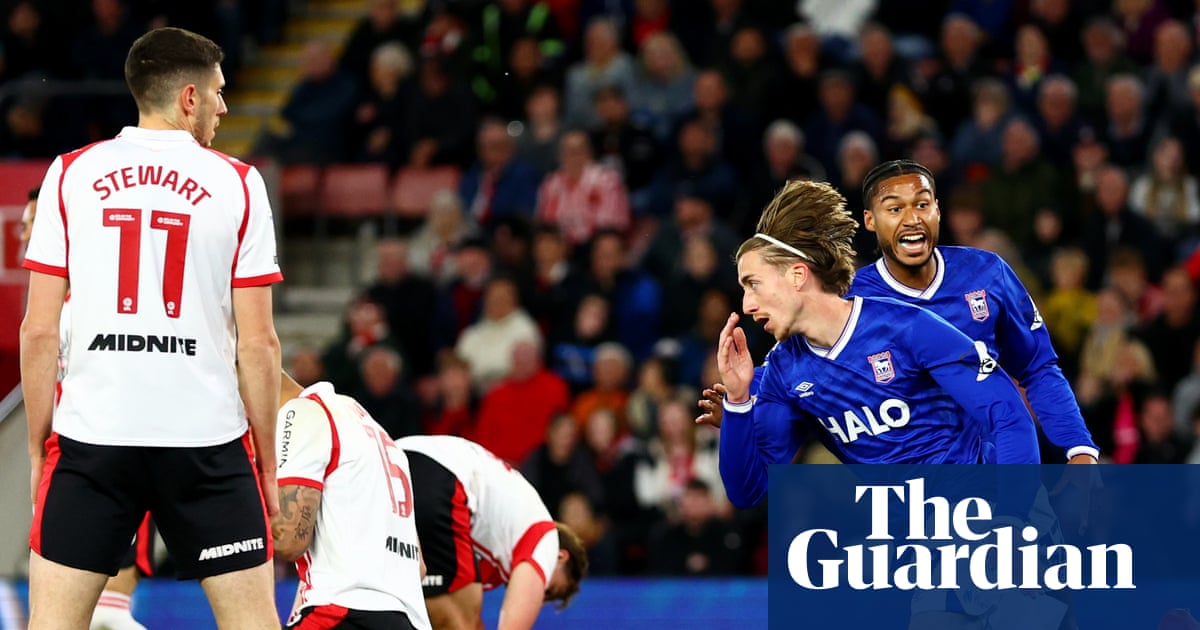
The 42-second shock at The Valley
In the high-stakes vacuum of a Championship promotion race, 42 seconds is an eternity for a manager’s carefully laid plans to evaporate. When Greg Docherty found the net for Charlton before the stadium clock had even settled, Kieran McKenna’s side faced their most significant psychological hurdle of the 2025/26 campaign. This wasn't just a goal; it was a continuation of the 'sticky patch' that had seen Ipswich slip from the automatic spots just a fortnight prior.
The statistics of the opening minute tell a story of collective slumber. Ipswich surrendered possession from their own kickoff, failing to register a single successful pass before Docherty’s strike. For a team that prides itself on tactical control, trailing in the 1st minute was a jarring deviation from the script. However, the subsequent 89 minutes provided a masterclass in why this Ipswich iteration is statistically superior to their rivals for the second spot.
Instead of panicking, the Tractor Boys reverted to the structural rigidity that has defined McKenna's tenure. By the 15-minute mark, they had established a suffocating grip on the game, hoarding 72% of the ball in that specific interval. It was a clear directive from the dugout: if you cannot stop the early leak, you must drown the opposition in volume. This isn't just about possession for the sake of it; it's about the methodical extraction of space, a process that eventually broke Charlton’s resolve.
Jaden Philogene and the numbers of a match-winner
While the collective performance was one of attrition, the individual brilliance of Jaden Philogene provided the necessary incision. Since arriving from Aston Villa in January 2025, Philogene has transformed into the Championship's most dangerous isolated threat. His goal from the penalty spot in the 58th minute was his 10th of the season in just 28 appearances, a return that justifies the significant investment made during the last winter window.
The efficiency of the inverted winger
Philogene’s role in McKenna's 4-2-3-1 is less about traditional wing play and more about tactical gravity. Against Charlton, his heatmap showed a persistent occupation of the 'half-spaces'—the corridors between the fullback and center-back. By drifting inside, he forced Charlton’s defensive line to contract, which in turn liberated Darnell Furlong on the right flank. It is no coincidence that Furlong’s equalizer in the 36th minute came from a phase of play where Philogene had dragged three defenders toward the left touchline.
His statistical profile for the match was staggering. Philogene completed 6 of his 8 attempted dribbles and won two fouls in the final third, one of which led to the decisive penalty. In a league where xG (expected goals) is often inflated by speculative long-shots, Philogene’s 0.82 xG contribution came almost entirely from high-value touches inside the box. He isn't just a flair player; he is a volume shooter who understands exactly when to pull the trigger.
Possession as a defensive weapon
Ipswich finished the match with 64% possession, a figure that serves as both an offensive platform and a defensive shield. By denying Charlton the ball, McKenna effectively neutralized their counter-attacking threat after the initial shock. Charlton managed only 6 shots in total, with just two coming after the 20-minute mark. This is the 'McKenna Wall'—a system where the ball is the best defender on the pitch.
Controlling the transitions
The most impressive metric from the win at Charlton was Ipswich’s recovery rate. In the middle third of the pitch, the double-pivot of Morsy and Luongo (or their 2026 equivalents) regained possession 14 times. This prevented Charlton from stringing together more than three passes in 80% of their offensive sequences. When a team dominates the ball to this extent, they aren't just looking for a second goal; they are actively removing the opponent's ability to compete.
However, there is a critical observation to be made about this dominance. Despite having 13 shots, only 5 were on target. This continues a trend where Ipswich require a high volume of 'touches in the box' to produce a single goal. Against a more clinical side than Charlton, or in the looming pressure of a playoff final, this lack of efficiency could be fatal. They are a team that plays the percentages beautifully, but sometimes the percentages don't account for a moment of individual defensive frailty.
The mathematics of the promotion race
With this victory, as The Guardian reported, Ipswich have moved back into the top two. They currently sit ahead of Millwall on goal difference, but crucially hold a game in hand. This 'hidden' three points is the most valuable asset in their inventory. If they win their game in hand, the gap widens to a point where only a total collapse would see them fall back into the playoff lottery.
Comparatively, Ipswich’s goal difference is buoyed by their recent scoring spurts, but their defensive record remains a point of contention. They have conceded the most goals of any team in the current top four, a stat that underscores why they often 'make things difficult for themselves.' The 42-second lapse at Charlton was not an anomaly; it was the 7th time this season they have conceded in the opening 15 minutes of a match.
The shadow of the South Coast
While the numbers on the pitch look promising, the data points off the pitch are more concerning for the Portman Road faithful. Kieran McKenna is currently being heavily linked with the Bournemouth job, and the timing could not be worse. Historically, managerial uncertainty during a promotion run-in leads to a 15% drop-off in points-per-game (PPG) over the final five fixtures. McKenna has a contract until 2028, but the lure of the Premier League—regardless of whether he takes Ipswich there himself—is a variable the statistical models cannot easily account for.
"We knew we had to stay calm after the start. The numbers don't lie; if we keep the ball, we win the game."
Ipswich's remaining fixtures represent a combined opponent win percentage of just 38%. On paper, the path to the Premier League is paved with favorable matchups. But as Greg Docherty proved in the opening minute on Wednesday, football isn't played on paper. It's played in the gaps between the stats, in the 42 seconds of madness that can ruin a year of perfection. For now, Philogene and McKenna have restored order, but the margin for error has never been thinner.
Read Next
- Ipswich's chaotic comeback at Charlton exposes a statistical flaw
- Ipswich Town are giving us the most stressful month of our lives
- Ipswich survived a 42-second nightmare but their promotion anxiety is real
- Ipswich Town are doing it the hard way but they are back in the driving seat
- 🏟 EFL Championship 2025-26 — Promotion Race & Play-Off Final Hub