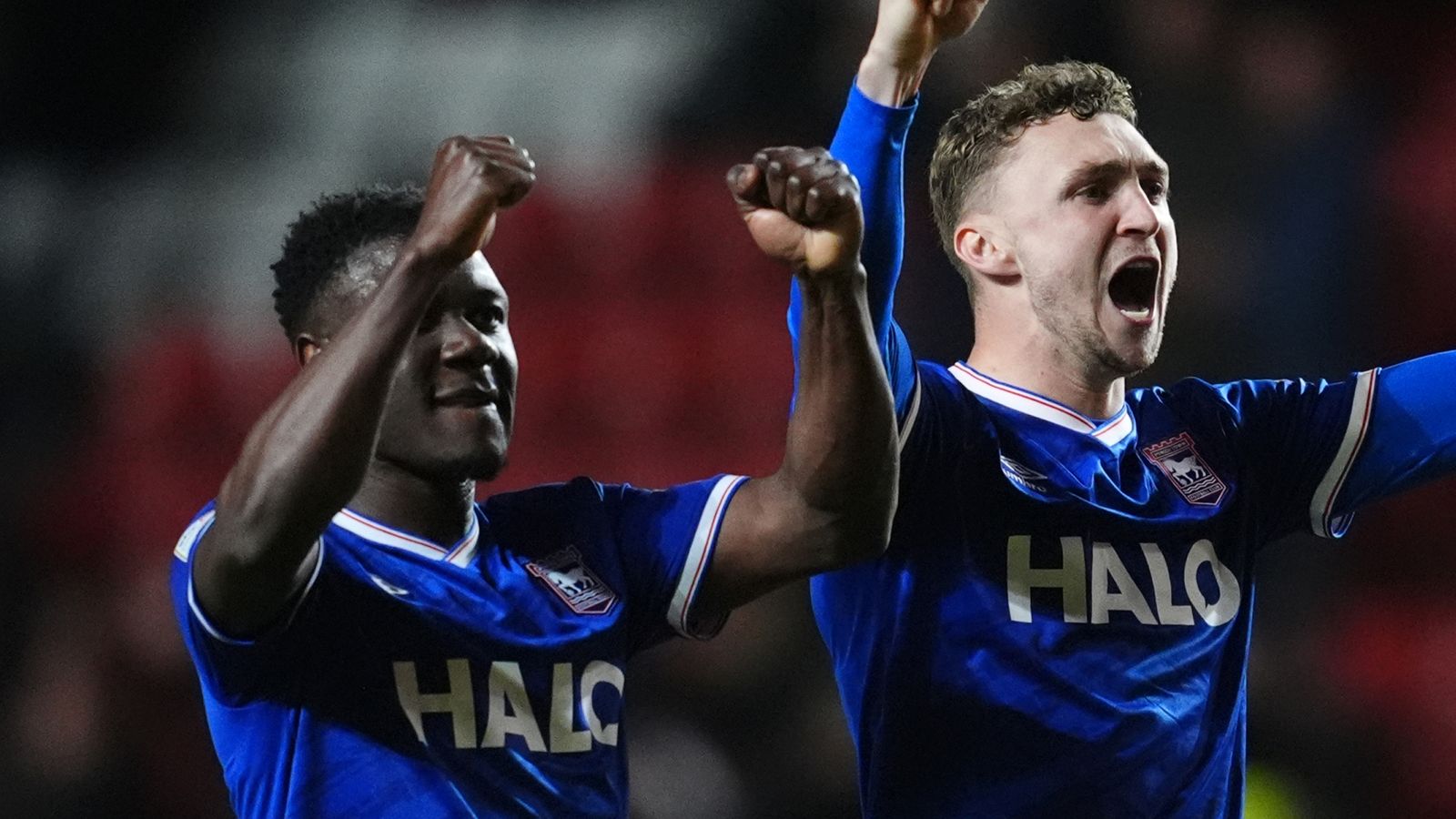
Ipswich survived a 42-second nightmare but their promotion anxiety is real
The psychology of the April run-in
April football in the Championship does terrible things to the human mind. The tactical whiteboards that defined August are rendered meaningless by the sheer, suffocating pressure of spring. Legs get heavy, lungs burn a little faster, and passes that were zipped confidently through midfield six months ago suddenly bounce awkwardly off shins.
It becomes a league of pure, unadulterated anxiety. The team that panics the least usually stumbles over the finish line. The pristine football of autumn is entirely gone, replaced by the grim business of survival.
Ipswich Town are currently providing a masterclass in testing cardiovascular health. On Wednesday night at The Valley, they were supposed to right the ship. They arrived needing to shake off a miserable, grinding stretch of form.
Instead, they found themselves staring into the abyss before most of the travelling support had even taken their seats. The Tractor Boys completely forgot how to play football for the opening minute. It is staggering to witness a professional outfit fail to start the engine when the lights go green.
The Championship run-in is ruthless because it does not care about your underlying metrics. It only cares about execution under duress. When you are chasing automatic promotion, every single dropped point feels like a fatal wound.
The tension bleeds from the stands onto the pitch. Players stop taking risks, and the ball suddenly feels like it weighs twenty pounds. Ipswich arrived at Charlton carrying all of that baggage, and they immediately dropped it on their own toes.
42 seconds of pure chaos
You can meticulously plan for a midweek away fixture. You can run the defensive drills, analyze pressing triggers, and set up your double pivot. But you cannot plan for collective amnesia.
Exactly 42 seconds after the referee blew his whistle, the ball was in the back of the Ipswich net. A catastrophic switch off allowed a Charlton player named Greg to wheel away in celebration. It was the kind of concession that makes a manager want to walk straight down the tunnel.
This is the fundamental contradiction of Kieran McKenna’s Ipswich. They are capable of playing sophisticated, mathematically precise attacking football. Yet they possess an infuriating, almost pathological propensity to punch themselves in the face.
They do not just invite pressure. They actively hand the opposition a crowbar and point them toward the vault. Conceding inside the opening minute away from home during a promotion chase is uniquely terrifying.
It immediately validates the fear that recent poor form was actually a terminal decline. It gives the home crowd an immediate reason to turn the stadium into a cauldron. It forces a team that wants to dictate the tempo to desperately play catch-up.
The anatomy of a mid-season stall
Let us look closely at what happens when Ipswich stall. McKenna demands absolute control. His philosophy is built on establishing rhythm, manipulating the defensive block, and creating high-percentage chances.
But when the promotion race mounts, that control turns sterile. During their recent sticky patch, center-backs started taking an extra touch. Wing-backs stopped making overlapping runs because they were terrified of transition.
Possession became a defensive mechanism rather than a weapon. They held the ball simply to prevent the other team from having it. Ipswich looked like a team playing strictly from memory rather than instinct.
They dominated the ball but lacked the sudden changes of pace necessary to break down low blocks. The underlying numbers remained fine, but the eye test told a clear story. A squad paralyzed by the stakes became entirely predictable.
In the second tier, predictability is a death sentence. Opposing managers figured out that if you sit deep and wait, Ipswich will eventually make a mistake. Charlton knew this, pressed exactly when they needed to, and reaped the reward within 42 seconds.
Look at the specific shape Ipswich adopted immediately after conceding. They pushed the wing-backs so high they practically operated as secondary strikers. This desperate shift abandoned their measured build-up and left the center-backs completely isolated against Charlton's pace.
When you operate with a double pivot, those two players must control the game's temperature. They are supposed to be the metronome, slowing things down when the away crowd gets loud. Instead, the Ipswich midfield got sucked into a chaotic, end-to-end basketball match.
You cannot play transition-heavy football when your entire squad is built for positional dominance. It tires out the wide players and bypasses the creative midfielders. McKenna was visibly furious on the touchline, wildly gesturing for his team to put their foot on the ball.
This kind of stall is incredibly difficult to coach out of a team. You cannot simply yell at players to be more creative. When confidence dips, players default to the safest possible action.
A progressive pass through the lines is ignored in favor of a square ball. The tempo slows to a crawl, allowing the opposition defense to rest. It becomes a slow, agonizing death by a thousand sideways passes.
Philogene and the absolute necessity of luck
Which brings us to Jaden Philogene. In a system obsessed with structure, Philogene represents the necessary agent of chaos. He is the player you use when the tactical plan fails entirely.
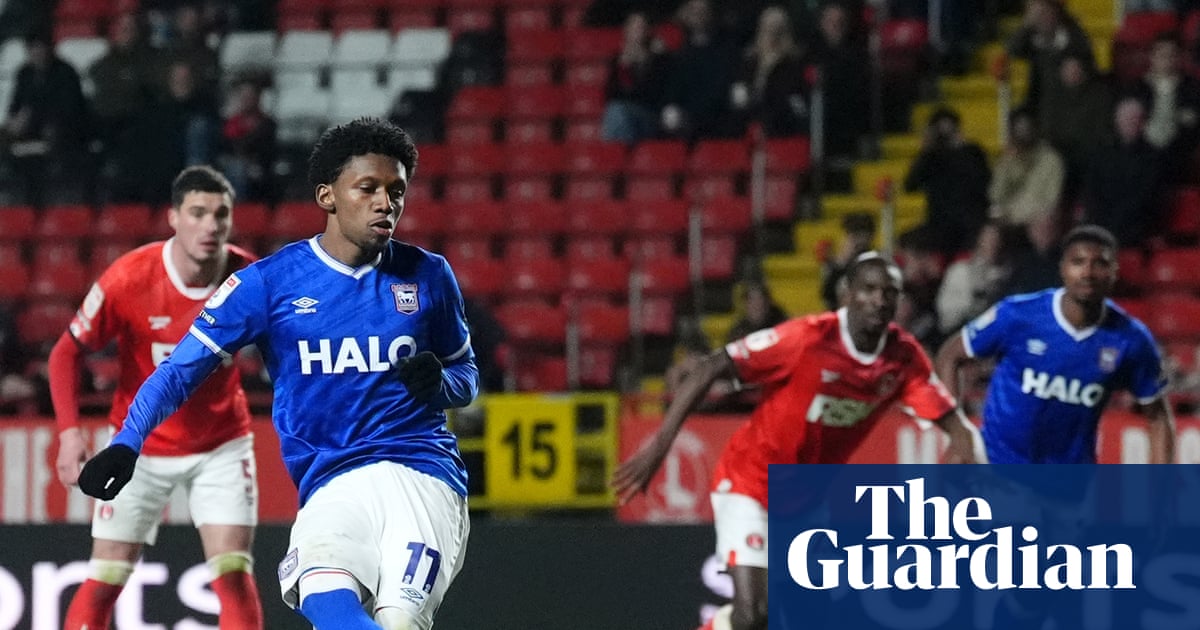
At Charlton, he delivered exactly what was required. The match report from The Guardian highlighted his "spot of luck" that lifted Ipswich back into the top two. Sometimes you desperately need a heavy deflection or a scuffed shot.
Luck is an uncomfortable subject in modern football analysis. We want to attribute every victory to pressing intensity and managerial genius. But blind fortune plays a massive role in who goes up and who stays down.
Philogene's intervention did more than just alter the scoreline. It broke the psychological hex gripping the squad. You could visibly see the tension drain from the Ipswich players.
Suddenly, the passes became crisper. The movement off the ball became sharper and far more aggressive. They stopped playing like a terrified team and started expecting to win.
The systemic flaws McKenna must address
Despite the eventual result, the overall performance at The Valley cannot be ignored. We have to be highly critical of how Ipswich start football matches. This 42-second collapse was the loudest symptom of a recurring disease.
Their play features a worrying lack of early aggression. They frequently treat the first ten minutes as an extended warm-up session. Against mid-table teams with nothing to lose, this passive approach begs for punishment.
McKenna needs to inject pure venom from the opening whistle. The double pivot frequently looks pedestrian when asked to win ugly second balls. They lack a true destroyer willing to commit a cynical foul.
If you constantly spot rivals a one-goal lead, you eventually run out of miracles. The margins are far too thin to rely on second-half comebacks. The tactical arrogance of assuming you can out-pass a team after giving them a head start will cost Ipswich.
The financial gravity of the second spot
The stakes surrounding this promotion race are impossible to overstate. The difference between second and third is guaranteed wealth versus a heartbreaking lottery. Automatic promotion brings an immediate broadcast revenue injection of well over £100m.
This windfall is not just about buying new players. It is about protecting current assets from being poached by established Premier League vultures. If Ipswich fail to go up, their top performers will undoubtedly be circled by top-flight scouts in June.
The squad McKenna meticulously assembled would risk being stripped for parts. This is the brutal economic reality of modern English football. You either climb over the wall into the promised land, or you fall back into the muddy trenches.
Static existence does not happen in the Championship. Clubs either ride the momentum upwards or collapse under the weight of their own wage bills. Ipswich are teetering right on that terrifying financial tightrope.
It completely transforms the financial reality of the town. It allows the recruitment department to identify targets with top-flight certainty. The playoffs, conversely, are a psychological torture chamber.
A team can accumulate 90 points and have their season ruined by a bad refereeing decision. Ipswich are exactly the sort of highly strung team that struggles in playoff football. This is why the victory at Charlton holds such massive significance.
It mathematically protects them from the chasing pack for now. But it also acts as a dangerous smokescreen. It papers over glaring structural and mental cracks within the starting eleven.
Looking ahead to the final hurdle
With only a handful of games remaining in the 2025/2026 season, the physical toll is evident. Key players are carrying heavy knocks, and the bench is getting thinner. The medical department is working relentlessly just to keep the eleven functional.
But physical fatigue pales in comparison to the mental exhaustion. Every tactical meeting is suffocated by the reality of what is on the line. The players know the massive career implications for themselves.
Ipswich must now close out the season without chaotic drama. They desperately need boring, highly functional 2-0 victories. They need to stop handing the opposition early leads.
The Tractor Boys are back on the right track, according to the early reports. But those tracks are incredibly narrow, and the drop is perilously steep. McKenna's true test will be stopping his brilliant machine from self-destructing before the final whistle.
The fans travelling back to Suffolk late on Wednesday night know this better than anyone. They have lived through the dark years of obscurity and the bitter taste of relegation. They are entirely exhausted by the emotional rollercoaster of this current squad.
Every clearance feels like a lottery ticket, and every misplaced pass feels like a disaster. They desperately want to believe in McKenna's long-term vision. But right now, they would happily trade all the beautiful football for a handful of ugly, scrappy victories.
Read Next
- Ipswich Town are doing it the hard way but they are back in the driving seat
- Ipswich's chaotic comeback at Charlton exposes a statistical flaw
- Ipswich Town are giving us the most stressful month of our lives
- Ipswich retake second as the Championship run-in descends into absolute chaos
- 🏟 EFL Championship 2025-26 — Promotion Race & Play-Off Final Hub
adidas Fussballliebe League Ball
Play like the pros with the official Euro 2024 takedown.
Frequently Asked Questions
How quickly did Ipswich concede against Charlton?
Who is the manager of Ipswich Town?
Where did Ipswich play their recent midweek fixture?
How did Ipswich respond to conceding an early goal against Charlton?
What is Ipswich Town's biggest issue during the Championship run-in?
More Coverage
Michael Skubala takes the hot seat at Ashton Gate
5 hours ago
Bournemouth are actually keeping Tommy Elphick
1 day, 14 hours ago
West Ham's post-relegation malaise is just beginning
2 days, 11 hours agoSergej Jakirović is failing upward and he is not going to apologize for it
3 days, 1 hour agoJakirović admits the Championship tanked him
3 days, 5 hours ago
Bolton’s return to the Championship is a triumph, but the VAR cloud lingers
4 days, 15 hours agoMore Analysis

Ipswich Town are doing it the hard way but they are back in the driving seat
1 month ago
Philogene rescues Ipswich as the Tractor Boys reclaim their promotion destiny
1 month ago
Ipswich's chaotic comeback at Charlton exposes a statistical flaw
1 month agoIpswich are staring down the barrel of history and I think they might actually do it
1 month, 1 week ago
Ipswich have one hand on the Premier League after St Mary’s madness
1 month ago