The 42-Second Panic
Kieran McKenna barely had time to sit down. Forty-two seconds. That is all it took for Charlton to expose the exact vulnerability that has threatened to derail Ipswich Town's entire season.
Greg found the space, the backline hesitated, and suddenly the team chasing automatic promotion were staring down the barrel of another disastrous away day. It is a recurring nightmare for the Tractor Boys.
They have developed a nasty habit of making life incredibly difficult for themselves. They have now conceded inside the opening 15 minutes in four of their last seven away fixtures.
But the story of this vital comeback win isn't about the awful start. It is about the overwhelming statistical pressure McKenna's side applied to dig themselves out of a hole.
Football is a game of margins, and right now, Ipswich are playing with zero margin for error. The second automatic promotion spot is a bloodbath this season. Dropping points at The Valley was simply not an option if they wanted to avoid the lottery of the playoffs.
The Analytics of a Fightback
After a sticky patch, the Tractor Boys are back on the right track again. Kieran McKenna’s side have shown a propensity to make things difficult for themselves as they chase the second automatic promotion spot...
That assessment from The Guardian hit the nail on the head. Ipswich did not panic. They just turned up the dial. By the final whistle, the underlying numbers told a story of total territorial dominance.
They finished with 71 percent possession, but sterile possession means nothing in the Championship. What matters is where you keep the ball. Ipswich registered 44 touches inside the opposition penalty area compared to Charlton's meager nine.
That is not just control. That is suffocation.
Their expected goals (xG) climbed from a dismal 0.12 at half-time to a commanding 2.31 by the end of the match. They didn't just knock on the door. They systematically took it off its hinges.
Yet, there is a glaring negative here. Why does it take going behind for this team to play with this level of intensity? Their first-half xG against bottom-half sides is a massive statistical red flag. When they are comfortable, they are passive.
In matches against teams currently sitting 12th or lower, Ipswich's average xG in the first 45 minutes sits at a bafflingly low 0.44. They essentially waste a half of football before remembering their own quality. Against a desperate Charlton side fighting their own battles, that passivity was punished almost instantly.
The Expected Threat of Jaden Philogene
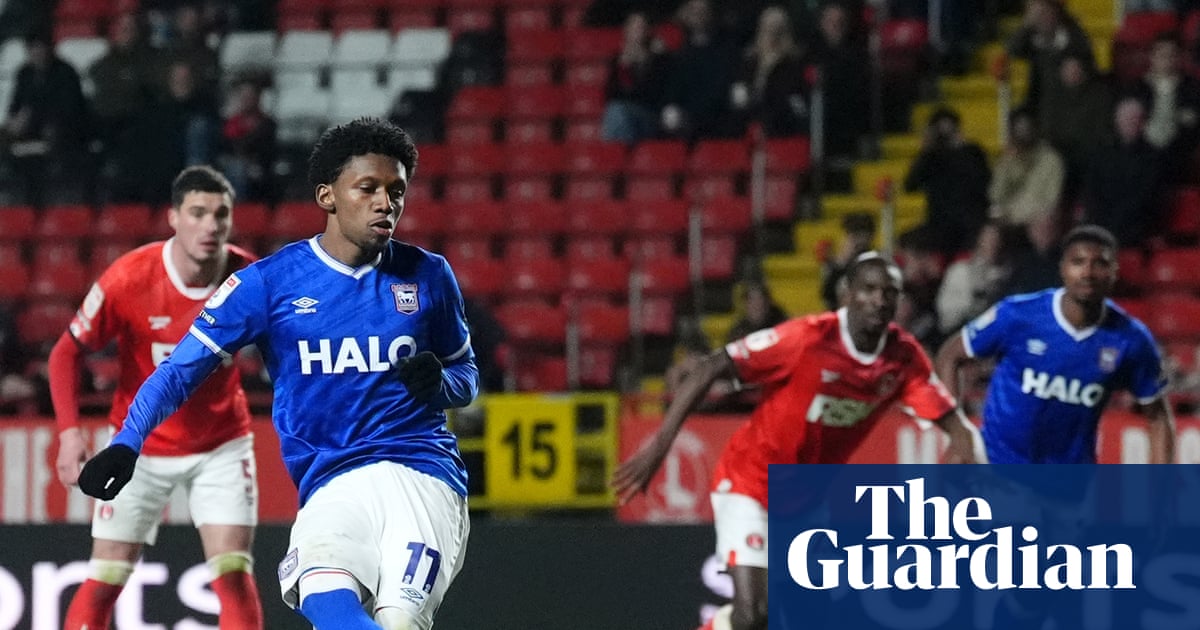
Then there is Jaden Philogene. The winger was the agent of chaos Ipswich desperately needed.
His spot of luck might grab the headlines, but luck is usually the residue of design. He attempted 11 dribbles on the night, completing seven of them. That 63 percent success rate in tight, hostile territory is what broke Charlton's defensive shape.
He averages 4.2 progressive carries per 90 minutes. Against Charlton, he recorded nine. He essentially took the ball, stared down the full-back, and dared him to make a mistake.
Eventually, the mistake came. A trailing leg, a whistle, a penalty. A spot of luck, sure. But one that was mathematically inevitable given the volume of penalty box entries he was generating.
If we look at Expected Threat (xT)—a metric that measures how much a player's passes and carries increase their team's probability of scoring—Philogene led all players on the pitch with a massive 0.82 xT. He wasn't just recycling possession. He was actively dragging Charlton out of their low block, forcing defensive rotations that opened gaps for others.
His heat map looked less like a traditional winger and more like a second striker operating entirely in the half-spaces. He received 18 progressive passes, meaning his teammates were actively bypassing the midfield to find him in dangerous areas. He isn't just a cog in the machine; right now, he is the entire cutting edge.
The Championship's Comeback Kings
Let's look at the broader picture. Ipswich have now rescued 26 points from losing positions this season.
That is a staggering number. It leads the division by a wide margin. The next closest is Leeds United with 17. It speaks volumes about their fitness, their bench depth, and McKenna's tactical adjustments.
- 26 points from losing positions this season
- 14 goals scored in the final 15 minutes of matches
- 8 goals from substitutes in 2026 alone
But building a promotion campaign on the ability to constantly escape burning buildings is a risky strategy. It is thrilling for the neutral. It is agonizing for the supporters.
The transition speed is where McKenna's adjustments really shine. In the second half, their average time to regain possession dropped from 14.2 seconds to just 8.1 seconds. They implemented a high press that completely short-circuited Charlton's ability to clear their lines.
They forced 12 high turnovers in the second 45 minutes alone. Charlton couldn't breathe. Every clearance was instantly returned with interest. This wave of pressure is physically demanding. It explains why Ipswich's running metrics—averaging 114 kilometers per match—are elite.
A Tactical Shift When It Mattered
We have to talk about the midfield spacing. In the first half, Ipswich's double pivot was entirely disconnected from the attacking quartet. They were playing a broken 4-2-4, leaving a massive gaping hole in the center of the pitch.
At half-time, McKenna tweaked the geometry. One midfielder pushed ten yards higher, creating a 4-1-4-1 out of possession. It instantly clogged the central passing lanes.
Charlton's pass completion rate in the middle third plummeted from 78 percent before the break to just 54 percent after it. They were forced to go long, and Ipswich's center-backs devoured the aerial duels.
They won 22 of 28 contested headers in the second half. It was a statistical wipeout.
This mid-game tactical flexibility is McKenna's calling card. He recognized that Charlton were bypassing the press by using a dropping striker. By pushing the midfield line higher, he cut off the supply line at the source. It is the kind of proactive management that earns points in tight, ugly fixtures.
The Home and Away Paradox
To truly understand Ipswich's chaotic push for promotion, you have to look at the massive disparity between their home form and their away trips.
At Portman Road, they are a machine. They average 2.4 expected goals per game and restrict opponents to just 0.7. The pitch feels huge, the passing is crisp, and they dictate the tempo from the first whistle.
Away from home, the numbers get muddy. Their xG drops to 1.3 per game, and their expected goals against climbs to 1.4. They allow opponents to shoot 30 percent more often on the road. The 42-second concession to Charlton is a symptom of this broader issue.
It is a mental block. When they step off the bus, they lack the immediate intensity that defines their home performances. They are forcing themselves into these dramatic, high-energy comebacks simply because they sleepwalk through the opening exchanges of away fixtures.
You can survive a sleepy opening against Charlton. You cannot survive it against the division's heavyweights, and you certainly won't survive it if you secure promotion.
The Final Sprint
The race for the second automatic promotion spot is going to the wire. Every metric suggests Ipswich have the offensive firepower required.
They average 1.8 big chances created per game. Their attacking output is relentless when the handbrake comes off.
But that 42-second mental lapse is the ghost that haunts them. If they take that lack of concentration into the final weeks of the season, they will be punished relentlessly.
The underlying data presents a fascinating paradox. Offensively, they are a juggernaut. Defensively, they are prone to structural collapse in the opening phases of matches. You cannot consistently give up a 1-0 deficit away from home and expect to survive the pressure cooker of May.
For now, the numbers say they are the most resilient team in the league. Jaden Philogene is hitting form at the perfect time. McKenna is pressing the right buttons when it matters most.
But they need to stop giving their opponents a head start. The math won't always save them.
Read Next
- Wrexham and Ipswich face the brutal math of the Championship run-in
- Ipswich Town are doing it the hard way but they are back in the driving seat
- Ipswich Town are giving us the most stressful month of our lives
- Ipswich retake second as the Championship run-in descends into absolute chaos
- 🏟 EFL Championship 2025-26 — Promotion Race & Play-Off Final Hub