The Breaking Point at Celtic Park
The Scottish Premiership title race delivered exactly what we wanted on the pitch this season. We watched late drama, tactical shifts, and a tightly contested battle that went down to the wire. But the final act at Celtic Park completely ruined the script.
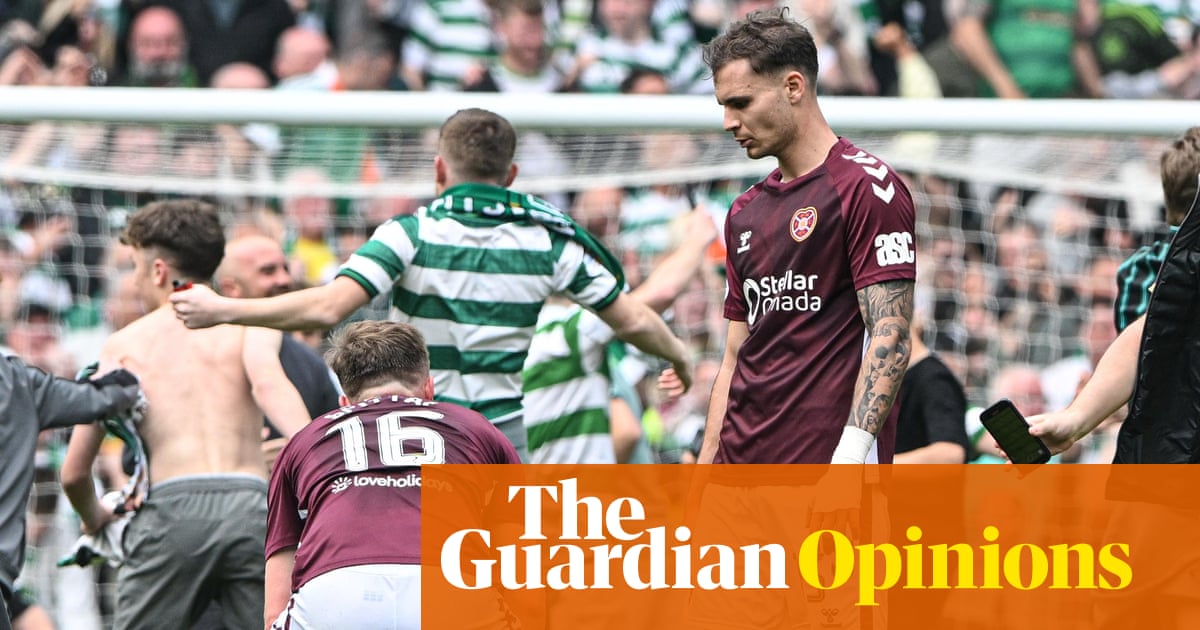
The grim denouement of the 2025/26 campaign didn't happen during the 90 minutes. It happened after the whistle. The resulting chaos has forced a reckoning.
The SPFL and SFA have a long, documented history of wobbling at the knees when punishing their biggest clubs. They issue strongly worded statements and hand out token fines that amount to rounding errors in a wage bill. But they never actually drop the hammer.
That approach is finally dead. The scenes at Celtic Park this past weekend crossed a line the governing bodies can no longer ignore. It risks setting a dangerous precedent that threatens the entire league's commercial viability.
You cannot market a top-flight league to international broadcasters when the trophy presentation is overshadowed by chaos. My prediction is absolute. By the time the 2026/27 season kicks off, the SPFL will introduce strict liability rules with mandatory sporting sanctions.
We will see point deductions handed out for fan misbehavior. It will fundamentally alter the balance of power in Glasgow.
A History of Institutional Weakness
For decades, the SFA has operated on a system of mutual self-preservation. When Rangers or Celtic fans step out of line with flares, pitch invasions, or sectarian singing, the clubs simply point the finger at an unnamed minority. The league nods in agreement, a reprimand is issued, and the cycle repeats.
The fear of upsetting the financial engines of Scottish football always wins out over maintaining order. This isn't a new problem. Scottish football has debated strict liability—making clubs directly responsible for fan actions—for well over a decade.
UEFA already operates under this model successfully. When Scottish clubs play in Europe, UEFA doesn't hesitate to issue fines or mandate partial stadium closures for crowd trouble. Yet, domestically, the SPFL has consistently voted against implementing those same standards.
The clubs vote on the rules, and turkeys don't vote for Christmas. They have protected themselves at the expense of the league's reputation. But this latest incident forces the issue entirely out of the clubs' hands.
The pressure isn't just coming from rival fans complaining on message boards or sports radio call-ins. It is coming from the people who actually fund the sport. That changes the math completely.
The Commercial Reality Check
Broadcasters absolutely refuse to have their product associated with stadium chaos. The current TV deal with Sky Sports runs through 2029, guaranteeing roughly £30 million per season across the league. That money is the lifeblood of the Scottish game.
If the SPFL fails to guarantee a safe, predictable, and marketable environment, they risk breaching clauses in those commercial agreements. Sky Sports pays for football, not crowd disorder. Sponsors get jittery when their pitch-side hoardings are obscured by smoke or damaged by pitch invaders.
The Scottish government has also been circling this issue for years. Lawmakers have repeatedly threatened to intervene if the football authorities cannot police their own game. The SPFL knows that if they don't act now, Holyrood will step in with heavy-handed legislation.
Government intervention is the ultimate nightmare scenario for the blazers at Hampden Park. That financial and political reality finally forces their hand. The threat of losing revenue or autonomy is the only thing that scares the big clubs more than losing a derby match.
The English Precedent
Look south of the border for proof of how fast governing bodies change their tune when forced. The English Premier League and the EFL spent years issuing fines for financial breaches. Then, suddenly, they started docking points.
Everton and Nottingham Forest were hit with sporting sanctions that completely changed the relegation battle. The threshold for punishment shifted from financial penalties to sporting ones because fines stopped working as a deterrent. The exact same logic applies directly to crowd control in Scotland.
A standard five-figure fine means absolutely nothing to Celtic or Rangers. A three-point penalty means everything. The SPFL has watched the English authorities weaponize point deductions and seen that it actually works.
It forces clubs to change their internal operations immediately. Once sporting integrity is on the line, clubs suddenly find the necessary resources to identify and ban troublemakers permanently.
The Tactical Fallout on the Pitch
Look at how Celtic and Rangers contested the title this year. The tactical setups were entirely dictated by fine margins. Brendan Rodgers and Philippe Clement spent the entire spring tweaking midfield rotations just to carve out a single-goal advantage.
When the margins are that tight, external factors carry massive weight. If a team is hit with a points penalty, the manager cannot simply ask his players to score more goals to make up the difference. The tactical shape becomes desperate.
Teams are forced to take unwarranted risks on the pitch. They overcommit fullbacks and leave themselves completely exposed on the counter-attack because a draw is suddenly functionally useless. The SPFL is about to inject an administrative variable into a purely tactical battle.
It is a frightening prospect for any coaching staff. You can run training drills all week to perfect a high press or meticulously scout set-piece routines. But you cannot coach a stadium full of 60,000 emotional fans.
The burden of responsibility shifts completely. The top clubs have spent millions upgrading their analytical departments to track expected goals and high-intensity sprints. Now, they need to spend that money on private security and facial recognition cameras at the turnstiles.
The analytics that will decide the 2026/27 championship might not be passing accuracy, but arrest rates. This changes player recruitment too. If a club knows they might face stadium bans, they will reconsider signing players who exclusively thrive on heavy crowd energy.
The 2026/27 Prediction
Here is exactly how this plays out over the next three months. The SFA will call an emergency summit before the summer window closes. They will draft a new disciplinary code that bypasses the need for a unanimous club vote by framing it as a strict licensing requirement.
The new system will be tiered and aggressively enforced. First offenses mean a partial stadium closure, while a second offense triggers a full stadium ban. The third offense demands mandatory sporting sanctions, specifically point deductions.
Celtic will start next season with a suspended point deduction hanging over them as a direct consequence of the recent title celebrations. Rangers will face the exact same conditional punishment given their own recent disciplinary track record. The SFA will have to make an example of someone early in the season.
They need to prove the new rules aren't just empty threats. I predict a mid-table club gets hit with a point penalty by October for a minor infraction, setting a harsh baseline. Once that happens, the new reality will finally set in at Ibrox and Parkhead.
A Failure of Leadership
There is a glaring negative observation to make here regarding the SPFL's leadership. Neil Doncaster and the board let it get to this absolute breaking point. They allowed the culture of impunity to fester for years because they were too scared to upset the established hierarchy.
Their reactive approach means they are now forced to make sweeping changes in a state of absolute panic. Instead of gradually implementing strict liability over the past five years and educating fanbases, they are dropping it like a bomb on the league. This panic will inevitably lead to highly inconsistent application of the rules.
The first time a major penalty is applied to an Old Firm club, the resulting legal and media circus will be exhausting. The SFA disciplinary panel will be scrutinised like never before. Every single point deduction will end up in front of the Court of Arbitration for Sport.
The league simply isn't prepared for the massive legal bills that are about to come their way. But they have backed themselves into a corner. The SPFL is finally growing a spine, not out of courage, but out of sheer desperation.
The era of empty threats is officially over. Point deductions are coming to Glasgow. The entire dynamic of Scottish football is about to shift permanently, and it is going to be a brutal transition.
Read Next
- The SFA's cowardice is destroying the Scottish Premiership
- Martin O'Neill just pulled off the most ridiculous heist in Celtic history
- Celtic lifted the trophy, but Hearts broke the Old Firm simulation
- Celtic bypassed Hearts on the pitch and broke the SPFL system off it
- ⚽ Scottish Premiership 2025-26 — Celtic vs Rangers Hub