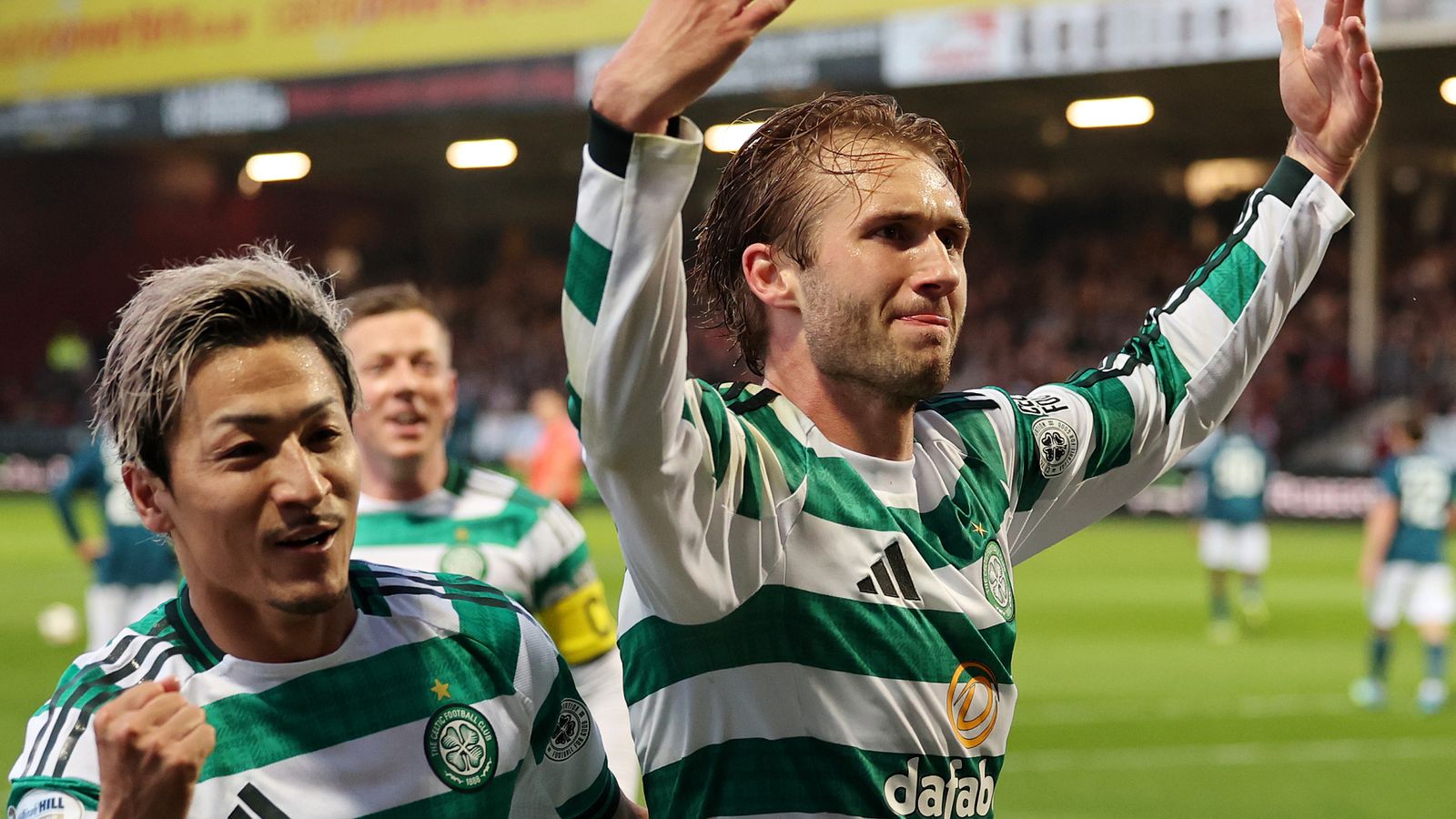
Celtic bypassed Hearts on the pitch and broke the SPFL system off it

The bureaucracy of chaos
The statement arrived with the sterile predictability of a corporate memo. The SPFL confirmed that Celtic’s title-clinching victory over Hearts had not, in fact, ended prematurely. They also issued the obligatory condemnation of the pitch invasion that followed Celtic’s third goal. It was a bureaucratic attempt to neatly categorize a moment of absolute, unvarnished chaos.
When that third goal hit the net, the tactical structure of the match evaporated. The game ceased to be a contest of spatial dominance and became a visceral release of tension. Fans spilled over the advertising hoardings. Green and white engulfed the playing surface. But before that structural collapse off the pitch, Hearts had already suffered a complete systemic collapse on it.
Celtic didn’t just beat Hearts. They suffocated them. The anatomy of a title decider is rarely about expansive, free-flowing football. It is usually an exercise in cognitive attrition. You force the opposition to make decisions constantly, relentlessly, until their mental elasticity snaps.
That snapping point usually arrives late in the game. It is born of fatigue. Not just physical fatigue, but the sheer mental exhaustion of tracking runners, closing passing lanes, and maintaining a rigid low block against a team that monopolizes possession. Celtic's use of inverted fullbacks creates a numerical superiority in the central third that makes pressing them a fool's errand. Hearts tried to remain compact, but the continuous lateral shifting eventually created massive gaps.
By the time the third goal went in, Hearts were chasing shadows. Their defensive line was fragmented. The midfield pivot had lost its spacing. The goal itself was just the final formal confirmation of a tactical reality established an hour earlier. Celtic were champions. They had rendered the opposition entirely passive.
The administrative disconnect
The SPFL’s swift statement confirming the match reached its natural conclusion is fascinating. It speaks to a deep-seated anxiety regarding the optics of the Scottish game. The governing body is desperate to project an image of orderly, modernized football. A match being abandoned due to a pitch invasion is the ultimate nightmare scenario for broadcasting partners.
Hence the quick clarification. They needed the narrative to be about the title win, not an aborted fixture. But the condemnation of the invasion feels hollow. Anyone who has spent five minutes analyzing the tribal dynamics of Scottish football could have predicted exactly what would happen if Celtic went three goals up in a title decider.
The failure isn't just on the individuals who crossed the white line. It is a massive operational failure in stadium management and stewarding. How do you fail to secure the perimeter when the entire stadium knows what is at stake? The stewarding model at major Scottish grounds remains fundamentally reactive. They form thin lines, hoping the threat of ejection deters thousands of people driven by pure adrenaline. It is a mathematical impossibility to stop a surge with the current staffing configurations.
This brings us to the core contradiction of modern football. The clubs and leagues market the passion. They sell the broadcast rights based on the intensity of the atmosphere, the noise, the sheer unadulterated fanaticism of the supporters. Yet, when that fanaticism breaches the highly regulated boundaries of the pitch, the authorities act shocked. They release statements. They condemn. They promise reviews.
It is a cyclical pantomime. The SPFL wants the chaotic energy for the highlight reels, but they want it safely confined behind LED advertising boards. You cannot have both. When a team executes a tactical game plan as ruthlessly as Celtic did against Hearts, concluding with a decisive third goal, the emotional dam breaks.
Tactical dominance and European vulnerability
Let’s look at the footballing implications of Celtic's domestic dominance. Clinching the title here in May 2026 with an emphatic margin over a team like Hearts highlights the enormous resource and quality gap in the division. Celtic operate in a different tactical stratosphere compared to the rest of the league. They can afford to commit bodies forward, knowing their counter-pressing structure will choke out 95% of transition attacks.
But this absolute domestic control masks a glaring vulnerability. The high line and aggressive counter-press work flawlessly against SPFL opposition. Against European teams with elite ball progression, it becomes a structural liability. Celtic often look magnificent in domestic fixtures because they are rarely forced to defend their penalty area for sustained periods.
When they step into the Champions League, the context shifts entirely. The inverted fullbacks who dominate the midfield against Hearts suddenly find themselves isolated against elite wingers in transition. The center-backs are asked to defend massive expanses of space behind them. The very system that won them the title against Hearts is the system that routinely gets them punished in Europe.
This is the paradox of managing Celtic. You are tasked with building a team capable of utterly dominating a low-quality domestic league, while simultaneously preparing that same squad to survive against the apex predators of European football. It requires a tactical flexibility that very few managers can successfully navigate.
The third goal against Hearts was a perfect example of domestic execution. It was likely the result of sustained pressure, a recycled clearance, and a quick combination in the final third. Hearts, mentally shattered, failed to track the final run. In Europe, that recycled clearance is intercepted. Within two passes, the opposition is bearing down on the Celtic goalkeeper.
The reality of the whistle
The referee's handling of the situation also deserves scrutiny. The SPFL statement was adamant that the game was not cut short. This suggests the referee allowed the clock to tick down during the chaos, or blew the final whistle at the precise moment the invasion began. It is an impossible situation for an official.
You cannot restart a game with thousands of people on the pitch. You cannot simply guess the remaining time. By declaring the match complete, the SPFL avoided a logistical nightmare. Imagine the absurdity of having to clear the pitch, warm the players back up, and play out the final ninety seconds of a match that was already definitively settled. It would have been a farce.
The pragmatism of the decision is obvious, even if it required a carefully worded press release to validate it. As the dust settles on this title win, the focus inevitably shifts. Celtic have their trophy. Hearts have another stark reminder of the gap they must bridge. And the SPFL has another incident to file away in their endless drawer of disciplinary reviews. The cycle continues.
The true test for Celtic will not be how they handle the fallout from a pitch invasion. It will be how they evolve this squad over the summer. They have mastered the art of breaking down domestic low blocks. They have perfected the art of the 3-0 victory that demoralizes the rest of the league. Now they must figure out how to stop the bleeding in Europe.
The ceiling of Scottish football
Until they solve that problem, these title-clinching victories will always carry a slight asterisk. They are moments of intense joy, undeniably. But they are also a reminder of the ceiling that currently exists for Scottish clubs. Dominating Hearts is the minimum requirement. The real measure of this team's quality will be taken on cold Tuesday nights in November, against teams who don't crack under the pressure of a Celtic press.
Consider the mechanics of how Celtic create chances against a packed defense. It is not about aimless crossing. It is about overloading specific zones to force the defensive block to shift. When Hearts shifted to cover the overload on the right, Celtic would rapidly switch the play to the isolated winger on the left. This requires immense technical proficiency and passing speed.
If the pass is even half a second too slow, the defensive block has time to recover its shape. Celtic's passing tempo is what separates them. They move the ball with a crispness that exhausts the opposition. You can see it in the body language of the Hearts players. By the 70th minute, the closing down becomes slightly slower. The distances between the midfield and defensive lines stretch by a few critical yards.
That is where Celtic kill you. They operate in those newly created pockets of space. The third goal was a product of this exhaustion. A runner untracked. A pass that bypassed two lines of defense because the pressing trigger was ignored by a tired midfielder. Tactical dominance is rarely about one brilliant move. It is about the accumulation of small, exhausting movements over ninety minutes.
The event management failure
The Scottish game is uniquely demanding in its physicality, but it often lacks this level of tactical sophistication. When a team like Celtic executes a modern, possession-based system with actual precision, the rest of the league looks completely out of its depth. Hearts are a solid team with a clear identity. On this occasion, they were reduced to the role of sparring partners.
It makes you wonder how Hearts can adapt. Do you try to match Celtic at their own game? That is tactical suicide given the disparity in technical quality. Do you retreat even further into a low block and hope for a set-piece goal? That just delays the inevitable. The tactical puzzle Celtic presents to the rest of the SPFL remains entirely unsolved.
Let's examine the mechanics of the event management failure. The SPFL’s condemnation places the blame squarely on the fans. But any security professional will tell you that relying on the restraint of a massive crowd in a highly emotional state is a dereliction of duty. The failure occurred hours before kickoff. It occurred in the planning meetings where the risk assessment was clearly botched.
If you know a third goal is likely to trigger an invasion, your deployment strategy must reflect that. The stewards cannot be static. They need a rapid response capability to reinforce vulnerable sections of the perimeter. The fact that the invasion happened so seamlessly suggests a total breakdown in crowd control protocols. The SPFL can write all the sternly worded letters they want. Until the structural approach to stadium security changes, this will happen again.
And what of the players? Being caught in the middle of a pitch invasion is a genuinely dangerous situation. The SPFL statement glosses over the physical risk to the athletes. While the vast majority of fans are there to celebrate, the chaotic nature of the event means you cannot guarantee player safety. The authorities were lucky that this incident ended without serious injury.
As Celtic transition into their summer rebuild, the lessons from this match must be contextualized. The sheer ease with which they dispatched Hearts is a false positive for their European ambitions. The domestic title is the baseline expectation. The real work begins now. They must ruthlessly analyze their own tactical setup and identify the flaws that elite European teams will exploit.
The fans who stormed the pitch were celebrating a domestic triumph. But the Celtic management cannot afford to be swept up in that localized euphoria. They must remain coldly objective. They won the title because they were the best team in a heavily flawed league. To take the next step, they must build a team capable of surviving outside the comfort zone of the SPFL.
The invasion of the pitch was a symptom. The cause was a relentless, methodical dismantling of a Hearts team that simply could not cope with the tactical questions being asked of them. Celtic provided the answers, wrapped up the title, and left the SPFL scrambling to manage the optics. It was a fitting end to a season that has felt inevitable for months.
Read Next
Expected Goals: The Story of How Data Conquered Football and Changed the Game Forever by Rory Smith
A fascinating deep dive into how stats replaced gut feelings in the beautiful ga
Frequently Asked Questions
What happened during the Celtic vs Hearts title-clinching match?
How did Celtic tactically dominate Hearts to win the title?
Why did the SPFL issue a statement after the Celtic match?
What caused the pitch invasion at the Celtic and Hearts game?
Why is the stadium stewarding criticized in the Celtic match?
More Coverage

Why Manchester United’s pursuit of Ederson makes tactical sense
11 hours ago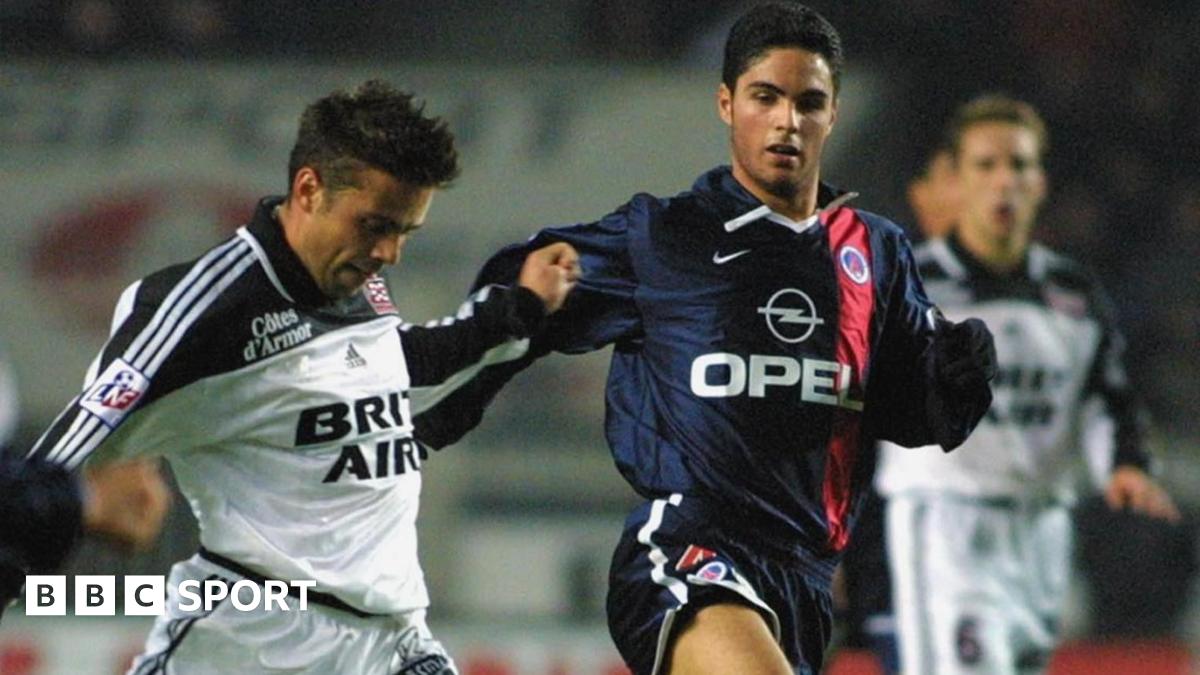
Arsenal must reconcile their tactical past with this final hurdle
13 hours ago
Manchester United are sleepwalking into another summer of uncertainty
15 hours agoHow a weird PSG loan turned Mikel Arteta into a manager
19 hours ago
Switzerland are the most dangerous sleeper in this World Cup
19 hours ago
Tonight is the Champions League Final, not an awards ceremony
23 hours agoMore Analysis

Celtic are about to win the league despite the Wilfried Nancy chaos
2 weeks ago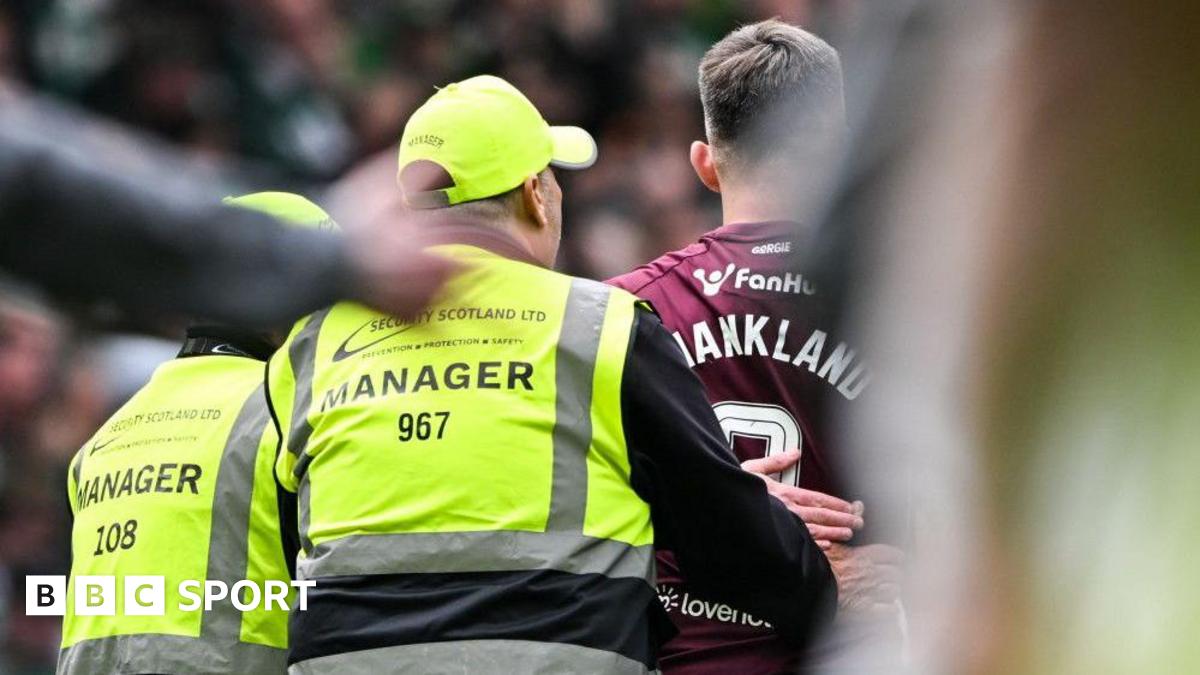
Celtic, Hearts, and the tactical cost of a stadium at war
1 week, 2 days ago
Hearts are absolutely right about the Celtic Park pitch invasion nightmare
1 week, 1 day ago
Celtic's chaotic title win sets the stage for a volatile summer transfer window
1 week, 4 days ago
Hearts are 90 minutes away from breaking the matrix
2 weeks, 2 days ago