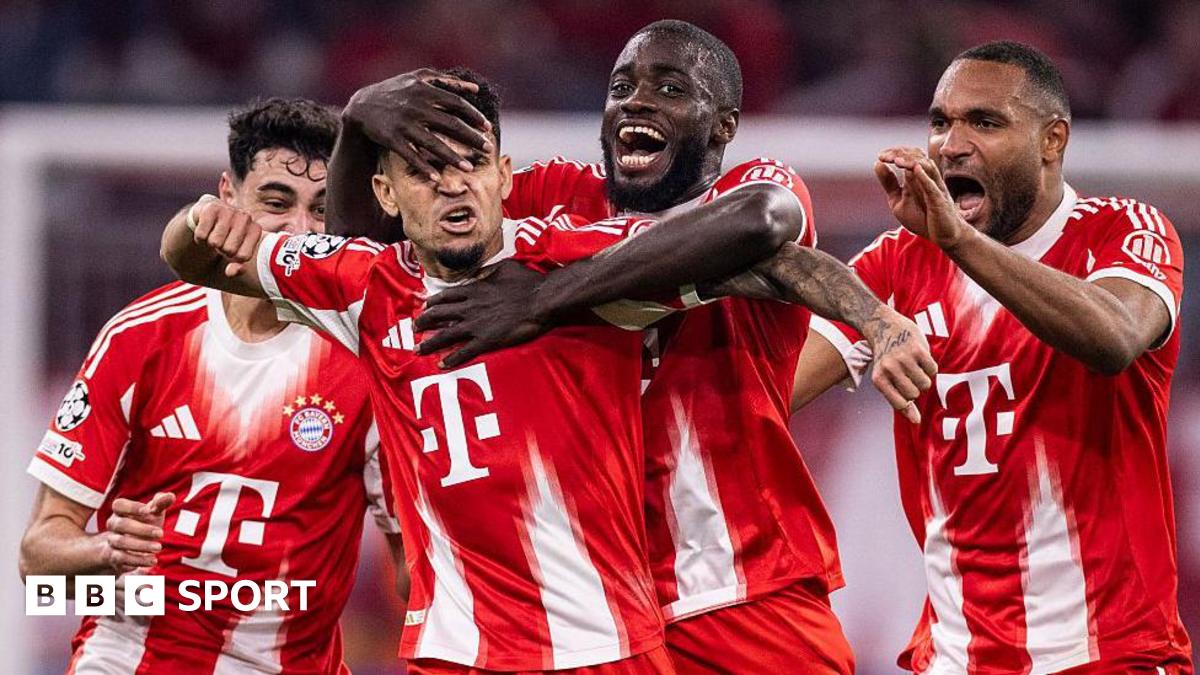
The narrowest margin in elite football
When Real Madrid and Bayern Munich kick off tonight, April 7, 2026, they aren't just playing a football match. They are adding a 27th chapter to a rivalry so statistically balanced it defies the usual laws of sporting probability. Across 26 previous meetings in the European Cup and Champions League, the record stands at 12 wins for Madrid, 11 for Bayern, and 3 draws. Even the goal difference is razor-thin, with Madrid leading 42-41. This isn't just a clash of titans; it is a statistical mirror image of two clubs that have defined the continental game for seven decades.
The weight of history is heavy, but the current data suggests we are looking at two very different machines. Real Madrid arrives at this quarter-final leg 1 having perfected the art of the 'statistical heist.' In their last 15 Champions League knockout matches, Madrid has actually been out-shot in 11 of them. Their Expected Goals (xG) against has been higher than their xG for in 60% of those fixtures. Yet, they have won 13 of those ties. This isn't luck; it is a repeatable model of high-leverage efficiency that drives data analysts to the brink of insanity.
The Harry Kane efficiency problem
Bayern Munich’s hope rests almost entirely on the shoulders of a man who has turned the Bundesliga into a private shooting gallery. As of today, Harry Kane has recorded 41 goals across all competitions in the 2025/26 season. His conversion rate is currently sitting at 28.4%, the highest among any striker in Europe’s top five leagues with more than 50 shots on target. Unlike the more mobile, chaotic threats of Vinícius Júnior or Rodrygo, Kane is a geometric striker. He occupies the 'Zone 14' spaces and punishes defensive lapses with a cold, mathematical precision.
However, Kane’s individual brilliance often masks a systemic vulnerability in this Bayern side. Their Passes Per Defensive Action (PPDA) has slipped this season to 10.2, down from the hyper-aggressive 8.4 they maintained during their last treble-winning cycle. They are pressing less frequently and less effectively, which is a dangerous trade-off when facing a Madrid midfield that thrives on breaking lines. If Bayern cannot disrupt Madrid’s buildup in the first 15 minutes, they risk being picked apart by the transition speed of Federico Valverde and Jude Bellingham.
The xG illusion and the Bernabéu factor
Data providers often struggle to quantify the 'Bernabéu Factor,' but we can see it in the tracking data. In the final 15 minutes of Champions League matches at home, Real Madrid’s sprint intensity increases by an average of 12% compared to the first hour of play. Their opponents, conversely, see a 7% drop in successful pass completion during the same window. The psychological pressure manifests as a measurable physical decline in the opposition. We saw this in the 2023/24 semi-final when Joselu’s late double turned a 0.12 xG chance into a season-defining moment in the 87th minute.
Madrid’s current xG delta in the Champions League is a staggering +0.45 per 90 minutes. This means they are scoring nearly half a goal more per game than the quality of their chances suggests they should. It is a statistical anomaly that has persisted for three seasons. While regression to the mean is a standard rule in sports analytics, Madrid seems to have found a way to live in the outliers. They don't need 20 shots to score three goals; they need four high-quality transitions and a mistake from a tiring center-back.
Transition metrics and the speed of light
The tactical battle tonight will be won in the 40 yards between the penalty boxes. Bayern Munich currently averages 62% possession in the UCL this season, while Madrid is comfortable sitting at 48%. The danger for Thomas Tuchel’s side is the 'possession trap.' In their last three exits from this competition, Bayern dominated the ball (averaging 59%) but conceded 70% of their goals on the counter-attack. Madrid’s front three are currently averaging a combined top speed of 35.4 km/h during transition phases, making them the fastest counter-attacking unit left in the tournament.
The arrival of this fixture on a new streaming platform, as Mirror Football reports, marks a shift in how these massive data-sets are consumed. For the first time, fans will have access to real-time player tracking and heat maps integrated into the broadcast. What they will likely see is a Bayern Munich team controlling the geography of the pitch, while a Real Madrid team controls the scoreboard. It is a recurring theme in this 15-6 title count rivalry: Bayern brings the system, but Madrid brings the moments.
A critical look at Bayern's defensive depth
It would be a mistake to view Bayern as favorites despite their superior possession stats. Their defensive line has been caught in a 'no-man's land' multiple times this spring. They are playing a high line (average distance from goal: 44 meters) without the recovery speed necessary to catch Vinícius Júnior once he breaks the offside trap. Dayot Upamecano’s individual error rate remains a concern; he has averaged one 'error leading to a shot' every 210 minutes in European competition this season. Against a team like Madrid, that is essentially a death sentence.
Madrid isn't perfect either. Their reliance on aging legs in the deep midfield means they can be bypassed if Bayern moves the ball quickly enough. But the numbers don't lie: when the game is tied after 70 minutes, Real Madrid has an 82% win rate in Champions League knockout ties over the last decade. Bayern’s path to victory requires a two-goal cushion before the clock hits 75 minutes. Anything less, and the statistical weight of the Bernabéu will likely crush them again. Tonight's leg 1 is less about who plays the better football and more about who survives the inevitable swing in momentum that defines this specific, brutal rivalry.
Read Next
- UCL Quarter-Finals: Europe's elite face moments of truth
- On This Day in Football: April 07
- Arsenal vs Bayern: The tactical chess match waiting to happen
- Trent Alexander-Arnold's Madrid struggles highlight massive risk for Liverpool
- 🏴 England World Cup 2026 — Three Lions Hub
- ⚽ La Liga 2025-26 — Title Race Hub
- ⚽ Bundesliga 2025-26 — Title Race Hub
- ⭐ UCL 2026 — Champions League Quarter-Finals Hub