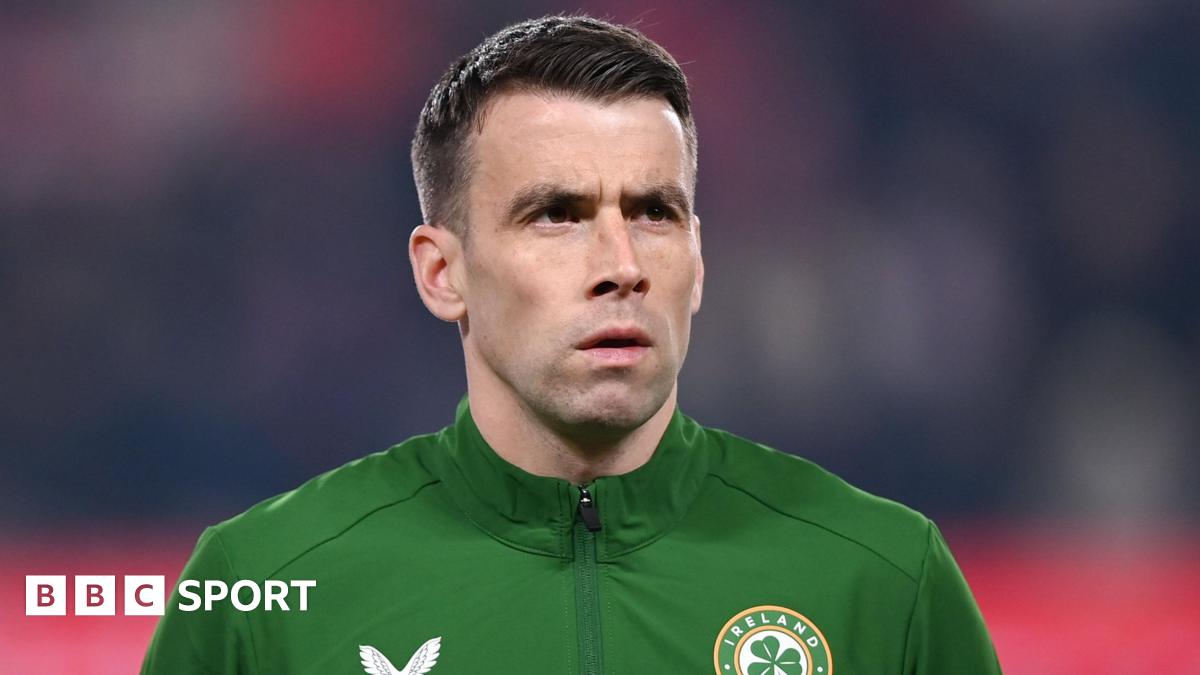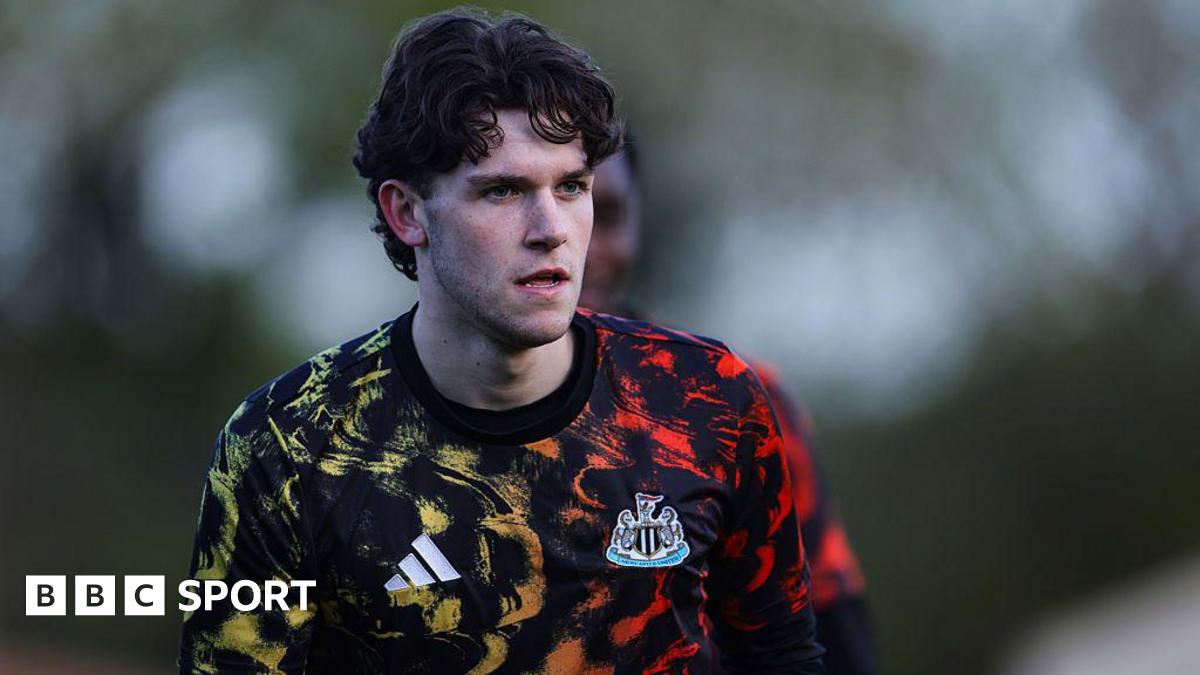
The youth movement finds its newest anchor
As the rest of the footballing world begins to pack its bags for the expanded 48-team spectacle in North America, the Republic of Ireland finds itself in a familiar, agonizing state of transition. While the elite prepare for high-altitude camps and tactical refinement, the FAI has arranged a friendly against Grenada. It is a fixture that feels more like a contractual obligation than a meaningful step toward relevance. Yet, within the sterile environment of this May window, there is one genuine reason for optimism: the arrival of Rory Finneran.
The Newcastle United teenager has been the subject of quiet hype since his move from Blackburn, and his inclusion in the senior squad is a recognition of his rapid ascent. At just 18 years old, Finneran represents a archetype that Ireland has lacked for decades — a defensive player who is fundamentally comfortable with the ball at his feet under pressure. He is not a traditional Irish center-back who treats the ball like a live grenade. He wants it, he moves it, and he dictates the tempo from the first phase of play.
His call-up follows the news that Newcastle's Finneran is in while Franco Umeh misses out. The absence of Umeh is a blow to the team's creative spark, but the focus shifts entirely to how the backline will reorganize. If Ireland is to ever escape the cycle of heroic defeats and drab stalemates, they need players who can bypass a midfield press. Finneran, despite his age, is currently the best candidate to do exactly that.
Why Grenada feels like a missed developmental step
Let’s be honest about the opposition. Grenada is currently ranked 174th in the world. They are a team that thrives on physical transitions and individual speed but lacks the tactical discipline to trouble a structured European defense. Scheduling this match in mid-May, just weeks before the World Cup kicks off without Ireland, feels like a defensive move by the FAI. It is a game designed to produce a comfortable win and a few highlights, but it teaches us almost nothing about Ireland’s ability to compete with top-tier nations.
Playing against CONCACAF minnows does not prepare a young defender like Finneran for the intensity of a European Qualifier against France or Portugal. It is a low-risk, low-reward scenario. The decision to prioritize this fixture over a more demanding test against a mid-table European side is a recurring failure in Irish football strategy. We are effectively choosing to look good against the weak rather than learning how to survive against the strong.
The technical gap between the two squads should be vast. Ireland has struggled recently with a lack of clinical finishing, often dominating possession only to be hit on the break. Against Grenada, that trend might continue if the midfield doesn't show more urgency. There is a persistent lack of verticality in the Irish central ranks. Too often, the ball travels sideways in a U-shape, avoiding the center of the pitch entirely. Without Umeh to provide that directness from the wing, the burden falls on the full-backs to provide the width.
The Newcastle blueprint in the Irish defense
Rory Finneran is the beneficiary of a Newcastle youth system that has been completely overhauled since 2021. The coaching he receives at St James' Park is centered on modern positional play, where defenders are expected to act as secondary playmakers. For Ireland, this is a cultural shift. We have spent the better part of twenty years relying on the "block and tackle" philosophy of the McCarthy and O'Neill eras. Finneran is the antithesis of that era.
In training sessions at Abbotstown, the reports suggest Finneran has already looked like he belongs. He has a physical frame that belies his age, standing at over six feet with the mobility of a much smaller player. His ability to hit a 40-yard diagonal pass with his weaker foot is the kind of technical proficiency that usually earns you a starting spot in a Top 6 Premier League side. The question is whether the Irish coaching staff will actually trust him to play that way, or if they will force him into a rigid, conservative structure.
The departure of senior figures has left a leadership void that hasn't been filled. While Finneran shouldn't be expected to lead the line at 18, his technical leadership is exactly what the squad needs. If he can demonstrate that Ireland can build play through the middle against Grenada, it might finally convince the management to abandon the long-ball safety net they often revert to when the pressure is on. It is a match where the result is irrelevant; the only thing that matters is the methodology.
Tactical stagnation and the missing pieces
The failure to qualify for the 2026 World Cup remains a dark cloud over Irish football. While the tournament prepares to take over North America, Ireland is left playing friendlies in empty stadiums or against opposition that doesn't move the needle. The absence of Franco Umeh is particularly frustrating because he represented one of the few players capable of individual brilliance. Without him, the team looks remarkably functional but lacks any real threat in the final third.
We are seeing a squad that is increasingly composed of Championship-level starters and Premier League bench players. This talent gap is widening. Every time a player like Finneran emerges, the pressure on them to be a savior is immense and unfair. Ireland’s goal should be to produce five Finnerans every two years, not one every five years. The reliance on individual prospects to fix systemic failures in coaching and recruitment is a strategy that has failed us for a decade.
The match against Grenada will likely follow a predictable pattern. Ireland will have 70% possession, struggle to break down a low block for the first 30 minutes, and eventually score through a set-piece or a moment of fatigue from the Grenadian defense. It will be hailed as a professional performance, but the underlying issues — the lack of creative depth and the slow tempo — will remain unaddressed. If Finneran doesn't start, the entire exercise is a waste of everyone's time.
Final verdict and prediction
Expect a game that is heavy on effort but light on quality. Ireland will dominate the ball, but the lack of a genuine number 10 will make the first half a tedious watch. The focus should be entirely on the second half, when we hope to see the debut of Finneran. His ability to find passing lanes that others miss will be the only highlight of an otherwise forgettable evening. Grenada will sit deep, frustrate, and maybe threaten once or twice on a counter-attack that will expose Ireland's lack of recovery pace in the wide areas.
Ultimately, the Irish quality should tell. A late flurry of goals will likely gloss over a performance that lacks identity. We are watching a team in a holding pattern, waiting for a miracle that isn't coming. Rory Finneran is a brilliant prospect, but one teenager cannot fix a broken system. We need more than just one call-up; we need a complete rejection of the mediocrity that has defined the last four qualification cycles.
Prediction: Ireland 3-0 Grenada. A comfortable scoreline that masks a lack of tactical invention. Finneran to come on in the 65th minute and complete more progressive passes than the rest of the midfield combined. It won't be pretty, and it won't make the pain of missing the World Cup any easier to swallow.