
Seamus Coleman deserved better than this broken Irish system
The End of the Road
The final whistle has blown on a dream that always felt a little too distant.
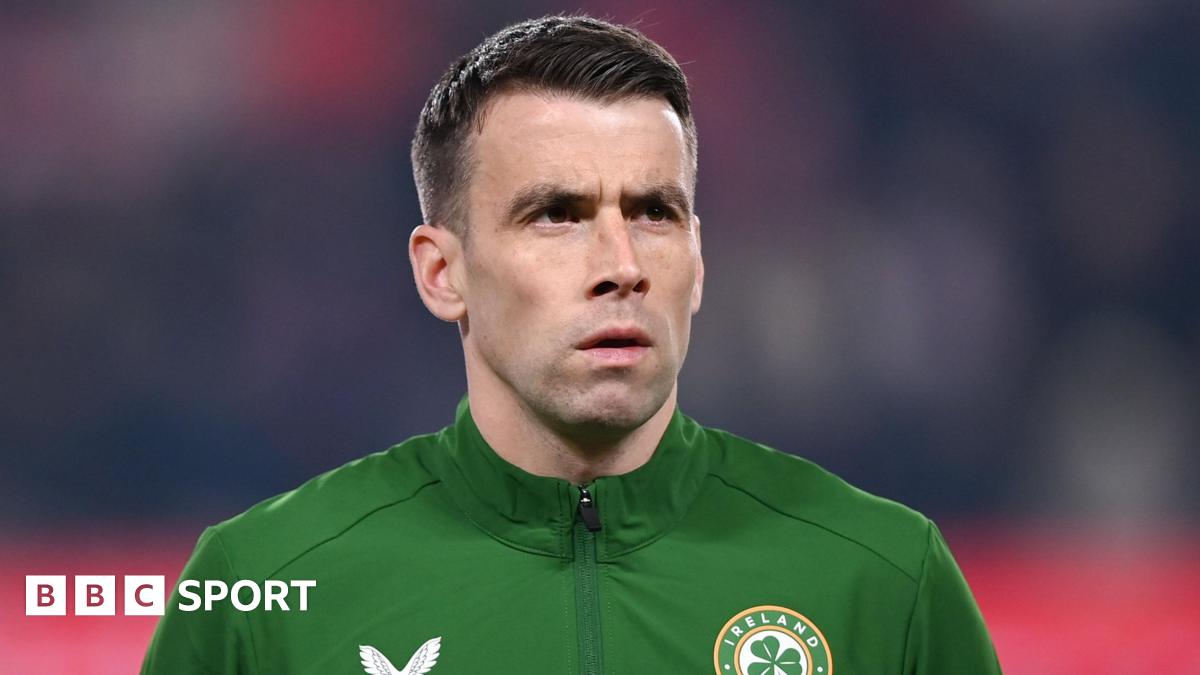
When Republic of Ireland manager Heimir Hallgrimsson stood before the press this week, his words carried the heavy weight of an inevitable conclusion. He spoke of "big respect" for Seamus Coleman.
He talked about how the veteran defender has "given everything" to his country's cause.
It was a eulogy for a tournament that hasn't even started yet.
Ireland's hopes of reaching the 2026 World Cup in North America are officially dead. The expanded 48-team format was supposed to be the golden ticket. Instead, it has merely highlighted how far the national team has fallen behind the rest of Europe.
For a nation starved of major tournament football, the mathematical elimination is a bitter pill. But the tragedy isn't just about the collective failure of the squad. It is intensely personal.
Seamus Coleman, the boy from Killybegs, the £60,000 bargain from Sligo Rovers, the relentless driving force on the right flank, will finish his career without ever playing on football's biggest stage.
The Club Contrast
To understand the deep injustice of Coleman's international timeline, you have to look at the brutal contrast between his club peak and his country's structural decline.
He arrived at Goodison Park in 2009. By the early 2010s, he had established himself as one of the most dynamic, destructive attacking full-backs in the Premier League.
Under David Moyes, he was a force of nature. When Roberto Martinez took over, Coleman added devastating final-third production to his tireless running. The combination of Leighton Baines on the left and Coleman on the right gave Everton a wide threat that rivalled elite Champions League squads.
But while Coleman was surging, Irish football was rotting from the inside out.
The Football Association of Ireland was chronically mismanaged. The domestic league was starved of funding. The grassroots production line that previously gave the world Roy Keane, Damien Duff, and Robbie Keane had simply stopped working.
Coleman inherited the captain's armband in a dark, regressive era.
He was asked to lead squads totally devoid of top-tier technical quality. Instead of flying down the wing to deliver crosses for elite strikers, he spent his international breaks trying to plug gaping holes in a sinking ship.
He played in teams managed by Martin O'Neill that relied on chaotic long balls and desperate defending. He was tasked with carrying the ball out of defence because the midfield simply could not retain possession under pressure.
A Wasted Weapon
When you look at comparable nations during Coleman's era, the failure of the Irish system becomes even more glaring.
Look at Wales. They had Gareth Bale and Aaron Ramsey, true. But they built a rigid, incredibly effective system around those players that maximised their strengths. They qualified for major tournaments. They went on deep runs.
Look at Iceland, Hallgrimsson's own former team. A tiny population, but a fiercely united squad that shocked England and reached the quarter-finals of Euro 2016.
Ireland had an elite, Champions League-level full-back in Seamus Coleman. They had a genuinely dominant force on the right side of the pitch.
Instead of building a tactical system that allowed him to push high and deliver early crosses into the box—the exact system that made him so devastating for Everton—Ireland continually forced him into deep defensive blocks.
He was constantly asked to defend two-on-one situations because the right winger ahead of him wouldn't track back. He was expected to win defensive headers against towering centre-forwards at the back post because the central defenders had lost their men.
It was a profound waste of an attacking weapon.
In international football, you have to hide your weaknesses and amplify your strengths. The FAI management over the last decade did the exact opposite. They exposed their weak midfield while completely neutralising their best wide player by pinning him back in his own defensive third.
The 2017 Turning Point
Any retrospective of Coleman's career has to stop in March 2017. It is the defining line between his athletic peak and his veteran reinvention.
Ireland were playing Wales at the Aviva Stadium in a brutal, ugly qualifier. Then came the challenge from Neil Taylor.
The double leg break was horrific. It echoed across the stadium. It was the kind of catastrophic injury that ends careers entirely, especially for wide players who rely heavily on explosive, short-area acceleration to beat a man.
Coleman was 28 years old. He was arguably at the absolute summit of his physical powers.
Most modern players never truly recover from an injury of that magnitude. They lose a decisive yard of pace. They hesitate going into fifty-fifty tackles. They start second-guessing their own bodies.
Coleman just went to work. He spent nearly a year in gruelling, isolated rehabilitation.
When he returned, he was forced to evolve. The blazing, lung-busting overlaps were slightly less frequent. But he compensated with elite defensive positioning, dark-arts aggression, and a sheer, terrifying force of will that commanded absolute respect from every single player who shared a dressing room with him.
He became a different kind of defender. He became a streetfighter.
The Tactical Chaos
The failure to reach the 2026 World Cup stings particularly hard because of the tactical whiplash the squad has endured over the last five years.
When Stephen Kenny took charge, he promised a revolution. He wanted to rip up the archaic Irish playbook. He wanted them to play out from the back, to press high, to dominate possession.
It was a noble, romantic idea. It was also completely delusional.
Kenny was trying to execute Manchester City tactics with players operating in the lower half of the Championship. The transition was a disaster.
Defenders like Shane Duffy were suddenly asked to play intricate passes through a high press. The midfield, anchored by the hard-working but technically limited Josh Cullen, was constantly overrun.
Through all of this, Coleman suffered. He was often rotated or played out of position in a back three. The rise of Matt Doherty at Wolves temporarily threatened his place, but Doherty's defensive frailties always forced managers to return to Coleman when things got tough.
The Kenny era brought humiliating defeats. Losing to Luxembourg at home. Getting torn apart by Greece.
Every time the system collapsed, Coleman was the one marched out in front of the television cameras. He never hid. He never threw Kenny or his teammates under the bus. He absorbed the national anger, took the criticism squarely on his own shoulders, and promised they would work harder.
The Hallgrimsson Pragmatism
Hallgrimsson was brought in specifically to stop the bleeding. The Icelandic manager is a pragmatist. He knows how to organise a rigid, hard-to-beat structure.
But he arrived far too late to salvage the current World Cup campaign.
The squad he inherited is severely lacking in attacking firepower. Evan Ferguson is a brilliant prospect, but he is young and constantly isolated. Chiedozie Ogbene offers genuine pace, but lacks consistent elite delivery.
Hallgrimsson has tried to make Ireland difficult to break down again. He has abandoned the possession-based fantasy of his predecessor.
But pragmatic football requires absolute defensive perfection to succeed. When you only create one or two big chances a game, you simply cannot afford to make mistakes at the back.
Ireland make mistakes. Consistently.
The recent qualifiers proved it. They lack the concentration required to grind out 1-0 wins away from home against second-tier European opposition.
Hallgrimsson's admission that the dream is dead is just a statement of obvious mathematical fact. But his comments about Coleman reveal a deeper truth about the state of the dressing room.
"He has given everything," Hallgrimsson said.
It is almost an understatement. It feels entirely inadequate for what Coleman has actually sacrificed. He gave pieces of his physical and emotional self to a national team setup that rarely, if ever, matched his punishing standards.
The Leadership Vacuum
Beyond the tactical missteps, the impending departure of Coleman from the international stage leaves a massive leadership vacuum in the Irish dressing room.
Modern football produces brilliant athletes, but it produces very few genuine leaders. The academy systems polish players technically but often strip them of the rugged, abrasive edge that is required to survive in the trenches of international qualification.
When Roy Keane retired, the armband eventually found its way to Robbie Keane, then briefly others, before landing on Coleman.
He was never the loudest player off the pitch. He didn't write controversial autobiographies. He didn't go on television as a pundit and tear into his peers.
His leadership was entirely action-based. It was the way he sprinted seventy yards to cover a mistake made by a nineteen-year-old debutant. It was the way he confronted referees when his younger teammates were being bullied.
Who steps into that void now?
Josh Cullen is a quiet, diligent worker. Nathan Collins has the physical presence but is still prone to disastrous lapses in concentration. Evan Ferguson is too young to carry the emotional weight of a crumbling national team.
The truth is, there is no heir apparent.
Hallgrimsson's praise is telling because it highlights the isolation of Coleman's standards. When a manager praises one player's commitment so heavily after a failed campaign, it operates as a silent, damning criticism of the rest of the squad.
Coleman demanded a level of professionalism that many of his international teammates simply couldn't comprehend.
The Inevitable Goodbye
You watch him play for Everton now, even in his late thirties, and the intensity remains genuinely terrifying.
He barks at referees. He snaps into sliding tackles against wingers who were in primary school when he made his Premier League debut. He drags an incredibly average Everton side through matches through sheer stubbornness.
He treats every single fifty-fifty challenge like a referendum on his personal honour.
That is the player Ireland is about to lose forever.
The cruelty of professional football is that it rarely affords perfect, cinematic endings. There will be no farewell tour on the grandest stage. There will be no summer weeks in New York, Los Angeles, or Dallas.
When the World Cup kicks off on June 11, Coleman will be watching from home, probably doing rehab exercises on a treadmill.
Players like Lionel Messi get their crowning moments. Cristiano Ronaldo gets his infinite farewell tours. But for the vast majority of professionals, the end comes quietly in a cold press room, often accompanied by the bitter taste of missed qualification.
Ireland must now face a terrifying reality. You can scout a new right-back. You can probably find a dual-national eligible player who is currently younger, faster, and more technically gifted in the final third.
But you cannot manufacture a Seamus Coleman.
You cannot teach a player to care that deeply. You cannot train the kind of desperate, clawing leadership that makes international managers speak about you with such quiet reverence.
Hallgrimsson knows exactly what he is losing. The Irish supporters who travel to away games know what they are losing.
The World Cup dream is dead. And the man who deserved it most is finally running out of time.
It is a damning indictment of the structures around him that his prime years were spent fighting fires for the FAI rather than fighting for trophies on the pitch.
He deserved a team that matched his ambition. He deserved an association that didn't squander his prime.
He gave them absolutely everything. They just didn't have the competence to give him anything back.
Read Next
- England's World Cup dream is dying in Thomas Tuchel's tactical wasteland
- Wales found the 86th minute limit of Bellamy's chaos while Gyokeres hit a new gear
- England's Friday disaster means the WSL derby carries the weekend
- Roberto Martinez is taking a massive gamble with Portugal
- 🏆 World Cup 2026 — Full Coverage Hub
Adidas Trionda League Ball - FIFA World Cup 2026
Train like the pros with the official 2026 World Cup design.
Frequently Asked Questions
What did Hallgrimsson announce about Ireland's World Cup hopes?
Why is Ireland's 2026 World Cup elimination especially disappointing?
How did Seamus Coleman perform during his prime years at Everton?
What challenges did Seamus Coleman face as the Irish national team captain?
How does Ireland's national team performance compare to nations like Wales?
More Coverage

Spurs face a relegation decider while Cristian Romero watches Belgrano
5 days, 6 hours agoCristian Romero trying to skive off to Argentina is peak Spurs comedy
5 days, 7 hours agoWhy Argentina's World Cup title defense is doomed to fail
6 days, 15 hours agoManuel Neuer's World Cup Return is the Funniest, Cruelest Joke in Football History
1 week, 1 day agoEmi Martínez secured Villa's trophy with a broken finger
1 week, 1 day agoTop 10: The Moments Defining the 2025-2026 Season
1 week, 2 days agoMore Analysis
World Cup dream over: Everton face ruthless choice on Seamus Coleman's future
2 months ago
Seamus Coleman is hanging on, but the Republic of Ireland is at a crossroads
2 days, 6 hours ago
Where Séamus Coleman goes next after 17 years at Everton
2 weeks ago
Ireland's World Cup Dream Dies in Prague, Hallgrimsson Laments 'Pain'
2 months ago