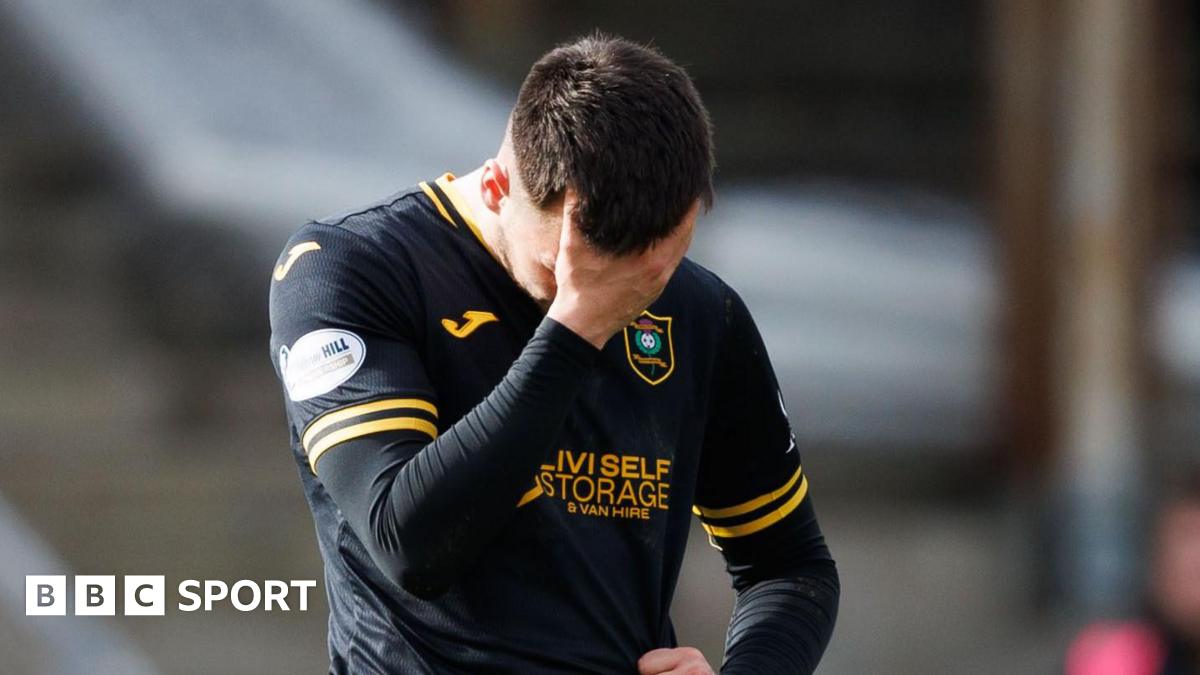
The 0.36 Draw Coefficient and the end of the Brown era
In the high-stakes theater of the Scottish Championship, 'mutual consent' is often the polite euphemism for a statistical dead end. The news that Scott Brown has stepped down as Ayr United manager comes on a Monday morning when the spreadsheets at Somerset Park have finally stopped making sense. While the headline will focus on the exit of a Celtic icon, the autopsy of his 797-day tenure reveals a project that became trapped by its own tactical volatility and a staggering lack of continuity.
To understand why this partnership dissolved today, on March 30, 2026, one must look at the number 15. That is how many times Ayr United have shared the points in their 41 matches this season. A 15 draws in 41 matches record translates to a 36.5% stalemate rate—the highest in the division. For a manager who built his playing career on high-intensity, winner-take-all aggression, his coaching identity at Ayr became defined by an inability to turn single points into three. It is a mathematical ceiling that no promotion-chasing side can survive.
The decline is even more stark when mapped against his debut full campaign. In the 2024/25 season, Brown’s side were the division’s great entertainers, or perhaps its most reckless gamblers. They finished 3rd with 18 wins, but the underlying data suggested they were walking a tightrope. They scored 63 goals but conceded 57—a defensive record more befitting a team in the bottom half than a promotion contender. This season, that balance tipped. The goals dried up as opponents figured out the pressing triggers of Brown's 3-5-2, yet the defensive fragility remained a constant, haunting presence.
The Recruitment Carousel and the loss of George Oakley
Data-driven recruitment is only as effective as the cohesion it produces. Under Brown, Ayr United became a revolving door. Since his appointment in January 2024, the club has signed over 30 players. That is an average of one new face every 26 days. While this high-turnover strategy initially brought energy, it ultimately eroded the tactical muscle memory required to navigate the Championship’s physical demands. You cannot build a defensive block when the personnel changes as often as the Scottish weather.
The xG deficit in the post-Oakley era
The departure of George Oakley, who notched 16 goals in the 2024/25 campaign, left a hole that the subsequent 30 signings failed to fill. Last season, Ayr averaged 1.75 goals per game; this season, that figure has plummeted to 1.12. The Expected Goals (xG) data shows that while Ayr are still creating similar volume—roughly 1.45 xG per 90—their conversion rate has fallen by 28%. They are getting into the zones, but they lack the clinical edge that Oakley provided. Brown’s tactical insistence on overloading the flanks with high wing-backs often left his central strikers isolated against low blocks, a flaw that was ruthlessly exposed by the likes of Livingston and Partick Thistle.
We saw the peak of this system in the 8-0 win over Broxburn Athletic in January 2025, a match where every tactical lever Brown pulled worked perfectly. But that result was an outlier. More representative of the systemic issues was the 5-0 loss to Livingston just three months later. That afternoon in West Lothian, Ayr’s 3-5-2 was dismantled by simple diagonal balls that exploited the space behind the wing-backs. Brown’s refusal to adjust his defensive line, which sat an average of 42 meters from his own goal, was a gamble that failed more often than it succeeded in 2026.
Tactical rigidity in a fluid league
The hallmark of a successful Championship manager is the ability to adapt when the league 'books' you. By mid-2025, every analyst in Scotland knew how to beat Brown’s Ayr. You sat deep, absorbed the initial 20-minute press, and waited for the inevitable transition opportunity. The numbers back this up: Ayr conceded 42% of their goals this season from counter-attacks following their own corners or set-pieces. This is a staggering inefficiency for a side that prides itself on tactical preparation.
The final 100-game verdict
As BBC Sport reported this morning, the exit is mutual, but the trajectory was singular. Brown leaves with an 43.3% win rate across 104 games. It is a respectable figure in isolation, but the trend line is pointing down. His first 50 games yielded a 50% win rate; his last 50 have struggled to clear 36%. In a league where the margin between the play-offs and mid-table obscurity is often a single late goal, Brown’s side became specialists in the 1-1 draw. They dominated territory, often seeing 62% of the ball, but failed to penetrate the final third with any meaningful variety.
Critically, the 'Somerset Park Glass Ceiling' became a reality under his watch. Despite the heavy investment in 30+ players, the club’s points-per-game (PPG) against the top four sides in the division fell from 1.2 in his first year to a dismal 0.65 in 2026. If you cannot beat your direct rivals, you cannot expect to lead a club of Ayr’s ambition into the Premiership. The 1.58 goals conceded per game during his first full season was a warning sign that went unheeded. Instead of tightening the screws, Brown doubled down on an expansive style that his squad simply wasn't disciplined enough to execute.
Why the stalemate had to break
Football is a game of patterns, and the pattern at Ayr had become a flat line. The decision to part ways now, with the 2025/26 season entering its final month, allows the board to reset before the summer recruitment window—another window they cannot afford to waste on a 15th overhaul in two years. Brown remains a figure of immense charisma and potential, but his time at Somerset Park serves as a cautionary tale: charisma does not win games when your defensive structure is leaking more than 1.5 goals per match.
The Honest Men now look for a successor who can bring the one thing the Brown era lacked: stability. The statistical noise of the last two years—the 8-0 highs and the 5-0 lows—has been exhausting for a fan base that values grit as much as flair. Brown leaves as a man who tried to play 'big club' football in a 'small margins' league. The math, in the end, was his toughest opponent, and it is an opponent that never blinks.