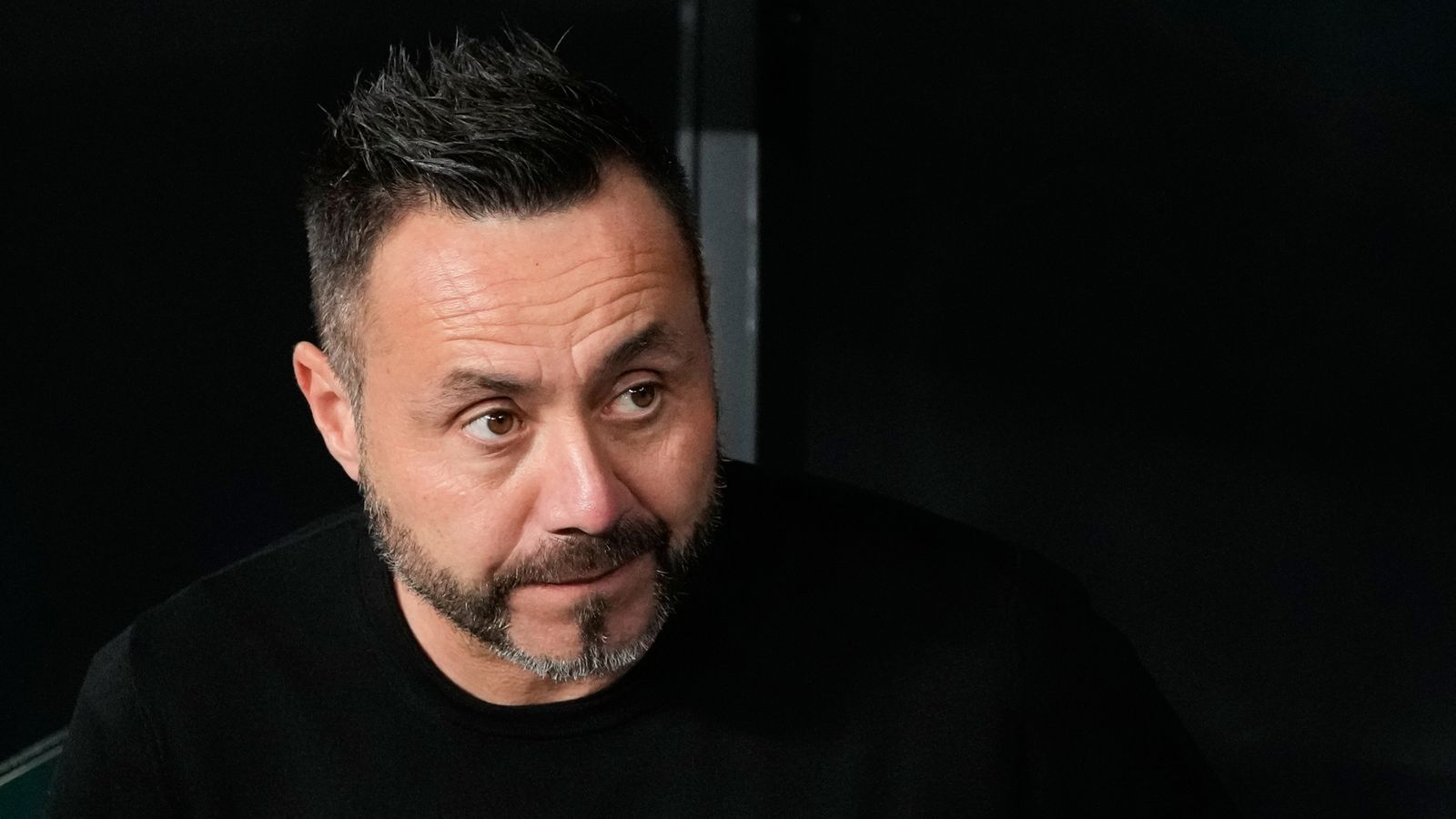
Tottenham and De Zerbi are a tactical powder keg waiting to explode
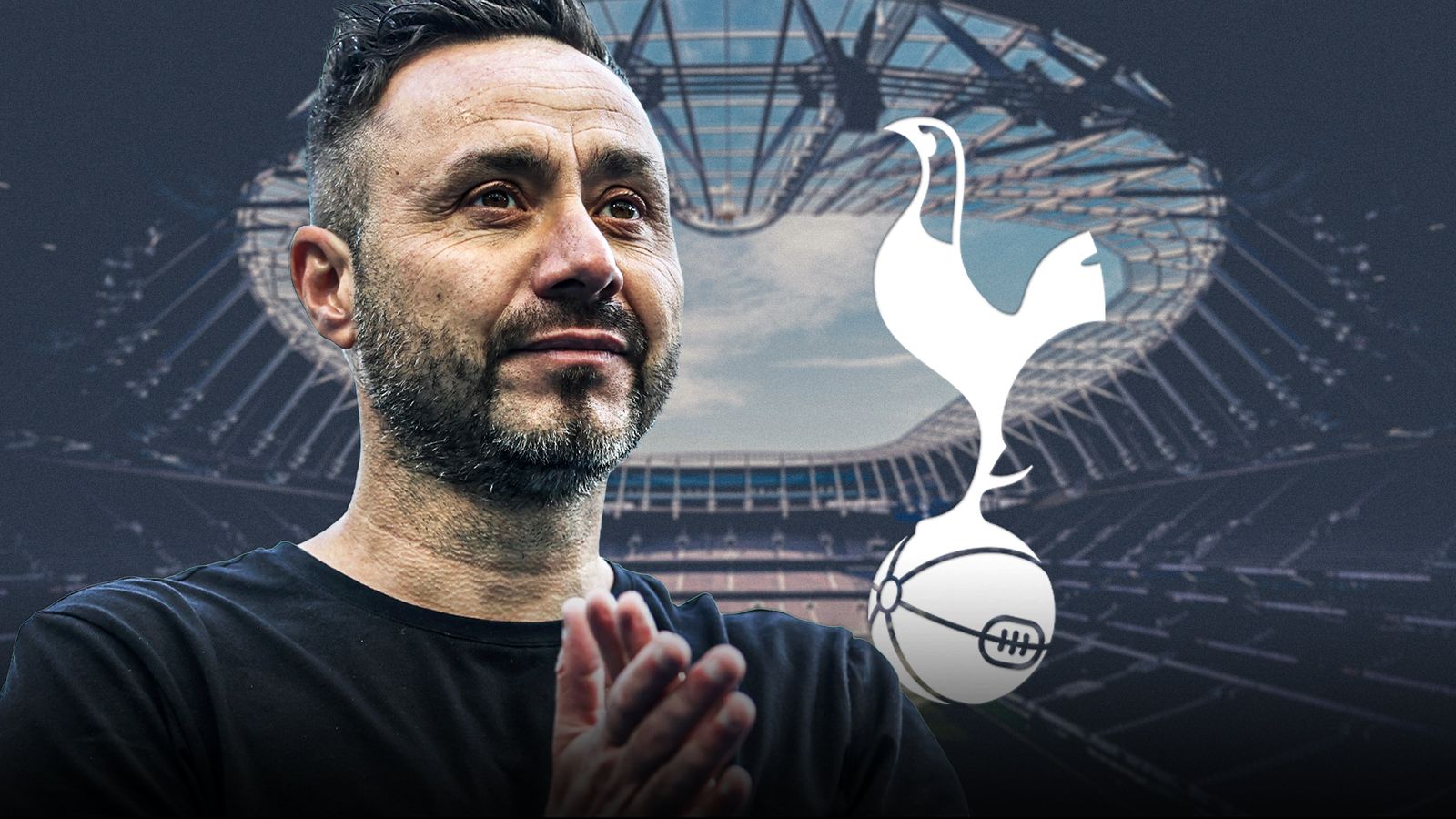
The inevitable collision of two volatile forces
The news that Tottenham Hotspur have opened formal discussions with Roberto De Zerbi should surprise absolutely nobody who has followed the trajectory of Daniel Levy’s managerial appointments over the last decade. It is a move that feels both inevitable and terrifyingly volatile. De Zerbi represents a brand of uncompromising football that either results in a 4-0 masterclass or a 5-1 collapse. For a Spurs side that has spent the 2025/26 campaign oscillating between brilliance and defensive fragility, the Italian is not a safe pair of hands. He is a high-octane accelerant.
As Sky Sports reported this morning, the talks are in the preliminary stages. However, the intent is clear. Levy is looking for a manager who can redefine the identity of the club after the stagnation of the last eighteen months. In De Zerbi, he finds a man who views the pitch as a chess board where every move is calculated to provoke a specific response from the opponent. It is a philosophy built on the 'bait'.
The central tenet of De Zerbi’s system is the provocation of the press. While most modern managers seek to bypass the opposition's first line of defense, De Zerbi invites it. He wants the opposition strikers to smell blood. He wants them to commit to the chase. By drawing the opponent deep into the Tottenham defensive third, he creates the very space he intends to exploit. It is high-wire act that requires nerves of steel and technical perfection from the center-backs.
The mechanics of the Italian bait
To understand why this is a gamble, one has to look at the 'sole-on-ball' technique that defined his Brighton tenure. De Zerbi’s players often stand still with their studs on the ball, waiting for a defender to engage. This is not arrogance. It is a tactical trigger. The moment the defender moves toward the ball, the passing lanes behind them open. In a 4-2-4 structure that often morphs into a 2-4-4 in possession, the two central midfielders act as the pivot points for this transition.
For Tottenham, this presents an immediate personnel question. Yves Bissouma thrived under similar patterns before, but the current Spurs squad has looked uncomfortable when asked to play out under extreme duress. De Zerbi’s teams averaged a league-high 18.4 passes per sequence during his peak years in England. If Micky van de Ven and Cristian Romero are the chosen pair to orchestrate this, they will be expected to complete vertical passes into the 'pockets' while facing their own goal. The margin for error is non-existent.
The 'third man' principle is the next phase. Once the press is broken, De Zerbi’s teams do not circulate the ball for the sake of possession. They attack with a verticality that is almost jarring. The ball goes from the center-back to a dropping midfielder, who immediately lays it off to a forward-facing teammate. This 'up-back-through' pattern is designed to eliminate entire defensive blocks in three seconds. It is the antithesis of the lateral possession seen under more conservative coaches.
The Maddison factor and the wingers pinned
James Maddison is perhaps the one player in the current Spurs squad who feels tailor-made for this. In a De Zerbi system, the 'number ten' is often required to operate in the half-spaces, acting as the link between the deep build-up and the explosive wingers. Maddison’s ability to turn in tight spaces and execute 'blind' passes into the channels would be weaponized. However, it also places a massive physical burden on him. He would be required to be the primary outlet for every high-risk pass coming out of the back four.
The wingers in this system are treated differently than they were under previous regimes. De Zerbi prefers his wide men to stay pinned to the touchlines, stretching the opposition backline to its absolute limit. This creates massive gaps between the opposition full-back and center-back. Son Heung-min, even in the twilight of his career, remains a master of exploiting these specific vertical corridors. But the system demands that the wingers do not come inside until the final third. It is a rigid positional discipline that can often feel restrictive to players used to more freedom.
There is also the question of the 'rest defense'. De Zerbi’s teams are notoriously vulnerable to the long ball over the top because their defensive line is often caught in a transitional state during the baiting process. During the 2023/24 season, Brighton conceded 62 goals, many of which came from simple direct play after a high turnover. For a Tottenham fanbase that is already scarred by defensive collapses at St James' Park and Anfield, this tactical trade-off might be hard to swallow. You are essentially trading defensive stability for the chance to score five goals a game.
The Levy and De Zerbi personality clash
Tactics aside, the most significant hurdle might be the boardroom. Roberto De Zerbi is not a 'company man'. He is famously outspoken about transfer policy and squad depth. At Brighton, he frequently clashed with the hierarchy regarding the timing of player sales. At Marseille, his demands for specific profiles led to significant friction within the first six months. Putting him in a room with Daniel Levy feels like bringing a blowtorch to a firework factory.
Levy has historically preferred managers who work within the existing structure—until he gets desperate. The appointments of Jose Mourinho and Antonio Conte were attempts to buy success through established personalities, and both ended in acrimony. De Zerbi is a different kind of challenge. He isn't interested in his 'legacy' or the 'brand'. He is interested in the purity of his tactical model. If the board does not provide the specific technical profile he requires for his double-pivot, he will tell the media exactly what he thinks before the week is out.
A critical observation must be made about De Zerbi's recent record: he has shown a worrying refusal to adapt when his primary plan is neutralized. Opponents have begun to realize that if you simply refuse to press his teams—if you sit in a deep block and ignore the 'bait'—the system can grind to a halt. We saw this in the latter half of his Brighton tenure where teams like Everton and West Ham sat deep and hit them on the break. De Zerbi’s response was usually to double down on the same patterns, leading to repetitive and predictable failures.
The verdict on the North London revolution
If the deal goes through, Tottenham will become the most watchable team in the Premier League overnight. They will also likely become the most chaotic. There is no middle ground with De Zerbi. You either buy into the 'automatisms' and become a slick, vertical machine, or you fail spectacularly because you lack the technical bravery to play a ten-yard pass while a striker is breathing down your neck. It is a move that acknowledges the 2025/26 season was a failure of identity.
The cost of this appointment will be measured in more than just the £10 million compensation package reportedly being discussed. It will be measured in the structural overhaul of the squad. Players who cannot handle the ball under pressure will be discarded regardless of their status. It is a ruthless approach that Spurs have lacked. But as we have seen with this club before, the higher the excitement, the harder the eventual fall. This isn't just a coaching change; it's a total philosophical gamble that could define the next five years of the club's history.
Tottenham fans should be excited, but they should also be very, very nervous. The 'De Zerbi ball' era in North London will either end with a trophy and a tactical revolution, or with the stadium half-empty as the opposition counters for a sixth goal. In a world of safe, corporate appointments, Levy has finally decided to roll the dice on a man who doesn't know how to play it safe. Whether that is brave or suicidal remains the biggest question in English football as we head toward the summer window.
Read Next
- Daniel Levy is about to gamble the house on Roberto De Zerbi
- Tottenham are finally considering the one thing they've spent years avoiding
- Tottenham cannot afford another hollow gamble in the dugout
- Spurs have sacked Igor Tudor, and the underlying numbers explain exactly why
- 🏆 Europa League Final 2026 — Full Coverage Hub
adidas FIFA World Cup 2026 Trionda Competition Ball
The official match-grade feel for the 2026 North American summer.
Frequently Asked Questions
How does Roberto De Zerbi's 'baiting' tactical system work?
What is the 'sole-on-ball' technique in De Zerbi's football?
Which formation does Roberto De Zerbi typically use in possession?
What is the 'up-back-through' passing pattern in football?
Why is Daniel Levy targeting Roberto De Zerbi for Tottenham?
More Coverage

Why Rafael Leao makes sense for United's rebuild
2 minutes ago
Why Liverpool must be wary of the Yan Diomande Bundesliga trap
3 hours ago
Raheem Sterling's arrest is a disaster for his career timeline
5 hours ago
Kieran Trippier is the exact veteran Wolves need right now
5 hours ago
Adam Wharton emerges as top summer target for Arsenal's midfield evolution
5 hours ago
Manchester United’s Summer Obsession: Why Inconsistency Defines the Strategy
5 hours agoMore Analysis
Tottenham are betting everything on De Zerbi’s high-wire tactical act
1 month, 4 weeks ago
Daniel Levy is about to gamble the house on Roberto De Zerbi
1 month, 4 weeks ago
Daniel Levy is chasing Roberto De Zerbi and it might actually work
2 months ago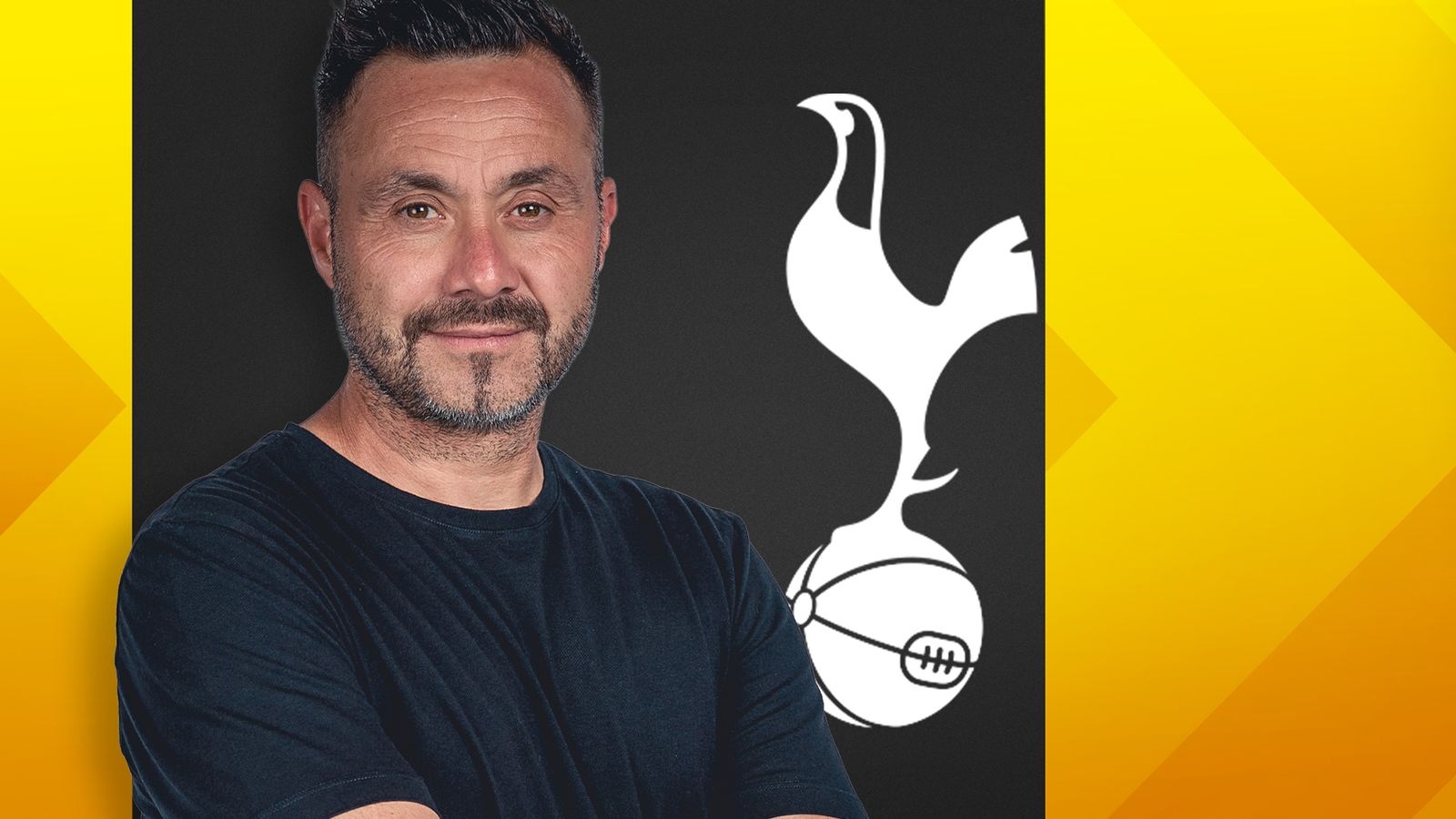
Roberto De Zerbi at Spurs is a beautiful disaster waiting to happen
1 month, 2 weeks ago
Roberto De Zerbi is about to learn that Spurs DNA is a myth
1 month, 2 weeks ago