The defensive foundation of a promotion
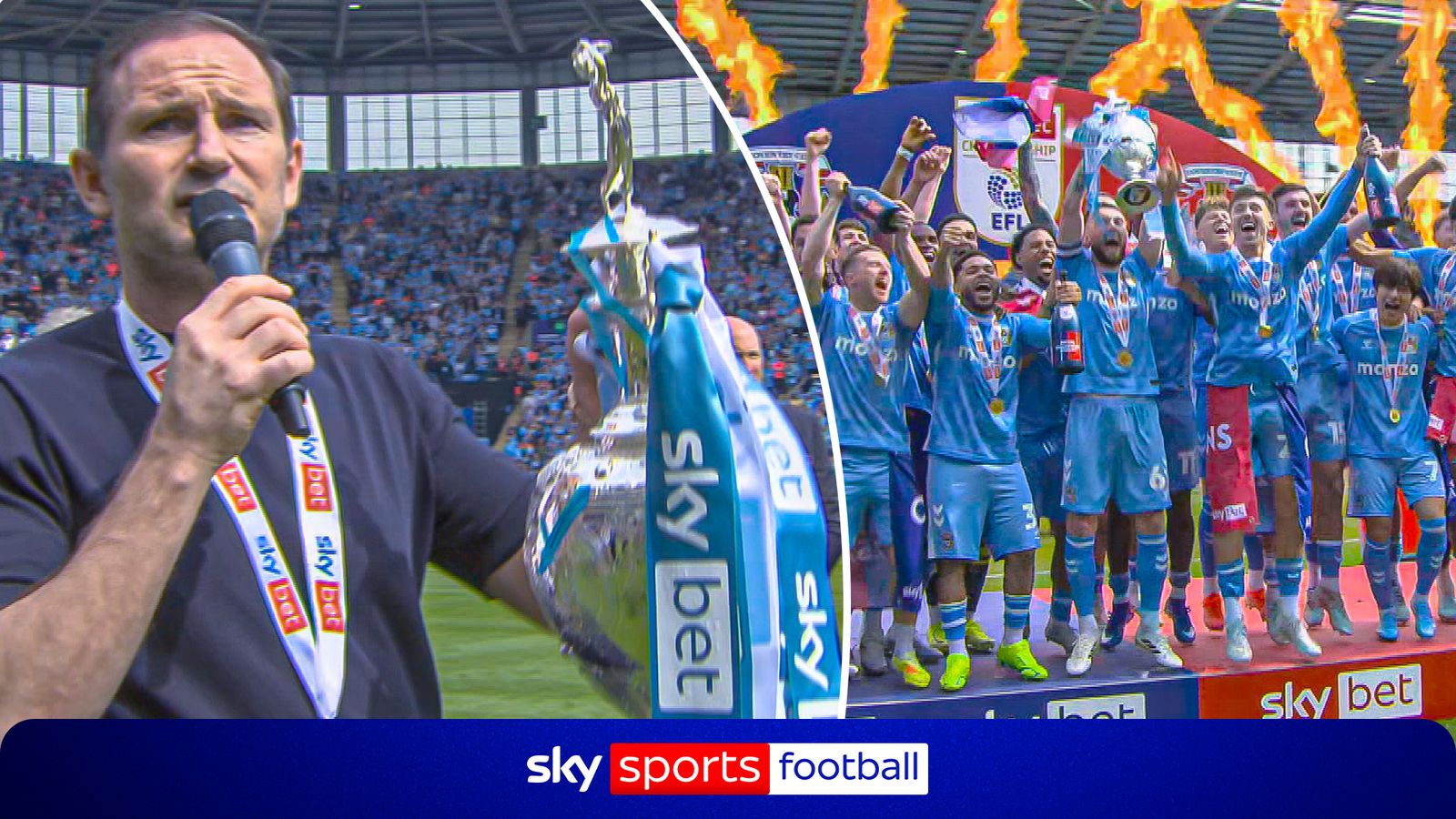
When Frank Lampard arrived at the CBS Arena, the skepticism was deafening. Yet, securing Coventry City's promotion to the Premier League with an astonishing 19 clean sheets has rewritten his managerial narrative. The numbers from this campaign tell a story of a coach who finally learned pragmatism.
The headline figure isn't the volume of goals scored. It is the defensive transformation. For a side that leaked goals heavily in transition last year, this represents a massive structural shift.
This defensive solidity wasn't a fortunate accident. Expected goals against (xGA) plummeted from 1.35 per game to a league-best 0.88. Lampard finally found a structural balance.
He binned the chaotic Chelsea press. Instead, he implemented a compact mid-block. This forced Championship opponents into wide, low-percentage crossing areas.
The center-back pairing became the bedrock. They won 68% of their aerial duals, neutralizing the direct approach favored by many second-tier sides. It was ugly. But it was ruthlessly effective.
Stepping out of the Robins shadow
Mark Robins remains a deity in Coventry. Following him was always going to be difficult. Robins built a side that was expansive and thrilling, but arguably too open for a sustained top-two push across 46 games.
Lampard had to change the philosophy without alienating a fanbase addicted to attacking football. He started by altering the possession metrics. Coventry averaged 56% possession, down slightly from the Robins era, but their pass completion in the final third rose to 79%.
They became methodical. Rather than relying on chaotic transitions, they suffocated teams with controlled possession. The ball circulation speed increased, particularly through the central areas.
Ben Sheaf averaged 64 successful passes per 90 minutes. More importantly, his progressive passes — those moving the ball at least 10 yards closer to the opponent's goal — jumped to 7.2 per game. He was the deep-lying metronome Lampard desperately lacked in his previous jobs.
But it wasn't flawless. There is a glaring issue with Lampard's in-game management that the numbers expose. In matches where Coventry went behind in the first half, their win percentage was a dismal 12%. The plan B was often non-existent.
The attacking and away efficiency
While the defense secured the promotion, the attack had to evolve. Ellis Simms and Haji Wright were forced to adapt. The system demanded more link-up play and less running blindly into channels.
Simms ended the campaign with 21 goals. However, his shot volume actually decreased. He took 2.4 shots per 90, down from 3.1 last season. The difference was location.
Lampard's system engineered higher-probability chances. The team's average shot distance moved three yards closer to the goal line. They stopped taking speculative efforts from outside the penalty area.
Wright, operating frequently from the left half-space, became a creative force. He contributed 11 assists alongside his 14 goals. His ability to isolate full-backs and deliver cut-backs was a recurring tactical pattern.
The combination of Simms' finishing and Wright's creation accounted for exactly half of Coventry's total league goals. It is a brilliant return. But it is also a glaring vulnerability. A Premier League injury to either player would completely derail this attack.
The away form anomaly
Promotions are rarely secured entirely at home. The CBS Arena was a fortress, but Coventry's away form was the true statistical outlier. They collected 41 points on the road, the highest total in the division.
This away dominance was built on a tactical switch. Lampard deployed a flexible 3-4-2-1 exclusively against top-half opposition. This allowed the wing-backs to completely control the flanks.
Milan van Ewijk was a revelation on the right. He completed 2.8 progressive carries per 90 minutes. He regularly broke opposition lines single-handedly.
The data paints a picture of an away side perfectly equipped for counter-attacking football. Their sequence time — the average duration of a possession spell — dropped by three seconds in away fixtures. They absorbed pressure and attacked with brutal efficiency.
In a pivotal away fixture in February, Coventry had just 34% of the ball. Yet, they generated an xG of 1.8 compared to their opponents' 0.6. It was a masterclass in drawing a team out and striking at the optimal moment.
Set-piece supremacy and the physical toll
Modern football is decided in the margins. Coventry recognized this. They turned set-pieces into a genuine weapon, scoring 16 times from dead-ball situations.
This was deliberate. Corner routines were highly varied, often involving near-post flick-ons to free a man at the back post. The xG per set-piece was a staggering 0.12, far above the league average of 0.08.
Yet, for all the tactical improvements, Lampard's reluctance to rotate remains a massive blind spot. The core starting XI played over 85% of available minutes. By late March, the physical toll was visible.
During a grueling four-game stretch, Coventry's pressing intensity dropped sharply. Passes allowed per defensive action (PPDA) rose from 11.2 to 14.5. They were leggy and incredibly fortunate to escape that period without dropping out of the automatic spots.
Lampard's distrust of his bench is a flaw that elite managers simply do not possess. In the Premier League, running a tight core into the ground will result in a rapid relegation.
A deserved achievement
Despite the valid criticisms of his rotation policy, the achievement cannot be understated. Taking a team from playoff heartbreak to automatic promotion requires immense managerial fortitude.
"It's right up there in my achievements," Lampard told Sky Sports amid the celebrations.
Coming from a player who defined an era of English football, that is a striking admission. He has reinvented himself. The tactical naivety of his early coaching days has been replaced by a hardened edge.
Coventry City are back in the big time. They did it with a £14 million net spend, outsmarting clubs armed with massive parachute payments. The data shows a team that was defensively elite and structurally sound.
The Premier League will ruthlessly expose any remaining tactical gaps. Lampard will need to find solutions for his substitution hesitations. But for this season, the numbers validate his redemption.
He built a machine that ground the Championship down over 46 games. Now, he has to prove he can do it against the tactical elite of world football. The real test is only just beginning.