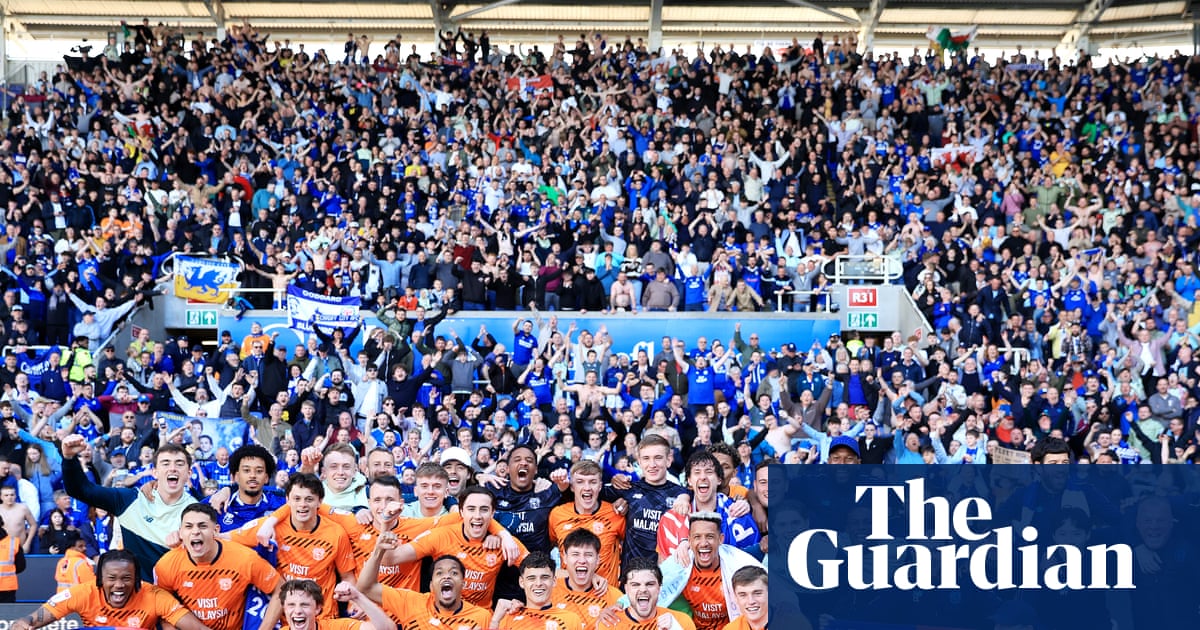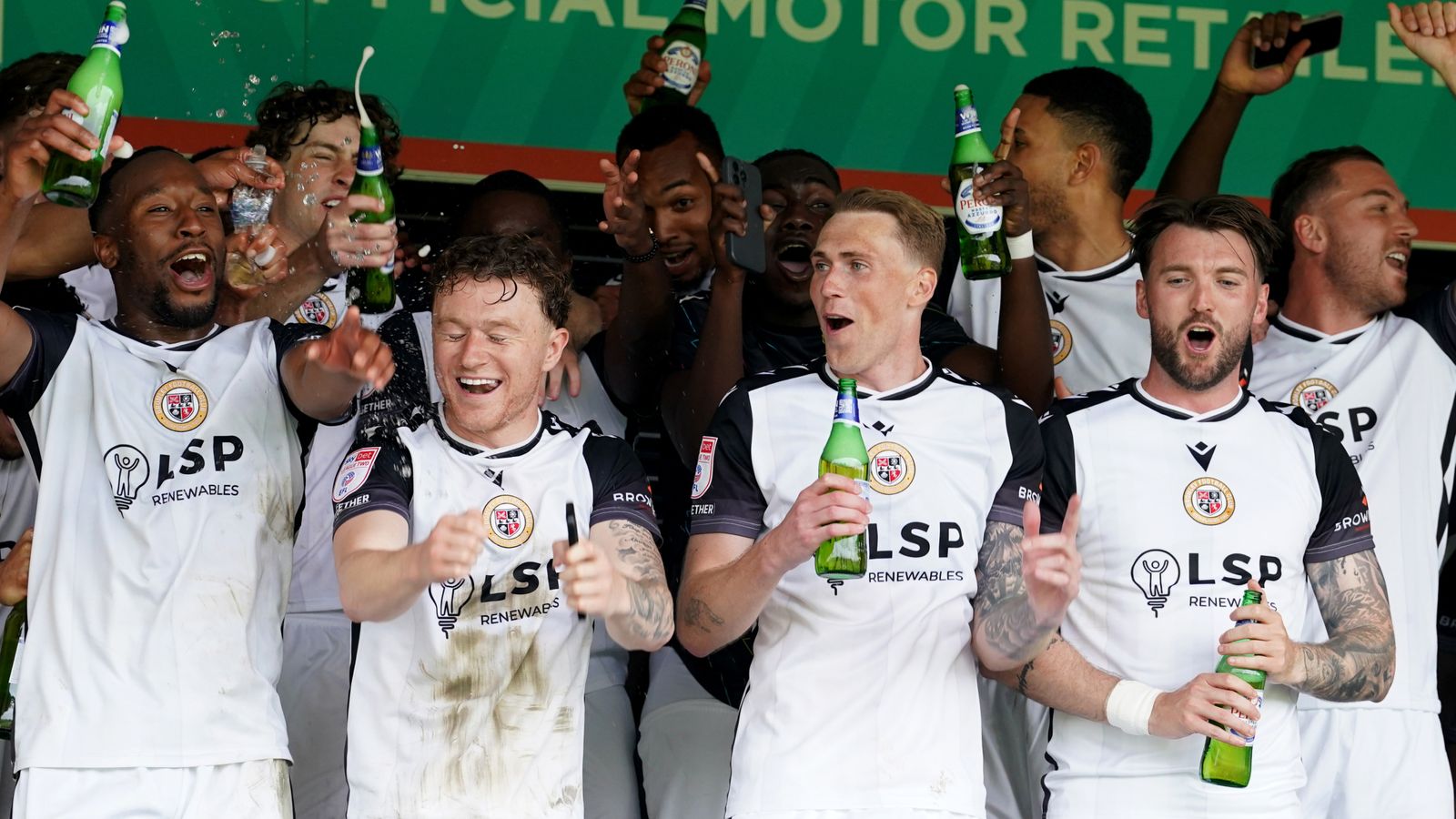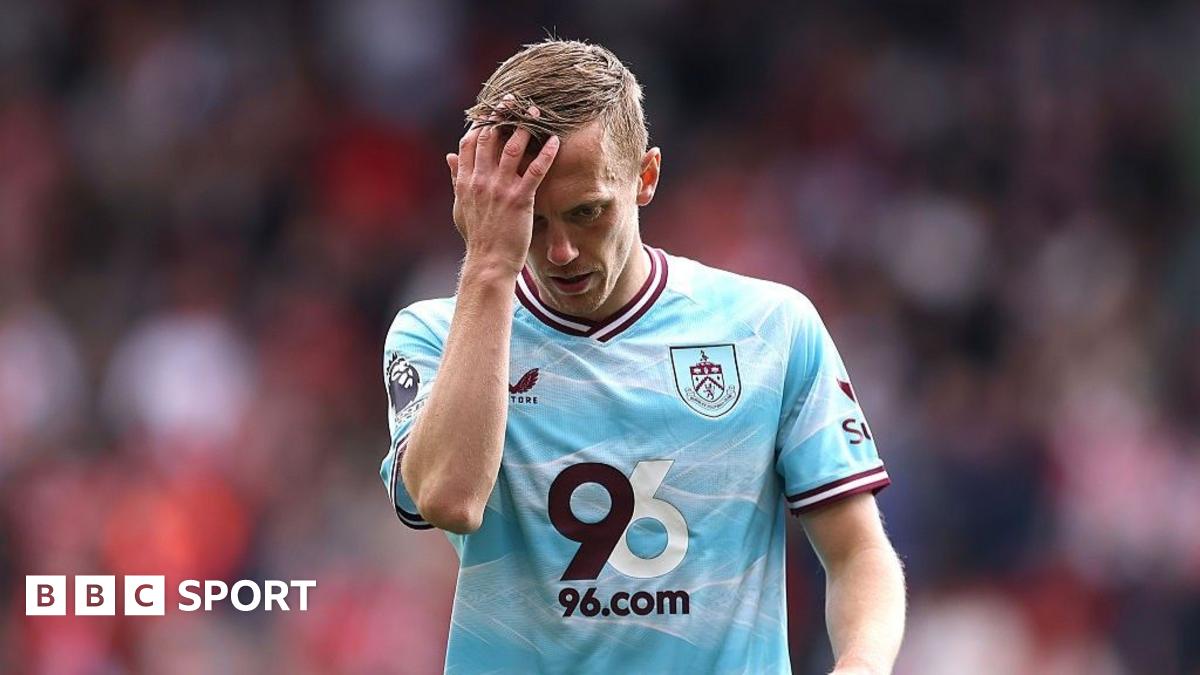
Welcome to the meat grinder
Mid-April in the English Football League is not for the faint of heart. It’s for the masochists. While the Premier League is busy debating VAR lines drawn by a guy in a shed near Heathrow, the EFL is serving up pure, unadulterated existential dread.
Look at the calendar. It’s April 18. Today is what Sky Sports is gleefully branding a "defining Saturday." Promotions. Relegations. Titles. It’s a broadcaster's dream and a season-ticket holder's absolute nightmare.
You wake up, you drink too much terrible coffee, and you stare at league tables until the numbers blur. 46 games is a ridiculous amount of football.
It’s a marathon run on gravel while people throw half-eaten pies at your head. And it all comes down to a few frantic hours this afternoon.
The financial cliff edge
Let's talk about the Championship first, because we always do. It is, without a shadow of a doubt, the most psychotic division in world football.
The gap between the Premier League and the Championship has turned into a canyon, heavily subsidised by parachute payments. You have clubs operating on budgets that wouldn't cover the catering at Manchester City, going toe-to-toe with recently relegated behemoths carrying squads packed with international talent. It creates an arms race that nobody can actually afford to win, yet everyone is forced to participate in.
When the broadcasters talk about "defining", they mean financial life or death. Missing out on promotion isn't just a bummer for the fans; for some of these boards, it’s a catastrophic failure of accounting. They’ve gambled the stadium, the training ground, and probably the club mascot's soul on reaching the promised land.
You see clubs posting massive operating losses in the Championship, desperately praying that a promotion windfall will wipe the slate clean. And what happens when they fail? Fire sale.
The best striker goes to Bournemouth for £15m. The highly rated academy kid gets scooped up by Chelsea to play in their loan army until he's 29. The manager who was a "tactical genius" in November gets sacked in the car park by May.
The playoff delusion
Then you have the playoff chasers. The teams sitting in seventh, eighth, and ninth. They are clinging to the mathematical possibility of a late surge.
Their managers will stand in front of the microphones today and spout the same tired cliches. "We treat every game as a cup final." "We just have to focus on ourselves." It's all absolute nonsense. They are aggressively refreshing the scores from other stadiums on an iPad hidden under a coat in the dugout.
The math of the Championship playoffs is enough to melt your brain. You’ll have a team in tenth place who realistically needs to win their last four games, overturn a massive goal difference deficit, and hope that three other teams simultaneously implode.
And their fans will still spend hours on internet forums mapping out the exact permutations where it happens. They convince themselves that if Millwall holds Sunderland to a draw, and Preston gets a red card against Stoke, the door is magically wide open.
The playoffs are the greatest invention in the history of sports television, purely because of the sheer volume of heartbreak they generate. You can finish 15 points clear of the team in sixth, batter them for 89 minutes in the semi-final, and then their left-back who hasn't scored since 2021 hits a 30-yard screamer. Your season is over. See you in Rotherham on a Tuesday night in November.
The cast of characters
Every EFL relegation scrap features the exact same cast of characters, and it drives me absolutely insane. It’s like watching a reboot of a movie where they just swap the kits.
First, you have the Firefighter Manager. The board panicked in mid-February, sacked the progressive young coach who tried to play out from the back with League Two center-halves, and brought in a gravel-voiced dinosaur. His entire philosophy consists of shouting instructions to bypass the midfield entirely and forcing the squad to run up hills in the rain.
Sometimes it works. Usually, it just results in a lot of 0-0 draws and terrible neck aches for the fans watching the ball sail through the sky.
Then you have the Premier League loanee. He’s 20 years old, he drives a car worth more than the stadium’s floodlight system, and he’s wearing gloves in April. He has incredible technical ability, but the moment a 34-year-old journeyman midfielder crunches him in the first five minutes, he mentally checks out.
He’s already thinking about his summer holiday in Dubai. He doesn't care if the club goes down; he’ll be back playing under-21s football in a state-of-the-art facility next month.
Conversely, you have the grizzled veteran. The guy who has been at the club for eight years. He has no cartilage left in his knees, but he’s throwing himself in front of shots like a Secret Service agent.
He’s the one doing the post-match interviews, looking like he hasn't slept since Christmas, apologizing to the fans. You can’t help but respect him, even if his legs have completely gone.
The trapdoor to irrelevance
But if you want to see actual, terrifying pressure, you have to look at the relegation battles in League One and League Two. This isn't about missing out on a payday; this is about sliding out of the Football League entirely.
Dropping into the National League is like falling into a black hole. It took Wrexham the GDP of a small nation and a Hollywood documentary to climb out. Once you're down there, playing against part-time plumbers who treat a tackle like a mixed martial arts sequence, the prestige of being a "former Football League club" means absolutely nothing.
This is where the real criticism needs to be aimed at club ownership. How many historic clubs have we seen mismanaged into oblivion by owners who treated a football institution like a shiny new toy before getting bored?
The EFL's fit and proper persons test has historically been about as rigorous as a bouncer at a student bar. We are seeing the consequences of that every single April. Points deductions, unpaid wages, transfer embargoes. The fans are the ones left holding the bag while the suits walk away without a scratch.
Let’s take a long, hard look at the bottom of League Two today. This is where the romance of football violently collides with the bleak reality of small-town economics. When a club drops out of the Football League, it is a localized tragedy.
The National League is a brutal wasteland. It is packed with former giants who thought they were "too big to go down." They arrogantly assume they will bounce right back up, relying on their fanbase and history.
But history doesn't win headers on a freezing pitch in Aldershot. The bottleneck to get back into the EFL is infuriatingly tight. Only two teams get promoted from the National League.
You can rack up 100 points, play incredible football for nine months, have a single bad afternoon in the playoffs, and you are trapped for another year. It is the most unforgiving bottleneck in European football.
And the owners of these League Two clubs staring at the drop zone? They are in full-blown panic mode right now. The difference in revenue between League Two and the National League is staggering.
Commercial sponsorships dry up. Broadcasting grants vanish. You go from being a professional football club to a glorified hobby project overnight.
Today, there are players stepping onto the pitch knowing that if they lose, they might not just get relegated; they might not get paid next month. The club staff—the ticket office workers, the groundsmen, the tea ladies—are all looking at these players, knowing their livelihoods depend on eleven guys trying to scrape a 1-0 win against a team with nothing to play for.
Television dictates the terms
And through all this misery, the broadcasters are having a field day. They package the panic, slap some dramatic music over a montage of grown men crying in the stands, and sell it back to us.
Don't get me wrong, I will be glued to the screen for all 90 minutes. I am a captive audience to the madness. But there is something deeply cynical about how the agony of relegation is commodified. It’s gladiator sports in a shiny studio.
They will cut to the studio, and some ex-pro in a very tight suit will tell us that the players "just didn't want it enough." As if desire is the only metric that matters when your center-back pairing has a combined age of 74 and your striker is playing through a sports hernia.
The reality is much uglier. Sometimes, the tactics are just terrible. Sometimes, the squad building was a disaster from day one. And sometimes, you just get robbed by a horrendous refereeing decision in the 88th minute of a freezing Tuesday night game that ends up costing you your league status.
A flawed masterpiece
Yet, for all its flaws, the EFL remains utterly captivating. It lacks the polish of the Champions League. You won't see a meticulously orchestrated false-nine system executed with flawless precision.
What you will see is a lot of desperate, panicked football. You will see a goalkeeper going up for a corner in the 94th minute of a 1-1 draw because a point isn't enough. You will see limbs in the away end when a 19-year-old local kid scores a tap-in to keep his boyhood club up.
There is no safety net here. There are no Super League breakaway plans to protect the incompetent. You earn your spot, or you fall down the ladder. It is brutal, it is unfair, and it is the best reality television on the planet.
So as we roll into this defining Saturday, spare a thought for the fans traveling five hours on a terrible rail network to watch their team potentially flush their season down the toilet. They don't do it for the glamour. They do it because they don't have a choice.
They are tethered to these chaotic institutions, riding the wave of euphoria and nausea all the way to the final whistle. And come August, regardless of what division they end up in, they will do it all over again.
Read Next
- Coventry’s improbable Premier League return hinges on tactical rigidity
- Blackburn are once again playing the role of the ultimate Championship spoiler
- The Premier League promotion trap is a billion-pound poison chalice
- Frank Lampard completes Coventry City turnaround with Premier League return
- 🏟 EFL Championship 2025-26 — Promotion Race & Play-Off Final Hub
- ⚽ EFL League Two 2025-26 — Promotion Race & Play-Off Final Hub