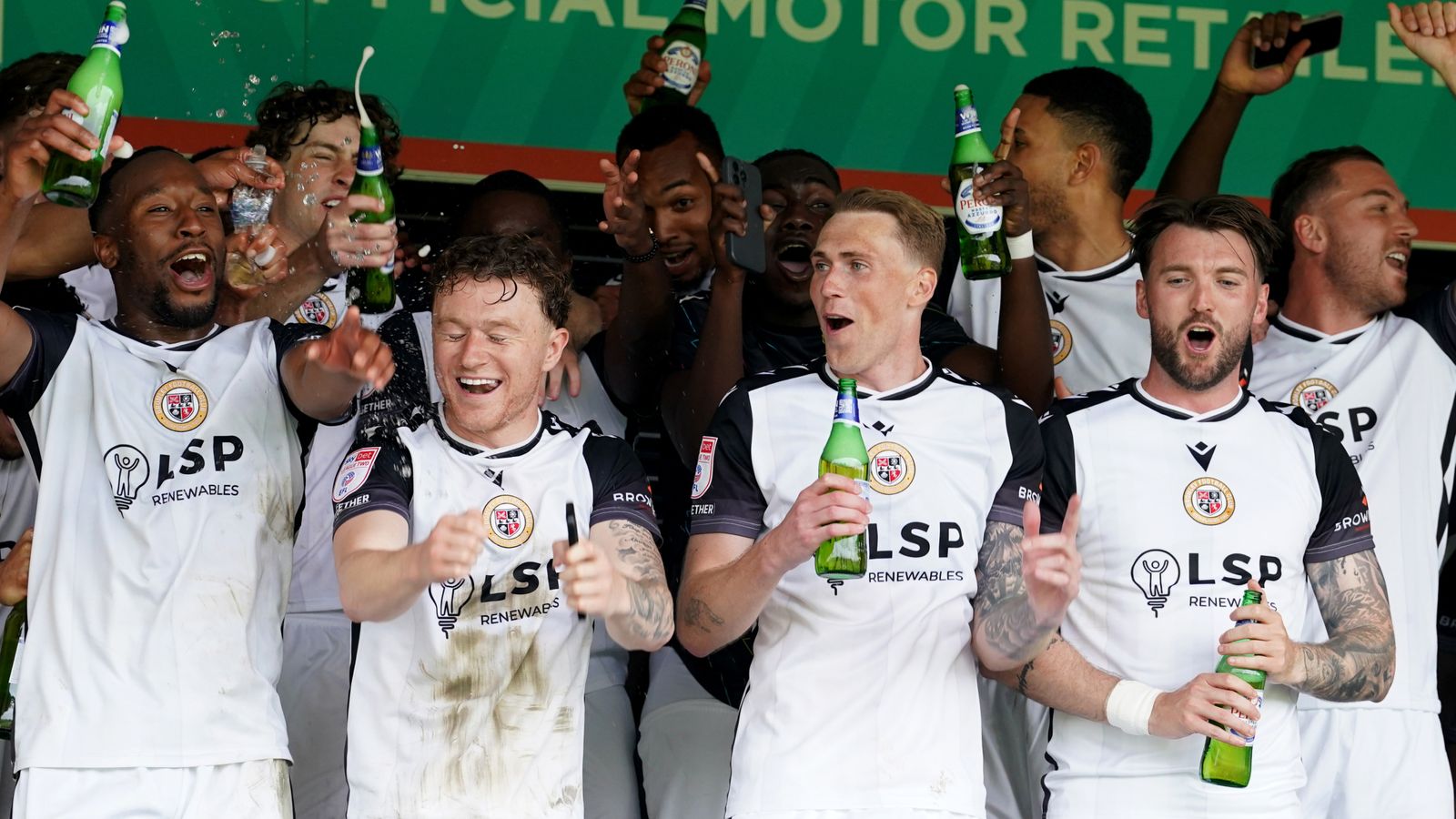
Steve McClaren in League Two is English football's strangest experiment
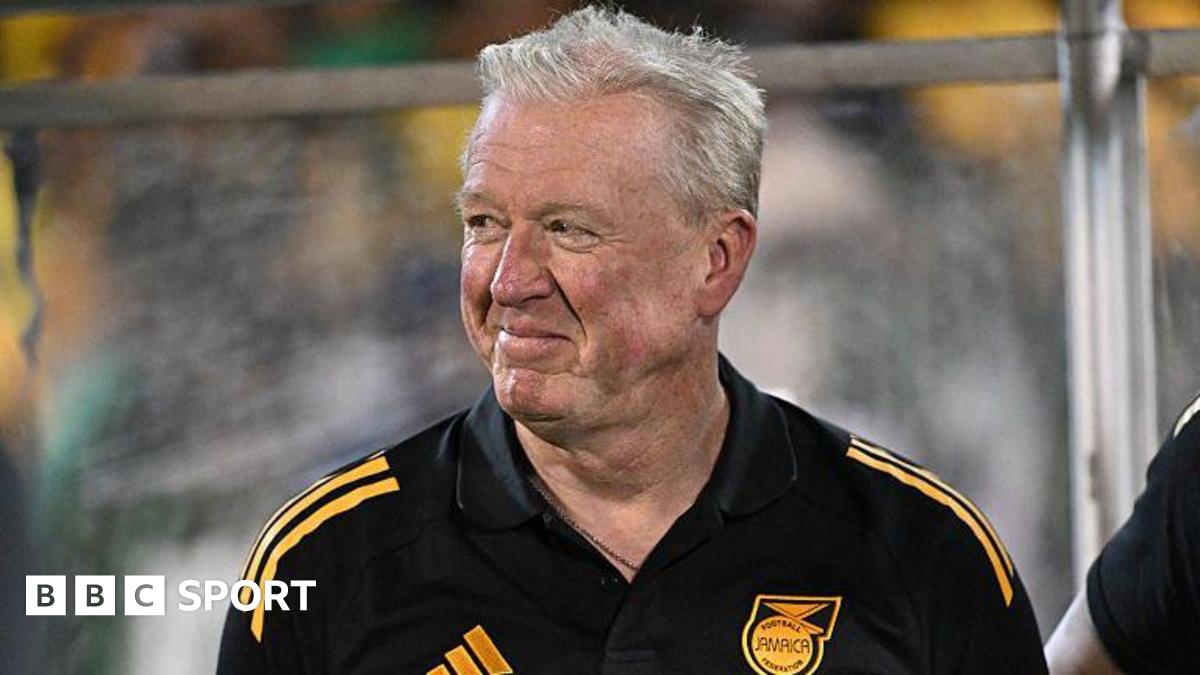
The news dropped on a quiet Wednesday morning and immediately scrambled the tactical consensus of everyone who follows the lower leagues. The BBC confirmed the appointment early today, marking a surreal new chapter for the Millers. Steve McClaren has taken a newly created role as head of football at Rotherham United. Yes, that Steve McClaren. The former England manager, the Eredivisie champion, the man who spent years refining tactical setups at Manchester United. He is heading to the New York Stadium.
He arrives at a club in absolute freefall. Rotherham have just been relegated to League Two. They are entering the basement of the English professional pyramid. This is not a standard managerial appointment. McClaren is not donning a tracksuit to scream at full-backs on a rainy Tuesday. He is taking an overarching executive role. He is tasked with defining the entire football operation from the boardroom down.
The anatomy of a freefall
Rotherham spent years as the ultimate yo-yo club. They were too strong for League One, entirely out of their depth in the Championship. That cycle was brutal but somewhat stable. Now, the floor has fallen out entirely. Dropping into League Two signifies a massive institutional collapse.
The squad is a disjointed mess. Rebuilding a team at this level requires brutal pragmatism. You need players who can survive a grueling 46-game league schedule without breaking down. You are not signing players for their progressive passing metrics or their expected threat. You are signing them because they don't tear a hamstring in December.
This is where McClaren’s appointment becomes truly fascinating. His entire career has been spent in environments where resources are plentiful. Even at Derby County or Nottingham Forest, he was working at the upper end of the EFL food chain. Now, he is dealing with free transfers, strictly capped wages, and the physical brutality of the fourth tier.
Tactical theory meets the fourth tier
McClaren’s reputation in the English game is complicated, but his tactical pedigree is undeniable. He was an early adopter of video analysis at Manchester United. At FC Twente, he implemented a structured, possession-heavy model that dominated the Netherlands. He understands the minute details of modern positional play.
League Two, however, operates in open defiance of positional play.
This division is a relentless war of attrition. Pressing structures are aggressive and chaotic. Pitches deteriorate rapidly through the winter months. If a head of football dictates that all youth and senior teams must build from the back, he is setting them up for immediate failure. Opposing strikers will set aggressive pressing traps, force the turnover, and punish the mistake.
Average pass completion in this division frequently hovers around 61.5% for mid-table sides. The ball spends a significant amount of time in the air. Midfielders are required to win second balls, not orchestrate elaborate passing triangles.
Consider the role of the defensive midfielder. In McClaren’s preferred systems at Twente and Manchester United, the holding midfielder is a metronome. He drops between the centre-backs, receives the ball on the half-turn, and breaks the first line of the opposition press with a vertical pass. He dictates the tempo of the entire match.
In League Two, the holding midfielder is a destroyer. The ball bypasses the midfield entirely during build-up play. Goalkeepers kick long. Centre-backs hit the channels. The primary function of a defensive midfielder at this level is to read the flight of the ball, anticipate the knockdown from the striker, and win the ensuing physical battle.
If McClaren scouts a holding midfielder who has elite passing range but shies away from physical contact, that player will be bypassed and bullied. The tactical demands are inverted. You do not control a game in League Two by keeping the ball. You control it by dominating the spaces where the ball is likely to drop. If McClaren tries to turn Rotherham into a fourth-tier Ajax, they will be relegated to the National League. The incoming manager must be given the freedom to play ugly, direct football when the situation demands it.
The mechanics of fourth-tier recruitment
How do you sign a player when you have no money? That is the question McClaren must answer immediately. In the Premier League, recruitment is a science. You filter targets by complex data models. You analyze their body orientation when receiving a pass.
In League Two, recruitment is often an exercise in damage limitation. You are signing players who possess inherent flaws. If a centre-back is dominant in the air and comfortable on the ball, he is playing in the Championship. If he is playing in League Two, he is either painfully slow or prone to catastrophic errors.
McClaren’s job is to build a squad out of these flawed parts. He has to identify which technical limitations Rotherham can safely hide within their defensive structure.
This requires a complete recalibration of his scouting eye. He is used to watching elite athletes process information in fractions of a second. Now, he must evaluate whether a released academy player has the raw physicality to deal with a towering target man from Newport County.
He cannot rely on deep data analytics. The event data available at this level is incredibly basic. There are no optical tracking cameras in every stadium mapping out passing networks. He will have to rely on traditional scouting networks, agents, and his own judgment. Many elite coaches fail in the lower leagues because they refuse to lower their technical standards. McClaren cannot afford that level of snobbery.
The Carrington connection
So why make this hire? Why bring an elite tactician into a division that demands grit over grace? The answer lies in his phonebook.
McClaren recently finished a stint at Manchester United under Erik ten Hag. He spent years building relationships across the top academies in the country. In League Two, the loan market is the great equalizer.
A club with a minimal transfer budget can secure promotion simply by borrowing two elite teenagers from a Premier League academy. McClaren has the direct lines to every top academy director in the country. When Rotherham call Manchester United or Arsenal asking for a highly-rated prospect, they aren't just another lower-league club. They are Steve McClaren calling in a favor.
This is the hidden value of the executive role. He isn't just designing a playbook. He is acting as a high-end broker. If he can secure three top-tier loanees for £0 in transfer fees, he justifies his salary instantly. An elite winger dropped into League Two can destroy an entire defensive block single-handedly.
Translating the training pitch to the boardroom
We also must examine the psychological transition from coach to executive. Being a head of football is not simply about signing players. It is about defining the culture, managing the medical department, and supporting the head coach in silence.
McClaren is a tracksuit manager at heart. He made his name as a brilliant field session coach. He is accustomed to being on the grass, blowing the whistle, and dictating the exact angle of a pressing trigger.
Stepping away from the pitch is notoriously difficult for career coaches. The urge to intervene is constant. When Rotherham are losing at halftime, McClaren cannot walk into the dressing room and change the shape. He has to sit in his seat in the directors' box and trust the manager he hired.
This dynamic has destroyed numerous football clubs. A prominent executive with a massive managerial ego will invariably clash with his head coach. The manager feels undermined. The players sense the divided authority. Performances collapse. McClaren must exhibit extreme restraint. His role is to build the machine, not to drive it.
The physical load in the lower leagues will also test his administrative skills. At Manchester United, McClaren had access to a sprawling sports science department. Players wore biometric trackers during every session. Sleep patterns were monitored.
At Rotherham, the reality is starkly different. Managing the physical load of a small squad through the brutal winter schedule is arguably the most vital part of a League Two campaign. When the fixtures pile up in February, with consecutive Tuesday night away games on waterlogged pitches, sports science often yields to sheer physical endurance. McClaren has to organize a medical setup that can handle this reality without the multi-million-pound budget he is accustomed to.
The pursuit of a final chapter
You have to wonder what drives a man with McClaren’s CV to step into this specific inferno. He has nothing left to prove financially. He has managed his country. He has won major honors abroad.
Taking the Rotherham job is not about money or prestige. It appears to be an attempt to write a definitive final chapter on his own terms. His managerial career has been defined by spectacular peaks and highly publicized valleys. The image of him holding an umbrella on the Wembley touchline still unfairly overshadows his genuine contributions to English tactical development.
Perhaps this is his way of stepping out of the shadows. After operating as a loyal assistant to Ten Hag, shielding the manager from dressing room friction, he now has his own project. If he can drag Rotherham out of the abyss and lay the foundation for a sustainable future, it would be a remarkable validation of his footballing intellect.
But the risk to his legacy is equally severe. If this project fails, the critics will immediately point to a lack of adaptability. They will argue that he was too rigid, too disconnected from the harsh realities of lower-league football to make a meaningful impact. The margins for error are terrifyingly thin.
A costly vanity project?
We have to look critically at the reality of Rotherham’s financial situation. This appointment reeks of desperation from a boardroom desperate for positive PR.
When a club drops into League Two, revenues plummet. Gate receipts drop. Television money evaporates. Allocating a massive chunk of a severely reduced budget to an executive role is an immense gamble. It feels like a boardroom trying to mask severe operational failures with a big-name hire.
A head of football only succeeds if the underlying setup can support his ideas. McClaren will not have an army of data scientists. He will have a skeletal staff and a mandate to fix a broken club on a shoestring budget. If the club fails to sign a proven goalscorer because the wage bill is tied up in executive salaries, the fanbase will revolt.
Rotherham have bet the future of the club on a massive contradiction. They are applying elite-level theory to fourth-tier mud. It will either be a masterstroke of modern restructuring, or the most expensive mistake in their history. Either way, the New York Stadium is about to host the strangest tactical experiment in English football.
Read Next
- Brighton's interest in Cresswell is weird, but it makes perfect tactical sense
- Why Tuchel's tactical rigidity will doom England at the World Cup
- Arsenal's 22-year title drought is dead. Bring on the coronation.
- The numbers behind Tottenham's final-day survival nightmare
- ⚽ EFL League Two 2025-26 — Promotion Race & Play-Off Final Hub
Adidas Unisex-Adult MLS Club Competition Soccer Ball
Professional-grade feel for your Sunday league or weekend park kickabout.
Frequently Asked Questions
What role has Steve McClaren taken at Rotherham United?
Why is Rotherham United currently in League Two?
How does Steve McClaren's background contrast with League Two?
What style of football is typical in League Two?
Why might a possession-based strategy fail at Rotherham United?
More Coverage

Why Liverpool must be wary of the Yan Diomande Bundesliga trap
3 hours ago
Manchester United are chasing ghosts with the Leao pursuit
7 hours ago
Michael Skubala ditching Lincoln for Bristol City is a massive gamble
7 hours ago
Why England must fear Panama's disciplined low block
8 hours ago
Arsenal vs PSG: Why tactical rigidity will determine the European champion
9 hours agoLincoln City just entered the weirdest experiment in League One history
11 hours agoMore Analysis
Lincoln City just entered the weirdest experiment in League One history
11 hours ago
John Terry at Colchester United is a massive gamble for everyone involved
1 month, 2 weeks ago
Lincoln City's joint-manager gamble is a blueprint for disaster
12 hours ago
Carlisle United turn to Rob Elliot to salvage their tactical identity
1 day, 13 hours ago
Forest Green’s obsession with optics is killing their promotion chances
1 month ago