
Transfer Tussles: Arsenal Builds, Liverpool Holds Firm
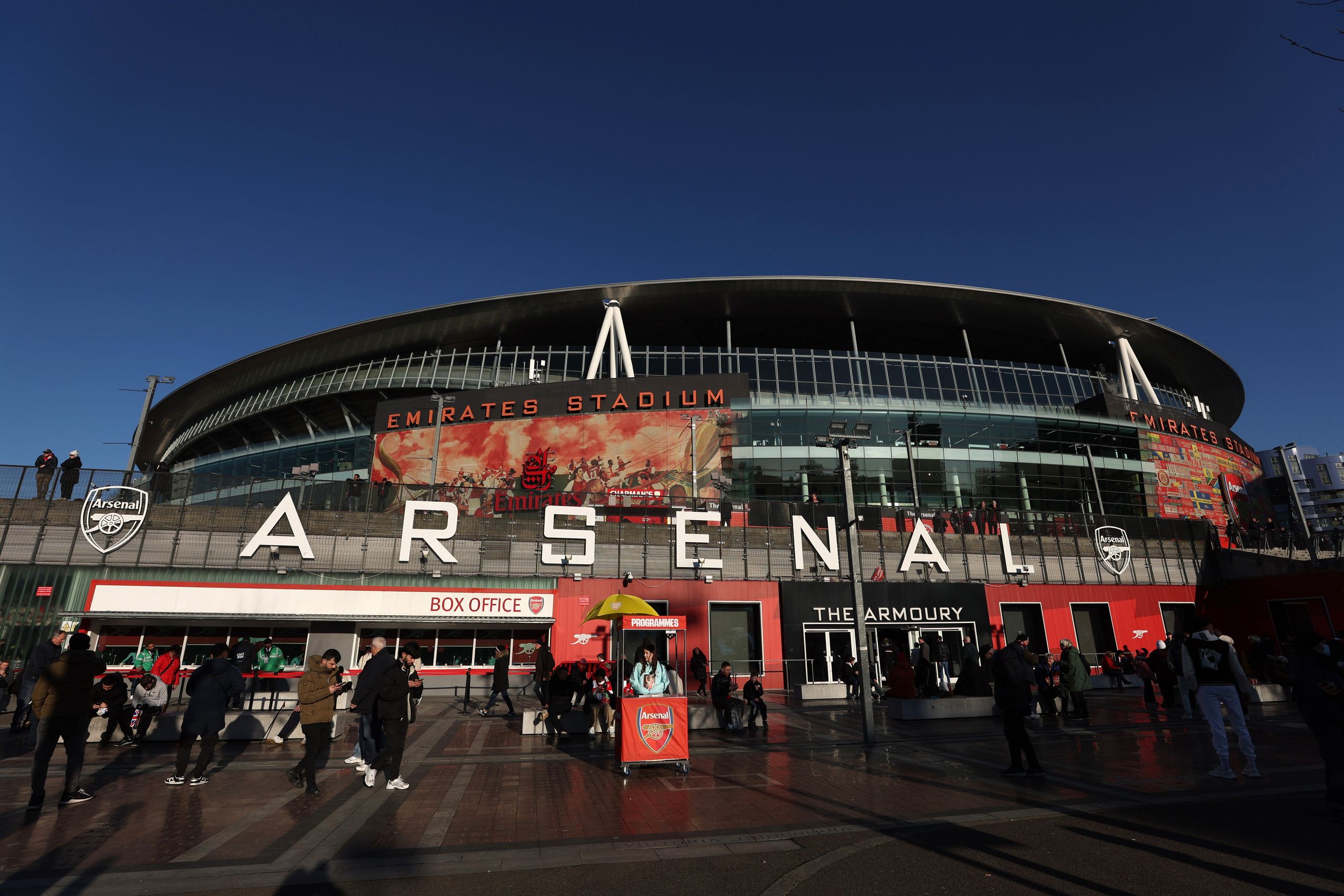
A Tale of Two Strategies: Arsenal's Aggression vs. Liverpool's Retention Battle
The current transfer window paints a fascinating picture of contrasting ambitions between two of the Premier League's perennial contenders, Arsenal and Liverpool. Mikel Arteta's Arsenal is actively pursuing a strategy of calculated aggression, targeting both future generational talents and immediate defensive reinforcements to bolster their squad depth. This proactive stance is in sharp contrast to Liverpool's more reactive approach, which appears primarily focused on retaining a vital young core player against the formidable, persistent interest from European giants. Both clubs, undoubtedly aiming for top honors next season, are navigating the complex, high-stakes transfer market with distinctly different priorities and pressures at play.
Arsenal, having consistently challenged for the title in recent campaigns, understands that sustained success demands continuous evolution and strengthening across all departments. Their reported interest in a burgeoning Norwegian wonderkid, described as already emulating Martin Odegaard, clearly signals a commitment to long-term talent acquisition and development. This isn't merely about adding numbers; it's about securing players who can shape the club's tactical identity and leadership for the next decade. The successful integration and subsequent captaincy of Odegaard himself provides a compelling precedent for such a strategic investment in Nordic talent.
The Emirates' Nordic Quest: Echoes of Odegaard
The whispers emanating from the Emirates suggest Arsenal is indeed deep in the hunt for a promising Norwegian midfielder, a player whose early career trajectory already draws direct, flattering comparisons to their influential captain, Martin Odegaard. This isn't merely about acquiring raw talent; it’s a highly strategic move designed to secure the next generation of creative leadership and midfield dominance. Such a significant signing would emphatically underscore the commitment from Arteta and Sporting Director Edu to building a squad that possesses both undeniable present quality and immense future potential. The seamless and highly successful transition of Odegaard from a promising, albeit unproven, Real Madrid prospect into Arsenal's indispensable midfield orchestrator and leader provides a robust and compelling blueprint for this ambitious recruitment strategy. Any new Nordic arrival, therefore, would inevitably face immense pressure to live up to such an established and celebrated benchmark, both on and off the pitch.
This pursuit, as is typical for players of such high potential, isn't unfolding without significant external competition. Premier League rivals, acutely aware of the player's talent and burgeoning reputation, are reportedly also circling, eager to secure his services. The race for these generational talents is rarely won solely by the highest financial bid; it is often the most compelling sporting project, the clearest pathway to first-team football, and the most cohesive developmental environment that ultimately sways the player. Arsenal’s impressive recent trajectory, characterized by consistent Champions League qualification and a clearly defined tactical identity under Arteta, undoubtedly positions them as an exceptionally attractive destination. They are offering a well-articulated pathway for professional development and elite competition, factors that many ambitious young players prioritize above all else.
Strengthening the Flanks: Livramento on Arteta's Radar
Beyond scouting future midfield architects, Arsenal is also actively and pragmatically addressing more immediate tactical requirements within their defensive unit. Reports from FourFourTwo indicate that the Gunners' pursuit of Tino Livramento from Newcastle is gaining significant momentum, with preliminary talks progressing encouragingly. Livramento, a dynamic and defensively astute full-back, represents a clear and tangible upgrade in both depth and overall quality for Arteta's existing defensive options. His impressive versatility, coupled with his modern attacking prowess and defensive diligence, fits the contemporary full-back profile perfectly, offering both solidity and offensive thrust.
Newcastle United, for their part, appears to be proactively weighing up various options for a potential replacement, a clear signal that a concrete transfer move is indeed under serious consideration and potentially close to fruition. This anticipated transfer underscores Arsenal's unwavering intent to foster healthy competition and secure robust cover across their entire backline, a critically important area for any team harbouring serious aspirations for the Premier League title and deep European runs. The relentlessly demanding schedule of both domestic and elite European football necessitates exceptionally robust squad depth, particularly in physically taxing positions such as full-back. Livramento, with his energy and talent, could provide vital rotational support, allowing for strategic rest, and offer distinct tactical flexibility, thereby pushing current starters and providing a different, perhaps more direct, dimension down the flanks when required. This move signifies Arsenal's meticulous planning and their commitment to leaving no stone unturned in their quest for sustained excellence.
Anfield's Captaincy Conundrum: Holding the Line Against Madrid
In stark contrast to Arsenal’s acquisitive strategy, Liverpool Football Club finds itself embroiled in a different, yet equally crucial, transfer battle – one intensely focused on retention rather than external acquisition. The club is reportedly engaged in delicate, high-stakes contract talks with a player widely and deservedly considered their future captain, aiming to secure him on a new, substantially improved long-term deal. This ongoing negotiation vividly highlights the constant, underlying struggle that top European clubs face: how to keep their most promising and influential talents, especially when the gravitational pull of perennial Champions League contenders like Real Madrid comes into play. Securing this player's long-term commitment is absolutely paramount for the nascent Arne Slot era, as it will provide essential stability, unquestionable leadership, and a clear focal point for the squad for many years to come.
The player in question, whose identity remains guarded but whose importance is undeniable, intrinsically embodies the spirit, the ambition, and the very future of Liverpool Football Club. This makes his successful retention an absolute top priority for the Anfield hierarchy, far outweighing the immediate need for new signings in many respects. Losing such a foundational and emotionally resonant piece of the squad would inevitably send a profoundly negative signal, potentially destabilizing the entire playing group and unsettling the fan base just as Arne Slot looks to calmly and confidently implement his fresh tactical vision. The financial commitment required to effectively ward off Real Madrid's persistent interest will be undeniably substantial; this will serve as a clear and unambiguous indicator of the player's immense value, his leadership qualities, and his strategic importance to the ongoing project at Anfield.
The Persistent Pull of the Bernabéu
Real Madrid’s almost predatory and remarkably consistent interest in Liverpool’s key players has become a somewhat predictable, yet no less stressful, recurring theme in the upper echelons of the European transfer market. The undeniable allure of the Santiago Bernabéu, with its storied history, its unparalleled collection of silverware, and the almost guaranteed annual shot at Champions League glory, often proves incredibly difficult, if not utterly irresistible, for even the most loyal and committed players. This current situation, involving Liverpool's highly-regarded “future captain,” is simply another, albeit high-stakes, chapter in that long-standing, often frustrating, narrative. It effectively forces clubs like Liverpool to not only compete fiercely on a financial playing field but also to continually and convincingly re-sell their entire sporting project, their vision, and their emotional connection to their own most coveted stars, year after year.
The mental and emotional pressure on the player to decide between cementing a lasting legacy at Anfield and succumbing to the undeniable, almost mythical, pull of Madrid's sporting prestige is truly immense. These decisions are rarely, if ever, purely financial transactions; they represent career-defining choices that weigh incredibly heavily on individuals, impacting their professional trajectory and personal lives. Liverpool's task in these negotiations is further complicated by their imperative to project an image of absolute stability and renewed ambition under their recently appointed new management. Convincing a generational talent to commit his long-term future to the club against such formidable external pressure demands not just a competitive financial offer, but also a truly compelling, articulate, and inspiring sporting vision for the seasons ahead.
The Cost of Loyalty and Ambition in Modern Football
This entire, unfolding transfer narrative, encompassing both Arsenal’s proactive acquisitions and Liverpool’s defensive retention efforts, starkly exposes a profound, and arguably critical, systemic flaw in modern elite football’s ever-inflating economic model. It highlights the relentless, seemingly ever-escalating cost of merely maintaining a genuinely competitive squad at the very highest level. For Arsenal, the acquisition of a promising Norwegian wonderkid and the proven quality of Tino Livramento will undeniably necessitate a significant, multi-million-pound investment in both upfront transfer fees and substantial long-term wage commitments. Similarly, for Liverpool, successfully retaining their highly-valued future captain will inevitably demand a “huge deal” – one that reflects his market value and adequately fends off the deep pockets and sporting prestige of Real Madrid. The romanticized notion of patiently developing homegrown talent and organically building a cohesive squad over several years increasingly clashes head-on with the immediate, brutal reality of needing to spend astronomical sums just to stay relevant, let alone compete for major honours.
The relentless financial arms race at the pinnacle of the Premier League and across elite European football means that even the most well-run clubs are rarely, if ever, afforded a period of genuine consolidation or quiet stability. Even immediately following immensely successful seasons, the insatiable demand for continuous improvement, for the next transformative signing, or for retaining existing superstar players at increasingly inflated prices, invariably creates a perpetual, and arguably unsustainable, economic cycle. This constant upward pressure puts immense strain on clubs' often precarious Financial Fair Play (FFP) standings and risks alienating segments of the fan base who observe ever-spiraling player wages with growing concern. It has fostered a market environment where standing still, even for a single window, is unequivocally akin to falling behind, driving a ferocious competition where even cherished, proven talents become highly valued commodities to be either fiercely protected at all costs or aggressively acquired at any price. This market dynamic, driven by ambition and fear, has fundamentally reshaped club strategies.
The Premier League Arms Race: No Room for Stagnation
The summer transfer window is, as ever, shaping up to be a high-stakes poker game, and both Arsenal and Liverpool are playing their respective hands with palpable conviction, albeit employing distinctly different yet equally critical strategies. Arsenal’s proactive and assertive pursuit of fresh, impactful talent, ranging from the promise of an emerging Nordic star to the proven Premier League quality of a dynamic full-back like Livramento, signals a club utterly confident in its established tactical direction and unequivocally prepared to invest heavily in its long-term future. Their ambitious aim is unequivocally clear: to meticulously build upon their recent, encouraging successes and to firmly secure their coveted place at the very pinnacle of English and elite European football for the foreseeable future. This strategic investment is not just about competition; it's about cementing a dynasty.
Liverpool, conversely, operating under the fresh mandate of new management, faces the equally formidable and intrinsically vital challenge of maintaining crucial continuity and stability. Successfully retaining a player of their future captain's undisputed caliber, especially against the relentless and persistent advances of a heavyweight like Real Madrid, is an objective as strategically crucial as any potential new transfer signing. It represents far more than just a contract extension; it is a profound statement of intent, an emphatic declaration that Anfield remains an elite destination for the very best talent, a sanctuary where sporting ambitions can be fully realized and legendary careers forged. The eventual outcomes of these individual, high-profile transfer sagas will undoubtedly exert a profound influence on the tactical landscape and competitive balance of the upcoming Premier League season, potentially determining which club holds a crucial psychological and sporting advantage in the ever-tightening race for silverware. The next few weeks will undoubtedly provide much clearer answers, but one fundamental truth remains utterly certain: the Premier League's established elite are not, and indeed cannot afford to be, resting on their laurels. The pursuit of excellence is a continuous, unforgiving marathon.
Read Next
- Arne Slot's Liverpool: A Summer Defined by Sales, Not Splurge
- Man Utd's New Reality: Scouting Bournemouth Is The Smartest Move In Years
- Liverpool chasing Joelinton proves the transfer market is officially broken
- Liverpool’s defensive crisis deepens as injury report creates UCL headaches
- ⭐ UCL 2026 — Champions League Quarter-Finals Hub
Adidas Tiro League Soccer Ball
The perfect match-day ball for high-intensity training.
More Coverage

Anthony Gordon to Barcelona marks a high-stakes gamble
an hour ago
Arsenal vs PSG: Why tactical rigidity will determine the European champion
an hour ago
Arsenal's 104 million gamble on Julian Alvarez is pure chaos
an hour ago
Arsenal and PSG are locked in a tactical chess match for the trophy
2 hours ago
Top 10: The Definitive Arsenal Moments of the 2025/26 Season
2 hours ago
Newcastle are burning the furniture to keep the house warm
3 hours agoMore Analysis
Arsenal and Liverpool are locked in a silent winger war
3 days, 3 hours ago
Arsenal's transfer strategy is dividing the fanbase
1 month, 3 weeks ago
Real Madrid's dressing room crisis is wrecking Liverpool's summer plans
1 month, 1 week ago
Arsenal's youth pipeline is producing gems while Liverpool's veterans crumble
2 months, 1 week ago
Arsenal's transfer strategy is shifting into a high-stakes game of shadows
2 months, 1 week ago