The reality of the European bag
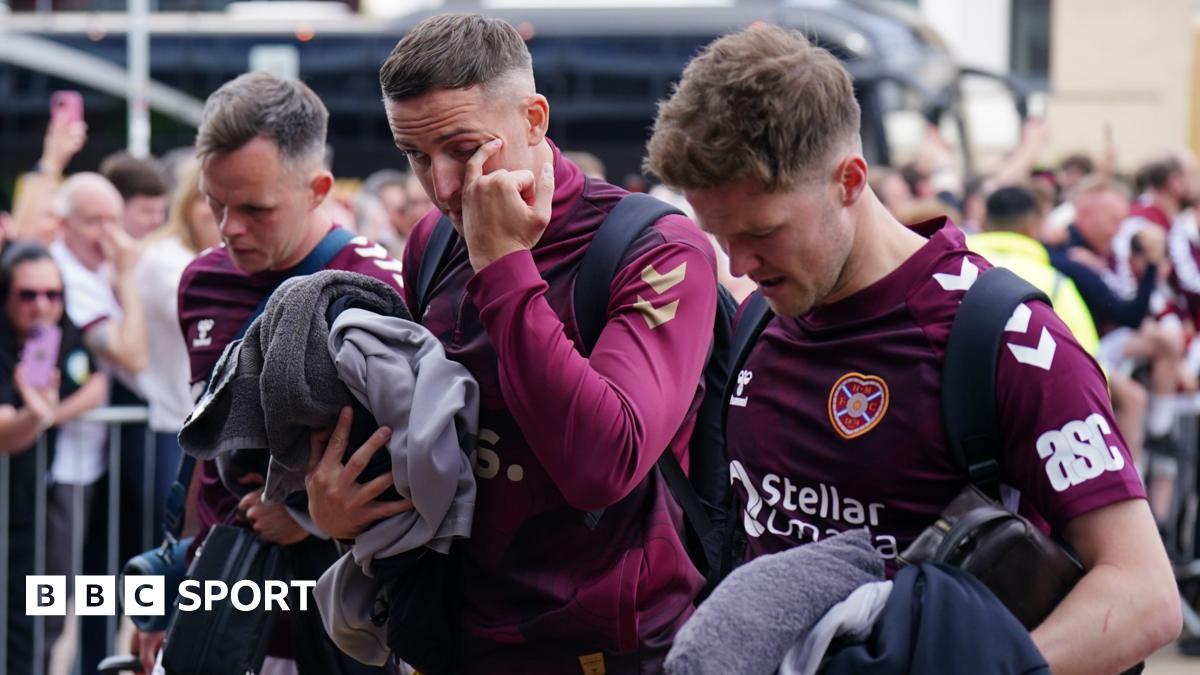
Hearts have done it again. Third place in the Scottish Premiership is locked up, and with it comes the ultimate prize for the "best of the rest" — guaranteed European group stage football.
BBC Sport recently highlighted the financial realities of this achievement, focusing on exactly how much money the club stands to make. For a team operating outside the Celtic and Rangers financial stratosphere, this isn't just a nice bonus. It is a massive, structural shift in their operating budget that dictates how the next half-decade could unfold.
Let's break down the actual numbers. The vague promise of European millions often masks the reality of UEFA's prize money distribution. If Hearts drop into the UEFA Conference League group stage, they are looking at a base participation fee of roughly €3.17 million. That is before a single ball is kicked in anger.
Add in the ten-year historical coefficient payout, the broadcast market pool, and the gate receipts from three guaranteed home nights under the lights at Tynecastle. You are quickly approaching a guaranteed €5 million haul. If they manage to navigate the Europa League playoff round and reach the Europa League group stages, that base fee jumps higher.
The Thursday-Sunday hangover
The television money gets significantly bigger in the Europa League, but the opponents get exponentially harder. This presents a massive dilemma for the Tynecastle board. The money is fantastic, but the problem with European football in Scotland is what it does to your domestic form.
We have seen this movie play out so many times before. A team overachieves, secures European group stage football, and then completely falls apart playing Thursday nights in Kazakhstan and Sunday afternoons in Dingwall. Aberdeen experienced this exact hangover just last season.
Let's look at the actual math of their squad constraints right now. When you play a Thursday night away fixture in Europe, you do not fly back until Friday morning. The players have one light recovery session on Saturday before stepping onto the pitch for a physical domestic league match on Sunday.
The human body simply does not recover in 48 hours. That is why squad depth is not a luxury for Hearts this summer — it is an absolute necessity for survival. The physical toll of the Thursday-Sunday schedule is brutal on a squad that isn't built to handle it. Your team needs to be built like a tank, not a sports car.
Avoiding the luxury trap
This brings us to the biggest flaw in how Scottish clubs traditionally handle this windfall. They get distracted by the shiny lights. Management starts looking at luxury signings.
They bring in a technically gifted, lightweight attacking midfielder from the continent who completely disappears on a freezing, wet Sunday away to St Johnstone. That is exactly what Hearts do not need right now.
They need bodies. They need robust, physically imposing squad players who can rotate in and grind out an ugly 1-0 win when the first-team regulars are completely exhausted from chasing shadows against a Bundesliga side 72 hours earlier.
Hearts have a bad habit of dropping incredibly silly points domestically immediately following big European ties. The adrenaline dump is real. The fans expect a routine demolition job on the weekend, but the players look like they are running through treacle.
If the recruitment window is mismanaged, that guaranteed European money will be completely offset by the financial hit of slipping to fourth or fifth in the league next season. Dropping down the domestic table erases the financial gains of the European run.
Digging the financial moat
Let's talk about the gap at the top. Celtic and Rangers are operating on a completely different financial planet. Even with a stellar European run and a sold-out Tynecastle every second week, Hearts are not catching them anytime soon.
The wage disparity is simply too massive to overcome over a grinding 38-game league season. You can beat them in a one-off cup tie, but you cannot out-spend them over ten months. But challenging for the title shouldn't be the immediate goal.
The goal right now is creating a permanent, unbridgeable financial moat between Hearts and the rest of the league. Aberdeen, Hibernian, and Kilmarnock should be looking at the situation at Tynecastle with serious concern.
If Hearts reinvest this UEFA money intelligently, they can cement third place as their absolute baseline for the next five years. This means resisting the urge to blow the budget on inflated wages for aging veterans. It means investing heavily in the youth setup. It means upgrading the training facilities to modern European standards.
Most importantly, it means giving the manager a squad of 24 senior players they actually trust to start a league match. They cannot rely on a rigid starting eleven and a bench filled with unproven kids.
The prediction
Look at the underlying numbers from their domestic campaign this season. Hearts' defensive solidity was the absolute bedrock of their success. They didn't blow teams away with free-flowing attacking football; they ground them down.
That pragmatic style of play translates reasonably well to European competition. You don't need to dominate possession against a mid-table La Liga team. You just need to stay defensively compact, absorb the pressure, and take your chances on the counter-attack or from set-pieces.
But you cannot play a high-intensity, physically demanding defensive game twice a week. You cannot do that for three straight months without your players breaking down. Muscle injuries will spike. Hamstrings will pop. Here is the brutal reality of the situation for the front office.
The recruitment team at Hearts has the hardest job in Scottish football this summer. They have to identify and sign players who are good enough to keep them competitive in Europe, but who are willing to sit on the bench for long stretches of the domestic campaign.
It is a delicate, almost impossible balancing act. Historically, Scottish clubs get it wrong far more often than they get it right. My prediction for next season is grounded in this exact history.
Hearts will successfully navigate the initial excitement of the European draw. The fans will get their brilliant away days in some obscure corner of the continent, and Tynecastle will be rocking under the lights. But the squad depth will eventually crack under the sheer volume of minutes.
They will take a couple of very heavy beatings in the group stages against significantly better-resourced teams. We are talking about clubs who can bring sixty million pounds worth of talent off the bench. Domestically, they will hit a massive slump in October and November.
That is when the fixture congestion is at its absolute worst. They will drop stupid points to teams fighting relegation. The fans will get frustrated, and the manager will face some very uncomfortable press conferences about squad rotation and lack of effort.
However, the sheer baseline quality of their core starting eleven will ultimately save them. Combined with the financial moat they are currently digging, it will eventually be enough to drag them over the line when the European distraction ends in the winter.
They will finish third again. They will get dumped out of Europe before Christmas. But the bank balance will look incredibly healthy, setting them up to do the exact same thing all over again the following year.
It isn't glamorous, and it certainly won't threaten the Glasgow duopoly anytime soon. But in the heavily unbalanced reality of Scottish football, securing that European bag and surviving the hangover is the absolute pinnacle of what a well-run club can achieve.
Read Next
- Hearts, Celtic, and the penalty that broke Scotland in half
- Celtic are about to win the league despite the Wilfried Nancy chaos
- Hearts face a hostile Parkhead with the weight of history against them
- Wilfried Nancy's 33-day Celtic tenure was a doomed surgical strike
- ⚽ Scottish Premiership 2025-26 — Celtic vs Rangers Hub