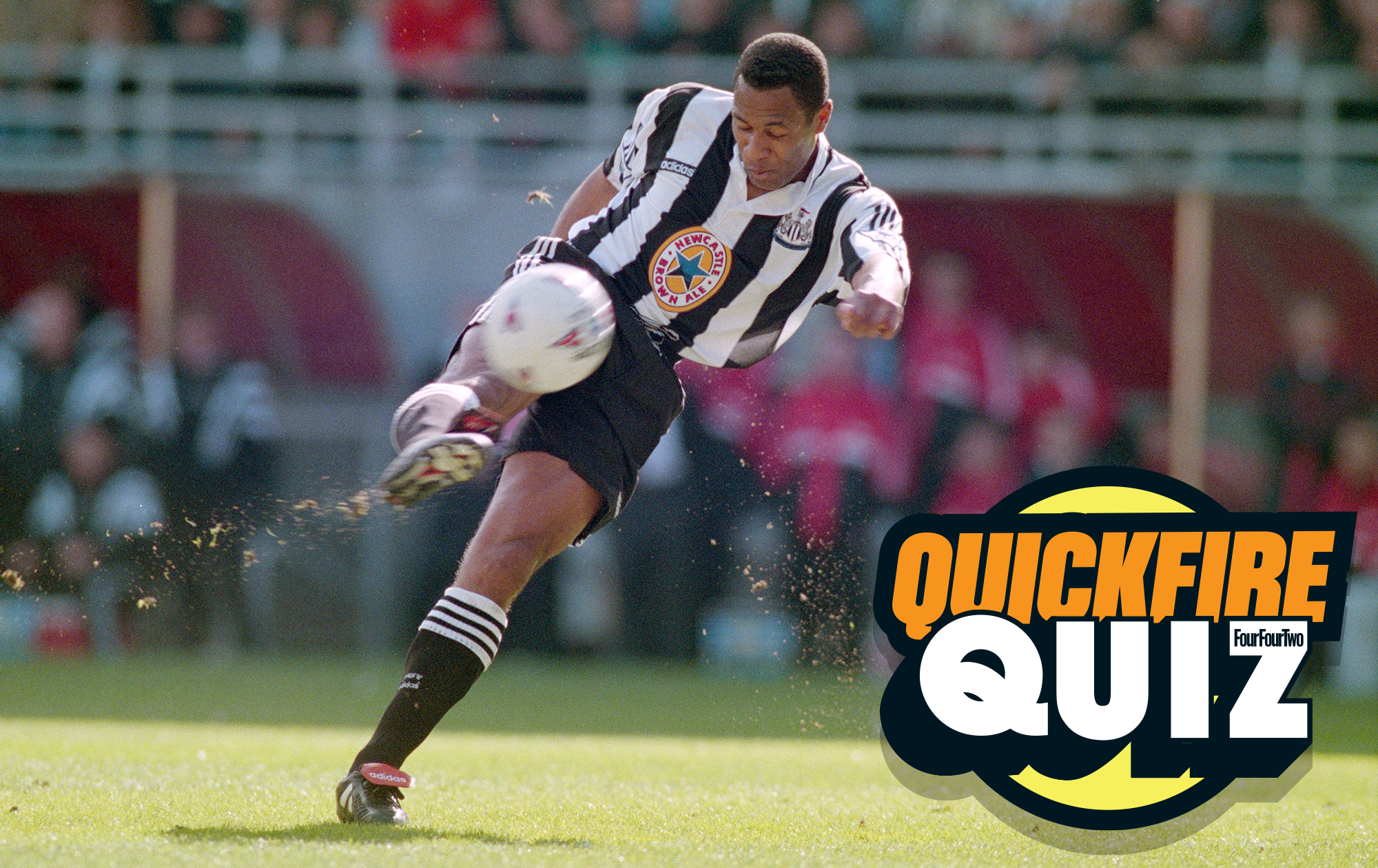
Why 90-second football trivia masks the brutal reality of the 92
"What else are you going to scroll through while you're sat on the loo?"
As FourFourTwo so bluntly asked this week, that is the current state of modern fan engagement. We are officially in the era of 90-second football consumption. You get 10 questions. You rattle through them. You flush. You move on.
The quickfire quiz format is the logical endpoint of digital sports media. We want the dopamine hit of knowing something without the heavy burden of actually understanding it. Can you answer 10 rapid-fire questions correctly? Probably. Does it make you a smarter, more observant football fan? Absolutely not.
We have entirely replaced match-going observation with statistical regurgitation. A supporter in 1996 might have argued about a striker's work rate based on watching him drag two center-halves out of position for an entire afternoon. A fan today argues based on expected threat per 90, often without having watched a single full match that month. The quiz culture feeds this exact sickness. It flattens the sport entirely. It turns complex, breathing football clubs into mere answers on a sterile drop-down menu.
The Map is Not the Territory
Let us look at a specific example. The same outlet recently published another teaser, challenging fans to name every English county to have a club in the 92. It plays like a harmless, nostalgic geographical exercise. You start typing. Greater London. Greater Manchester. Merseyside. West Midlands. The heavy hitters fall easily. Then you start hunting for the stragglers. You type in Bedfordshire for Luton Town. You remember Cumbria because of Carlisle United.
But this is not a simple geography test. It is a terrifying financial heat map of English football. The distribution of the 92 clubs across these specific counties is a brutal reflection of economic concentration. If you actually look at the map you are filling in, you see the massive voids. You see the places professional football simply forgot.
Greater London holds a wildly disproportionate amount of the wealth and the league spots. You have Arsenal, Chelsea, Spurs, West Ham, Crystal Palace, Fulham, and Brentford hoarding Premier League television money. Move down into the EFL, and the capital is still completely packed. Leyton Orient, Charlton Athletic, Millwall, Queens Park Rangers. The wealth is highly localized. It sits safely inside the M25 and it pools heavily in the North West. The trivia question masks a terrifying reality about the English football pyramid. The money is not trickling down. It is pooling in very specific, affluent postcodes.
The Football Deserts
When you play that county quiz, pay close attention to the answers you cannot find. Look at the South West. Cornwall has never hosted a Football League club in its history. Truro City tried to climb the non-league pyramid, but the severe financial realities of geography crushed them. Travel costs alone in the National League South are highly prohibitive for a club located at the extreme end of the peninsula.
Somerset lost its only league representative when Yeovil Town fell out of League Two. They tumbled blindly through the trapdoor and found themselves playing regional football again. The entire county was wiped off the EFL map in an instant. Lincolnshire used to be a stronghold of grim, battling lower-league football. Scunthorpe United were a Championship side in 2011. They are now playing regional non-league football after back-to-back relegations and catastrophic ownership disasters. Grimsby Town cling on, but the financial margins are razor-thin.
These aren't just trivia blanks on a screen. They are dead zones created by a fundamentally broken financial model. The Premier League generates billions globally. The clubs at the bottom of League Two are relying on bucket collections and sympathetic local businessmen just to make Friday payroll. When you type "Lincolnshire" into a 90-second quiz, you aren't engaging with the brutal reality of Scunthorpe's demise. You are just trying to beat a digital timer.
The Tactics of Survival
There is a harsh tactical element to this geographic divide that goes entirely ignored by mainstream analysis. We spend countless hours dissecting Pep Guardiola's inverted full-backs or Mikel Arteta's aggressive high press. We ignore the fascinating tactical innovations happening out of pure necessity in the poorer, isolated counties.
If you are managing Carlisle United in Cumbria, you cannot recruit technically gifted Spanish midfielders. Your scouting network is highly limited. Your pitch in late January will resemble a muddy battlefield. The tactics dictate themselves. You play a deep low block. You rely heavily on set-piece efficiency. You recruit giant, aggressive target men who can win first contacts and sweep up second balls. It is not pretty, but it is geographically necessary.
Consider the massive rise of the 3-5-2 formation in the lower leagues. Why do so many League One and Two teams play with wing-backs? Because producing high-quality, technically gifted wingers is incredibly expensive. Premier League academies hoard them early. If you are a lower league club in a poor county, you cannot afford a winger who can consistently beat a man and deliver a perfect cross. Instead, you recruit athletic full-backs. You play three physical center-halves to secure the middle. You bypass the wide areas and play extremely direct. It is a major tactical trend born entirely of economic scarcity.
You don't see fluid 4-3-3 positional play at a wet, windy stadium in Shropshire. You see a rigid mid-block 5-3-2 designed strictly to grind out a 1-0 victory. The quiz reduces these varied, distinct local football cultures into a homogenous, boring list. It pretends that a club in affluent Surrey operates in the exact same universe as a club in industrial South Yorkshire. They absolutely do not.
The Hump Day Distraction
The editorial framing of these quizzes is incredibly telling. They actively serve up these teasers stretching from A to Zizou as a convenient way to tackle hump day. Football has become a secondary screen experience for the masses. We are sitting in offices on a Wednesday in late March 2026. Domestic football feels like a frustrating holding pattern. The Champions League quarter-finals do not kick off until April 7. So we just kill time.
We test our faded recall of mid-2000s holding midfielders. We try desperately to remember if Zinedine Zidane ever actually played against certain obscure European teams. It is a comforting, warm illusion. It makes us feel deeply connected to the sport without demanding any real intellectual engagement. Reading a highly detailed, 3,000-word tactical breakdown of why Arsenal's left-side progression is currently stalling requires real effort. Typing "Berkshire" to get Reading on a quiz takes two seconds.
But what is actually happening to Reading? The historic club has been hollowed out by disastrous, negligent ownership. Endless points deductions, unpaid tax bills, massive fan protests. Typing their county into a text box feels almost insulting when you pause to consider the existential threat the club faces every single week. Trivia is inherently backward-looking. It asks you to remember what previously was. It actively distracts you from analyzing what is happening right now.
The pervasive hump day mentality is actively destroying serious football journalism. The sheer, overwhelming volume of snackable content trains fans to expect easy answers in 90 seconds. When a match is genuinely complex—a tight nil-nil draw where two elite pressing teams effectively neutralize each other—the trivia-brained fan is completely bored. They want immediate action. They want goals. They don't want to analyze the subtly shifting passing lanes or the specific trigger points of a counter-press. They just want the quick, easy answer.
The Future of the Map
We are currently waiting to see the full, unvarnished impact of an independent football regulator in England. The arguments are incredibly tedious, constantly bogged down in dense legislative jargon and aggressive Premier League pushback. The big clubs absolutely do not want oversight. They want to fiercely protect their enormous broadcasting revenue streams. They want to ensure that the wealth remains securely concentrated in the specific, rich counties that currently dominate the top flights.
If the regulator ultimately fails to implement a much fairer distribution of broadcasting wealth, the map of the 92 will continue to shrink rapidly. We will see more historic counties fall off the list entirely. The trapdoor between League Two and the National League is no longer a gentle, recoverable drop. It is a sheer, terrifying cliff. Drop out of the 92, and the television money evaporates instantly. You are left with meager solidarity payments that barely cover a fraction of basic operating costs.
The quiz will simply get much easier to play. You will only need to type in a handful of wealthy metropolitan counties to get most of the correct answers. The provincial clubs, the quiet market town teams, the rural outposts—they will slowly, quietly vanish from the professional ranks.
The Final Whistle
Next time you sit down to kill 90 seconds with a rapid-fire football quiz, take a much longer look at the specific answers you input. Look past the immediate, hollow dopamine hit of a green checkmark. Think deeply about the actual clubs that currently populate those specific counties. Think about the severe tactical compromises they make just to survive a cold, miserable Tuesday night fixture.
Think about the massive, unbridgeable financial chasm between the top of the list and the very bottom. Football is not a simple memory test. It is a deeply unequal, heavily stratified hierarchy. Knowing that Zinedine Zidane scored a beautiful volley at Hampden Park is fine. Knowing that a historic club in a forgotten English county is currently fighting for its actual life is far better.
We loudly demand better tactical analysis from our highly paid managers. We should strongly demand better, deeper engagement from ourselves. The sport is far too complex, too incredibly beautiful, and too deeply broken to be reduced to a 90-second hump day distraction.
Adidas Unisex-Adult Tiro 23 League Training Jersey
Look sharp, stay cool, and own the pitch just like your favorite Premier League
Frequently Asked Questions
What does the English county football quiz reveal?
Why are short football trivia quizzes criticized?
Where is wealth most concentrated in English football?
How does geography impact non-league football clubs?
Which English region is considered a professional football desert?
More Coverage
Arsenal’s Champions League final quest hinges on defensive discipline
12 hours ago
Top 10: The Defining Moments of the 2025/26 English Football Season
1 day, 4 hours ago
Crystal Palace's unlikely European title exposes the modern speed gap
1 day, 13 hours agoThe World Cup knockout bracket is a total minefield
2 days, 6 hours agoThe World Cup bracket is a house of cards waiting to collapse
2 days, 6 hours agoThe World Cup knockout stage is a tactical disaster waiting to happen
2 days, 6 hours agoMore Analysis

The absolute sickness of modern football trivia
1 month ago
Why football quiz culture is the ultimate test of your fandom
2 months, 1 week ago
The Premier League promotion trap is a billion-pound poison chalice
1 month, 1 week ago
The EFL run-in is about to destroy your tactical masterplan
2 months ago
Sheffield Wednesday are staring into the abyss once again
2 months, 1 week ago