A Sanctuary in Dark Blue
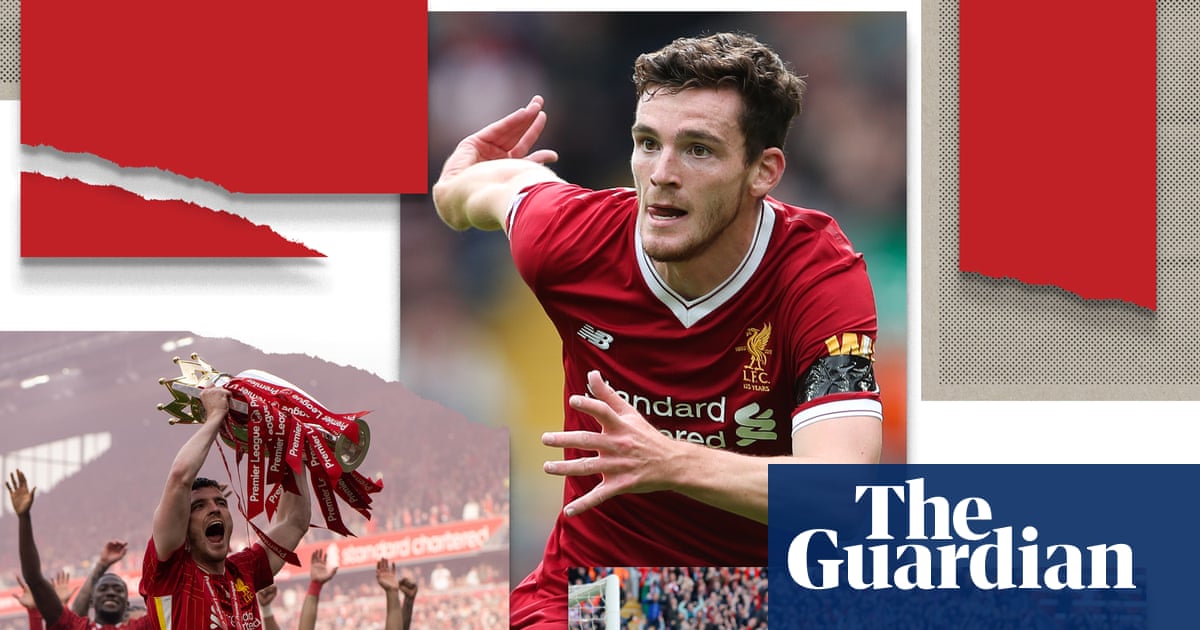
There is a telling honesty in Andy Robertson's recent admission. Speaking to Sky Sports, the Liverpool left-back confessed exactly where his mental energy is coming from this season.
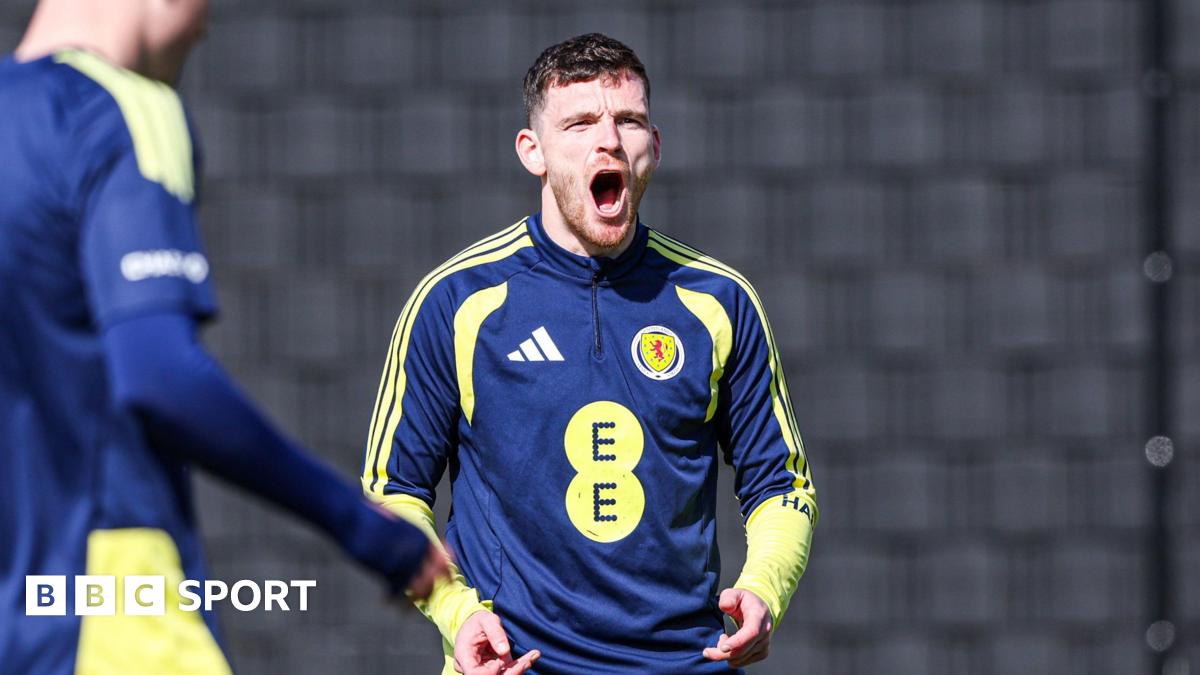
"It's kept me going at times," Robertson admitted, referencing the high of Scotland's upcoming World Cup campaign.
It is a rare moment of vulnerability. We are talking about a player whose entire brand is built on relentless, mechanized stamina.
For nearly a decade, Robertson has been the tactical metronome on the left flank at Anfield. But modern football is unforgiving. As the tactical demands under Arne Slot shift and evolve, the traditional overlapping fullback is frequently asked to invert or tuck into midfield.
Robertson has adapted, but the physical load is immense. Scotland, paradoxically, offers a tactical refuge. Under Steve Clarke, Robertson operates in a system that perfectly maximizes his defining traits.
It is no wonder he is looking ahead to June 11 and the kickoff of the 2026 World Cup with such desperation. He needs that release. But before he can board a flight to North America, there is the small matter of Liverpool's Premier League run-in.
The Tactical Shift: Slot vs Clarke
To understand why Robertson feels so liberated in a Scotland shirt, you have to look at the chalkboards. At Liverpool, the left-back role has become wildly complex. When Trent Alexander-Arnold or Conor Bradley inverts from the right, the left-back is often caught in positional purgatory.
Do you push high and maintain maximum width, or do you tuck in alongside Virgil van Dijk to form a rest-defense trio? Slot has asked Robertson to be more measured. The blind, lung-busting overlaps that defined the Jurgen Klopp era have been dialed back.
Instead, Robertson is frequently asked to receive the ball under pressure in the middle third. He is tasked with progressing play through narrow central corridors rather than hugging the touchline.
With Scotland, the brief is beautifully simple. Operating mostly as a left wing-back in a back five, Robertson is the primary source of width. Kieran Tierney usually slots in as the left-sided center-back, stepping up to draw the press and instantly releasing Robertson down the flank.
He is allowed to be aggressive. He is encouraged to hit the byline without worrying about complex midfield rotations. His only job is to stretch the pitch and deliver early crosses into the box.
That freedom translates directly to his body language. You can see it in the way he drives with the ball. For Scotland, he attacks the space in front of him with pure, unadulterated aggression.
For Liverpool, there is occasionally a split-second of hesitation. It is a calculation of risk versus reward that simply does not exist when he plays for his country.
The Crossing Zones
Let's talk about delivery. Robertson is arguably the greatest crosser of the ball from the left flank in Premier League history. But the location of his crosses has changed over the last two seasons.
Previously, the majority of his assists came from the final third. He dominated the zone between the edge of the penalty area and the byline. He was hitting cutbacks or whipping flat deliveries across the face of goal.
Now, opponents know the drill. They double up on the left side. They force him backward. Consequently, Robertson is crossing from much deeper areas.
These angled deliveries are harder to defend, but they require a completely different type of run from the forwards. Darwin Nunez thrives on these deep, curling balls, but it requires pinpoint accuracy. When the margin for error is that small, frustration inevitably builds.
Look at the pass completion maps from his last five domestic starts. You will see a cluster of touches exactly ten yards deeper than where he operated in previous years. He is hitting inswinging deliveries from the left half-space.
It is a completely different technique. It requires him to wrap his foot around the ball and generate whip without the momentum of a full sprint. While he is certainly capable of this, it neutralizes his greatest weapon: his acceleration over the first five yards.
This weekend, Liverpool's opponents will undoubtedly set up in a low block. They will condense the center of the pitch and force the ball wide. They are betting that their center-backs can deal with deep crosses.
Robertson has to find a way to break those lines. He needs to mix up his delivery. He has to rediscover that chaotic, overlapping energy that makes him unplayable.
If he constantly receives the ball to feet, stationary, with a defender squared up to him, Liverpool's attack will stall. He needs dynamic movements ahead of him. He needs the left winger—whether that is Luis Diaz or Cody Gakpo—to make inside runs that drag the opposing full-back away.
The Pressing Trap
Let's drill down into the pressing mechanics. When Liverpool lose the ball high up the pitch, Robertson is instructed to counter-press aggressively. This works perfectly when the midfield unit is compact.
But lately, we have seen massive gaps opening up between the midfield three and the back line. If the initial counter-press is bypassed, Robertson is left stranded out of position. His recovery sprints are legendary, but he is running an extra forty yards per game just to get back into a defensive shape.
Over a grueling thirty-eight game season, those sprints accumulate into dead legs. Contrast this with his role for Scotland. Steve Clarke's mid-block is notoriously stubborn.
Scotland rarely commit bodies forward recklessly. When they lose possession, they immediately drop into a compact shape. Robertson doesn't have to execute those lung-bursting recovery sprints because he is already sitting deeper, flanked by a dedicated center-back and a holding midfielder.
It is a system designed to protect its assets rather than expose them. This is why Robertson looks so revitalized in international fixtures. He is physically protected by the structure.
Looking at Liverpool's upcoming fixture, this structural vulnerability is exactly what opposing managers will target. Expect to see early, direct balls clipped into the channel behind Robertson.
The opposition winger will be instructed to cheat defensively—staying high rather than tracking back. They are gambling on Liverpool turning the ball over in central areas. If Van Dijk is pulled out wide to cover that space, it leaves a gaping hole in the middle of the penalty area for a late runner to exploit.
This is my biggest criticism of Slot's current setup. He is leaving his full-backs entirely exposed during negative transitions, banking on his center-backs to mop up impossible situations. It is a flawed strategy that a smart counter-attacking team will ruthlessly exploit.
This forces Robertson to constantly make impossible decisions. Does he step up to join the press, knowing there is no cover behind him? Or does he drop off, allowing the opposition right-back time and space to measure a cross?
These split-second hesitations are where matches are won and lost. A confident Robertson simply acts on instinct. A fatigued or tactically burdened Robertson pauses, and in the Premier League, a pause is fatal.
Managing the Physical Toll
We cannot ignore the miles on the clock. Robertson plays an incredibly demanding position in a physically brutal league. He does it with a ferocious intensity that defies sports science.
But you cannot cheat biology forever. The minor muscular injuries, the occasional dip in recovery pace—these are the realities of a player deep into his prime.
Defensively, the numbers tell an interesting story. His tackle success rate remains exceptionally high, but the volume of his defensive actions has dropped. This is not necessarily a decline in ability.
It is a shift in instructions. He is being asked to delay and jockey rather than aggressively bite into tackles. But when he pulls on the Scotland shirt, Clarke wants him biting. He wants him disrupting the opposition's rhythm high up the pitch.
International breaks are usually viewed as an annoying disruption by club managers. But for Robertson, linking up with the national team seems to act as a psychological reset. The pressure is different.
The tactical demands are more aligned with his natural instincts. The high of qualifying for a World Cup and the anticipation of this summer's tournament provides an adrenaline spike that carries over into his club form.
Liverpool need to harness that energy. Slot has to find a way to replicate that sense of freedom within the confines of his own tactical framework.
It might mean occasionally deploying a left-sided midfielder who naturally drifts wide, allowing Robertson to underlap and attack the half-spaces. It might mean giving him selective rests in Europe to keep his legs fresh for the relentless weekend fixtures.
The Weekend Match-Up
Looking ahead to this weekend's clash, the spotlight will be firmly on that left channel. Liverpool are desperate for three points to maintain their momentum. They cannot afford a sluggish start.
They need tempo, and tempo almost always dictates how involved Robertson is in the opening twenty minutes. The opposition will likely deploy a right winger tasked solely with tracking Robertson's runs.
It is a classic tactical move to nullify an attacking full-back by turning the winger into a secondary defender. If Robertson gets frustrated and drops too deep to get on the ball, Liverpool lose their out-ball. If he pushes too high too early, he leaves space in transition.
It is a delicate balancing act. Robertson has to pick his moments. He needs to recognize when the opposition's midfield pivot shifts too far across, leaving the switch of play open.
When that cross-field ball comes from the right, Robertson has to be on his bike. He must attack the space before the defensive block can slide across.
Prediction and Final Thoughts
There is no hiding from the fact that Andy Robertson has looked fatigued at points this season. The tactical shifts, the relentless fixture list, the weight of expectation—it all takes a toll.
His comments to Sky Sports are a window into the immense mental stamina required to operate at the elite level for so long. But write him off at your peril.
Robertson thrives when his back is against the wall. The prospect of leading Scotland out at the World Cup this summer is clearly burning brightly in his mind. He is using that future high to drag himself through the present grind.
For this weekend, I expect a deeply pragmatic performance from Liverpool. The opposition will make it ugly. They will foul, they will break up play, they will challenge Liverpool to break down a low block.
It will require patience and precision. My prediction? Liverpool will struggle for the first hour. The left side will look congested and disconnected.
But Robertson's sheer force of will usually finds a way. I am backing him to provide the decisive assist late in the second half—a classic, surging run to the byline followed by a cutback that bypasses three defenders. Liverpool win it 1-0 in a gritty, unremarkable fashion, and Robertson takes one step closer to his summer sanctuary.
Read Next
- Why Andy Robertson's Liverpool exile changes everything for the run-in
- Ipswich are drowning in boardroom noise just when they need points most
- Ugarte's suspension escape sets up a chaotic tactical battle
- Klopp is right about Salah, and Liverpool fans need to accept it right now
- 🏴 Scotland World Cup 2026 — Tartan Army Hub
- 🇧🇷 WC 2026 Group C — Brazil, Morocco, Scotland, Haiti
- 🏆 Europa League Final 2026 — Full Coverage Hub