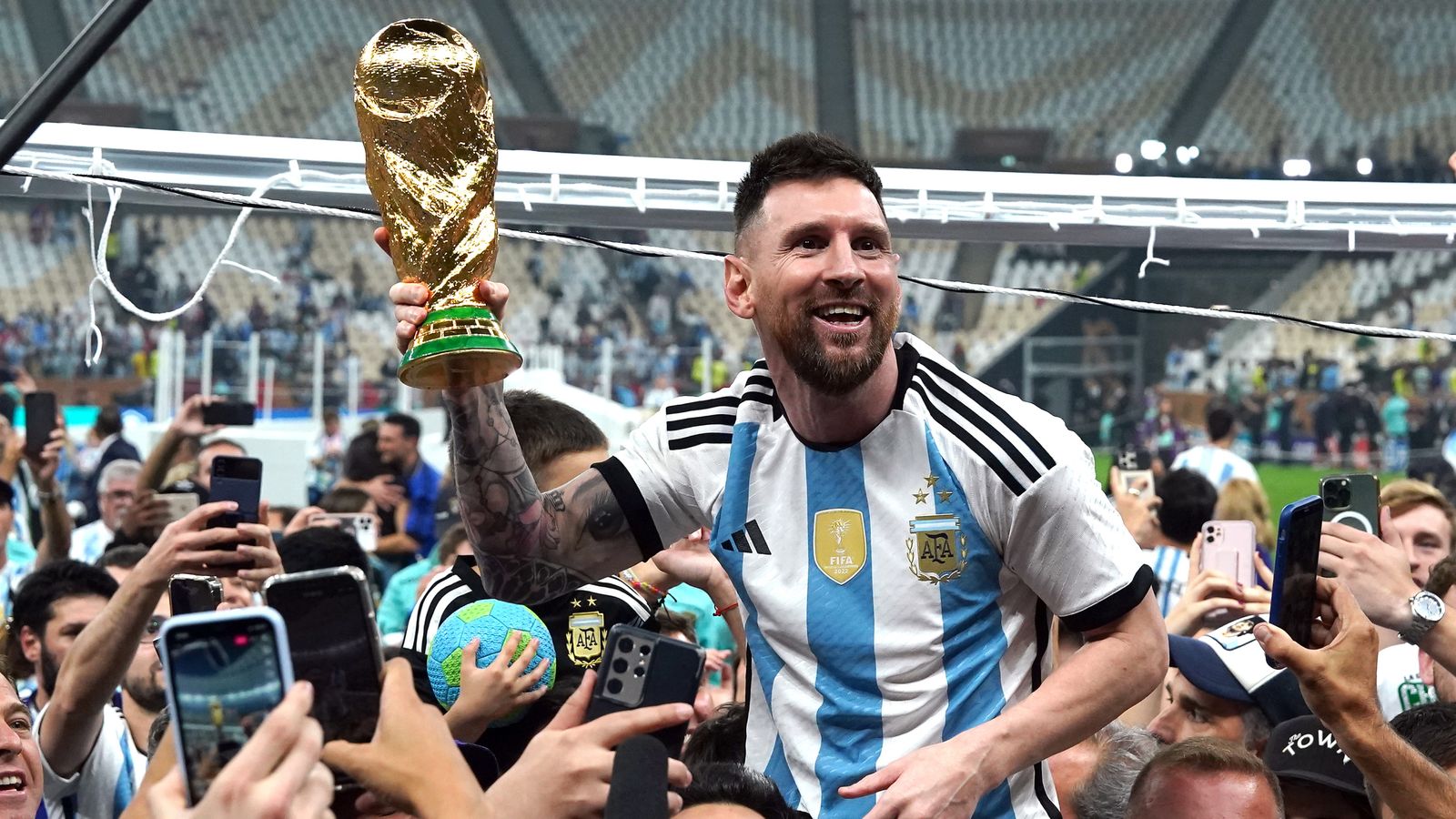
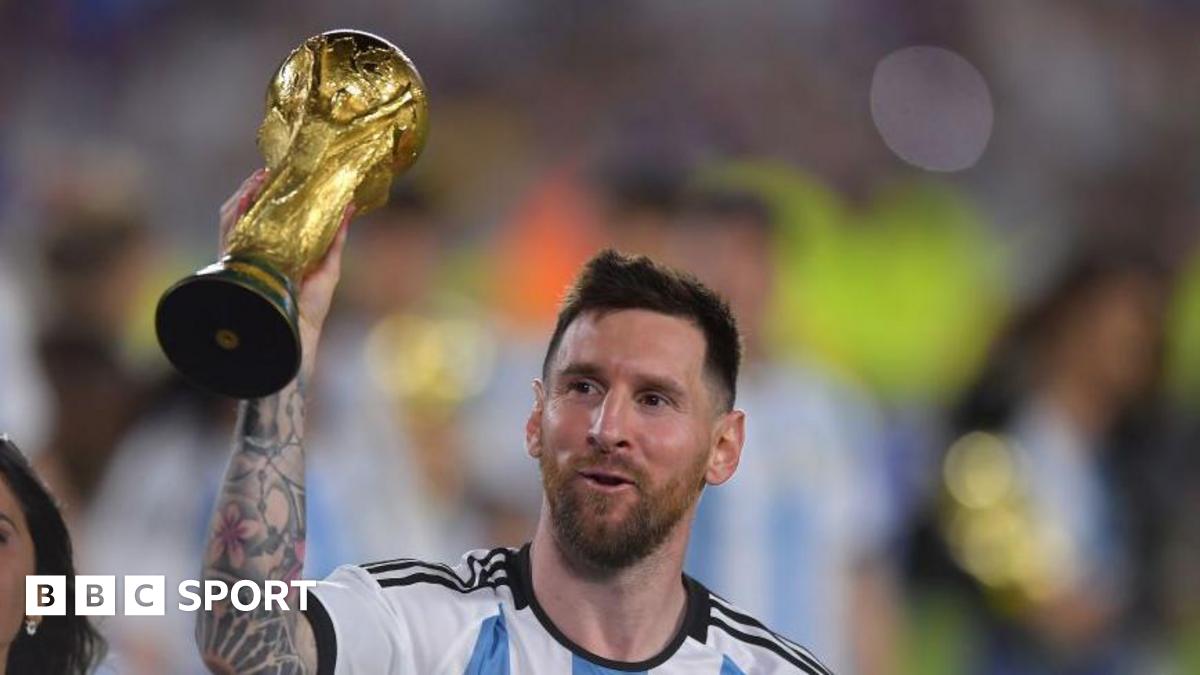
We are exactly 37 days away from the madness. On June 11, the expanded, bloated, frankly ridiculous 48-team FIFA World Cup kicks off across North America. And while everyone is busy arguing about the logistics of hosting a tournament across three massive countries and four time zones, all eyes on the pitch will inevitably be fixed on the defending champions.
Argentina isn’t just arriving as the holders. They are arriving as a modern dynasty. They snagged the 2021 Copa America, conquered Qatar in 2022, and defended their continental crown in 2024. They have essentially forgotten how to lose when it actually matters.
But international football is ruthless. Nostalgia doesn't win knockout games. As Lionel Scaloni finalized his preparations this week, the noise back in Buenos Aires is getting deafening. Defending a World Cup is notoriously brutal. Just look at the graveyard of recent champions. France showed up in 2002 and got completely stunned by Senegal. Italy arrived in 2010 and managed to finish bottom of a group containing New Zealand. Spain entered 2014 as the greatest team of a generation and got humiliated by the Netherlands. Germany in 2018 lost to South Korea and went home early. The champion's hangover is a very real, very dangerous phenomenon.
Can La Albiceleste actually dodge the curse, do the impossible, and go back-to-back? Let's rip into the five biggest storylines hanging over this squad.
1. The Lionel Messi Management Plan
Let’s address the elephant in the room immediately. Lionel Messi turns 39 a few days after the tournament starts. He is no longer the guy who can casually jog around for 85 minutes, find a pocket of space, and then detonate a defense with a single drop of the shoulder. Even in the relatively slower pace of MLS, the miles are adding up. His body is showing the wear and tear of two decades of being hacked by terrified, desperate center-backs.
Scaloni’s absolute biggest test ahead of this tournament isn't tactical. It is entirely psychological. Can he convince the greatest player in the history of the sport to accept a managed role? We saw glimpses of his physical frailty during the 2024 Copa America, where injuries kept him sidelined or visibly hobbled during matches. He literally broke down in tears on the bench during the final.
If Argentina tries to build their entire pressing structure around covering for a 39-year-old Messi for seven potential matches in the sweltering North American summer heat, they will get torched. A younger, hungrier midfield—like France or England—will run right through them.
The smartest move is brutally simple. Use him as the ultimate cheat code off the bench. Bring him on in the 60th minute against tired legs and let him dictate the final third without the burden of tracking back.
Will Scaloni actually pull that trigger? I seriously doubt it. The romantic pull of seeing Messi lead the team out, wearing the armband from the first whistle, is probably too strong. But that stubborn loyalty might be the exact flaw that sinks them in a high-stakes knockout match.
2. Replacing the Ultimate Big-Game Player
Everyone talks about Messi, but let’s be totally honest for a second. Angel Di Maria was the actual cheat code in finals for this team. He scored the lobbed winner in the 2021 Copa America final. He scored in the Finalissima against Italy. He won the penalty and scored in the World Cup 2022 final against France. He was the ultimate safety valve when things got tight.
He walked away from international football after the 2024 Copa America, and the void he left out wide is absolutely massive. You can’t just plug and play a guy with that level of chaotic, clutch energy.
So who steps into that role? Alejandro Garnacho has the raw pace, the tricks, and the Manchester United swagger, but he still looks wildly inconsistent in an Argentina shirt. He frequently makes the wrong decision in the final third, opting for a low-percentage shot instead of the simple cutback. He lacks the composure that Di Maria had perfected.
Nico Gonzalez works his socks off. He will track back, defend all day long, and win headers. But he doesn't strike fear into elite fullbacks. He isn't going to turn Kyle Walker or Theo Hernandez inside out when the game is on the line.
Scaloni has to find a secondary match-winner. When opposing managers inevitably overload the center of the park to stop the midfield from finding Messi or the central strikers, Argentina needs someone out wide who can isolate a defender and ruin their afternoon. Right now, looking at the roster, that player simply isn't there.
3. The Engine Room is Running Hot
The secret sauce of their historic run in Qatar wasn’t just Messi’s brilliance. It was the absolute dogwork of Rodrigo De Paul, Enzo Fernandez, and Alexis Mac Allister. They functioned as a three-man wrecking crew that allowed the attacking players to conserve energy.
Fast forward to May 2026. These guys have been playing non-stop, high-intensity football in the Premier League and La Liga. Mac Allister has been carrying a massive load for Liverpool, constantly covering ground in a high-pressing system. Enzo Fernandez is dealing with the relentless chaos and physical demands of Chelsea’s messy midfield.
Rodrigo De Paul is still doing De Paul things for Diego Simeone at Atletico Madrid. He is still an absolute nuisance. But even he has to slow down eventually. The human body can only take so many heavy tackles and overlapping sprints before it breaks down.
Can this trio replicate the manic energy of 2022? In Qatar, they peaked at exactly the right time. But we are coming off a brutally compressed European club season. If that midfield trio looks sluggish or fatigued in the group stages, Argentina’s entire defensive structure collapses.
Worse yet, the depth behind them is questionable. Leandro Paredes is a fine passer but lacks the mobility to cover ground defensively against elite opposition. Exequiel Palacios is talented but constantly battling injuries. If one of the main three goes down, the drop-off is steep. They do not have the pure recovery pace at the back to survive without a snarling shield in front of them.
4. The Striker Dilemma: Lautaro vs Alvarez
It is the ultimate champagne problem for a national team manager. You have Lautaro Martinez, who continues to bully Serie A defenders for fun at Inter Milan, and Julian Alvarez, who runs like a man possessed and has firmly established himself as a relentless force since leaving Manchester City for Atletico Madrid.
In 2022, Alvarez essentially benched Lautaro midway through the tournament. Scaloni desperately needed a forward who would press the first line of defense like a rabid dog, and Alvarez executed that role perfectly. It worked flawlessly and changed the dynamic of the team.
But Lautaro exorcised his major tournament demons in the 2024 Copa America. He came off the bench and scored the winner in the final against Colombia. He proved he can deliver when the lights are brightest and the pressure is completely suffocating.
So who starts? Alvarez gives you the tactical flexibility, the tireless pressing, and the relentless off-the-ball movement that creates space for others. Lautaro gives you ruthless, cold-blooded finishing inside the penalty area.
Scaloni usually leans toward Alvarez when he needs to protect the midfield and disrupt the opponent's build-up play. But dropping a striker in Lautaro's absurd goalscoring form feels downright criminal. It is a massive luxury to have both options, sure. But making the wrong call in a tight, cagey quarter-final could be disastrous. The margin for error is zero.
5. The Weight of the Crown and an Aging Defense
Winning back-to-back World Cups is the rarest achievement in the sport. It hasn't been done since Brazil pulled it off in 1958 and 1962. It is nearly impossible in the modern era of the game, where the athletic margins between the top ten nations are razor-thin.
A unique arrogance comes with winning everything. Sometimes, that arrogance fuels you. Real Madrid in the Champions League is a prime example of a squad that simply expects to win out of habit. But in international football, that arrogance usually breeds a deadly complacency.
The hunger drops by a fraction of a percent. The defensive rotations are half a second slower. The pressing isn't quite as aggressive. And suddenly, you are getting overrun by a wildly athletic squad playing out of their skin because it's the biggest game of their lives.
Combine that complacency with a defensive unit that has some serious question marks. Nicolas Otamendi is 38 years old. If he is forced to play significant minutes against elite, pacy wingers, it is a disaster waiting to happen. Cuti Romero and Lisandro Martinez are fantastic, but the fullbacks are concerning. Nahuel Molina hasn't consistently hit the heights of his 2022 form, and Nicolas Tagliafico is on the wrong side of 30.
Argentina has a massive target firmly painted on their backs. Every single team in this expanded tournament views a match against the defending champions as their own personal World Cup final. The physical and emotional toll of the last five years is immense.
They have climbed the mountain multiple times. Finding the adrenaline, the desperation, and the sheer will to do it one last time is a monumental task. This will surely be the final ride for this legendary golden generation. It is going to require a miracle of man-management from Scaloni to keep them grounded and motivated.
Thirty-seven days. That is all we have left until the circus begins. Argentina is absolutely still the team to beat on paper. But the cracks are there if you look closely enough. An aging superstar, a missing clutch winger, a fatigued midfield, a potentially leaky defense, and the crushing weight of history. It is going to be spectacular television, one way or another.
Read Next
- Five massive questions hanging over the USMNT before the 2026 World Cup
- Why the USMNT will survive the group stage but give us all heart attacks
- Mexico is staring down a nightmare in the World Cup opening match
- Why England's defensive balance remains a World Cup mystery
- 🏆 World Cup 2026 — Full Coverage Hub
- 🇦🇷 Argentina World Cup 2026 — Defending Champions Hub