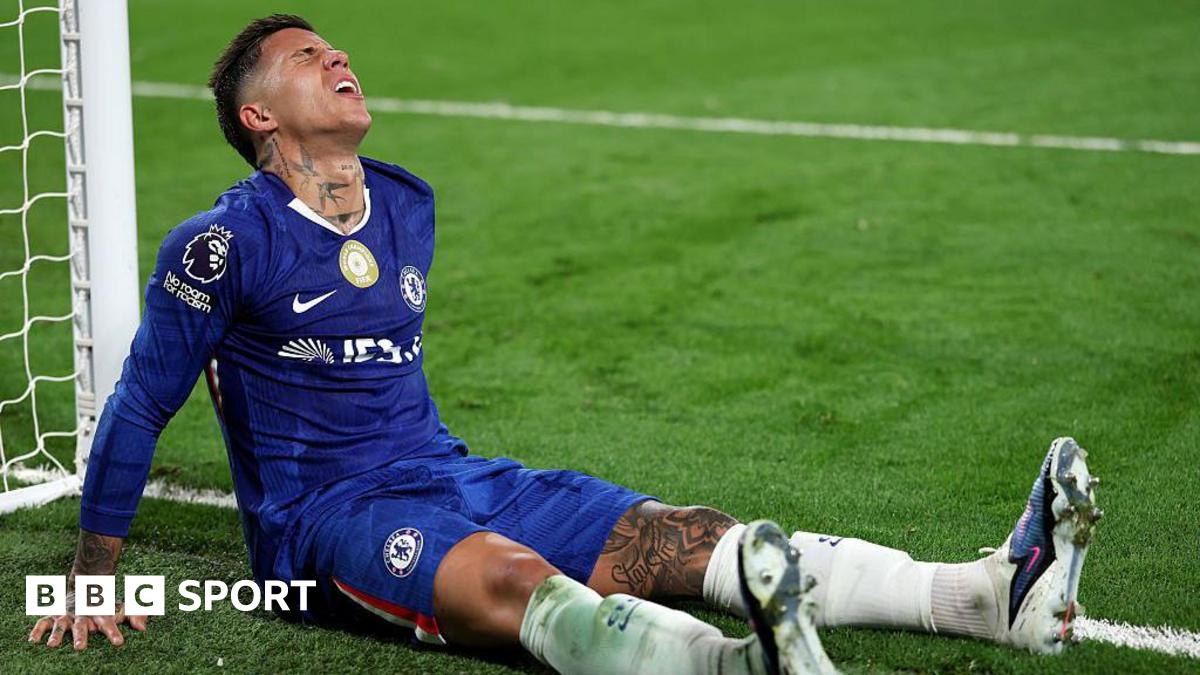
The Anatomy of a Tactical Disaster
Chelsea are facing an absolute medical nightmare at the worst possible moment. Head coach Liam Rosenior, already staring down the barrel of a must-win fixture against Manchester City, will now have to navigate the defining stretch of the season without his creative engine. Cole Palmer pulled up during Thursday’s high-intensity tactical session at Cobham.
He grabbed the back of his right thigh immediately after a deceleration movement. The medical staff did not hesitate to pull him from the pitch. Initial assessments are rarely optimistic in these scenarios, but the subsequent MRI results delivered a crushing blow. Palmer has suffered a Grade 2c tear of the biceps femoris.
This is not a standard, run-of-the-mill muscle tweak. The 'c' classification indicates that the damage extends deeply into the myotendinous junction. That is the fragile transitional zone where the muscle belly physically attaches to the tendon structure. Blood supply in this specific region is notoriously poor, making natural regeneration incredibly sluggish.
Poor blood flow means a protracted healing timeline. A standard muscle belly tear might heal in three or four weeks. A myotendinous junction tear requires a minimum of six to eight weeks of aggressive, carefully managed rehabilitation. Palmer is effectively ruled out for the remainder of the Premier League campaign.
The Biomechanics of Exhaustion
His participation in the upcoming FIFA World Cup 2026, which kicks off in North America on June 11, is now in serious jeopardy. England’s medical staff will undoubtedly be demanding daily updates from Cobham. But Chelsea cannot afford to care about international tournaments right now. They have an immediate crisis on their hands.
The mechanics of this injury are entirely predictable. Palmer’s entire game relies heavily on abrupt, violent deceleration. He receives the ball on the half-turn, drops his center of gravity, and forces opposing defenders to commit. That sudden braking action places extreme eccentric load on the hamstring complex.
The muscle is forced to lengthen while simultaneously contracting to absorb the force of his body weight. Over an exhausting season, microscopic tissue damage accumulates. Eventually, the structural integrity simply fails. Rosenior’s system relies entirely on Palmer's ability to operate in the right half-spaces.
Without him, the offensive structure collapses into a rigid, predictable U-shape around the penalty area. Against a Manchester City side that ruthlessly exploits transitions, lacking a central press-resistant playmaker is essentially a tactical death sentence. Chelsea will likely be forced to start Christopher Nkunku in a deeper role, asking him to perform ball-progression duties that simply do not suit his athletic profile.
The Triage Unit at St. James' Park
The medical failure at Chelsea is ultimately a squad building failure. You cannot rely on a single human hamstring to carry a billion-pound football club. Over in the North East, the situation is equally grim. The headline issue for Eddie Howe’s Newcastle United is the chronic, lingering deterioration of Alexander Isak’s groin.
The pressure mounting on Howe is immense, and it is forcing him into dangerous medical compromises. Isak has been dealing with early-stage osteitis pubis for months. This is a severe inflammation of the pubic symphysis and the surrounding muscle insertions, typically the adductor longus.
It is a classic overuse injury born from repetitive, high-speed directional changes. Every time Isak plants his foot to cut inside, aggressive shear force rips directly across his pelvic ring. The established medical protocol for osteitis pubis is complete rest. There is no shortcut.
But Howe is fighting to keep his job and secure European football. He cannot afford to rest his only reliable goalscorer. Instead, Newcastle's medical staff are being forced into a dangerous game of load management and pain suppression. They are likely managing Isak with localized anti-inflammatory injections just to get him through 60 minutes of football on a weekend.
A Systemic Collapse
This is a short-term gamble with catastrophic long-term consequences. Suppressing the body's natural pain response allows the player to continue causing micro-trauma to the pelvis without feeling it. The risk of a complete adductor tendon avulsion — where the tendon physically tears away from the bone — increases exponentially with every single match he plays under these conditions.
If Isak suffers a complete avulsion, his season ends immediately. The surgical intervention required to reattach the adductor tendon involves a grueling four-to-six-month recovery period. Newcastle are playing Russian roulette with a £60 million asset because the immediate financial implications of missing European qualification are simply too severe to ignore.
This is the grim reality of the modern Premier League run-in. Managers like Rosenior and Howe are operating purely in survival mode as the battles at both ends of the table heat up. They are heavily incentivized to ignore long-term medical warnings in favor of immediate three-point hauls. A medical director can present all the GPS tracking data and elevated creatine kinase load markers they want.
If the manager is desperate, the player is going out on the pitch. We have seen this movie before, and it always ends badly. Look back at Fernando Torres rushing his recovery from a meniscus tear for the 2010 World Cup. He permanently lost his explosive acceleration.
Look at N'Golo Kante being repeatedly pushed through chronic hamstring issues at Chelsea until his body completely rejected the workload. The Premier League operates on a brutal cycle of consuming elite talent, and the medical departments are merely functioning as damage-control units. The broader industry problem cannot be ignored.
Today is April 12. The Champions League Final is a mere 46 days away. The 2026 World Cup is right behind it. Players are physically breaking down under the weight of an expanded, deeply cynical calendar.
Sports science has advanced incredibly over the last decade, but it cannot outpace sheer biomechanical exhaustion. You cannot inject a player with platelet-rich plasma and expect an overworked muscle fiber to magically regenerate. The body always keeps the score. For Cole Palmer, the next two weeks will be defined by incredibly boring isometric loading and heavy hours confined to a hyperbaric oxygen chamber.
The physiological goal is to stimulate collagen synthesis in the damaged tendon without aggravating the actual injury site. By week three, if the follow-up ultrasound shows significant fluid reduction, he might begin light eccentric exercises on a dynamometer. But he will not kick a football in anger until late May at the absolute earliest.
Chelsea’s Champions League qualification hopes will likely be dead by then. The deep irony is that Manchester City, their upcoming opponents, figured out this medical puzzle years ago. Pep Guardiola rotates his squad with a ruthless, almost clinical detachment.
He prioritizes tactical freshness over individual rhythm. Consequently, City consistently arrive at the business end of the season with their key assets functioning at near peak physical capacity. Chelsea do not have that luxury.
Rosenior has run Palmer into the ground because he felt he had no other viable tactical alternatives. Newcastle are making the exact same fatal mistake with Isak. The sport has simply become too fast, too demanding, and too relentless for any single athlete to play 60 high-intensity matches a season without severe physical consequences.
Until the governing bodies seriously address the match calendar, these Grade 2 tears and chronic groin inflammations will remain the defining, unfortunate narrative of every major title race.
Read Next
- Chelsea's Enzo Fernández suspension exposes a dying project
- Chelsea are spiraling and Enzo Fernandez is the collateral damage
- A former Chelsea star's radical pivot to monastic life exposes football's void
- Newcastle's medical room is leaking depth as UCL dreams fade
- 🏴 England World Cup 2026 — Three Lions Hub