
Why Forest's European survival hinges on a masked Morgan Gibbs-White
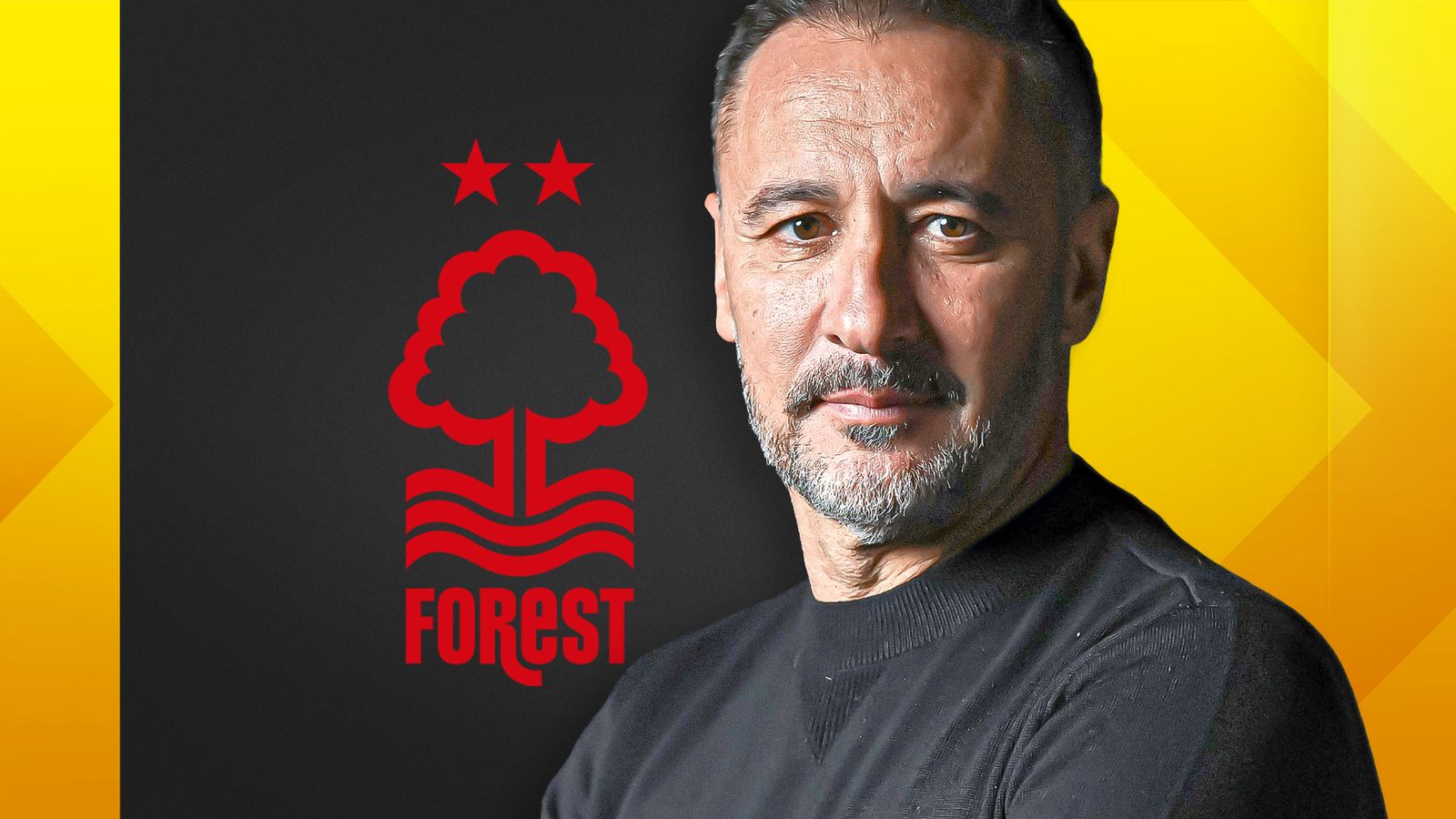
The Weight of the Midlands Derby
Thursday night at Villa Park is going to be incredibly loud, intensely hostile, and tactically fascinating. We are looking at a fierce domestic rivalry dropped right into the boiling cauldron of a European semi-final second leg.
The familiarity these two squads have with each other from the Premier League changes the dynamic entirely. There are no secrets here. No unknown quantities to figure out in the opening twenty minutes.
"Aston Villa vs Nottingham Forest... feels like the competition's final." - Paul Merson
Paul Merson was not dealing in hyperbole when he made that claim on Sky Sports. The intensity of this specific fixture outstrips whatever awaits the victor. Aston Villa want to stamp their authority as the dominant force in the region. Nottingham Forest are trying to recapture their historical European pedigree. It is a collision of heavy ambition and massive historical expectations.
The Medical Nightmare
But all the grand tactical plans and video analysis sessions are currently hostage to a single medical update. Morgan Gibbs-White missed training this week. The images of his facial injury have completely hijacked the pre-match narrative.
Forest are clinging to the possibility that he can take the pitch wearing a protective mask. It sounds heroic. The masked talisman marching out of the tunnel to orchestrate a famous European night. Fans love that imagery. The media loves it.
Tactically, however, it is a nightmare scenario. People vastly underestimate how much a rigid carbon-fibre mask impairs a player. It is not just about discomfort. It fundamentally alters your field of vision.
For a central playmaker, peripheral vision is your primary weapon. Before the ball even leaves a teammate's foot, a player like Gibbs-White has already scanned the pitch three times. He needs to know exactly where the passing lanes are and, more importantly, where the blind-side pressure is coming from.
A mask creates physical blind spots. It cuts off the extreme edges of your vision. If that forces you to physically turn your head to check your shoulder, you lose fractions of a second. In a crowded midfield block, a fraction of a second is the difference between a defence-splitting pass and a heavy tackle that launches an opposition counter-attack.
Gibbs-White operates almost exclusively on the half-turn. He receives the ball in those tight pockets of space between the opposition midfield and defensive lines. If he cannot process the spatial geometry around him instantly, his effectiveness plummets. He will take extra touches. He will play backward instead of breaking the line.
Pereira's Waiting Game
Forest manager Pereira is playing an agonizing waiting game. He is giving his primary creator until the very last moment to prove his fitness. You do not leave a player of that calibre on the bench in a match of this magnitude unless the medical staff explicitly forbid him from lacing his boots.
This entire situation exposes a massive, glaring recruitment failure by the Nottingham Forest hierarchy. It is a severe squad-building error. They are completely reliant on one individual to act as the offensive hinge of their entire team.
When Gibbs-White is absent, Forest's transition from a defensive shape to an attacking threat simply ceases to exist. They do not have a deputy who can replicate his exact movement profile. Instead of progressing the ball intelligently through the thirds, they regress into a rigid, deeply predictable side.
Without him, their build-up play becomes slow and horizontal. They cycle the ball between the centre-backs and full-backs, waiting for a gap that never materialises. Eventually, frustration sets in, and they launch hopeful, low-percentage diagonal balls toward the wingers. It is desperate football, and it rarely works against high-level opposition.
The atmosphere at their training base reflects this anxiety. The BBC reported that the club remain hopeful regarding his availability. But hope is a terrible tactical foundation. It is an admission that you do not have a viable fallback plan.
The Tactical Battleground
Let us examine the tactical puzzle Aston Villa presents. They operate with a notoriously aggressive high defensive line. They want to squeeze the effective playing area into a tiny 30-yard strip in the middle of the pitch. They want to suffocate the ball carrier and force turnovers in dangerous areas.
To beat that trap, you need exceptional timing. You need a player who can delay a pass by milliseconds to ensure the runner stays onside before releasing the ball perfectly into the space behind the full-backs. Gibbs-White is Forest's only player capable of consistently executing that specific action under heavy pressure.
If Pereira is forced to deploy a 4-2-3-1 formation without his primary number 10, the spaces between the lines will become desolate. Villa's double pivot will step up and aggressively compress the midfield. They will challenge every first touch. They will look to dominate the physical battles early.
Villa are incredibly well-drilled in these defensive transitions. When they lose the ball, their immediate counter-press is ferocious. They hunt in packs of three to win the ball back within five seconds. If Forest cannot string together three accurate passes to bypass that initial wave of pressure, they will spend the entire match pinned inside their own penalty area.
The Physical Toll of the Mask
This is where the mask issue returns to the forefront. If Gibbs-White starts, Villa's midfield enforcers will test him within the opening five minutes. It is a ruthless but entirely legal part of the game.
They will challenge him in the air. They will leave a shoulder in during a heavy 50-50 challenge. They need to find out if he is hesitant. They need to see if the mask is distracting him.
If he shows even a hint of self-preservation, Villa will target him relentlessly. They will crowd his space and force him into rushed decisions. A European semi-final is no place for passengers. You are either fully committed to the physical realities of the match, or you become a liability to your own team.
Consider the specific geometry of Forest's build-up phase. It heavily relies on the right-sided centre-back stepping into midfield. This only works if the number 10 drifts into the corresponding half-space to offer a vertical passing option. Without Gibbs-White making that specific unselfish run, the centre-back is forced to turn backward, instantly triggering Villa's aggressive pressing trap.
The Pressing Triggers and Mid-Block Mechanics
We have to look specifically at how Forest's mid-block functions without a natural number 10 leading the press. Normally, Gibbs-White operates as the tip of the spear defensively. He dictates the angle of approach. He forces the opposition centre-backs to pass outward toward the touchline, where Forest's wingers wait to spring a trap.
If Pereira has to push a traditional central midfielder further forward to fill that void, the timing of the press breaks down. A defensive midfielder instinctively wants to drop and cover space. A natural number 10 instinctively wants to jump out and disrupt the ball carrier. You cannot rewire years of positional programming in three days of training.
Villa's centre-backs will recognise this hesitation immediately. They will bait the press. They will hold the ball under their feet, inviting the disorganized Forest midfield to step out of shape. Once that shape fractures, Villa will play rapid, vertical passes straight through the middle of the pitch.
This places immense pressure on Forest's two holding midfielders. They will be tasked with covering an impossible amount of ground. They will be dragged out wide to deal with Villa's overlapping runs, leaving the top of the penalty area completely exposed for cut-backs.
It is exactly this type of structural collapse that Villa's coaching staff are built to exploit. They feast on disorganized transitions. They do not just attack space; they manufacture it through deliberate, provocative possession patterns.
And what happens when Forest actually win the ball back deep in their own half? The initial clearance must be perfect. If you are defending with eight men behind the ball, your striker is completely isolated against two dominant centre-backs. He cannot hold the ball up forever.
He needs runners. He needs a central attacking midfielder sprinting thirty yards to offer a short passing option. Gibbs-White makes those lung-busting support runs repeatedly. It is the unglamorous side of his game that rarely makes the highlight reels, but it is the tactical glue that holds Forest's transition game together.
Let us outline the exact tactical deficits Forest face without their primary creator:
- Total loss of central ball progression through the middle third.
- Wide forwards become isolated on the touchline with zero overlapping support.
- Set-piece delivery quality drops significantly, removing a vital scoring threat.
The Final Verdict
Villa's attacking structure is fluid and dangerous. They use inverted full-backs to create numerical superiority in the centre of the pitch. This drags the opposition wingers inside, which then isolates the opposing full-backs against Villa's dynamic wide forwards.
It is a brilliant tactical loop that constantly forces the defending team to make terrible choices. Do you step inside to help the midfield and leave the winger completely unmarked? Or do you stay wide and allow Villa to dominate possession centrally?
Forest will likely set up in a very deep, compact block. They will try to deny Villa any space between the lines. They will challenge them to break down a low block by endlessly circulating the ball. It is a strategy built on extreme patience and flawless concentration.
But defending a penalty box for over an hour is exhausting. Mental fatigue leads to physical mistakes. A missed assignment on a runner from deep. A failure to track a late run to the edge of the box in the 90th minute. These are the details that decide European ties.
Everything comes down to this single tactical pivot point. A late fitness test. A custom-fitted piece of protective gear. The margins at this elite level of the sport are almost microscopic.
If Morgan Gibbs-White walks out of that tunnel wearing a mask, Forest have a fighting chance to exploit Villa's high line and snatch a famous result. If he does not, Pereira will have to rely on a defensive masterclass and an obscene amount of luck. I know which one I would rather bet on.
Read Next
The Age of Football: Soccer and the 21st Century by David Goldblatt
A deep dive into the global impact of the beautiful game.
More Coverage
Top 10: Definitive Penalty Moments in Modern Football
2 hours ago
Top 10: Defining Football Moments of the 2025-26 Season
6 hours ago
Top 10: The Defining Moments of the 2025/26 English Football Season
7 hours ago
The post-football career pivot is the smartest move a veteran can make
13 hours ago
Top 10: The Most Audacious Moments in Modern Football
15 hours ago
Crystal Palace's unlikely European title exposes the modern speed gap
16 hours agoMore Analysis
Morgan Gibbs-White is the only story that matters before Villa Park
3 weeks, 2 days ago
Nottingham Forest face tactical reality against Aston Villa after Chelsea high
3 weeks, 3 days ago
Forest face a Europa League mountain without their engine room
3 weeks, 3 days ago
Morgan vs. Morgan: The duo defining the Europa League semi-final
4 weeks, 1 day ago
Nottingham Forest are turning the Europa League into a City Ground cage fight
4 weeks, 1 day ago