The Salah anomaly
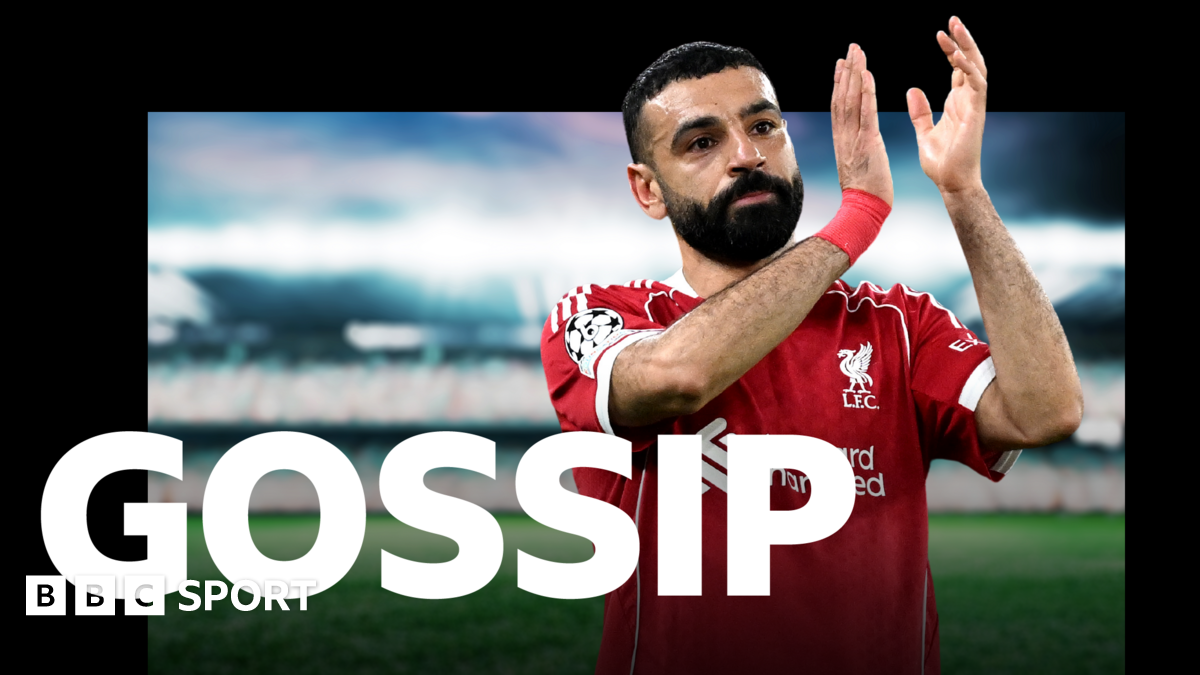
Only one player in Europe's top five leagues has consistently overperformed their non-penalty expected goals by a margin of at least 15 percent across seven consecutive seasons. That player is Mohamed Salah.
When the BBC reported that Al-Ittihad have rekindled their efforts to sign the Liverpool forward, the immediate reaction focused on his age. He turns 34 this coming June.
But the Saudi Pro League outfit aren't looking at his birth certificate. They are looking at his underlying metrics. Salah's shot volume has naturally dropped from his 2017 peak, but his shot quality has steadily increased.
He takes fewer low-percentage efforts from the right half-space now. Instead, he focuses on high-value zones. His average shot distance has decreased by almost two yards over the last three campaigns.
This is why Al-Ittihad are willing to offer astronomical wages. They are buying the most efficient attacking output in world football. Even with a theoretical decline in explosive pace, Salah's spatial awareness and shot execution remain elite.
The evolution of a right winger
Look at his ball retention in the final third. During his peak creative seasons, Salah completed 78.4 percent of his passes under pressure. For a player who almost exclusively operates in congested areas, that figure is absurd.
Compare that to his peers. Bukayo Saka, often touted as his stylistic successor, traditionally sits at roughly 73 percent. Phil Foden hovers around 75 percent. Salah does not just create chances; he recycles possession when the primary passing lane is blocked.
Al-Ittihad know exactly what they are missing. Their current attacking setup heavily relies on central progression, but they lack a ruthless, penetrating runner on the right flank. Their attacks frequently break down when shifted wide.
Last season, Al-Ittihad averaged just 12.4 crosses per game from the right side, the third-lowest in the Saudi Pro League. They play narrow, congested football. Salah completely changes their geometry. He pins the opposition left-back, forcing the defensive line to stretch horizontally.
The Ndiaye profile at Old Trafford
The second half of Thursday's gossip column is arguably more intriguing from a tactical perspective. Manchester United are considering a move for Everton's Iliman Ndiaye.
At first glance, this feels like an underwhelming target for a club of United's financial stature. Ndiaye is not a prolific goalscorer. He managed just three league goals in his final season at Marseille before moving to Goodison Park.
But modern recruitment is rarely about raw goal totals. It is about spatial occupation and off-the-ball intensity. During his standout year at Sheffield United, Ndiaye averaged 1.83 successful take-ons per 90 minutes.
More importantly, he ranked in the 88th percentile for attacking third tackles among attacking midfielders and wingers. He is a defensive menace in the final third. This is exactly what United have lacked when attempting to implement a high-pressing system.
The critical flaw in United's plan
Here is the problem with dropping Ndiaye into the current Manchester United setup. He requires a highly structured pressing unit to function effectively.
At Everton, Sean Dyche uses him as a localized disruptor. He chases loose touches and initiates transitions. United, however, frequently suffer from massive gaps between their forward line and midfield pivot.
If Ndiaye presses the opposition centre-back, but the United midfield fails to step up, he will simply be bypassed. He will spend 90 minutes doing shuttle runs. His pressing numbers will remain high, but his actual defensive impact will be zero.
There is also the question of his final ball. His expected assisted goals (xAG) figure hovered around 0.14 per 90 during his last full European campaign. That is not the creative output of an elite playmaker.
Let's break down Ndiaye's heat map. He is nominally a second striker or a wide playmaker, but his touch distribution is heavily concentrated in the left half-space.
He receives the ball on the half-turn, taking his first touch inside to shield it from the retreating full-back. From there, he either draws a foul or threads a pass through the defensive line.
At Everton, this skill set was heavily utilized to relieve pressure. Dyche's side often averages less than 40 percent possession. When they win the ball back, they need an out-ball. Ndiaye is that out-ball.
He frequently averages over four progressive carries per 90 minutes. He drags his team 40 yards up the pitch single-handedly. But Manchester United do not need an out-ball. They need a player who can unlock a low block.
A fundamental mismatch
When United face teams that sit in a mid-block, they struggle to create central overloads. Their wingers prefer to receive to feet on the touchline. This isolates the central striker.
Ndiaye could theoretically operate as a floating ten, pulling centre-backs out of position. But his passing range is limited. He attempts just 2.1 switches of play per season. He is a short-distance combination player.
If he is forced to play long, diagonal balls to switch the point of attack, his completion rate plummets. This is where the recruitment strategy looks disjointed.
You are buying a player who excels in chaotic transitions and asking him to break down set defenses. It is a fundamental mismatch of player profile and tactical requirement.
This is the fundamental difference between the two transfers reported today. Al-Ittihad are pursuing Salah because he is a proven, systemic goalscorer who elevates the baseline level of any attack.
Manchester United are considering Ndiaye because he fixes a specific, localized problem—a lack of final-third pressing—without addressing the broader structural issues within the team. One transfer is a calculated investment. The other feels like a reactionary attempt to plug a tactical hole with the wrong type of player.
Read Next