The day the football market finally lost its mind
Football is the only industry on the planet where you can spend the equivalent of a small country's GDP on a single human being and then get mad when he catches a cold in March. We have reached a point where seeing a nine-figure sum attached to a player doesn't even make us blink anymore. It is just another Tuesday in a sport that has more money than sense and a shorter memory than a goldfish.
The current obsession with breaking transfer records has turned every summer into a giant game of Monopoly played by people who don't understand the rules. We see owners throwing around cash like they are in a strip club at 3:00 AM, hoping that the sheer weight of their wallet will somehow translate into a Champions League trophy. Spoiler alert: it usually doesn't. Most of these deals are less about sporting merit and more about billionaires measuring their egos on a global stage.
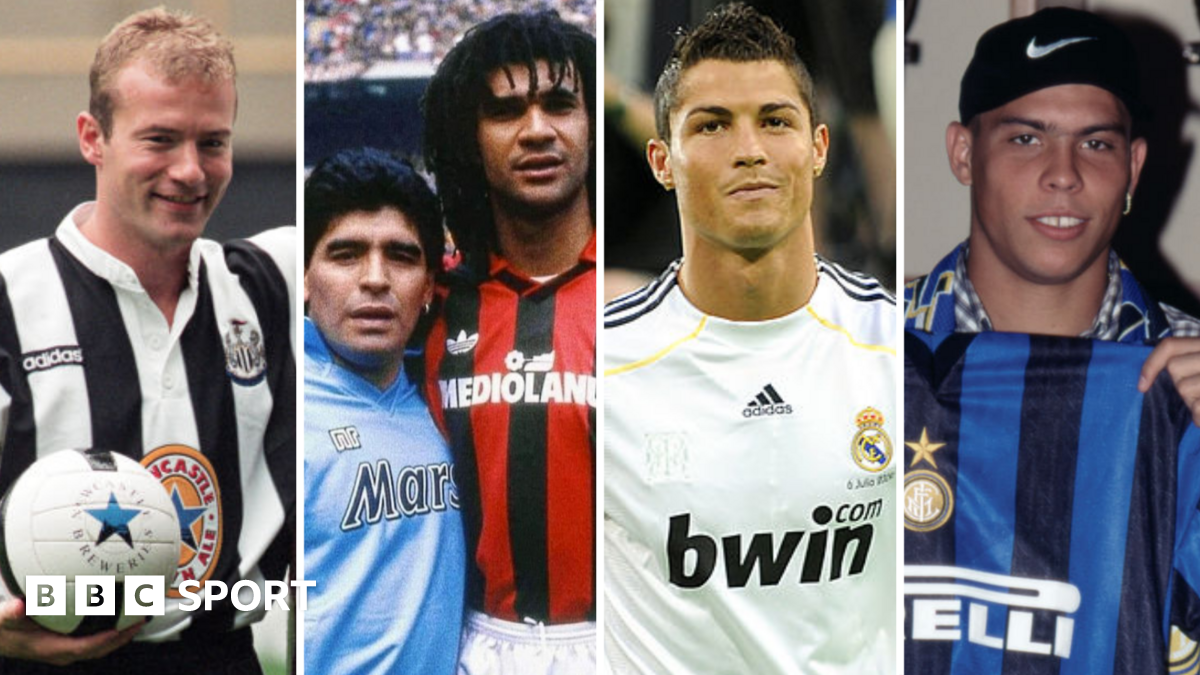
As the BBC recently pointed out, stumping up world record sums does not always guarantee success. For every Cristiano Ronaldo, there are three players who spent most of their record-breaking tenure injured, pouting, or wondering why they swapped sunny Spain for a rainy training ground in northern England. It is a minefield of bad decisions and inflated expectations that would make a Wall Street hedge fund manager blush.
The Neymar effect and the death of the sensible deal
If you want to find the exact moment when the footballing world jumped the shark, look no further than the summer of 2017. PSG decided to activate Neymar’s release clause of €222 million and effectively broke the transfer market for everyone else. Before that deal, a world-class player cost you maybe sixty million. After it, every club with a semi-decent winger decided they were sitting on a gold mine.
Neymar’s move was the ultimate vanity project. It wasn't about building a team; it was about branding. PSG wanted to show they could take anyone they wanted from Barcelona, the biggest club in the world. They succeeded, but at what cost? They spent half a billion euros on one guy when you factor in wages and bonuses, and they have exactly zero European trophies to show for it. It turns out you can't just buy a soul for a football club.
The ripple effect was catastrophic. Suddenly, Barcelona had two hundred million burning a hole in their pocket and the collective scouting intelligence of a bag of hammers. They panicked and spent it on Philippe Coutinho and Ousmane Dembele, two deals that will go down in history as the most expensive ways to sit on a bench. It was a chain reaction of stupidity that started in Paris and ended with Barca nearly going bankrupt.
The rare occasions when the money actually made sense
It isn't all doom and gloom, though. Once in a blue moon, a club actually pays a record fee for a player who isn't a total fraud. Take Cristiano Ronaldo’s move to Real Madrid in 2009. At the time, eighty million pounds felt like an insane amount of money for a guy who spent half his time doing step-overs and the other half looking at himself on the big screen. But then he went and scored 450 goals for them.
Ronaldo at Madrid is the gold standard for transfer success. He won four Champions League titles and turned the club back into the global juggernaut it always thought it was. He was so good that by the time he left, the original fee looked like a clerical error. That is the only time a world record transfer is truly justified—when the player becomes so synonymous with the club's success that you can't imagine them without him.
Then you have Zinedine Zidane. In 2001, Real Madrid paid about forty-six million pounds for a thirty-year-old. On paper, that is terrible business. You don't break the world record for a guy whose knees are already starting to creak. But then he hit that volley in the 2002 Champions League final against Leverkusen, and suddenly the price tag didn't matter. He brought 13 trophies to the club as a player and manager, proving that sometimes you pay for the aura as much as the output.
When the record fee becomes a lead weight
For most players, the world record fee is not a badge of honor; it is a noose. Look at Paul Pogba’s return to Manchester United. They paid eighty-nine million pounds to bring back a player they let go for free. That alone should have been enough to get the entire board fired. Pogba is a brilliant footballer on his day, but at United, he became a lightning rod for everything that was wrong with the post-Ferguson era.
Every time he had a bad game, people didn't just talk about his passing; they talked about his price. Every haircut was a national emergency. Every Instagram post was seen as a distraction from his failure to dominate the midfield against Burnley. When you cost that much, you aren't allowed to have an off day. You have to be the best player on the pitch every single week, or the fans will turn on you before you can even get your boots off.
The same thing happened to Jack Grealish at City. Even though they won the Treble, there was always that nagging feeling that he wasn't doing 'hundred million pound things.' We have created a world where we judge players not by their talent, but by the number of zeros on their invoice. It is a miserable way to watch the game, and it is entirely the fault of the owners who think they can play FIFA Ultimate Team in real life.
The emotional value of the local hero
We also have to talk about the transfers that didn't just break records but broke hearts. Alan Shearer going to Newcastle in 1996 for £15 million was a massive statement. He turned down Manchester United, the biggest team in the land, to go back to his hometown club. In terms of trophies, it was a disaster. He won absolutely nothing at St James' Park while United went on to win everything.
But if you ask any Newcastle fan, they will tell you it was worth every penny. He became the Premier League's all-time top scorer in those black and white stripes. He gave a city a reason to believe again. That is the intangible side of these deals that the accountants always miss. Sometimes the record fee isn't about the ROI; it's about the feeling in the stands when the local boy bangs one in from thirty yards.
Then there is Diego Maradona to Napoli. In 1984, they paid £5 million to sign the best player in the world from Barcelona. At the time, Napoli were a struggling side in a city that felt ignored by the rich north of Italy. Maradona didn't just play for them; he became their god. He won them two league titles and a UEFA Cup, single-handedly sticking it to Juventus and Milan. That wasn't a transfer; it was a revolution.
Why we need to stop caring about the price tag
The problem with the modern game is that we have lost the ability to just enjoy a player for what they are. We are too busy checking their amortized cost over a seven-year contract to notice a beautiful through-ball. The media is just as guilty, turning every transfer window into a frantic countdown where the biggest spender is crowned the winner before a ball has even been kicked.
We need to get back to a place where we roast a player because he missed a sitter, not because he represents a poor allocation of capital. The world record is a meaningless title that changes every eighteen months anyway. By the time the 2026 World Cup kicks off in a few weeks, someone will probably have spent two hundred million on a teenager from the Brazilian second division who has only played five professional games.
Ultimately, these massive fees are just a symptom of a sport that has more money than it knows what to do with. We can complain about the greed and the insanity all we want, but we are the ones who keep tuning in. We are the ones who buy the shirts and pay for the subscriptions. We are the fuel for this fire, so we shouldn't be surprised when it occasionally burns the whole house down.
Read Next
- Man United chasing Tchouameni is the club defining madness
- Manchester United eye Real Madrid reinforcement as defensive overhaul looms
- Liverpool are finally locking down Ibrahima Konaté
- Why Brentford's chaotic transfer window hinges on physical enforcers
- ⚽ La Liga 2025-26 — Title Race Hub
- ⚽ Ligue 1 2025-26 — PSG, Monaco & the Title Race Hub