Tier 1 Reality Check: The Source
Sky Sports has dropped the quotes, and there is no ambiguity here. This is Tier 1, direct-from-the-manager confirmation. Pep Guardiola has publicly stated his exhaustion with the officiating system.
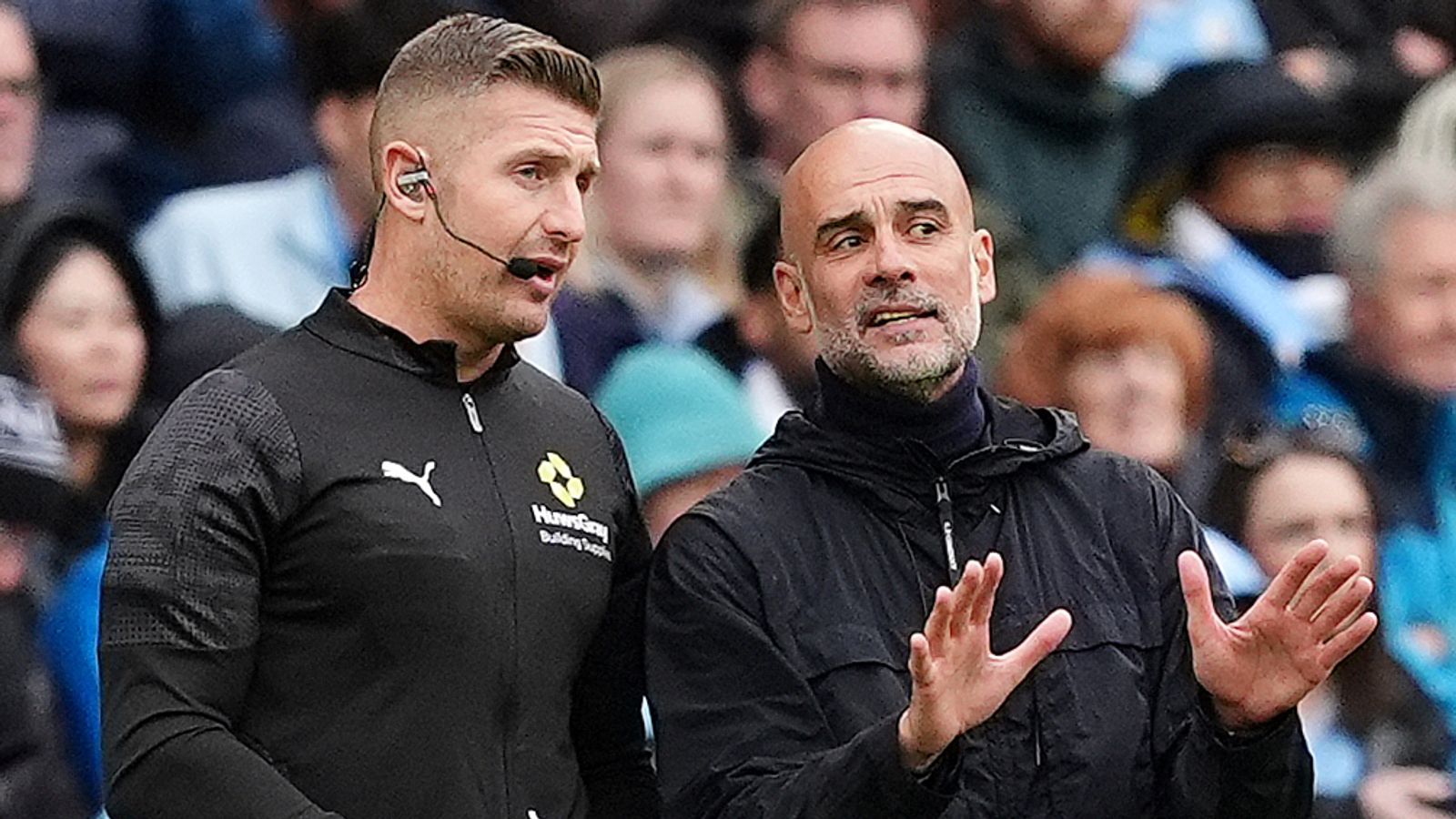
"I have never trusted anything with VAR."
There is no hiding behind PR spin or vague club statements. The Manchester City manager is exhausted by the micro-analysis of every decision. When he speaks with this level of bluntness, the rest of the league pays attention.
We are not dealing with a rumour cooked up on a message board. This is the defining voice of the modern Premier League admitting defeat against the machines.
Guardiola is usually calculated in his press conferences. He praises opponents, he downplays expectations, and he rarely offers a viral soundbite without a purpose. This outburst breaks that mold entirely.
He is setting a baseline. By stating his distrust so clearly, he is insulating his team against future controversies. It is a preemptive strike against the inevitable refereeing drama that will unfold over the coming weeks.
You do not drop a quote like this unless the internal frustration has reached a boiling point. The dressing room has clearly had enough, and the manager is acting as their shield.
The Tactical Fit: How VAR Alters the City Machine
To understand Guardiola's frustration, you have to look at how Manchester City actually play football. They operate with a devastatingly high defensive line.
Ruben Dias and John Stones are routinely asked to defend on the halfway line. This requires absolute precision. It also requires an officiating system that understands the geometry of the pitch in real-time.
VAR has turned the offside trap into a forensic investigation. Strikers are flagged for an armpit being ahead of a trailing heel. For a team that relies on suffocating opponents in their own half, these marginal calls are maddening.
The tactical risk profile has completely changed. In the past, a well-executed offside trap was a definitive defensive weapon. Now, it is a roll of the dice in Stockley Park.
Guardiola knows that relying on a screen is a fool's errand. His instruction to the squad is simple. Remove the referee from the equation. Win by three goals, not one.
This means City cannot afford to drop their intensity. If they are leading 1-0 in the 80th minute, a single VAR intervention can cost them two points. They have to keep attacking to build an insurmountable buffer.
The Historical Context: A Trail of Broken Trust
This admission did not happen overnight. The scar tissue goes deep. You have to go back to 2019 to find the moment the trust really shattered.
The Champions League quarter-final against Tottenham Hotspur remains the defining VAR trauma for this club. Raheem Sterling scoring in stoppage time. The Etihad erupting. Guardiola sprinting down the touchline.
Then, the review. Sergio Aguero was ruled offside in the buildup by the narrowest of margins. The goal was chalked off. Spurs advanced.
From that night forward, Guardiola stopped celebrating goals immediately. He waits. He looks at the referee. He looks at the giant screen. The pure, visceral joy of scoring has been replaced by a tense legal review.
When he says he doesn't trust the system, he is speaking from years of accumulated grievance. The recent Premier League apologies from PGMOL have only poured salt in the wound.
It is one thing to lose a game because a striker missed a penalty. It is another entirely to drop points because someone misaligned a graphic on a replay monitor. That lack of control is what drives a perfectionist crazy.
He has built a career on eliminating variables. He controls the diet, the training, the passing angles, and the pitch dimensions. VAR is the one chaotic element he cannot coach out of the game.
The Crystal Palace Challenge: Focus Over Frustration
The timing of these comments is dangerous. City are preparing to face Crystal Palace. Selhurst Park is rarely a comfortable afternoon for anyone.
Palace are built to absorb pressure and counter quickly. They have the pace to exploit the space behind City's high line. If City are distracted by the officiating, Palace will punish them.
Guardiola is acutely aware of this trap. His press conference was a warning to the officials, but it was also a directive to his players. Do not look for excuses. Do not expect favors.
If a penalty is denied, sprint back into position. If a goal is ruled out, retrieve the ball and score another. The focus must be absolute.
Palace have taken points off City before by dragging them into scrappy, emotional games. Guardiola is trying to preempt that scenario by airing his grievances now, leaving the players with a clear mindset for kickoff.
The message is blunt. The referee is not going to help you. The video assistant is not going to save you. Go out there and beat Palace so decisively that the men in black do not matter.
Player Profile: The Mental Toll on the Squad
Look at the body language of the City players recently. Kevin De Bruyne barely registers emotion when a flag goes up. Erling Haaland just shakes his head and walks back to the center circle.
The squad has internalized the manager's skepticism. They are programmed to play to the whistle, but the whistle no longer means anything. The real decision comes two minutes later.
This creates a bizarre psychological environment. You are asking elite athletes to perform at maximum intensity, but denying them the immediate emotional release of success.
You have to be cold. You have to be clinical. City have built a squad of players who can detach themselves from the injustice of a bad call and just keep passing the ball.
Phil Foden is a prime example. He gets kicked relentlessly. He rarely dives. When a decision goes against him, he does not crowd the referee. He just resets and looks for the next pocket of space.
That level of discipline is hard to maintain over a 38-game season. Guardiola is speaking out because he knows his players are exhausted by the constant friction of the rulebook.
There is a breaking point for every squad. City are dangerously close to theirs when it comes to officiating.
The Cost of Doing Business
If we look at this through the lens of a transfer, the fee here is the emotional energy expended on complaining. Guardiola is refusing to pay it anymore.
He is cutting his losses. By declaring his lack of trust, he is bankrupting the idea that City will ever rely on a favorable decision. It is a brilliant bit of psychological management.
He takes the heat. He creates the headline. The players are shielded from the debate and can focus entirely on the pitch.
Other managers let VAR complaints define their entire season. They bring iPads to press conferences. They write open letters. Guardiola drops one devastating quote and moves on.
The wager here is that this public dismissal of the system will galvanize his team. It is an us-against-the-world narrative, delivered by a manager who usually prefers to focus purely on football.
He knows the media will run with this quote for days. He expects the think pieces and the radio debates. And while everyone else is arguing about lines on a screen, his squad will be running tactical drills.
Probability Assessment: The Reality Check
What is the probability of VAR improving in the short term? Zero.
The technology is what it is. The human operators will continue to make subjective errors while drawing objective lines. The Premier League is stuck with this flawed product.
There will be no magical transfer of competent officials to save the day. The expected timeline for a flawless VAR implementation is never.
Guardiola has accepted this reality. That is the core of his message. The system is broken, so stop waiting for it to be fixed.
We are not going to see an influx of new technology that magically solves the offside rule. Semi-automated offsides might speed up the process, but the fundamental argument over intent and interference will remain.
The probability of PGMOL suddenly achieving perfect accuracy is nonexistent. City have to price that failure into their title bid.
Every dropped point will be scrutinized, but the underlying truth remains. The club must deal with human error masquerading as technological precision.
The Expected Impact
The immediate impact should be visible against Crystal Palace. Expect City to be ruthless. Expect them to finish passing sequences rather than appealing for fouls.
But let's be entirely clear about the reality on the pitch. City cannot blame everything on the officials. Their defensive transitions have been uncharacteristically sloppy over the last month.
Dias has looked slow on the turn, and Akanji is too easily dragged out of position. Whining about VAR is a convenient shield for a backline that has simply been leaking cheap goals.
If Palace exploit that high line, no amount of complaining will save City. They have to fix their own house before they burn down the PGMOL headquarters.
Historically, this version of Manchester City responds well to perceived injustice. When they feel the deck is stacked against them, they usually respond by simply removing the opponent from the game entirely.
They will hold 75 percent possession. They will create a dozen clear chances. They will attempt to make the referee completely irrelevant.
VAR might have broken Guardiola's trust, but it has not broken his team. If anything, it has given them a new reason to be absolutely flawless.
The margins are too tight to rely on a monitor. The only way to survive is to be undeniably better than everyone else on the pitch.