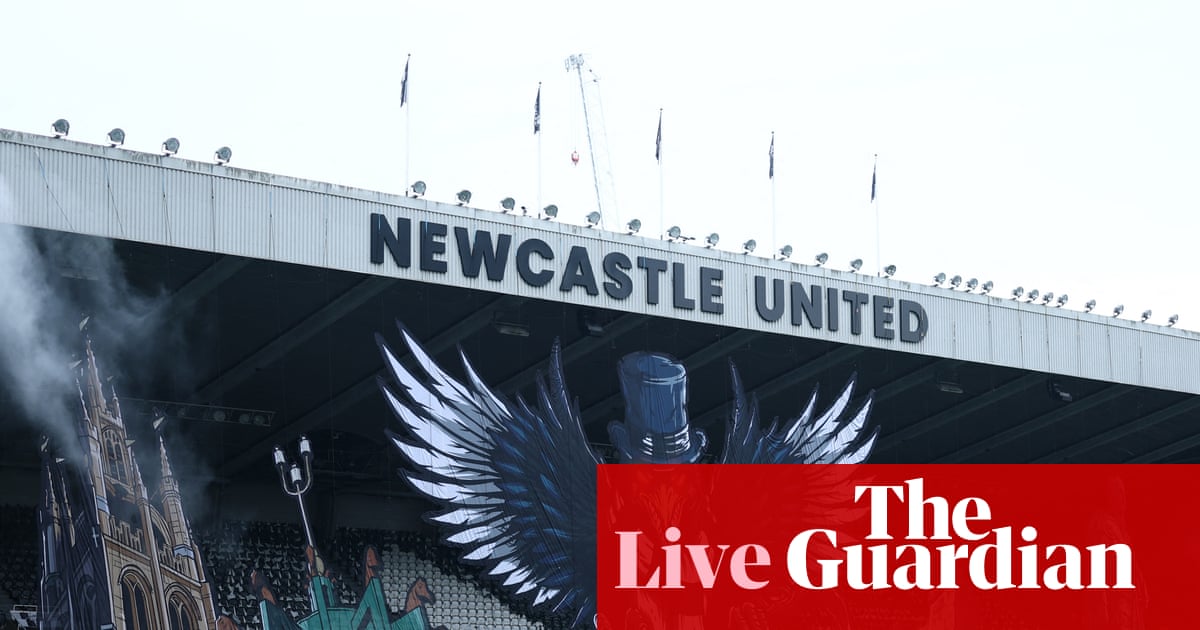
Why Peter Crouch at Newcastle remains one of football's great missed connections

The 2009 transfer saga that almost turned red and white
In the summer of 2009, Peter Crouch was sitting in a car driving away from Sunderland's training ground. He had already agreed to personal terms and met with Steve Bruce. The move felt inevitable, a done deal in every sense except for the ink on the contract. It was a period when Sunderland were spending aggressively, trying to cement themselves as a top-half Premier League force.
Then the phone rang. It was Harry Redknapp, and the direction of Crouch's career changed in a single conversation. Instead of heading to the North East, he turned back toward London to join Tottenham Hotspur in a £10 million deal. It was a move that made sense for his England career, but it left a lingering question mark over what he could have achieved in a different environment.
Crouch recently admitted that while Sunderland was the club he nearly joined, Newcastle United was the one he truly wanted. There is something deeply resonant about a player of his profile admitting a fascination with St James' Park. He wasn't just another striker looking for a paycheck; he was someone who understood the weight of the shirt. He grew up watching the Entertainers and the relentless scoring of Alan Shearer.
The weight of the Newcastle number nine
The role of the Newcastle centre-forward is different from almost any other in English football. It carries a specific gravity, a demand for both technical excellence and a certain blue-collar work ethic. Crouch recognized this early on, noting that
I reckon there's something special about being Newcastle's number nine.It is a sentiment shared by many, but few would have fit the aesthetic of that era quite like the 6ft 7in striker.
Think back to the post-Shearer years at Newcastle, a period defined by expensive mistakes and tactical incoherence. While Crouch was flourishing at Portsmouth and Spurs, Newcastle were cycling through the likes of Michael Owen and Obafemi Martins. Owen, in particular, never seemed to truly embrace the city or the culture in the way Crouch describes. There was always a sense of detachment, a feeling that he was elsewhere even when he was on the pitch.
Crouch, by contrast, seems to have a genuine affection for the atmosphere of a true football city. He mentioned his appreciation for the pre-match music and the way the fans live and breathe every result.
Whenever I go up there, I feel like it's a football city,he remarked. That connection is often the difference between a successful signing and a £15 million waste of space.
A tactical fit that never materialized
Technically, Crouch was always more than just a target man, despite the lazy labels often applied to him. He had a touch that defied his height and an awareness of space that made him a nightmare for defenders. At Newcastle, he would have been the perfect foil for the creative midfielders they possessed during that transition period. He could have provided the focal point that Kevin Keegan or Chris Hughton's sides desperately lacked at various points.
The tragedy of the 2009 window wasn't just that Crouch missed out on Newcastle; it was that Newcastle were in the Championship. Mike Ashley's ownership had already begun to hollow out the club's ambition. While Crouch was dreaming of the number nine shirt, the club was busy being relegated under a revolving door of managers. It was the absolute worst time for a player of his caliber to consider a move to Tyneside.
Even so, the idea of Crouch under the lights at St James' Park remains a compelling thought experiment. He was at the peak of his powers in 2009, coming off a season where he scored 11 goals for a struggling Portsmouth side. He was a regular in Fabio Capello's England squads and was consistently proving doubters wrong. Newcastle, meanwhile, were entering a dark age of austerity and lack of direction.
The Sunderland alternative and the Steve Bruce era
Steve Bruce's Sunderland was a strange beast, capable of brilliant individual performances but often lacking a cohesive identity. They eventually signed Darren Bent, who was a phenomenal success, scoring 24 league goals in his debut season. Had Crouch joined, the dynamic would have been entirely different. Perhaps he would have formed a 'big man, little man' partnership with Bent that could have pushed Sunderland into Europe.
But the North East is a fickle place for strikers. For every Kevin Phillips, there is a Jozy Altidore. Crouch's admission that he was looking at houses in the area shows how close he came to that reality. It would have been a massive gamble for a player who had already played for Liverpool and was looking to stay in the Champions League picture. Choosing Spurs was the safe, logical choice, but it robbed us of seeing him in a derby atmosphere.
The rivalry between Newcastle and Sunderland is often misunderstood by those outside the region. It isn't just about geography; it's about identity. Crouch's comments suggest he understood that duality perfectly. He knew that by signing for one, he was effectively closing the door on the other. His desire for Newcastle was so strong that even a concrete offer from Sunderland couldn't quite extinguish the 'what if'.
The legacy of the Entertainers
Newcastle fans are often accused of living in the past, but when the past looks like the 1990s, it's hard to blame them. Crouch's desire to play for them stems from that same nostalgia. He wanted to be part of that lineage of great strikers who defined an era of English football.
If I had gone in just after that Alan Shearer phase, I would have been at a good age then,he said. It's a frank admission of timing being everything in a career.
In reality, Newcastle spent years trying to replace Shearer with players who didn't want to be there. Michael Owen's time at the club is still a sore point for many fans, largely because of the perceived lack of effort and his public falling out with Shearer. Crouch, with his self-deprecating humor and obvious passion for the game, would have been an instant cult hero. He wouldn't have just played for the club; he would have understood it.
There is also the matter of the fans themselves. Newcastle supporters have a reputation for being demanding, but they are also fiercely loyal to anyone who shows they care. Crouch's style of play — the overhead kicks, the delicate touches, the sheer uniqueness of his movement — would have been celebrated. He was a player who played with a smile, something that was often missing during the grim years of the Mike Ashley era.
The missed connection of the 2010s
As the 2010s progressed, Crouch became a staple at Stoke City, reinventing himself as a reliable Premier League veteran. Newcastle, meanwhile, fluctuated between the heights of the Alan Pardew fifth-place finish and the lows of another relegation. There were moments when a player of Crouch's experience and character would have been invaluable. Instead, they often relied on younger, unproven talent from the French market.
The lack of a veteran presence in the dressing room was a recurring criticism of Newcastle during that decade. While Crouch was helping Stoke establish themselves as a top-ten side, Newcastle were often lacking leadership. He was a player who could galvanize a team, both through his performances and his personality. He was the kind of professional who could have mentored the likes of Ayoze Perez or Aleksandar Mitrovic.
Instead, we are left with his podcast revelations and the occasional look back at what might have been. It is a reminder that football careers are often dictated by phone calls and timing rather than ambition. Crouch's career was a brilliant one, spanning multiple top clubs and a successful international stint, but the lack of a black and white shirt in his wardrobe remains a shared regret between him and the Tyneside faithful.
Critical analysis: The reality of the Ashley era
However, we shouldn't be too romantic about the prospect. The reality is that Newcastle under Mike Ashley was a toxic environment for any ambitious player. Had Crouch signed in 2009, he likely would have spent his best years fighting against a board that didn't want to invest. He might have been sold for a profit after eighteen months, much like Andy Carroll or Yohan Cabaye. The 'dream' might have quickly turned into a struggle for survival.
Newcastle's recruitment during that period was notoriously erratic. They often missed out on obvious targets while overpaying for players who didn't fit the system. Missing out on Crouch was symptomatic of a wider failure to build a squad with character. They lacked a clear strategy, and while Crouch was a 'Harry Redknapp player', he was exactly the type of character Newcastle needed to stabilize their identity.
The club's inability to capitalize on his interest is a damning indictment of that era. When a player of his profile is openly stating they want to play for you, and you're in a position to sign him, you make it happen. Instead, they allowed him to slip away to a rival, only to spend the next few years looking for someone with half his ability. It was a failure of vision that haunted the club for years.
The enduring appeal of St James' Park
Ultimately, Crouch's comments are a tribute to the enduring power of Newcastle United as a footballing institution. Even during their lowest ebbs, the club retained a pull that few others could match. For a player who had already experienced the Anfield atmosphere and the bright lights of London, the call of the North East was still strong. It speaks to a culture that survives regardless of who is in the boardroom.
Crouch's admission that
if I had to pick one club to play for, it would have been Newcastleis high praise indeed. It validates the fans' belief that their club is special, even when the results suggest otherwise. It's a sentiment that bridge generations, from the days of Jackie Milburn to the modern era under Eddie Howe. The number nine shirt continues to be a symbol of hope and expectation.
As we look back on Crouch's career, he will be remembered as one of the most unique and beloved strikers of his generation. He won trophies, scored world-class goals, and became a media personality of significant influence. But for a certain section of fans in the North East, there will always be that image of him in a black and white shirt, leaping for a header at the Gallowgate End. A dream that almost became a reality in the summer of 2009.
Final thoughts on a career well traveled
Peter Crouch played for eleven different professional clubs, but the one that got away is the one that seems to matter most in his reflections. His career was a testament to his longevity and adaptability, but it was also a series of choices that defined the modern Premier League era. His near-move to Sunderland and his desire for Newcastle are two sides of the same coin — a player who followed the logic of his career while keeping a piece of his heart for the traditions of the game.
Today, Newcastle are in a different world, backed by immense wealth and competing at the top of the table again. They have new heroes and new ambitions. But the story of Peter Crouch serves as a reminder of the years when the club's greatest assets were its history and its atmosphere. It's a story of what happens when the right player and the right club find themselves in the wrong decade.
Newcastle eventually found their new number nine in Callum Wilson and then Alexander Isak, but the Crouch-shaped hole in their history remains a fascinating footnote. As The Mirror reported, his dream was to wear the number nine at St James'. While it never happened, his words have given Newcastle fans one more reason to appreciate what they have — and what they almost had. By the way, the transfer fee was £10 million when he joined Spurs.
FOCO Premier League Official Team Scarf
Wear your club colors with pride from the pub to the stadium.
Frequently Asked Questions
Why did Peter Crouch not sign for Sunderland in 2009?
Which North East club did Peter Crouch actually want to play for?
What makes the Newcastle number nine shirt unique?
How did Peter Crouch view the atmosphere at Newcastle?
Why would Peter Crouch have been a good tactical fit for Newcastle?
More Coverage
Bayern Munich is just throwing darts at a map of the Premier League now
11 minutes ago
Achraf Hakimi's PSG future is uncertain before the Champions League final
15 minutes ago
Milan are sleepwalking into a structural identity crisis
16 minutes ago
Ibrahima Konate’s exit is official: Why Real Madrid are the clear favorites
16 minutes ago
Leeds United's summer rebuild under Daniel Farke is officially underway
an hour ago
Top 10: Defining Moments of the Modern Premier League Era
an hour agoMore Match Reports

The night Ruud Gullit benched Alan Shearer and broke Newcastle United
2 months, 1 week ago
Eddie Howe is the perfect Newcastle figurehead who shouldn't be coaching them
2 months ago
Newcastle's PR disaster masks a deeper tactical rot
2 months ago
Jose Mourinho to Newcastle is the beautiful disaster we all deserve
1 month, 2 weeks ago
Newcastle's £125m striker experiment is already falling apart
2 months ago