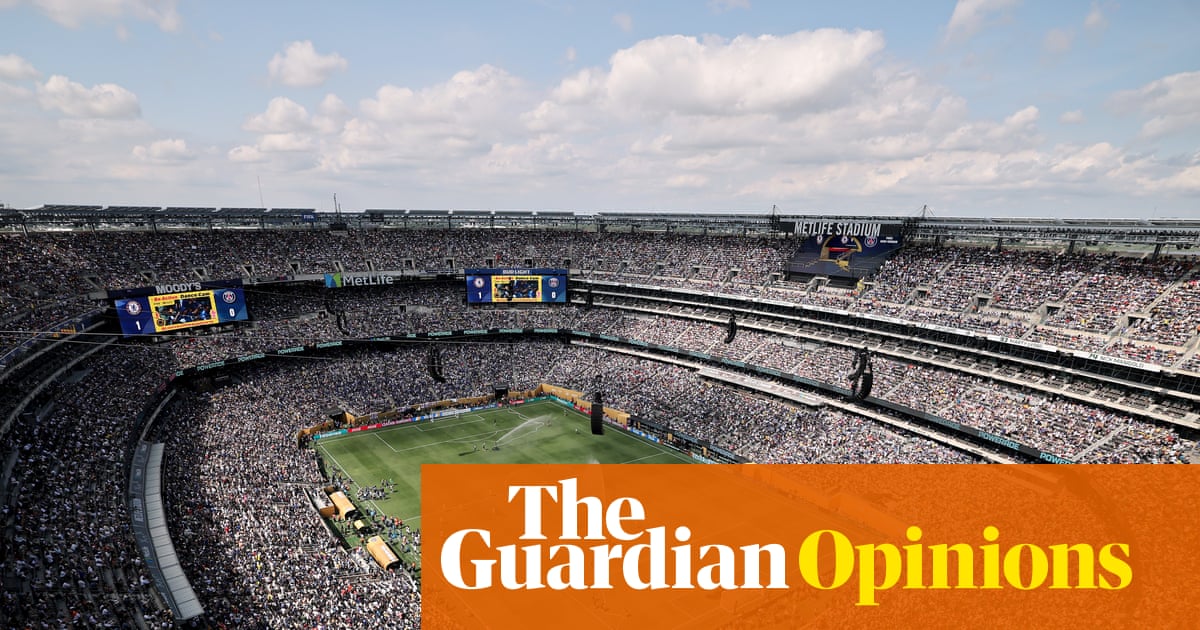
The 104-match monster looming over North America
We are exactly 59 days away from the kickoff of the 2026 World Cup at the Estadio Azteca, and the scale of what is about to happen is finally starting to sink in. This isn't just another tournament. It is a massive, sprawling, 48-team beast that will consume 16 cities across three countries. For the first time, we are looking at 104 matches packed into a single summer. It is a logistical footprint so large that it effectively kills the traditional concept of a 'host nation' as we have known it since 1930.
The expansion from 32 to 48 teams was never about the quality of the football. It was a mathematical exercise in political capital and broadcast revenue. By adding 16 more teams, FIFA didn't just invite more nations to the party; they invited a logistical nightmare that only a handful of regions on the planet can actually sustain. As The Guardian recently argued, the sheer size of the modern World Cup has made it too big for any single region to handle responsibly. We are no longer watching a tournament; we are watching a global infrastructure project.
The death of the cultural epicenter
In previous iterations, like Germany 2006 or even South Africa 2010, there was a sense of a tournament having a heart. You could feel the pulse of the event in the fan zones of Berlin or the streets of Johannesburg. In 2026, that heart is being surgically removed and replaced by a series of disconnected 'pods.' A fan in Vancouver will have a fundamentally different experience than a fan in Mexico City, separated by nearly 3,000 miles and three different time zones. The shared cultural experience that defines a World Cup is being sacrificed at the altar of volume.
This fragmentation is the primary reason why Leander Schaerlaeckens is right to call for total decentralization. If the tournament is already this disjointed, why pretend it belongs to a specific geography at all? The 2026 model is a halfway house—it keeps the branding of a 'North American' cup while delivering the reality of a televised product scattered across a continent. It is the end of the World Cup as a pilgrimage and the beginning of the World Cup as a distributed network of content hubs.
The tactical cost of continental travel
From a purely analytical perspective, the 48-team format creates a recovery deficit that will define the knockout stages. Consider a scenario where a team plays a Round of 32 match in Boston and then has to fly five hours to Los Angeles for the Round of 16. That isn't just travel; it's a physiological tax on the players. When you factor in the 90-degree humidity of Miami against the 7,300-foot altitude of Mexico City, the tactical consistency of the tournament begins to crumble. Managers won't be picking their best XI; they will be picking the eleven players whose lactic acid levels haven't hit the red zone yet.
We saw hints of this in the pan-European Euro 2020, where teams like Switzerland and Denmark were forced into grueling travel schedules while others stayed stationary. In 2026, this inequality will be magnified. The 'pod' system is supposed to minimize travel, but once we hit the knockout rounds, the bracket will dictate the movement. A team that tops their group might actually find themselves punished with a cross-continental flight on three days' rest. It is a mess that favors squads with the deepest benches, not necessarily the most coherent tactical systems.
Expansion and political influence have made soccer’s showpiece too big for one region to handle responsibly.
The quote from Schaerlaeckens highlights the underlying rot. When a tournament becomes this large, it becomes a tool for 'strongman' leaders to exert soft power. We saw it in Russia 2018, which now looks like a carefully choreographed PR stunt for Vladimir Putin. By decentralizing the tournament permanently—moving to a model where matches are played in established footballing hubs globally—you strip away the ability of a single regime to use the event as a shield. It turns the World Cup into a utility rather than a trophy for autocrats.
The environmental hypocrisy of the 48-team era
It is impossible to ignore the carbon intensity of this new format. FIFA continues to talk about 'sustainability' while scheduling a tournament that requires hundreds of thousands of fans and 48 teams to crisscross a continent by air for six weeks. The 104 matches mean more flights, more temporary infrastructure, and more waste. If the World Cup were decentralized into permanent, regional hubs with high-speed rail links—think a 'Western Europe' hub, an 'East Asian' hub, and a 'South American' hub—the environmental impact would plummet. Instead, we are stuck with a model that prioritizes the $11 billion revenue target over the very planet the game is played on.
The 2026 World Cup will also likely be the last time we see a group stage with any real tension. The move to 12 groups of four teams means that eight of the best third-placed teams will advance. This effectively removes the 'Group of Death' phenomenon. You could lose your first two matches and still find a way into the knockout rounds. It dilutes the stakes. Real journalism requires pointing out that FIFA has traded the sporting integrity of the group stage for the inventory of more broadcast windows. It is a cynical swap.
The looming shadow of 2030
If you think 2026 is a logistical reach, look at what FIFA has planned for 2030. A tournament spanning Spain, Portugal, and Morocco, with 'celebratory' opening matches in Uruguay, Argentina, and Paraguay. It is a plan so absurd it makes the 2026 North American spread look like a local park kickabout. It confirms that the 'Host Nation' model is officially dead. FIFA is now in the business of selling 'Global Hosting Packages' that satisfy as many voting federations as possible.
This is where the argument for decentralization becomes a necessity rather than a theory. If the tournament is going to be spread across three continents anyway, we should stop pretending it's a 'World Cup' hosted by specific nations and start treating it as a global league. Use the world's best stadiums—the Bernabeu, the Maracana, Wembley, the Azteca—as permanent homes for the tournament. This would ensure the highest possible standards for players and fans while removing the ruinous cost of building 'white elephant' stadiums in countries that don't need them.
The critical failure of the current path is the assumption that 'bigger' is synonymous with 'better.' It isn't. The 32-team format was the sweet spot of competitive balance and logistical feasibility. By pushing to 48, FIFA has entered a phase of diminishing returns. The quality of the football in the opening two weeks of 2026 will likely be the lowest we have seen in decades, as lopsided matchups between top seeds and nations ranked 70th in the world become the norm. We are going to see a lot of 5-0 scorelines that do nothing for the growth of the game.
A confident, if cynical, prediction
My prediction for the 2026 World Cup is that it will be a broadcast success and a logistical failure. The TV ratings will be monstrous because the US market will be flooded with 24/7 coverage, but the actual 'vibe' of the tournament will feel hollow. We will see empty seats in the upper tiers of NFL stadiums for matches like Oman vs. Ecuador, and we will hear constant complaints from managers about the state of the pitches and the travel fatigue. This tournament will be the catalyst that finally forces a move toward the decentralized model Schaerlaeckens proposes.
The era of the singular host is over. The 2026 World Cup is the funeral. We are about to spend 40 days watching a continent try to digest a tournament that is too big for its stomach. Enjoy the spectacle, but don't be surprised when the football feels secondary to the logistics. The winner won't just be the team with the best tactics; it will be the team that survives the 50,000 miles of air travel and the bureaucratic weight of a 48-team circus. Own the chaos, because this is the new normal.
Read Next
- England Fans Are Drunk on Hope, Italy Gets a Lifeline: Welcome to World Cup 2026 Chaos
- Liam Rosenior is trading tactical purity for survival at Stamford Bridge
- That City fan with the Arsenal bottle just exposed the 2026 title race vibe
- Another Week, Another VAR Disaster? Rangers' Falkirk Goal Ignites Familiar Fury
- 🏆 World Cup 2026 — Full Coverage Hub