Why the desperation for a clue is breaking English football
Paranoia at Rockliffe Park and the golf club exit
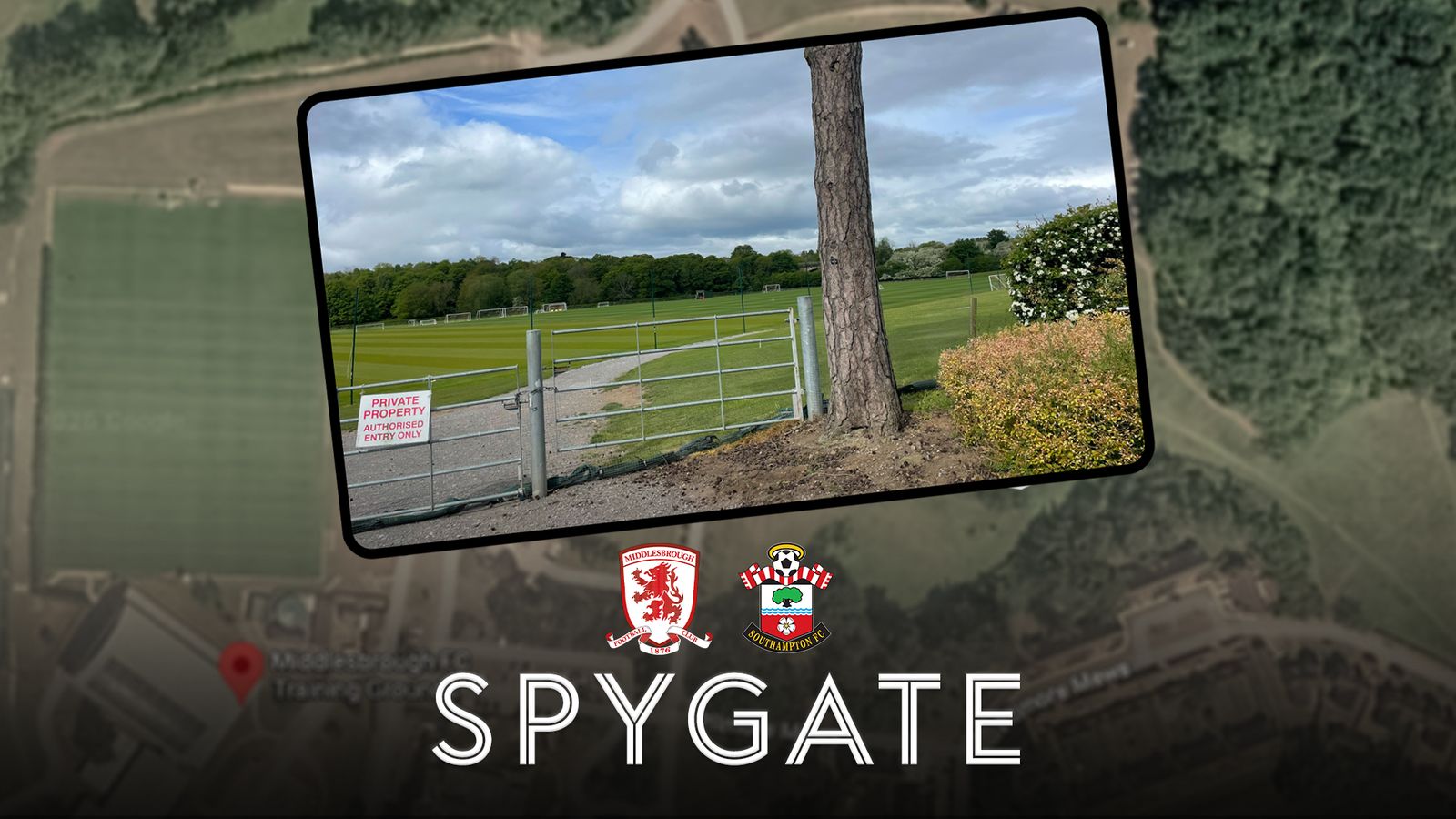
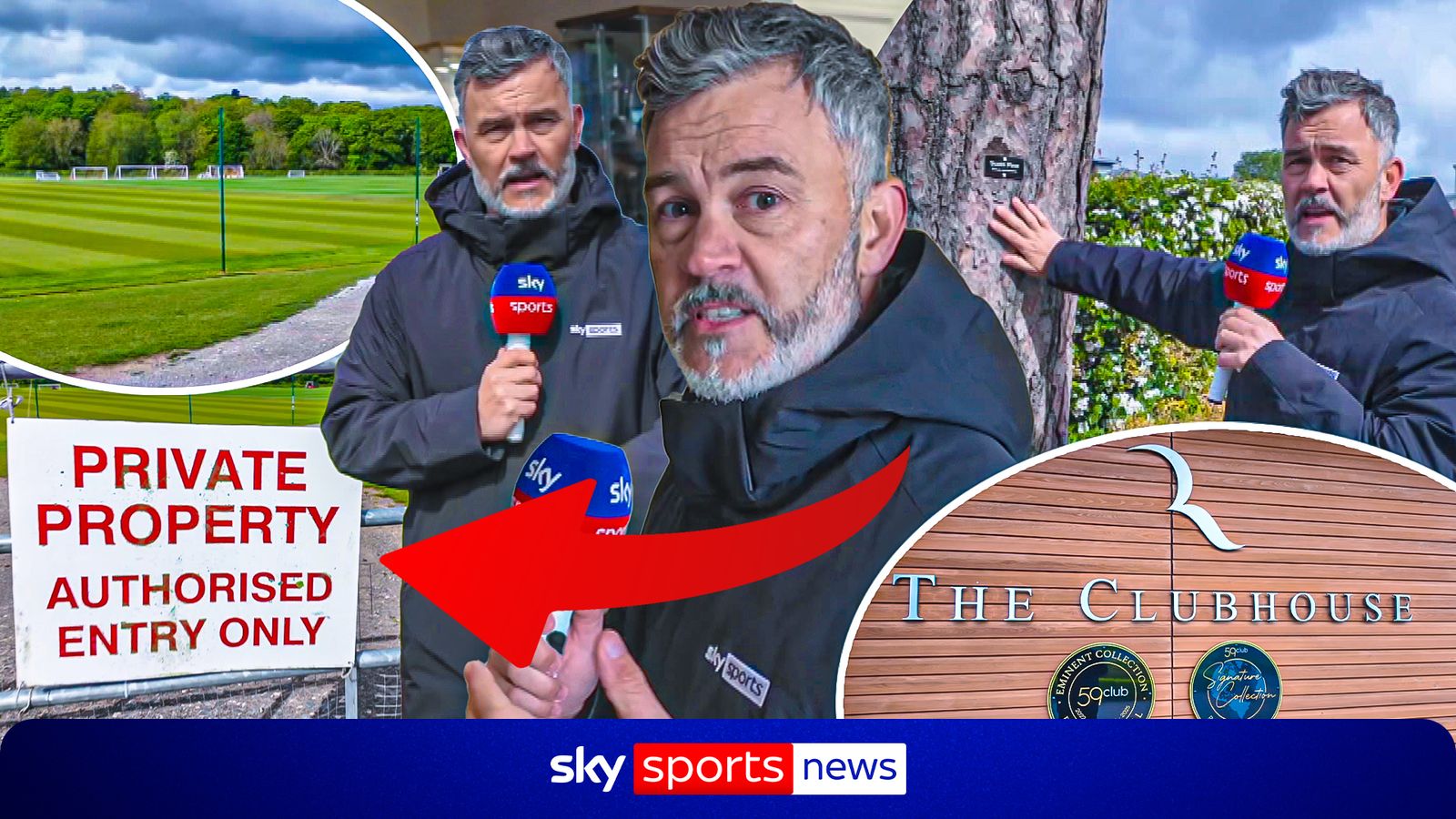
Football in May is a psychological meat grinder. We saw it reach a fever pitch this week when the relative calm of Middlesbrough’s Rockliffe Park training ground was shattered by a scene better suited to a low-budget heist movie than a professional sports preparation. The reports of a 'Spygate' incident involving Southampton employees lurking near the Boro fences suggest a level of desperation that usually precedes a total systemic collapse.
According to details released by Sky Sports, the alleged intruder didn't just walk away when spotted. They utilized a pre-planned escape route through a neighboring golf club, a detail that points toward a level of premeditation that is as impressive as it is pathetic. When you are a club with Southampton’s wage bill, you should not need to be hiding in the rough of the fourteenth hole to figure out how to beat a Middlesbrough side that had already showed its hand over 46 games.
The irony is that this obsession with marginal gains often distracts from the actual football. Southampton eventually squeezed past Boro in extra time to reach the play-off final, but they did so with a performance that felt burdened by the weight of their own anxiety. They looked like a team that knew exactly what Boro were going to do, yet were too terrified to actually play through them for the first 90 minutes. It was a victory of attrition, not tactical genius.
The extra-time slog and the cost of obsession
The match itself was a masterclass in defensive positioning from Michael Carrick’s Middlesbrough. They sat in a compact 4-4-2 block, denying the central spaces that Southampton usually thrive in. The Saints dominated 68 percent of the ball, yet their xG remained stubbornly low until the final twenty minutes of normal time. It felt like the 'Spygate' information—if there was any—had only served to make the Saints overthink their approach.
As the official match report notes, it took until the dying embers of extra time for the deadlock to break. The fatigue finally opened up the gaps that no amount of clandestine training ground footage could have predicted. It was a reminder that in high-stakes knockouts, the physical condition of your wing-backs usually matters more than knowing whether your opponent worked on a specific set-piece routine on Tuesday morning.
There is something fundamentally broken about the culture of the Championship play-offs when spying becomes a standard operating procedure. It speaks to a lack of trust in the coaching process. If Russell Martin’s system is as robust as he claims, it should be able to withstand a few tactical tweaks from the opposition. Instead, we have adults running through golf courses to avoid detection, which is a miserable look for a club aiming for the top flight.
The VAR booth and the request for a clue
While the Championship was dealing with amateur espionage, the Premier League was providing a much more high-tech version of total incompetence. The leaked audio from the West Ham vs. Arsenal match is perhaps the most damning piece of evidence against the current VAR implementation we have ever heard. Watching Chris Kavanagh struggle with the footage of Callum Wilson’s stoppage-time goal was like watching someone try to assemble flat-pack furniture in the dark.
The moment Kavanagh asked the VAR team to give him a 'clue' while reviewing the handball shout is the moment the facade of objective officiating finally crumbled. As the full audio revealed, the referee was genuinely confused by the grainy, inconclusive loops being fed to his monitor. He wasn't looking for a fact; he was looking for a narrative to help him make the controversy go away.
Wilson’s goal was ruled out, and Arsenal survived a scare that would have likely ended their title aspirations right there in East London. But the cost was the total alienation of the West Ham players and staff. When a referee admits he needs a clue to see an infringement that is supposed to be clear and obvious, the entire justification for the technology disappears. It’s no longer about accuracy; it’s about a desperate search for justification.
The technological paralysis of the modern referee
The problem with the 'give me a clue' request is that it highlights the psychological pressure these officials are under. Kavanagh knew that if he allowed the goal, he’d be accused of handing the title to Manchester City by omission. If he disallowed it, he’d be accused of protecting the 'Big Six.' He was paralyzed by the consequences of the decision, rather than focusing on the 89th minute incident itself.
We have moved into an era where the referee is no longer the arbiter of the game, but a victim of the footage. The VAR official at Stockley Park spent over three minutes looking for a frame that showed the ball hitting Wilson’s arm. They found one that was so blurry it could have been a picture of a UFO, and that was enough to provide the 'clue' Kavanagh needed. This isn't officiating; it's a Rorschach test for people in neon shirts.
Arsenal will not care about the optics, of course. For Mikel Arteta, those three points are the difference between a parade and a post-mortem. But for the neutral, the sight of a Premier League referee begging for help to see something that should be apparent is a low point for the professional game. It suggests that the technology hasn't simplified the job—it has made it impossible by introducing a level of scrutiny that the human brain isn't equipped to handle under pressure.
A critical failure of leadership and integrity
The common thread between the Southampton spy and the VAR booth is a total loss of perspective. Everyone is so terrified of losing that they have abandoned the basic principles of the sport. Southampton felt they couldn't win without cheating; Chris Kavanagh felt he couldn't decide without a hint. Both represent a retreat from the actual events on the pitch into a world of shadows and screens.
Southampton’s behavior is particularly galling given their stated ambitions to be a 'different' kind of club. Running a covert operation at Rockliffe Park is not 'the Southampton Way.' It is a desperate, short-term gamble that could have resulted in a points deduction had the evidence been more substantial. They got lucky this time, but the reputational damage will linger long after the play-off final is over.
The refereeing situation is even more dire because there is no easy fix. You can’t train a referee to be more decisive when the system is designed to make them doubt their own eyes. The 'clue' comment will follow Kavanagh for the rest of his career. It has become a shorthand for the insecurity of the modern official. Every time a decision goes against a smaller club now, the fans will assume the referee is just looking for a reason to follow the path of least resistance.
The long road to the World Cup and the final reckoning
With the 2026 World Cup kicking off in just 29 days, the international community is watching this English meltdown with a mixture of amusement and horror. If this is how the self-proclaimed 'best league in the world' handles its pressure moments, the tournament in the USA, Canada, and Mexico is going to be a chaotic mess. We are exporting a culture of paranoia and technological dependence that is poisoning the well of the global game.
We have the Champions League final on May 28, a match that will likely be decided by a similar VAR intervention. One can only hope the officials in that game have more conviction than their English counterparts. The sport is becoming increasingly difficult to enjoy when the post-match discussion is entirely focused on what someone saw on a monitor or what a spy saw through a chain-link fence. We are losing the football in the noise.
Ultimately, the Saints reached the final and Arsenal kept their title hopes alive. On paper, the 'right' teams won if you value the status quo. But anyone who actually watched these incidents knows that the soul of the competition is being eroded. We are trading the raw, visceral drama of the game for a series of bureaucratic arguments and espionage scandals. It's a bad trade, and we're all paying the price for it.
The play-off final will be billed as the richest game in football, with a prize worth over 100 million pounds. But if the winner has to cheat to get there, and the loser is robbed by a referee looking for a 'clue,' what is that money actually buying? It’s buying a product that is increasingly hollow, where the results are dictated by the people who are best at manipulating the system, rather than the ones who are best at playing the game.
Southampton might find themselves in the Premier League next season, but they will arrive there with a cloud over their heads. And the Premier League itself will continue to struggle with its officiating crisis until it realizes that no amount of technology can replace the need for brave, independent decision-making. Until then, we are all just waiting for the next person to run through a golf club to tell us what we should already know.
Read Next
- Arsenal and Southampton define the fragility of loyalty
- Howard Webb is gaslighting West Ham fans and we are all exhausted
- Southampton Stared Into the Abyss and Found a Winner
- Arsenal, Man City, and the controversial ripple effects deciding the title race
- 🏟 EFL Championship 2025-26 — Promotion Race & Play-Off Final Hub
The Club: How the English Premier League Became the Wildest, Richest, Most Disruptive Force in Sports
The definitive inside story of the Premier League's global takeover.
More Coverage

Adam Wharton emerges as top summer target for Arsenal's midfield evolution
2 minutes ago
Manchester United’s Summer Obsession: Why Inconsistency Defines the Strategy
2 minutes ago
Liverpool chasing Yan Diomande in high-stakes €150m transfer scramble
2 minutes agoArsenal’s European ambition check is about eighty games overdue
an hour ago
Tottenham are shaking up the squad with a record-breaking push
2 hours ago
Arsenal weigh up Ethan Nwaneri departure as Premier League interest grows
2 hours agoMore Analysis
Southampton’s tactical paranoia is the final ingredient for a Wembley win
2 weeks, 2 days agoBinoculars, Laptops, and Moral Panic: Football's Undying Spying Obsession
1 week, 1 day ago
Southampton's spying scandal blows the playoff semi wide open
2 weeks, 1 day ago
The 170 million pound paranoia driving the Hellberg and Jakirovic Spygate row
1 week, 1 day agoWhy modern football spying culture is getting embarrassing
2 weeks, 3 days ago