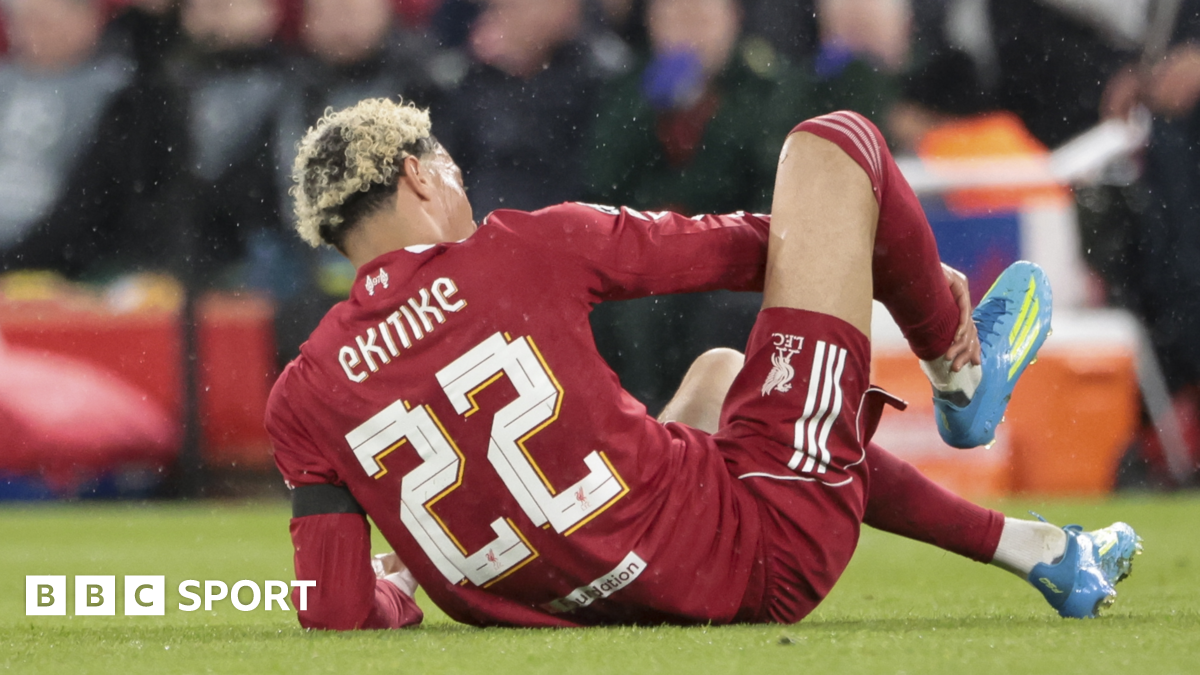
The BBC recently published a quiz asking fans to name the 23 Manchester United players who have scored against Liverpool in the Premier League since 2010. It is a fun exercise in nostalgia. Fans will easily name Wayne Rooney and Marcus Rashford. They will struggle to remember the fringe players who bundled in a late consolation goal.
Looking at that list of 23 names through a medical lens paints a completely different picture. This fixture is widely regarded as the most physically demanding game in the English football calendar. The intensity is unmatched by almost any other rivalry. The sprint distances are consistently higher than the season average. The tackle impacts are heavier and more frequent.
As a fitness reporter, when I look at those 23 names, I do not just see goals or glorious moments. I see extensive medical records. I see hamstring avulsions. I see stress fractures. I see the evolution of Premier League sports science documented in the broken down bodies of these elite athletes.
The sprint burden and the hamstring
Marcus Rashford has scored several important goals against Liverpool over the years. His medical file over the last eight seasons tells the story of an explosive forward operating at the absolute limit of human biomechanics.
When a forward sprints past a defender like Trent Alexander-Arnold, the hamstring is doing an immense amount of eccentric work. The muscle is lengthening while simultaneously contracting to decelerate the leg. This conflicting mechanical demand is exactly where the tissue damage happens.
Rashford has dealt with recurring back stress fractures and hamstring issues. The timeline for a grade two hamstring tear is relatively standard across the league. A player expects to miss four to six weeks of competitive action. The rehabilitation involves carefully progressive loading.
The medical staff must perfectly balance the need to rebuild tissue strength with the immense risk of re-injury. Returning a player too early from a hamstring strain is a guaranteed way to ensure a secondary tear. This secondary tear is almost always more severe than the initial injury.
Anthony Martial is another famous name on that list of 23. His debut goal against Liverpool is legendary among the fanbase. But his subsequent career is a textbook case study in muscular unreliability.
Martial suffered repeatedly from groin and hamstring strains that robbed him of his physical peak. The expected timeline for resolution with chronic muscle injuries is never linear. A player might return to full training after three weeks. They might then break down entirely during the final sprint tests on a Thursday afternoon.
The medical department at Carrington faced severe, justified criticism during this period. The negative observation here is unavoidable. Manchester United's sports science application routinely fell behind their immediate rivals. They struggled to keep their most explosive players consistently fit. Liverpool implemented a much more rigorous load management system. The difference in squad availability between the two clubs was glaring.
The brutal reality of impact injuries
Muscle strains are just one part of the equation when analyzing these fixtures. The Manchester United versus Liverpool game is defined by aggressive, heavy collisions.
When two players contest a loose ball in the center of the pitch, the force generated is comparable to a minor car accident. We have seen significant joint injuries result directly from these high-speed clashes.
Consider the medial collateral ligament. The MCL sits on the inside of the knee joint. It provides necessary stability against outward valgus force. When a player receives a heavy, sweeping tackle from the side, the MCL takes the entire mechanical strain.
A grade one MCL sprain requires two to three weeks of conservative treatment and bracing. A grade three complete rupture can mean immediate surgery and four to six months on the sideline. The timeline for resolution is brutal.
Wayne Rooney frequently played through these minor joint sprains during his peak years. He is arguably the most famous name on the BBC's list. His pain tolerance was legendary within the dressing room. But playing through structural injury always has long-term consequences.
The broader impact on the industry is a massive shift away from this old-school mentality. Modern medical departments simply do not allow players to take anti-inflammatory injections just to get through a big game. The risk to the player's long-term joint health is too high. The financial risk to the club, protecting a massive asset, is even higher.
Sports science and tactical evolution
The list of 23 goalscorers spans a period of massive tactical change from 2010 to 2026. In 2010, the game was slower. The high, coordinated press was not universally adopted across the league.
By 2026, the physical demands have absolutely skyrocketed. Midfielders are expected to cover over 12 kilometers per game as a baseline. Forwards initiate pressing triggers constantly, requiring repeated maximum-effort sprints.
This tactical evolution has forced an entirely new medical evolution. Recovery is now a relentless 24-hour operation. Players use extreme cryotherapy chambers immediately after the final whistle. They wear targeted compression garments on long flights.
Despite all these expensive advancements, the injury rates in the Premier League have not dropped significantly. The game has simply become faster. The human body has hard limits, and managers continually push right up against them.
When a team prepares to face Liverpool, the training week is heavily monitored. The fitness coaches meticulously taper the training load. They focus on low-intensity tactical shape rather than physical exertion. The ultimate goal is to arrive at kickoff with maximum glycogen stores and minimal muscle fatigue.
The mental toll of the treatment room
Physical injuries are only half of the medical equation. The psychological impact of long-term rehabilitation is severe and often overlooked by the public.
When a player suffers a severe injury in a high-stakes match like this, they are instantly isolated from the main squad. The expected timeline for resolution of a major ligament tear is isolating.
A player will spend six months working alone in the gym while the team travels and competes. They watch their teammates experience the highs and lows of the season from a stationary bike. The mental fatigue of repetitive, painful rehabilitation exercises wears players down.
This isolation leads to well-documented mental health challenges within the sport. Players report feelings of detachment, anxiety about losing their place in the starting lineup, and profound fear of re-injury. The medical departments now employ full-time sports psychologists to manage this aspect of the recovery timeline.
The pressure to return ahead of schedule is immense, especially when the team is struggling for results. A manager might subtly push the medical staff to clear a player for an important cup tie. This is where the medical professionals must hold their ground.
Rushing a player back from a grade two hamstring tear almost always results in a recurrence. This doubles the total time missed. The desperate need for a result against a rival has historically led to poor long-term medical decisions.
The cost of making the list
Scoring against Liverpool guarantees a player a permanent spot in Manchester United folklore. The recent quiz proves that fans remember these fleeting moments of brilliance forever.
But the medical reality is incredibly stark. The players on that list paid a severe physical price to earn their spot. The expected timeline for a professional football career is remarkably short. It is finite.
Every heavy tackle, every torn muscle fiber, every cortisone injection shaves days, weeks, or months off that timeline. We celebrate the goals on television. We analyze the tactics on podcasts. We rarely discuss the agonizing rehabilitation processes that follow these massive games.
When a player walks off the pitch after scoring in this fixture, the adrenaline temporarily masks the micro-trauma in their leg muscles. The real work begins the next morning on the sterile treatment table.
The medical staff immediately assess the damage. They check the GPS tracking data for total sprint distance. They look for dangerous asymmetries in muscle power output during jump tests.
If a player is flagged in the red zone for injury risk, they face immediately modified training. They might be forced to sit out the next match entirely. This is the constant, stressful balancing act of modern elite football.
The competitors in the league are all fighting this exact same battle. Arsenal, Manchester City, and Chelsea invest tens of millions in sports science departments. The margins between winning the league and finishing fourth are incredibly tight.
A single grade two muscle tear to a starting forward in March can entirely derail a title challenge. It can alter the course of a season and cost a manager their job. The physical stakes are just as high as the competitive ones.
The 23 names on that BBC list are survivors of this grueling system. They found a way to deliver in the most physically demanding environment possible. But their internal medical files would make for a much less entertaining public quiz.