The impossible task of replacing a tactical unicorn
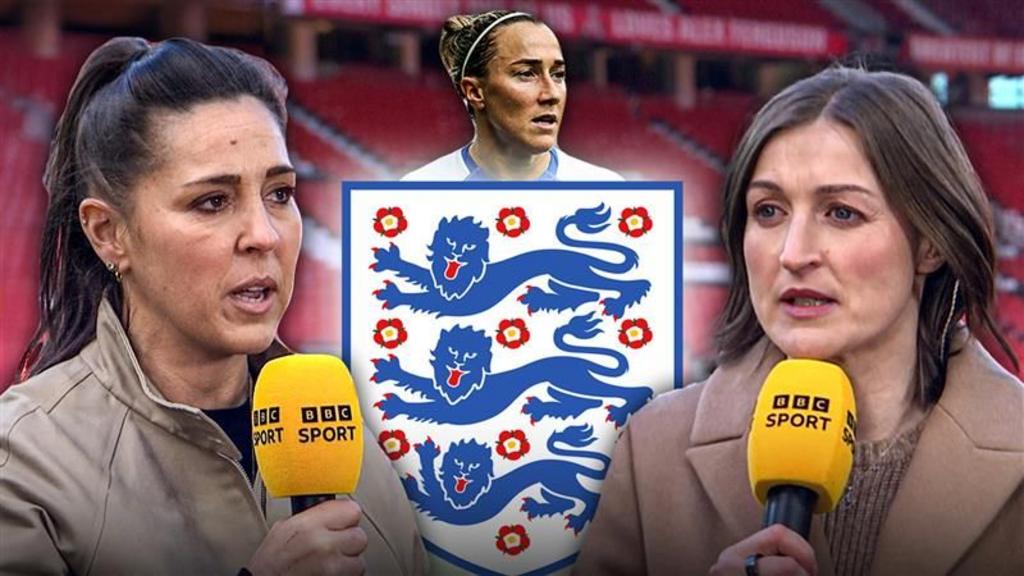
In exactly 58 days, England will walk out for their opening match of the 2026 World Cup. While the focus elsewhere remains on the fitness of the front three, a quiet crisis is brewing at right-back. Lucy Bronze remains the undisputed starter, a status she has maintained through three cycles of management and a shifting tactical landscape that has seen her evolve from a traditional lung-busting runner into a multifaceted playmaker. But as a recent BBC panel featuring Alex Scott and Steph Houghton pointed out, the lack of a viable alternative isn't just a selection headache — it is a structural vulnerability.
Bronze is a tactical outlier. She doesn't just occupy the right flank; she colonizes it. In Sarina Wiegman’s preferred 4-3-3, Bronze is frequently instructed to tuck inside, acting as an auxiliary midfielder during the first phase of build-up. This allows the right-sided central midfielder to push higher into the half-space, creating an overload that few teams can track without sacrificing their defensive shape. When you remove Bronze from this equation, the entire mechanism grinds to a halt. The failure to integrate a successor who can replicate even 70 percent of this output is a glaring oversight that could haunt the Lionesses in June.
The issue is one of archetype. Alex Scott was a specialist; Bronze is a generalist with the physical profile of a sprinter. To find a backup, Wiegman has consistently looked at players who excel in one department but fail the holistic test. Maya Le Tissier is the most technically proficient option, but she lacks the recovery speed to play the high line that Wiegman demands. Niamh Charles offers the engine but is naturally left-footed, leading to a loss of width that disrupts the rhythm of the right winger. England are effectively holding their breath, praying that a 34-year-old’s hamstrings can survive seven matches in the North American heat.
The statistical vacuum behind the starter
Look at the numbers from England's last three competitive fixtures. Bronze averaged 82 touches per ninety minutes, the highest of any non-center-back in the squad. More tellingly, 14 of those touches occurred in the central third of the pitch, between the lines of the opposition midfield. This isn't a defender playing a position; it is a playmaker operating from a defensive starting point. When Jess Carter filled in during the final twenty minutes against France last month, those central touches dropped to zero. Carter is an exceptional one-on-one defender, perhaps the best in the WSL, but she is a 'stay-at-home' fullback who offers nothing in the way of ball progression.
Wiegman’s reluctance to experiment is becoming a pattern. During the BBC discussion, Fara Williams noted that the drop-off isn't just about quality, but about chemistry. The relationship between the right-back and the right-sided attacker—likely Lauren James or Beth Mead—relies on an intuitive understanding of when to underlap. Bronze does this by 'triggering' her run the moment the winger's body shape opens up toward the touchline. Without these synchronized movements, England's attack becomes predictable, funneling play through the center where congested midfields can easily snuff out the danger. It's a real issue that hasn't been addressed despite years of warning signs.
The defensive metrics are equally concerning. While Bronze is often criticized for being caught out of position, her recovery pace masks many of England's transition flaws. Last season, she recorded a top speed of 33.4 km/h. Her primary backup candidates struggle to break 31 km/h. In a World Cup where they will face the verticality of the United States or the raw pace of Spain’s wide forwards, that gap is the difference between a controlled clearance and a desperate foul. Wiegman is gambling on Bronze's longevity, but the house usually wins when the player is nearing 35.
Tactical stagnation in the Wiegman era
There is a stubbornness to Wiegman that served England well during the Euros, but it is now bordering on negligence. She has spent three years searching for the 'next Bronze' instead of adjusting the system to fit the players she actually has. If Maya Le Tissier is the future, then the 4-3-3 needs to be tweaked. You cannot ask a ball-playing center-back to perform the overlapping duties of a world-class athlete. You either change the personnel or you change the instructions. By doing neither, Wiegman has left the squad in a state of tactical limbo.
The lack of minutes given to younger prospects like Lucy Parry or even the versatile Esme Morgan in that specific role is baffling. Friendly matches are designed for stress-testing the depth of the roster, yet Wiegman treats every match like a final, rarely rotating her backline until the 80th minute. This creates a vicious cycle: the backups lack the experience to be trusted, so they aren't played, which ensures they never gain the experience. It is a management philosophy that prioritizes short-term stability over long-term sustainability, and the bill is coming due.
"It's a real issue - who is the back-up to Lucy Bronze?" — The BBC panel's blunt assessment reflects a growing consensus that England's depth is an illusion.
Critics will argue that you don't bench a legend, and they're right. You don't bench Bronze. But you do prepare for her absence. If Bronze picks up a yellow card accumulation or a minor strain in the group stages, England's tactical flexibility vanishes overnight. We saw this in the 2023 World Cup final when Spain successfully targeted the space behind the fullbacks. The Lionesses had no Plan B then, and they appear to have no Plan B now. The obsession with a specific profile of right-back has blinded the coaching staff to the pragmatic reality of their squad's limitations.
The verdict for the World Cup campaign
The upcoming international window is the final opportunity to fix this. England cannot head to the States with a 'Bronze-or-bust' mentality. The tactical burden placed on that right-back slot is too heavy for a single player to carry, especially one in the twilight of her career. Wiegman needs to show she can adapt. Whether that means shifting to a back three to accommodate Le Tissier's passing range or utilizing a double-pivot to cover the defensive gaps left by a more conservative fullback, something has to change.
My prediction? Wiegman will stick to her guns, Bronze will start every game, and England will look invincible until they hit the quarter-finals. That is where the physical demands will catch up. Against a high-pressing side like Germany or a technically superior Spain, the reliance on an ageing fullback to be both the primary carrier and the primary recovery defender will be exposed. It happened in the Nations League, it happened in the friendlies, and it will happen on the biggest stage unless the manager finds the courage to innovate.
The Lionesses are good enough to win the World Cup, but they are also fragile enough to exit early if their engine room fails. Bronze is that engine. And right now, there isn't a spare part in the garage. Expect a nervous few weeks for England fans every time they see Bronze go down for a tackle. The margin for error is non-existent, and that is a failure of planning, not talent. Wiegman has 58 days to prove she isn't as rigid as her critics claim. I wouldn't bet on it.
Read Next
- Mary Earps prepares for one final stand against the Spanish machine
- Manchester United are heading into a nightmare at Elland Road
- Van Dijk to PSG? Analyzing the Transfer Rumour That Isn't One
- Mainoo's absence exposes United's hollow midfield setup
- 🏆 World Cup 2026 — Full Coverage Hub
- 🏴 England World Cup 2026 — Three Lions Hub