The slow puncture at Molineux comes to a stop
The trap door has finally swung shut on Wolverhampton Wanderers. After eight seasons of defying financial gravity, the weight of a squad stripped of its identity for three years straight finally proved too much. Relegation was confirmed on April 21, 2026, following a sequence of results that felt less like a sudden collapse and more like a slow, agonizing puncture. For a club that once broke the established order of the top six, this exit feels quiet, almost resigned.
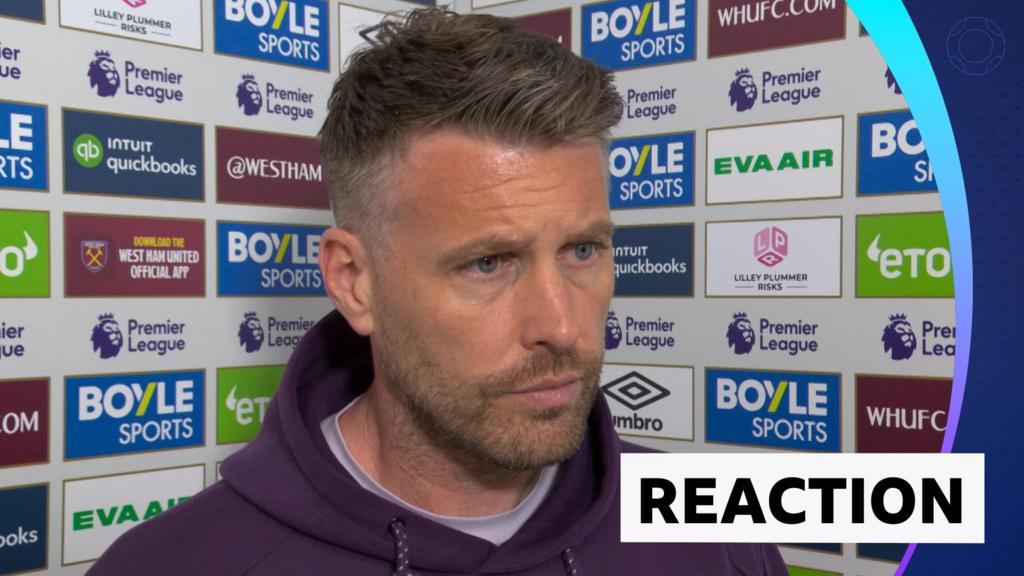
Rob Edwards, a man who has made a career out of extracting blood from tactical stones, finally found a squad where the marrow had been sucked dry. As The Guardian reported, Edwards did his best to keep his side from the drop, but the reality is that Wolves have been paying the price for selling the family gold without a viable replacement strategy. When you sell players like Pedro Neto, Joao Gomes, and Max Kilman and replace them with projects and loanees, the Premier League eventually finds you out.
The irony of the final blow coming via West Ham, managed by former Wolves boss Nuno Espirito Santo, is almost too thick for fiction. Nuno built the original Wolves machine—a rigid, counter-attacking 3-4-3 that relied on the elite delivery of Ruben Neves and the sheer speed of Adama Traore. Today, that machine is a rusted heap of mismatched parts. The tactical coherence that defined the early Fosun era has been replaced by a desperate, shifting search for a style that never quite materialized under three different managers in two seasons.
Tactical gridlock and the failure of the low block
Statistically, Wolves have been a disaster in transition this season. Their PPDA (Passes Per Defensive Action) has ballooned to 15.4, the highest in the division. This indicates a team that no longer presses with intent but merely sits in a passive mid-block, waiting for the inevitable error. Under Rob Edwards, they attempted to shift to a more aggressive 3-4-2-1, but the lack of a clinical finisher meant they were frequently dominating territory without threatening the goal. They have averaged just 0.82 goals per game across the 2025/26 campaign.
The recruitment has been the primary culprit. There is a palpable laziness—sorry, let’s be more precise—a distinct lack of imagination in how this squad was built. For years, the club leaned on the Jorge Mendes pipeline, which provided elite talent like Diogo Jota and Joao Moutinho. When that pipeline started delivering B-tier prospects and expensive flops, the scouting department failed to pivot. They became a club that bought names rather than profiles, resulting in a midfield that lacks the mobility required for the modern English game.
In the final third, the numbers are even grimmer. Their expected goals (xG) underperformance of -12.4 is the worst in the league. It is not just that they aren't creating enough; it's that the players they have are actively failing to convert high-value chances. This isn't bad luck. It is the result of a recruitment policy that prioritized versatility over specialization. You cannot survive in this league with a frontline of creative number tens masquerading as strikers.
The Nuno irony and the final whistle
Watching Nuno’s West Ham dismantle this Wolves side was a masterclass in tactical clarity. Nuno knows exactly what he wants: a compact defensive unit and verticality. Wolves, by contrast, look like a team that has forgotten how to win. They have surrendered 24 points from winning positions this season. That is the hallmark of a team with a soft center and a lack of leadership. When Max Kilman left, the vocal leadership in that backline evaporated, leaving a group of young defenders to communicate in shrugs and frustrated gestures.
Rob Edwards did his best to keep his beloved side from the trap door marked Do One but, after eight seasons in the Premier League, Wolves have officially been relegated.
The club's hierarchy will likely point to PSR constraints and the need to balance the books, but that is a convenient shield for poor decision-making. Other clubs with similar budgets have found ways to innovate. Wolves chose to stagnate. They kept players past their sell-by date and failed to integrate youth prospects effectively. The result is a bloated wage bill and a squad that will likely be picked apart by bottom-half scavengers the moment the window opens.
The Championship forecast: No immediate return
The prediction for Wolves is not a happy one. Anyone expecting a Newcastle-style immediate bounce-back is ignoring the structural rot at Molineux. The Championship is a league that punishes teams without a clear physical identity, and this Wolves squad is physically lightweight. They lack the grinders required for a 46-game slog in the rain. Without a complete overhaul of the scouting department and a clear tactical mandate, they are more likely to pull a Sunderland or a Stoke than a Fulham.
They will likely lose another five key starters this summer. The parachute payments will be consumed by the existing debt and the high wages of players who are now surplus to requirements but impossible to shift. It is a classic relegation trap. The club needs to find a way to reconnect with its local roots and move away from the agency-led recruitment that has characterized the last decade. If they don't, the stay in the second tier will be a long and painful one.
By the time the 2026 World Cup kicks off on June 11, Wolves fans will be watching their former stars shine on the global stage while wondering how their own club fell so far. The gap between the Premier League's middle class and the Championship is widening, and Wolves have just fallen into the chasm. The eight-year stay in the sun is over, and the winter looks set to last for several seasons. Expect a mid-table finish in the Championship next year—nothing more, nothing less.
The tactical void left by the departure of the Portuguese core was never filled. You cannot replace Champions League-level technical ability with Championship-level work rate and expect the same results. Wolves tried to play a game they no longer had the pieces for. They were relegated because they were arrogant enough to believe that their status was permanent and that their system was infallible. It turns out, you actually need to score goals to stay in the Premier League. Who knew?
The final tally of 28 points with four games left to play tells the whole story. They aren't just down; they are deservedly down. The rebuilding process must start with an apology to the fans who have watched this slow-motion car crash for three years. It is time to stop looking for the next Portuguese wonderkid and start looking for players who actually want to track back and win a second ball.
Read Next
- Wolves have finally run out of luck and logic at Molineux
- Wolves are finally heading down and it feels like a merciful ending
- Wolves are finally heading down and honestly it was a long time coming
- Wolves finally pay the price for a three-year fire sale
- 🏟 EFL Championship 2025-26 — Promotion Race & Play-Off Final Hub