The Anatomy of a Midfield Collapse
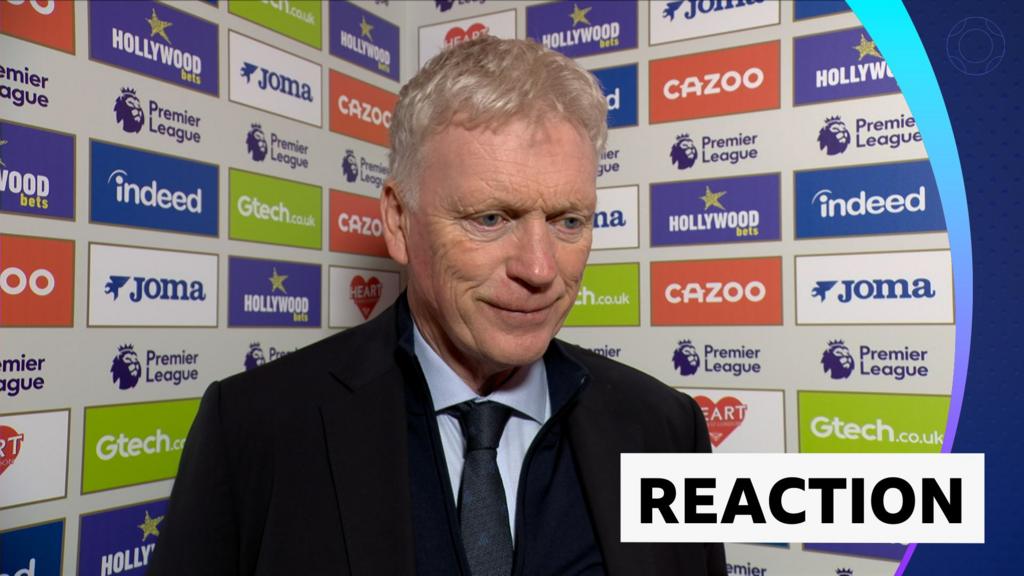
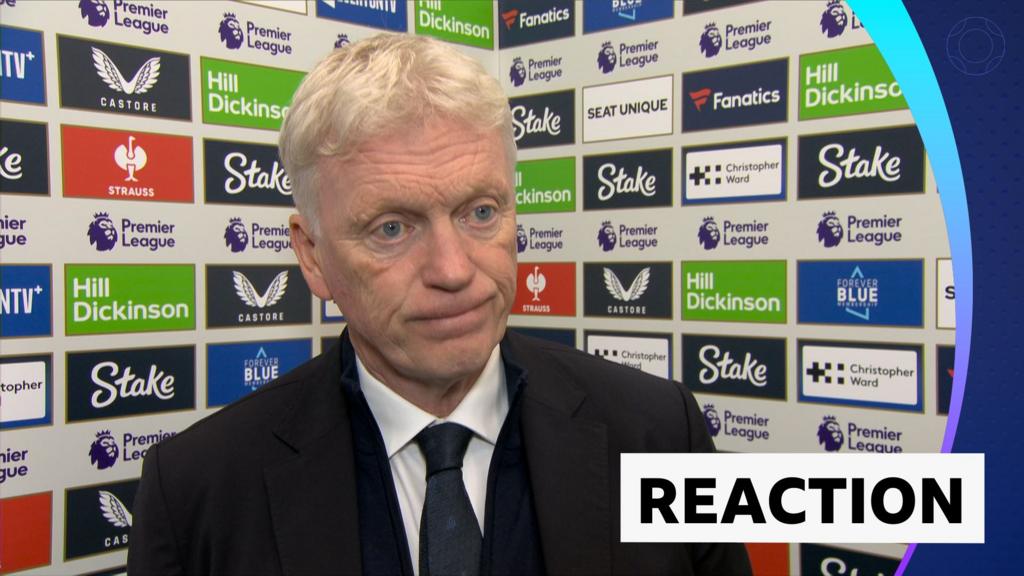
David Moyes stood on the touchline on Sunday afternoon, looking like a man who had just watched his tactical blueprint dissolve into the turf. The 3-1 defeat to Sunderland at the Hill Dickinson Stadium was not just a bad day at the office. It was a brutal exposure of every structural flaw currently plaguing Everton. They did not simply drop points; they surrendered the entire middle of the pitch to a side that looked hungrier, sharper, and tactically superior in every single phase of play.
"Defeat to Sunderland incredibly disappointing," Moyes admitted in his post-match press conference.
It was a bleak assessment, but his secondary observation hit closer to the truth. He bluntly stated that his team "lacked control." That is the understatement of the season. For large stretches of the second half, Everton’s midfield was entirely bypassed, reduced to mere spectators as Sunderland played triangular passing combinations around them.
When Moyes returned to Goodison Park, the mandate was clear. He was brought in to restore pride, instill discipline, and build a team that was excruciatingly difficult to break down. For a while, it worked. The defensive block was resolute, the counter-attacks were vicious, and the team operated with a clear, unified purpose. But this iteration of Everton looks entirely devoid of that identity. They are neither a possession-based team nor an effective counter-attacking unit. They exist in a tactical purgatory, reacting to the opposition rather than dictating the terms of engagement.
To understand what went wrong, you have to look at the shape. Moyes set his side up in his familiar, conservative 4-2-3-1, clearly aiming to absorb pressure and hit Sunderland in transition. The theory was sound. In practice, it was a disaster. Sunderland refused to take the bait. Instead of committing bodies forward recklessly and leaving space in behind, they pressed high, cutting off passing lanes and forcing Everton's center-backs into long, hopeful, and ultimately inaccurate clearances.
The Spacing Issue
The distance between Everton's double pivot and their attacking trio was staggering. If you look at the average position maps from the first hour, you could have parked a bus in the space left behind the number ten. This is exactly where control evaporates in the modern Premier League. When a holding midfielder drops deep to receive the ball from the defense, the advanced midfielders must drop into the half-spaces to offer viable passing angles. Against Sunderland, they simply refused to do so.
Everton managed an expected goals (xG) tally of just 0.6 from open play. That is grim reading for a team fighting desperately to salvage their season. Sunderland, by contrast, created over 2.1 expected goals, with the vast majority of their high-value chances originating from central areas. They deliberately overloaded the middle third, dragging Everton's fullbacks inside and creating massive gaps out wide for their wingers to exploit.
The pressing triggers were equally broken. A successful high press requires absolute synchronization. The striker initiates the press, and the wingers instantly shut down the lateral passing options, while the midfield steps up to compress the space. Everton attempted to press, but it was agonizingly disjointed. The striker would sprint at the center-back, but the wide players would hesitate, staying ten yards too deep. This hesitation allowed Sunderland's holding midfielder to simply pivot, receive the ball, and play through the lines. It is basic tactical discipline, and yet a Moyes team—usually so reliable defensively—looked entirely uncoordinated.
Tactical Rigidity and Second Balls
When you break down the passing networks from the weekend, the isolation of Everton's forward line becomes startlingly clear. The center-forward was effectively stranded on an island, receiving fewer than fifteen touches in the entire match. When your primary striker is forced to drop into his own defensive third just to feel the leather of the ball, your offensive structure is fundamentally broken. Moyes instructed his team to play long, bypassing the press, but Sunderland’s center-backs dominated the first contacts.
The second balls, which are the lifeblood of a Moyes system, were consistently hoovered up by Sunderland’s aggressive midfield trio. This failure to win second balls is directly tied to the spacing issue. Because the Everton wingers were pinned so deep, reacting to the overlapping runs of the opposition full-backs, the pitch became far too stretched. When the ball dropped from a long clearance, Sunderland had three players within a five-yard radius. Everton usually had one. It is simple math. If you do not have bodies in the central zones, you cannot sustain attacks. You are relying on individual errors from the opposition, and Sunderland simply did not make any.
The problems extended to the defensive line. They dropped far too deep, far too early. There was a glaring 15-yard gap between the center-backs and the midfield pivot for Sunderland’s second goal. That is a fatal error at this level. You are openly inviting the opposition to shoot from the edge of the box without any pressure. Sunderland accepted the invitation gladly, punishing the lack of aggression.
Take the role of the full-backs, for instance. Under Moyes, full-backs are traditionally instructed to bomb forward only when the defensive structure is completely secure behind them. Against Sunderland, they were caught in two minds. They pushed up ten yards too high during the build-up phase, leaving massive channels for Sunderland’s wingers to exploit on the turnover. It was a failure of spatial awareness. The communication between the center-backs and the full-backs was non-existent.
The High Stakes of the Next Fixture
Looking ahead to this weekend, the pressure on Moyes is mounting exponentially. The fans are turning, the local press is asking pointed questions, and the boardroom will be watching nervously. The final games of a Premier League season are unforgiving. Teams fighting for survival suddenly find an extra gear, while those chasing European spots play with a ruthless efficiency. Everton currently look like a team stuck in neutral.
The opposition this weekend will not need to reinvent the wheel to beat them. They will simply replicate the Sunderland blueprint. Expect them to deploy a high line, squeezing the pitch and suffocating Everton's midfield pivot. They will target the half-spaces, drifting wingers inside to overload the center and force Moyes' full-backs into impossible decisions. Do they step inside to track the runner and leave the flank exposed, or do they stay wide and allow the midfielder to shoot from eighteen yards?
Moyes has built a career on making teams hard to beat. He builds solid foundations, organizes the defense, and demands relentless work rate. But work rate without a coherent pressing structure is just running around. Against Sunderland, Everton looked exhausted by the sixtieth minute because they were constantly chasing shadows. The metric Passes Per Defensive Action (PPDA) highlights this perfectly. Sunderland’s PPDA was low, indicating a fierce, coordinated press. Everton’s PPDA was one of their highest of the season, showing a team that stood off, backed away, and allowed the opposition to dictate the tempo.
Required Adjustments
Moyes has to abandon the passive 4-2-3-1 structure. A switch to a 4-3-3, utilizing a single defensive anchor flanked by two dynamic number eights, might finally give Everton the numerical parity they desperately need in the center of the park. They cannot afford another match where they are consistently outnumbered in the engine room.
Personnel changes are also necessary. If the manager persists with the exact same starting eleven, he will get the exact same result. He needs players with the physical capacity to cover ground defensively, but also the technical security to retain the ball under pressure. The midfield against Sunderland treated the ball like a live grenade. That panic has to be eradicated.
The psychological damage from a defeat like this cannot be ignored. Moyes cut a deeply frustrated figure after the final whistle. The body language of the players during the match was equally concerning. Heads visibly dropped after Sunderland scored their second goal. That lack of resilience is a terrifying trait for a team heading into a defining weekend.
With the World Cup kicking off in less than a month, player focus can occasionally drift. But nobody in the Everton dressing room can afford to have their eyes on North America right now. The domestic situation requires absolute concentration. This weekend’s fixture is no longer just another game on the calendar. It is a referendum on Moyes’ current tactical approach.
Prediction
Everton will try to tighten up this weekend. Moyes will drill them all week on shape, discipline, and defensive solidity. They will likely sit even deeper than they did against Sunderland, hoping to grind out a miserable, low-scoring draw. But the structural issues are simply too severe to fix in four training sessions.
The midfield will still lack the necessary mobility. The disconnect between the defense and the attack will still exist. Without an effective method for transitioning from defense to attack, they will invite relentless pressure. Expect them to concede early from a set-piece or a breakdown in midfield possession. Once they go behind, they lack the offensive cohesion to break down a settled defense. It will be another punishing afternoon for Moyes and his squad. 2-0 defeat.
Read Next
- Gary Neville is fuming but the numbers behind Mo Salah's outburst are damning
- Wolves' European Dream Hinges On Solving The Fulham Puzzle
- Michael Carrick's chaotic United finish third by accident
- Brighton are ready to expose the fatal flaw in the Leeds machine
- 🏟 EFL Championship 2025-26 — Promotion Race & Play-Off Final Hub