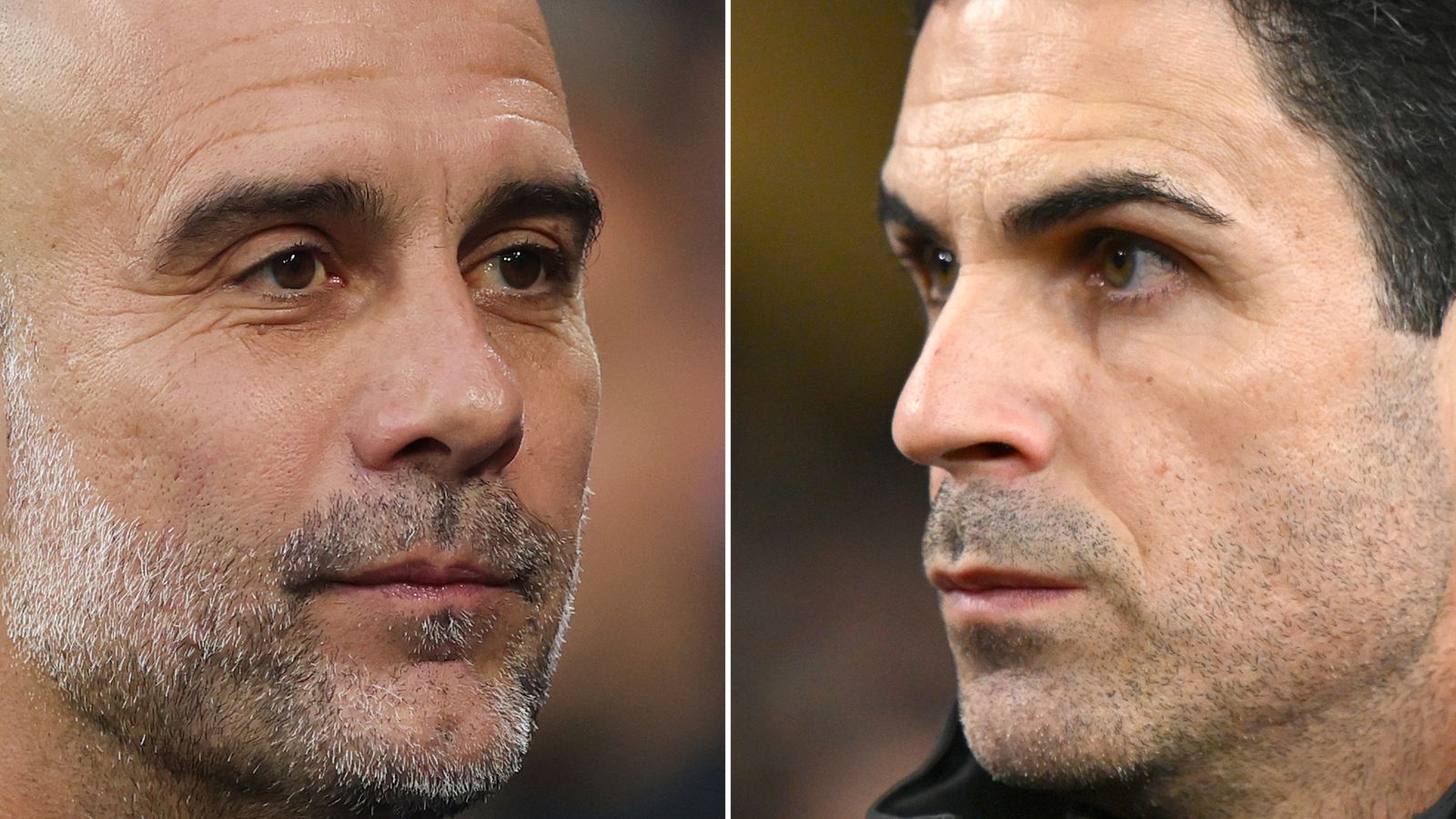
The statistical mountain Mikel Arteta must climb
As the buses pull into the Etihad Stadium today, April 19, 2026, the scoreboard doesn't just show a 0-0 start. It carries the invisible weight of 4,109 days. That is the exact span of time since Arsenal last secured a Premier League victory at this ground, a 2-0 win in January 2015 defined by Santi Cazorla’s masterclass and a different tactical era. Since then, the Gunners have visited Manchester 11 times in the league, returning with just three points from a possible 33.
While seven pundits in the latest Mirror roundup have reached a concerning verdict on Arsenal’s chances, the data suggests the gap is narrowing, even if the result remains elusive. Last season’s 0-0 draw was a defensive clinic, but it came at a massive cost to Arsenal's attacking identity. To win the title today, Arteta cannot simply survive; he has to out-calculate a Manchester City machine that is currently averaging 2.4 goals per game on home turf this season.
The pundits' skepticism is grounded in City's frightening efficiency in April. Since 2018, Pep Guardiola’s side has won 71% of their Premier League fixtures played in the final two months of the season. They don't just win; they suffocated opponents with a field tilt that often exceeds 75%, pinning title rivals into their own defensive third until a structural crack inevitably appears.
The defensive wall vs the final third efficiency
Arsenal arrive with the best defensive metrics in Europe, conceding a meager 0.82 xGA (Expected Goals Against) per 90 minutes away from home. The partnership of William Saliba and Gabriel Magalhães has evolved into a statistical anomaly. Saliba currently leads the league in progressive carries for a center-back with 3.1 per match, allowing Arsenal to bypass the first line of the City press without relying on risky mid-range passes.
However, the problem isn't stopping City; it is finding the net at the other end. In their last three visits to the Etihad, Arsenal have averaged a pathetic 0.65 xG per game. You cannot expect to win a title-deciding match with less than one high-quality chance created. The transition from a low block to a counter-attack has been Arsenal's weakest link in these high-stakes encounters, often resulting in a clearance to nobody or a turnover in the middle third.
City’s defensive transition remains the gold standard. They currently average 14.2 seconds to regain possession after a turnover in the opposition half. This 'rest defense' is designed specifically to kill the pace of players like Bukayo Saka and Gabriel Martinelli before they can even cross the halfway line. If Arsenal cannot find a way to break that initial six-second counter-press, they will spend 90 minutes chasing shadows once again.
The Rodri factor and the Odegaard problem
The game will be won or lost in the central corridor, specifically in the duel between Rodri and Martin Odegaard. Rodri remains the most vital component of the City system, boasting a 94% pass completion rate under high pressure this season. When Rodri is bypassed, City’s win percentage drops by nearly 18%. Arsenal’s tactical trigger must be centered on isolating him, yet the data shows they often do the opposite, allowing him to dictate the tempo from a deep pivot role.
There is a glaring negative trend in Arsenal’s recent performances that should worry Arteta. When Martin Odegaard is limited to fewer than 50 touches in a match, Arsenal see a 22% drop in total shot-creating actions. In last year's Etihad stalemate, Odegaard was a ghost, finishing with just 38 touches and zero successful passes into the penalty area. If City shadow him with a dedicated marker, Arsenal's entire offensive structure becomes static and predictable.
The lack of a clinical edge from Arsenal's rotating cast of strikers is another statistical red flag. While City have the inevitability of Erling Haaland—who is converting 28% of his big chances this season—Arsenal’s leading scorers are all significantly over-performing their xG. This suggests a regression is coming, and there is no worse place for your luck to run out than against a team that has not lost a home league game in over 18 months.
Why the numbers point to a stalemate or a City surge
Analysis of City’s passing networks shows a heavy bias toward the right flank in the last four weeks. They are deliberately overloading the zone occupied by Arsenal’s left-back, seeking to draw Gabriel out of position to cover the space. If Arsenal bite on this movement, the vacated central space is exactly where Haaland thrives. He doesn't need a high volume of touches; he currently averages just 19 touches per game, the lowest of any regular starter in the league, yet he remains the most efficient finisher in modern history.
Arsenal's passing accuracy away from home this season sits at 88.4%, but this figure drops significantly when they face a high press. In the reverse fixture at the Emirates, that number fell to 81%, leading to three high-turnover shots for City. Arteta’s insistence on playing out from the back is a high-reward strategy that, in this specific stadium, has historically carried a high-risk penalty. One loose pass from David Raya could end the title race before the halftime whistle.
Ultimately, the pundits’ 'concerning verdict' is supported by the cold reality of the shot maps. Arsenal have become experts at the 1-0 win, but they haven't proven they can go blow-for-blow with City in a game where the field tilt is against them. The statistics suggest that unless Arsenal can increase their final-third entries by at least 30% compared to their previous three visits, the 4,109-day drought will likely extend into another year.
Final tactical outlook
The numbers don't lie, but they can be disrupted by a single moment of individual brilliance or a red card. Statistically, City are the 65% favorites for a reason. They have the home advantage, the historical psychological edge, and a deeper bench of creative outlets. Arsenal are no longer the defensive pushovers of the late Wenger or Emery eras, but they still lack the clinical ruthlessness required to turn 40% possession into three points at the Etihad.
Expect a cagey opening 20 minutes where City attempt to establish a 70% possession baseline. If Arsenal can survive that period without conceding a high-turnover goal, they might have the physical conditioning to push in the final ten minutes. But as it stands, the data-driven path to an Arsenal victory requires a perfect defensive performance coupled with a near-impossible 100% conversion rate on whatever limited chances they manage to scrape together.
Read Next
- Why Real Madrid will inevitably shithouse their way to another Champions League
- Mohamed Salah's Saudi Exit Hits A Snag, Opening The Door For Rivals
- Man United fans are tearing each other apart over the Rashford return rumors
- Maddison Snub, Williamson Return, Coventry Party: Footy Fans React!
- ⭐ UCL 2026 — Champions League Quarter-Finals Hub