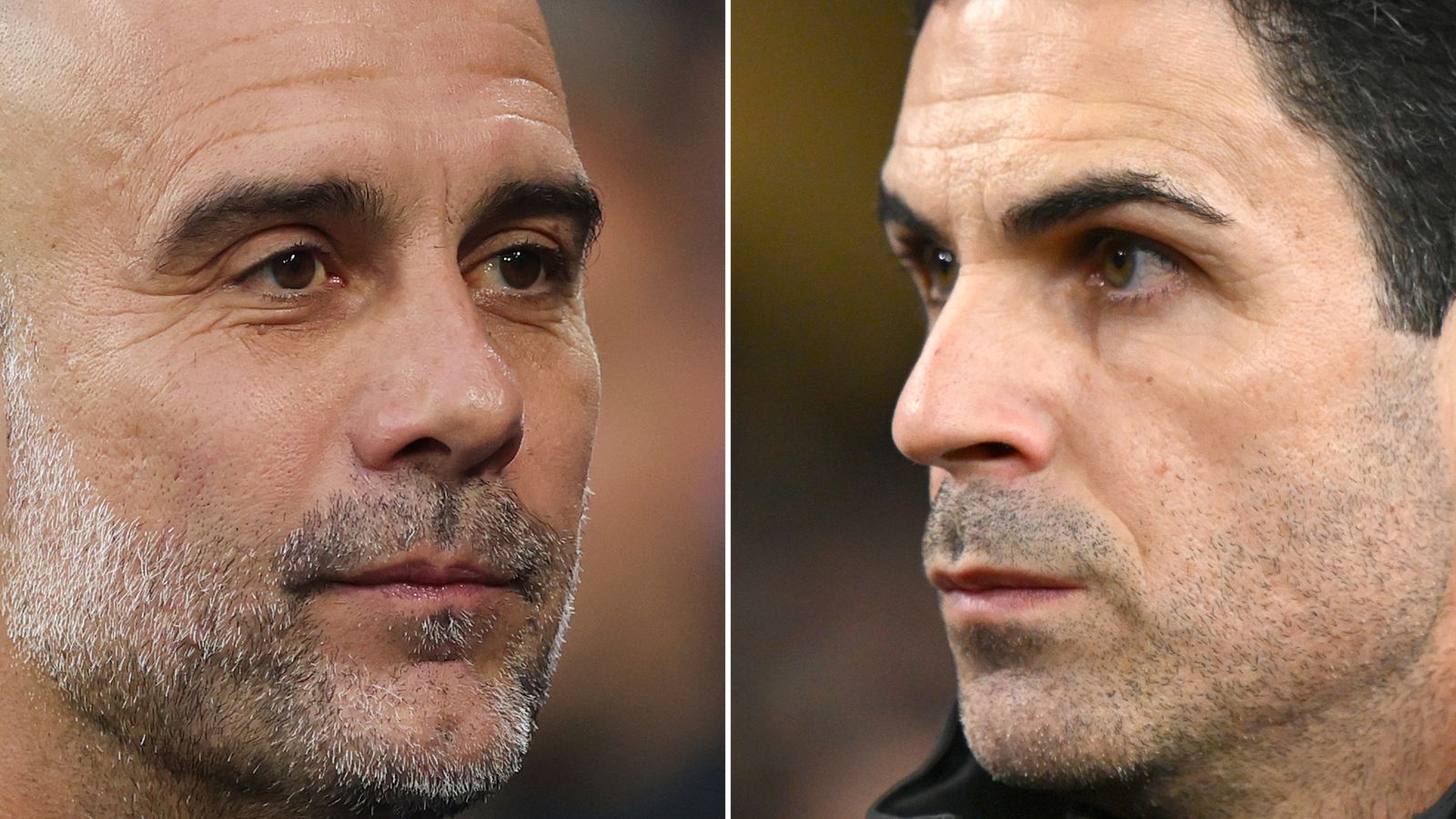
The Etihad psychological barrier
January 18, 2015. That was the last time Arsenal walked out of the Etihad Stadium with three points in a Premier League fixture. Since Santi Cazorla's masterclass that afternoon, the Gunners have played 10 league matches at Manchester City's home, losing nine and drawing one. The aggregate score in those games is a staggering 28-6 in favour of the champions.
As Mikel Arteta prepares his squad for this weekend’s title-defining clash, the data suggests that tactical preparation is only half the battle. The other half is overcoming a statistical anomaly that has morphed into a decade-long hex. Tony Adams has recently voiced concerns about the leadership in this squad, questioning whether the players are too reliant on Arteta's micro-management.
When Adams asks, "Why do you need a manager then?" he is highlighting a specific data point: Arsenal’s performance drop-off when the pre-match plan is disrupted. In the last three seasons, Arsenal have won just 12% of matches against 'Big Six' opposition where they conceded the first goal. This lack of on-field adaptability is exactly what Adams is targeting.
The Control Paradox
Under Arteta, Arsenal have evolved into a team that craves structural integrity. They currently rank second in the league for Field Tilt—a metric measuring a team's share of final-third passes—sitting at 64.2%. This indicates they spend the majority of games pinned in the opponent's half. However, against Manchester City, this dominance often becomes a liability.
In their last four meetings, City have allowed Arsenal more of the ball than usual, dropping their own possession average from 62% to 51%. Pep Guardiola is baiting the press, waiting for the one individual error that inevitably comes when a young team tries to play high-volume, low-risk football against a clinical counter-attacking machine. Arsenal’s PPDA (Passes Per Defensive Action) drops from 9.4 to 14.2 against City, showing a hesitation to commit to the high press.
This hesitation is the "leadership gap" Adams is describing. When the structure wobbles, the data shows that Arsenal's senior players—Odegaard, Rice, and Saliba—revert to safe passing rather than progressive risk-taking. In the 2025/26 season, Declan Rice’s progressive pass distance drops by 22% in matches against top-four rivals compared to his season average.
The math of the Arteta Ceiling
There is a recurring theme in Arteta’s big-game management that the numbers can no longer ignore. He has a 14.2% win rate against Pep Guardiola in the Premier League. For a manager often hailed as the primary challenger to the City dynasty, that is a damning indictment of tactical rigidity. He is trying to beat the master at his own game with a 15% lower wage bill and a squad age that is 2.4 years younger on average.
Adams' critique isn't just old-school shouting; it's an observation of a team that looks coached to within an inch of its life. Arsenal currently lead the league in 'Sequence Starts'—the number of times they begin an attack from a dead ball or a regained possession. They are a team of rehearsed patterns. But when those patterns are broken by City's elite-level pressing, the underlying numbers collapse.
In the reverse fixture earlier this season, Arsenal managed an xG (Expected Goals) of just 0.44, their lowest in any home game for two years. They were technically sound but offensively sterile. They lacked the individual spark or the captain’s intuition to change the rhythm of the game. It was a performance that felt like a computer simulation running a script it wasn't allowed to deviate from.
The Haaland Factor vs the Saliba Wall
The individual battle between Erling Haaland and William Saliba remains the most significant data set in English football. Haaland is currently averaging 1.14 goals per 90 minutes this season, a slight regression from his record-breaking 2023, but still the highest in Europe. Saliba, conversely, is winning 71% of his defensive duels, the best for any centre-back in the league.
The problem for Arsenal is that City don't need Haaland to win the duel to win the game. They use him as a gravitational force to pull Saliba out of position, creating spaces for Phil Foden and Kevin De Bruyne. In their last visit to the Etihad, Saliba’s average position was 6 yards deeper than his seasonal norm. This retreat created a 15-yard vacuum in the midfield that Rodri exploited to devastating effect.
If Arsenal are to prove Tony Adams wrong, they need to bridge this gap. It isn't about more coaching; it's about the 3.2 progressive carries per game that Bukayo Saka needs to turn into 5.0 to disrupt City's shape. It’s about Gabriel Martinelli finding the 18% extra sprint intensity required to track back when the high line is breached.
Statistical regression or a new peak?
Critics point to Arsenal's recent run of form—four wins in five—as evidence of progress. But a deeper look at the metrics shows a worrying trend of 'Over-Performance' against mid-table sides. Their xG over-performance (scoring more than the data suggests they should) is currently at +8.4. History tells us that this eventually regresses to the mean, usually in high-pressure games against elite defenses.
Manchester City’s defense is currently conceding just 0.72 xG per match at home. If Arsenal enter the Etihad with their current offensive output, they are statistically projected to score 0.82 goals. In a stadium where City have scored in 54 consecutive league games, a single goal is rarely enough to secure even a point. Arsenal are effectively walking into a math problem they haven't solved since 2015.
The question of leadership mentioned by The Mirror is ultimately a question of agency. Do the players have the permission to ignore the script when the script is failing? In the 87th minute of last year's title decider, Arsenal players were still looking to the bench for instructions while 2-0 down. That is the behavior of a squad that is managed, not led.
The verdict on the data
The numbers don't lie, but they do offer a path to redemption. Arsenal’s set-piece efficiency remains the best in the league, accounting for 34% of their total goals this season. In a game where open-play opportunities will be limited, Gabriel Magalhães and his 6 goals from corners this season might be the most important statistical outlier on the pitch.
Arteta has built a machine, but as Tony Adams correctly notes, machines don't win titles; people do. The data suggests Arsenal are technically ready to compete, but psychologically anchored to a decade of failure at this specific venue. Breaking the 4,108-day drought requires more than just a higher xG; it requires a rejection of the tactical safety net that has defined the Arteta era so far.
If they fail again, the 10% gap in title probability between them and City will likely widen to an insurmountable margin before the month is out. The 2026 title is currently a coin flip, but the Etihad is where the house usually wins.
Read Next
- Tony Adams just nuked Arsenal's vibes right before the City game
- Arteta's tactical headache before the Man City title decider
- Arteta and Guardiola are playing a dangerous game of chess
- Tony Pulis calling City's attackers 'leg-beaters' broke Arsenal Twitter
- ⭐ UCL 2026 — Champions League Quarter-Finals Hub