The North London atmosphere has reached critical mass
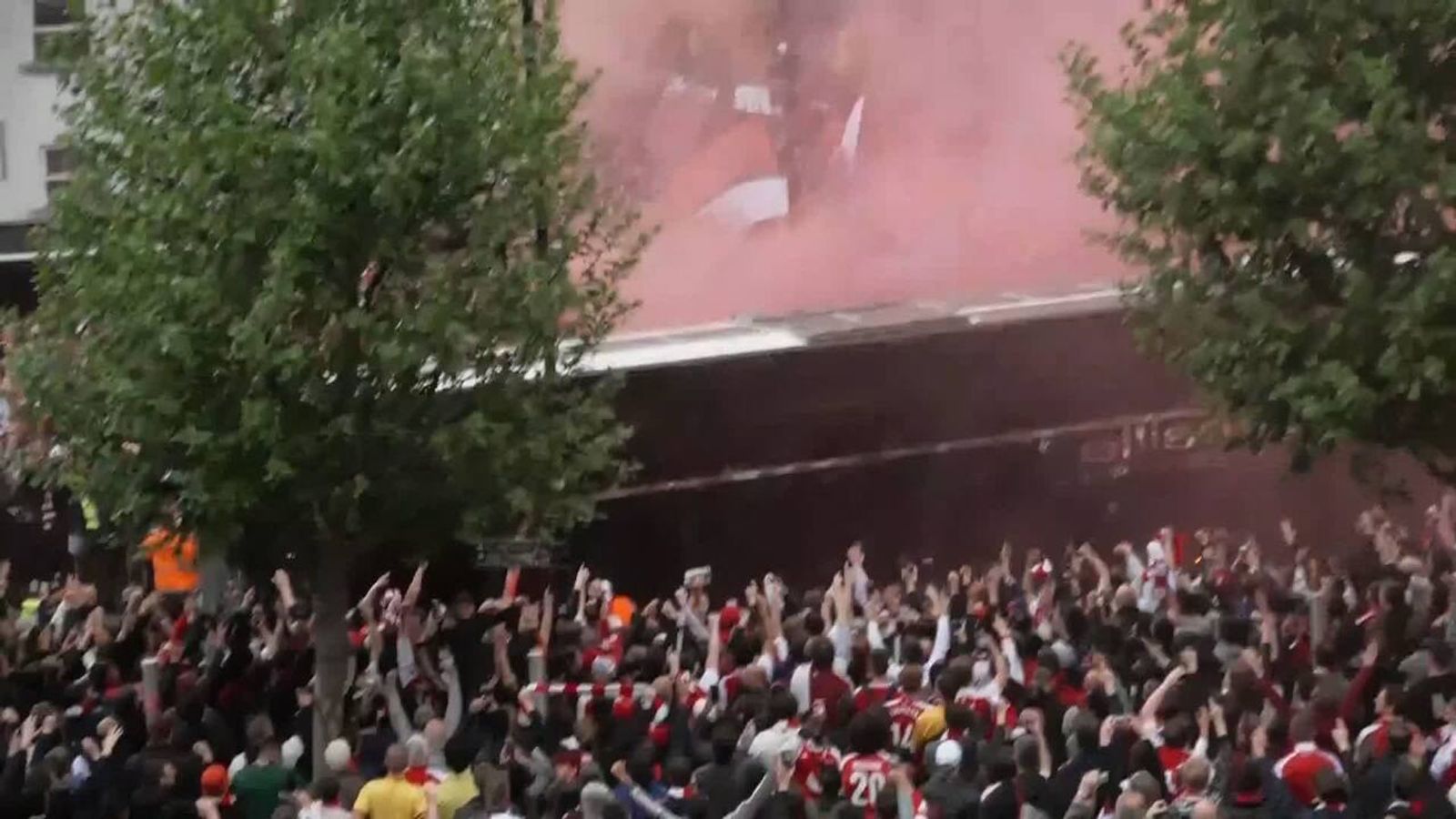
The scenes outside the Emirates this afternoon suggest a level of anticipation rarely seen in modern English football. Fans have effectively gridlocked the area, turning the approach to the stadium into a cauldron of noise that serves as a direct response to the stakes of tonight’s Champions League semi-final second leg. When the squad bus eventually breached the sea of red, the volume indicated a collective belief that history is being written in real-time.
However, the genuine tension lies in what happens once the whistle blows. Arsenal management must navigate a side still finding its defensive cohesion against opponents who thrive on punishing structural lapses. The footage of supporters swarming the streets, as reported by Sky Sports, underlines that this is no longer just a tactical exercise. It is a referendum on the current project.
Tactical reality beyond the passion
The noise outside will count for nothing if the mid-block is bypassed as easily as it was during the first half of the opening leg. Arsenal’s pivot has been guilty of drifting too far from their defensive line, creating a vacuum that world-class midfields occupy with ruthless efficiency. If the holding midfielder is dragged out of position tonight, the back four will be exposed to one-on-one scenarios they cannot win.
Technical precision is the only currency that matters in matches of this magnitude. Last week, the turnover rate in the middle third was a startling 18 percent, a statistic that likely cost the organization an early advantage. The transition phase for Arsenal remains their most dangerous weapon, yet it relies entirely on the successful retention of the ball in tight spaces. Without the ball, they are forced to shift into a defensive shape that lacks the necessary discipline.
The cost of the top-four sprint
The pressure on this squad mirrors the financial anxieties currently sweeping through other powerhouses, where the reward for excellence is a massive shift in internal expenditure. Just as Manchester United’s wage structure adjusted under the weight of their Champions League status, Arsenal’s players are operating under a microscope of expectation and potential contractual movement. The intensity of this match is a byproduct of the modern economic realities of the game.
One negative observation persists regarding the squad’s durability. The reliance on individual brilliance to solve tactical stalemates has frequently masked an inability to break down disciplined low-block systems. Unless there is a significant movement off the ball in the final third, the attack will degenerate into a series of predictable crosses. That lack of variation is the primary flaw in an otherwise potent offensive set-up.
Predicting the night's outcome
The venue will provide an initial wave of momentum, but elite European opponents are indifferent to crowd noise. If Arsenal concede in the first 20 minutes, the anxiety in the stands will transfer onto the pitch, potentially leading to individual panic. This happens far too often when games are hyped to the level of a total city shutdown.
Expect a cagey, high-stakes affair where the first goal determines the remaining 70 minutes. I anticipate a 1-1 draw that stretches into extra time, with the visitors squeezing through on a late counter-attack as Arsenal abandons all defensive discipline to chase the winner. The quality of their opponent’s transition play is simply too sharp to ignore, and the emotional weight of this specific home advantage could play against them if the game remains level late into the second half.
Read Next
- Arsenal vs Atletico Madrid: The tactical wall meets the unstoppable force
- Arsenal face the ultimate dark arts test at the Emirates
- Arsenal are exactly where Arteta always wanted them
- Arsenal supporters are losing their collective minds at the Emirates
- ⭐ UCL 2026 — Champions League Quarter-Finals Hub