The 20-year wait for defensive stability
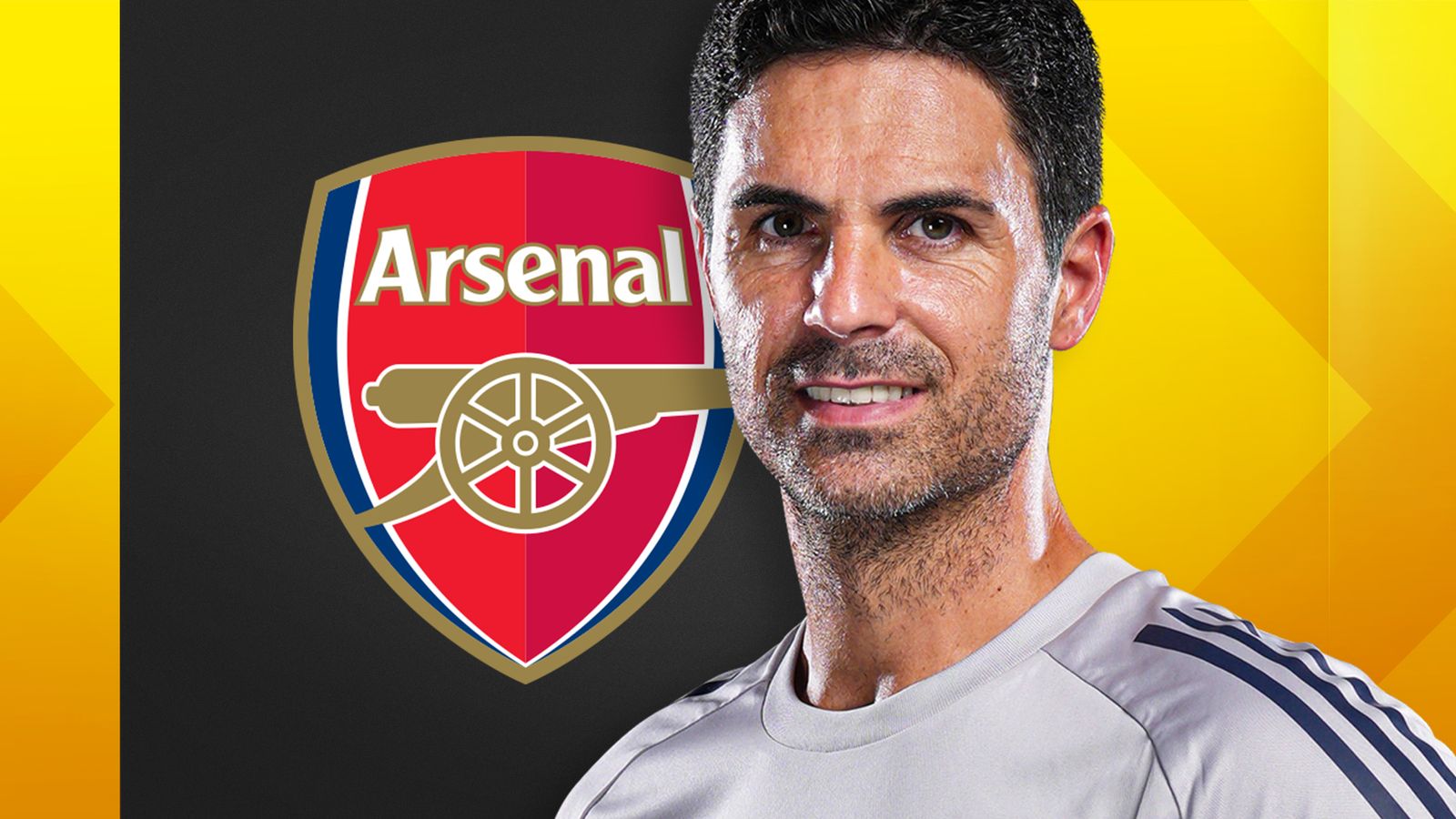
Arsenal have not contested a Champions League final since May 2006. It has been a painful two decades for a club that views itself as European royalty. Mikel Arteta has dragged them back to the showpiece event on May 28, and even his harshest early critics are now capitulating. As Mirror Football reported, Thierry Henry delivered his honest assessment of his former teammate this week, changing his tune on the manager's tactical blueprint.
Henry is not easily impressed. During the first two years of Arteta's tenure, the French striker was openly skeptical of the slow, methodical possession that often ended in sterile wide areas. But the numbers from this current European campaign leave no room for debate. Arteta has built a statistical juggernaut.
To understand why Henry has shifted his stance, you have to look at the defensive data. Arsenal have navigated the knockout stages with a brutal, suffocating efficiency. In their six knockout matches leading up to this final, they have registered an expected goals against (xGA) of just 0.68 per 90 minutes. You do not luck into a number like that against elite European opposition. It is the result of structural dominance.
The evolution of a tactical machine
When Arteta took over in December 2019, Arsenal were a statistical disaster. They finished the 2019-20 Premier League season with a negative expected goal difference. They were conceding high-probability chances at an alarming rate, averaging 1.48 xGA per 90 minutes. The defense was porous, the midfield lacked control, and the attack was entirely reliant on Pierre-Emerick Aubameyang converting low-percentage shots from the left half-space.
Fast forward to May 2026, and the transformation is staggering. Across the current Champions League campaign, Arsenal boast a positive expected goal difference of +12.4. They are not just winning games by slim margins; they are dominating the underlying metrics of every single match. This is not variance. It is the result of a ruthless squad overhaul and a rigid framework.
Henry, a player whose game was built on improvisation and devastating pace, initially bristled at this rigidity. Arteta's positional play dictates exactly where players should stand, down to the millimeter. It removes individual expression in favor of collective control. Arsenal average 61.4 percent possession in Europe this season. They deny opponents the ball, and by extension, deny them the opportunity to generate shots.
Choking the opposition: The high press data
The defining characteristic of this Arsenal side is their out-of-possession structure. They do not drop into a low block. They engage high and early. Arsenal's Passes Allowed Per Defensive Action (PPDA) sits at 9.8 across all competitions in 2026. This metric measures how aggressively a team presses out of possession. Anything under 10 indicates a fiercely aggressive high press that disrupts opposition build-up.
For context, Jurgen Klopp's title-winning Liverpool side of 2019-20 recorded a PPDA of 10.1. Arteta has Arsenal pressing harder and more efficiently than one of the most celebrated pressing teams in modern Premier League history. They force high turnovers constantly. In the knockout stages alone, Arsenal have registered 47 high ball recoveries, winning the ball back within 40 meters of the opponent's goal.
Seven of those high recoveries have led directly to shots on target. They use their defensive press as their primary playmaking weapon. When Henry looked at early Arteta teams, he saw a side that passed sideways in deep areas. Now, he sees a team that suffocates opponents in their own penalty box. The field tilt metric, which measures the share of final third passes, shows Arsenal at 68 percent. The game is entirely played in the opponent's half.
The midfield engine and central control
You cannot execute a high-pressing, possession-heavy game without an elite defensive midfielder. Declan Rice has provided the anchor that allows this system to function at the highest level. Rice is averaging 7.2 ball recoveries per 90 minutes in the Champions League. But his real value lies in his ball retention under extreme pressure from elite midfields.
Rice completes 92.4 percent of his passes. More importantly, his forward passing accuracy sits at 86 percent. He is not just circulating the ball safely back to his center-halves; he is breaking lines and feeding the attacking players. When compared to the midfield options Arteta inherited in 2019, the upgrade in sheer technical security is massive.
This control allows Martin Ødegaard to operate significantly higher up the pitch. Ødegaard leads the tournament in shot-creating actions, averaging 5.8 per 90. He is the primary beneficiary of the foundation Rice and the center-backs provide. Henry knows from his own playing days that attacking players need a secure base to thrive, and Arsenal finally have an impenetrable one.
The glaring flaw: Open-play stagnation
Despite the glowing defensive metrics, there is a serious structural flaw in this Arsenal team. They struggle to break down low blocks in open play. Arsenal's non-penalty expected goals (npxG) from open play has actually dropped from 1.62 per 90 last season to just 1.47 this year. They are moving the ball slower in the final third, allowing defenses to settle.
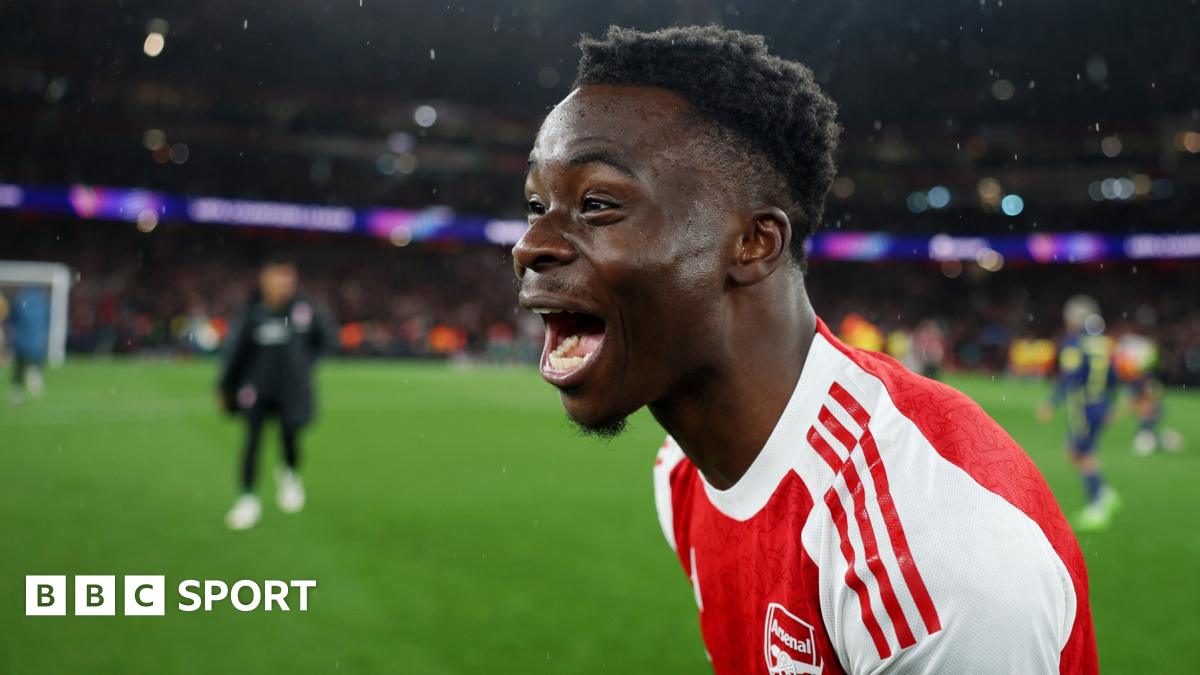
In the semi-final against Bayern Munich, Arsenal held 64 percent possession over two legs but only generated 1.8 xG from open play. They looked blunt and entirely predictable. The movement off the ball was static. Bukayo Saka was frequently double-teamed, and without rapid underlapping runs from the fullbacks, the attack simply ground to a halt.
Arteta has masked this deficiency through set-pieces. Arsenal have scored an incredible eight goals from corners in the Champions League this season. Nicolas Jover, the set-piece coach, deserves massive credit for designing these routines. But relying on dead-ball situations to bail out a stagnant open-play attack is a precarious strategy. If a team defends the box well in the air, Arsenal can be completely neutralized. This over-reliance on corners is a vulnerability that could easily be exposed in a one-off final.
The Invincibles comparison
When analyzing Henry's change of heart, it is natural to compare this team to the 2003-04 Invincibles. Statistically, the defensive comparison is fascinating. The Invincibles conceded 26 goals in a 38-game league season, an average of 0.68 per game. Arteta's current defensive unit is conceding 0.74 across all competitions.
But the offensive numbers tell an entirely different story. The Invincibles scored 73 goals, averaging 1.92 per game. More importantly, their speed of attack was terrifying. They averaged just 2.4 passes per possession before registering a shot. Arteta's Arsenal average 4.6 passes per possession before a shot. They are deliberate, slow, and heavily calculating.
Henry played in a team that struck like lightning on the counter-attack. He is now endorsing a team that crushes opponents slowly, like a python constricting its prey. It is a fundamental shift in footballing philosophy. The fact that Henry can look past his own aesthetic preferences to acknowledge the effectiveness of this Arsenal side speaks volumes about the sheer weight of the data.
Looking ahead to May 28
As we approach the May 28 final, the narrative surrounding this team is firmly established. Arsenal are not the swashbuckling entertainers of the early Arsène Wenger years. They are a defensive juggernaut built on spatial control, aggressive pressing, and set-piece efficiency. The numbers prove it beyond any reasonable doubt.
Arteta has spent four years building this specific machine. He has stripped away the chaos of the late Wenger and Emery eras and replaced it with cold, hard metrics. Whether that translates to the ultimate prize will be decided in 22 days when they step onto the pitch for the final. But the debate over his methods is officially over. When Thierry Henry looks at the numbers, he has no choice but to concede the point.
Read Next