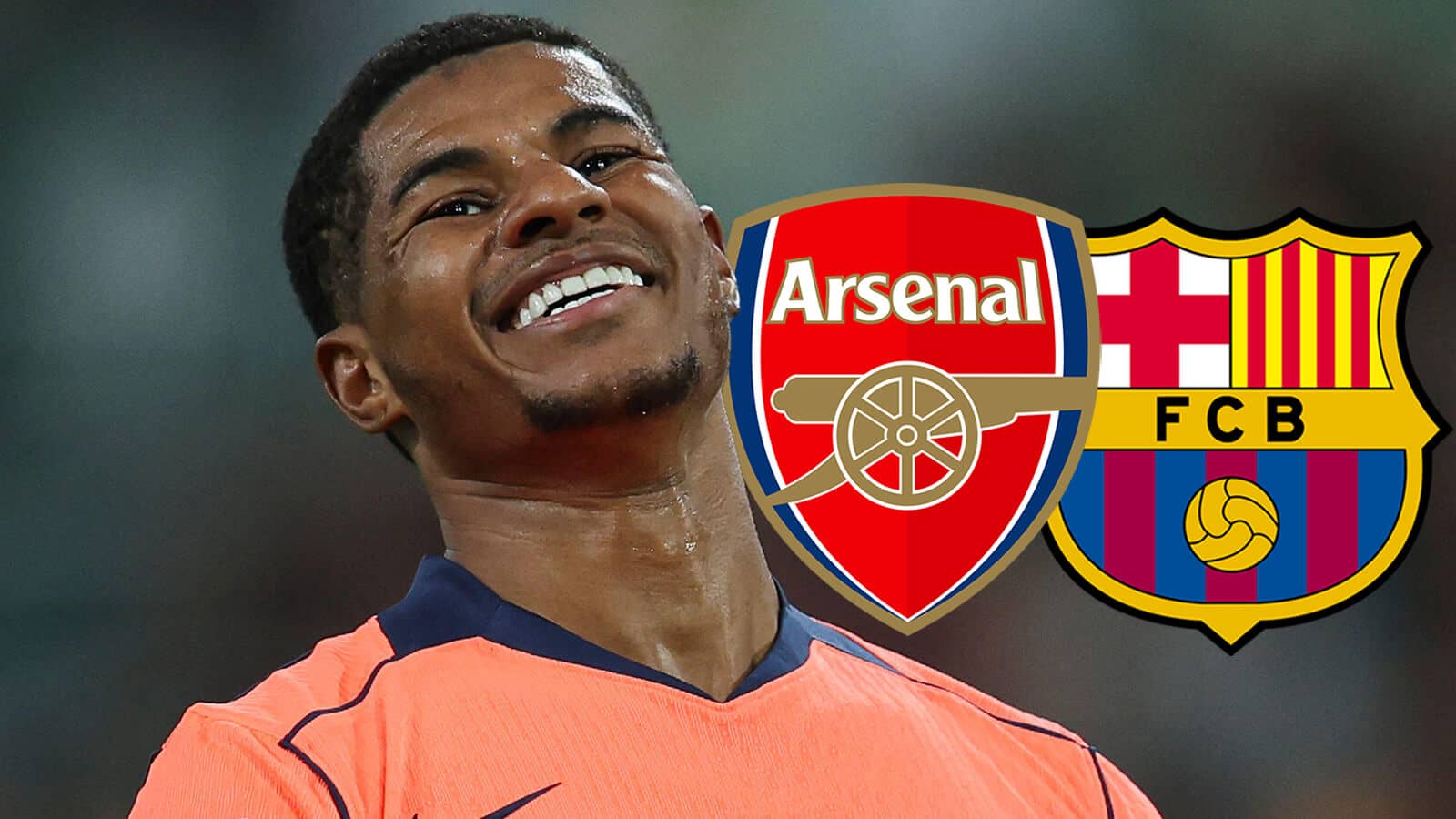
The physical realities of Lee Dixon's warning
Lee Dixon did not mince words. He called Marcus Rashford an "Arsenal player" in theory, but firmly stated that you "can't trust him" on the pitch. While fans immediately debate tactical fit or finishing ability, the real issue is physiological. Trust in modern elite football is entirely dictated by physical reliability.
Mikel Arteta demands relentless pressing. A forward in his system must repeatedly hit high-speed running metrics over 90 minutes. Rashford possesses elite top speed, but his ability to sustain anaerobic efforts has visibly declined. You cannot execute a high press if your body is carrying the accumulated damage of multiple seasons played through pain.
Rashford spent years managing a severe double stress fracture in his back. He delayed shoulder surgery to participate in major tournaments. Those decisions leave permanent physiological scars. Fast-twitch muscle fibers, which generate explosive pace, lose their elasticity when forced to operate under chronic fatigue.
Dixon sees exactly what the sports scientists see. A player who hesitates to commit to a 50-50 challenge or fails to track back in the 82nd minute isn't necessarily lazy. They are often physically compromised. The central nervous system essentially forces the body to throttle down to prevent a catastrophic muscle tear.
Alan Shearer's praise and the durability gap
Alan Shearer recently named his three best Arsenal players this season. His selections arrived shortly after he made specific claims regarding Bruno Fernandes. What links Shearer’s top Arsenal performers is not just technical brilliance. It is their absolute refusal to break down.
Arsenal have built a squad composed of aerobic monsters. They dominate possession, but they also suffocate opponents off the ball. To survive in that environment, a player needs flawless biomechanics. They must recover from a Sunday afternoon kickoff in time for a Wednesday night European fixture without a drop in athletic output.
Compare this to the medical reality at Manchester United. Their medical department has faced relentless scrutiny. Players return from hamstring strains only to suffer immediate relapses. When Shearer evaluates the best players in the league, availability is the silent metric underpinning every choice. You cannot be the best player on the pitch from the treatment table.
The Fernandes anomaly and Barcelona's pivot
Bruno Fernandes is a medical anomaly. He simply does not get injured. Rashford recently sent his captain a glowing message regarding his massive impact at the club. This public support arrived right after a widely reported Barcelona U-turn agreement.
The Barcelona U-turn agreement highlights how elite clubs value durability. Barcelona desperately need players who can survive a gruelling La Liga and Champions League campaign. When a player never misses a match, their market value stabilizes.
United secured Fernandes because they recognized he was the only player holding their chaotic squad together. Rashford’s glowing message to his captain was effectively an acknowledgment of this reality. You can have all the talent in the world. If your hamstrings fail under pressure, you cannot lead a team.
Fernandes does not rely on raw sprint speed. He dictates play through spatial awareness and technique. His joints do not absorb the massive braking forces required to stop a full-speed sprint. Rashford relies entirely on those violent decelerations. That is exactly where tendons rupture and ligaments tear.
The biomechanics of high-speed deceleration
Sports science has revolutionized how we view player fatigue. Ten years ago, managers looked at total distance covered. Today, medical departments analyze high-intensity sprints and the massive braking forces required to stop.
When a forward sprints at 34 kilometers per hour and suddenly changes direction, the load on their patellar tendon is immense. A healthy player absorbs this shock naturally. A fatigued player overcompensates, shifting the strain to weaker muscles and inviting severe injuries.
Rashford’s running style is explosive. He relies heavily on a rapid first step to beat his full-back. When his muscles are fully recovered, it looks devastating. When he is carrying a knock or exhausted from an endless fixture list, that first step disappears completely.
You can see this hesitation during defensive transitions. He frequently drops his shoulders and jogs back into a defensive shape. Fans call it a lack of effort. Medical staff recognize it as a protective mechanism triggered by a nervous system under severe duress.
Historical comparisons and the breakdown of speed
Football history is littered with fast forwards who lost their legs by the age of 28. Michael Owen won a Ballon d'Or but was functionally finished as an elite sprinter after repeated hamstring tears. Fernando Torres lost his terrifying acceleration following a rushed return from knee surgery. The warning signs for Rashford are identical.
When a player loses a fraction of a second in acceleration, their entire game collapses. Defenders step up higher. The gaps close faster. What used to be a clean breakaway becomes a blocked shot. The margins at the elite level are brutally small.
Arsenal's recruitment team knows this. They utilize advanced data models to predict injury probability. They track historical load, previous surgical interventions, and asymmetric movement patterns. If a player favors one leg to protect an old injury, the opposite hip or knee inevitably absorbs the extra force and fails.
Dixon's lack of trust is completely justified by the data. Investing massive wages into a player with a history of back and shoulder trauma is a gamble. If Arsenal sign a forward, they need a machine. They do not need a reclamation project requiring constant load management.
The upcoming World Cup and calendar congestion
The football calendar is entirely broken. The upcoming FIFA World Cup kicks off on June 11, 2026. Players are being ground into dust by an endless cycle of domestic leagues, expanded European competitions, and international duty.
For a player with Rashford’s medical history, this schedule is deeply dangerous. There is zero time for a proper off-season. Muscles require extended periods of complete rest to heal micro-tears. Without that rest, the tissue becomes fibrotic. Scar tissue does not stretch. It snaps.
Arsenal are preparing for this brutal reality. Their squad depth is designed to rotate players before they hit the red zone. But you cannot rotate a marquee signing who expects to start every major match. If a player demands to play through the fatigue, the risk of a Grade 3 hamstring tear skyrockets.
This is a major flaw in the modern game. We demand maximum intensity from players who are completely exhausted. The federations keep adding fixtures, the broadcasters demand high-tempo entertainment, and the players' bodies simply give out. It is a broken, unsustainable system.
The verdict on trusting broken machinery
Ultimately, Dixon's assessment is harsh but accurate. You cannot trust what you cannot put on the pitch. Arsenal's current success is built on a foundation of sports science and strict physical profiling.
Shearer recognized the output of Arsenal's best players, and that output requires superhuman fitness. Fernandes demonstrates the extreme end of natural durability, navigating Barcelona rumors and United chaos without ever pulling a calf muscle. Rashford recognizes that brilliance, but he cannot emulate it.
A transfer to Arsenal would require a medical miracle. The physical demands would break down an already compromised athlete. Football is a harsh business. Once the body loses its elite elasticity, the tactical intelligence does not matter. The machinery is broken, and in the Premier League, there is no time to fix it.
Read Next
- Arsenal chasing Rashford is a fan fiction nightmare
- Dembele's injury changes everything for Arsenal and France
- Why Thomas Tuchel and Mauricio Pochettino are having a terrible week
- Why Arsenal are targeting Julian Alvarez and Barcola
- 🇵🇹 Portugal World Cup 2026 — A Seleção Hub
- ⭐ UCL 2026 — Champions League Quarter-Finals Hub