The London Colney casualty ward
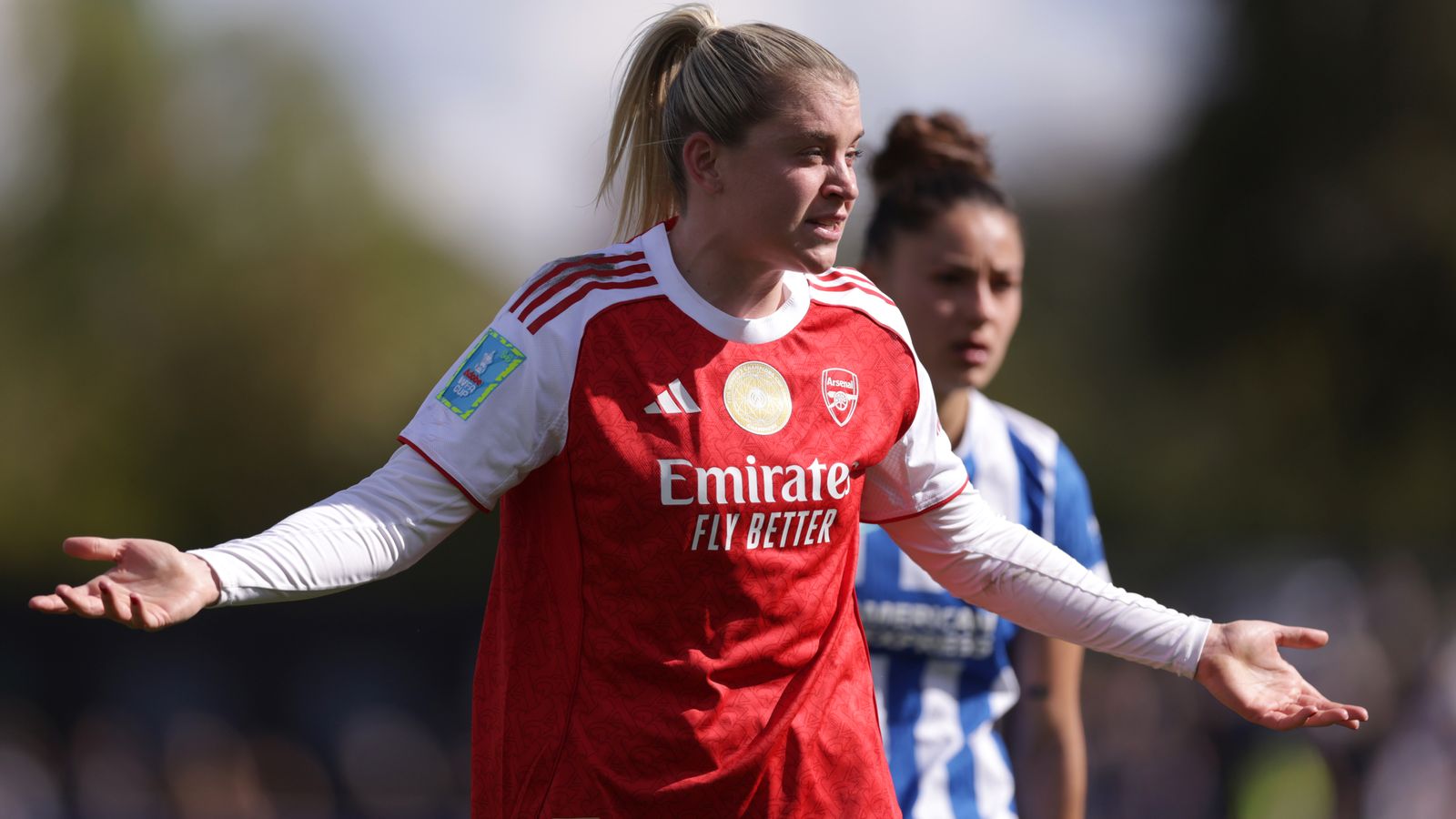
Mikel Arteta has a problem that cannot be solved by a tactical whiteboard or another intense session on the grass. The international break, often a source of quiet dread for managers, has mutated into a full-scale disaster for Arsenal’s title ambitions. We are no longer talking about a few knocks or players needing a week of rest. As The Mirror reported, the injury list has now ballooned to twelve senior players.
This is not just bad luck. It is a systemic collapse of the squad's physical ceiling at the exact moment the season enters its most unforgiving phase. With the Champions League quarter-finals just 9 days away, Arteta is looking at a starting XI that might have to be patched together with duct tape and academy prospects. The list of names reads like a team-sheet for a title-winning side: Rice, Saka, Madueke, Zubimendi, and Hincapié are all currently under medical assessment.
The Zubimendi void and midfield stagnation
Losing Martin Zubimendi is arguably the most damaging tactical blow in this entire list. He was the metronome Arteta spent months chasing, the player designed to provide the defensive security that allows Declan Rice to operate as a roaming destroyer. Without Zubimendi’s ability to manipulate the first phase of build-up, Arsenal’s progression through the middle becomes predictable and slow. We saw this in the matches before his arrival; the ball circulates in a giant 'U' shape around the opposition block without ever penetrating the lines.
Rice is also a doubt, which leaves the engine room effectively empty. If Arteta is forced to rely on a Jorginho-Partey axis, the high-pressing system that Arsenal uses to suffocate opponents will inevitably fail. Those two simply do not have the lateral mobility required to cover the ground when the opposition breaks. In recent matches, Arsenal’s PPDA (Passes Per Defensive Action) was a league-leading 8.2, but that number will skyrocket if the midfield cannot trigger the press. As the Daily Mail reported, even Thomas Tuchel has expressed concern about the state of these players returning from England duty.
The Saka gravity problem
Everything in the Arsenal attack functions because of Bukayo Saka’s gravity. He drags two defenders toward the touchline, which creates the half-space opening for the right-sided eight to exploit. When Saka is sidelined, or even playing at 70% fitness, that gravitational pull disappears. Opposition left-backs no longer feel the need to stay pinned to their defensive line, allowing them to join the counter-attack and overload Arsenal’s makeshift flanks.
Noni Madueke’s injury on the opposite wing doubles this frustration. Madueke provided the 1v1 threat that prevented teams from simply shifting their entire defensive block toward Saka's side. If both are out, Arsenal lose their width. The attack becomes congested in the center, playing right into the hands of any team with a disciplined low block. You cannot win a Premier League title by playing everything through the eye of a needle for 90 minutes.
Defensive structural collapse
Piero Hincapié was supposed to be the final piece of the defensive puzzle. His ability to act as a hybrid left-back and third center-back allowed Arsenal to transition into a 3-2-5 shape with seamless fluidity. If he is unavailable, Arteta has to revert to a more traditional back four, which immediately compromises the team's ability to defend the counter. Without Hincapié’s recovery pace in the channel, the 12-man injury list starts to look like a death warrant for the team's defensive clean sheet record.
In the last five matches before the break, Arsenal surrendered an average of only 0.72 xG per game. That defensive solidity was built on the consistency of the back five. If you remove Hincapié and potentially Gabriel, you are asking players who haven't seen meaningful minutes in weeks to step into a title race at 100mph. It is a recipe for the kind of individual errors that derailed the 2023 campaign.
The cost of Arteta's obsession
There is a necessary critique to be made of Arteta’s management here. He has a notorious reluctance to rotate his squad, often keeping his preferred XI on the pitch long after a game has been put to bed. This 'red-lining' of his key assets is the primary reason why a single international break has caused such a catastrophic ripple effect. When you play your stars for 90 minutes in every competition, their muscles are essentially ticking time bombs. This isn't just a streak of bad luck; it is the bill for a season of over-reliance finally coming due.
The physical data shows a clear trend. Arsenal's sprint distance per game has dropped by 12% since February. The players are exhausted, and the international calendar has simply provided the breaking point. The medical staff at London Colney are miracle workers, but they cannot fix chronic fatigue and soft-tissue tears in 48 hours. Arteta’s insistence on a small, trusted circle has left him with a bench that lacks the tactical maturity to step in without a massive drop-off in quality.
The April reality check
Looking at the fixture list, there is no room for error. The Premier League race is currently separated by a single point, and the Champions League Quarter-Final is the biggest game in the club's recent history. Heading into this period with 12 players on the treatment table is like trying to win a grand prix with three flat tires. The depth just isn't there to sustain the level of performance required to beat the elite.
My prediction for the coming weeks is grim. Expect a sluggish performance in the next league outing where the lack of midfield control results in a frustrating 1-1 draw. In Europe, the situation is even more precarious. Without the first-choice defensive structure, Arsenal will likely have to abandon their high line and play a pragmatic, reactive game that doesn't suit their personnel. The 'Arteta-ball' we've seen all season is about to be replaced by a desperate scramble for points.
Ultimately, this injury crisis will be remembered as the moment the 2026 season slipped away. You cannot lose the spine of your team in March and expect to hold off a chasing pack that is significantly fresher. The Gunners are about to learn a very expensive lesson about the importance of squad rotation and the brutal reality of the modern football calendar.