
Beyond the Flag: Akil Howson's Wembley Milestone and Officiating's Unseen Battles
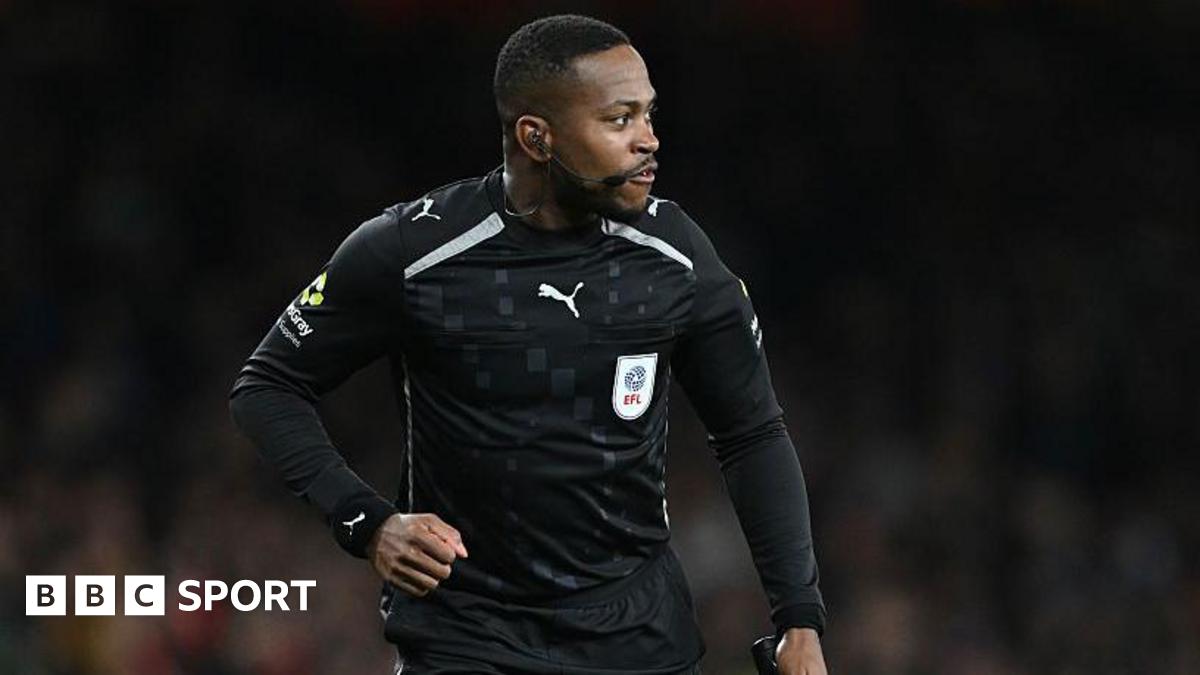
Wembley's new frontier: History made, pressures remain
On May 16, 2026, when Chelsea and Manchester City clash in the FA Cup final, the spotlight at Wembley will not solely rest on the pitch's star players. History will be made on the touchline. Akil Howson is set to become the first black official to feature in an FA Cup final, a landmark moment confirmed by reports from both the BBC and the Mirror. His appointment as an assistant referee alongside lead official Darren England signifies a vital step forward for diversity within English football's elite officiating ranks.
This isn't merely a personal triumph for Howson, though his dedication to reaching this pinnacle is undeniable. It represents a crack in a ceiling that has, for too long, appeared impenetrable. The visible inclusion of a black official in one of the world's most prestigious club competitions sends a powerful message, inspiring a generation of aspiring referees from underrepresented backgrounds.
The enduring scarcity of diverse leadership
While Howson’s achievement deserves every commendation, it simultaneously throws into stark relief the glacial pace of change within football officiating. The fact that it has taken until 2026 for such a milestone to occur speaks volumes about the systemic barriers that have historically stifled diversity. We celebrate a 'first,' yet it's a first that should have arrived decades ago.
Representation isn't just about visibility; it's about breaking down implicit biases and fostering an environment where talent from all backgrounds can thrive. For years, the pathway to professional refereeing has appeared largely homogenous, leading to legitimate questions about how thoroughly the existing systems identify and nurture diverse talent. How many potential Akil Howsons have been overlooked, or felt unwelcome, along the way?
The intense crucible of Wembley
However, the symbolism of Howson's appointment also collides head-on with the brutal reality of officiating at the highest level. The FA Cup final is not merely a football match; it is an economic and emotional behemoth, where every decision is magnified, scrutinized, and replayed ad infinitum. Even a historic occasion cannot insulate officials from this unrelenting pressure.
Darren England, taking charge of the Wembley showpiece for the first time, will feel the weight of expectation. His assistant, Akil Howson, will be under an equally intense microscope. One incorrect offside call, one missed foul, or one contentious handball decision could define careers, alter legacies, and overshadow the very history being made.
The margin for error in modern football officiating is infinitesimal, and the consequences of perceived mistakes are often disproportionately severe. Officials are expected to be flawless, yet they operate in real-time, at blistering speeds, in an environment designed to push human perception to its absolute limit. This inherent flaw in expectation is a critical, negative observation about the state of professional officiating today.
Beyond the grand stages: Grassroots realities
The contrast between the professional theatre of Wembley and the raw passion of youth football could not be starker. While Howson prepares for the FA Cup final, the Scottish Youth Cup final pits Queen’s Park against Hearts at Hampden. These matches, though vital for player development, operate with a very different kind of pressure – one rooted more in the purity of competition than the multi-million-pound stakes of the senior game.
It is at these grassroots levels that the future Akil Howsons are currently learning their trade, often in thankless conditions, subjected to abuse from touchline parents and coaches. The challenge for football associations, both English and Scottish, is not just to elevate a select few to the professional ranks, but to cultivate an inclusive, supportive environment throughout the entire officiating pyramid. If the base of the pyramid remains narrow, the diverse talent pool at the top will always be limited.
What truly changes after May 16th?
Howson’s historic walk onto the Wembley pitch is undoubtedly a moment to celebrate. It proves that the path to the top is not entirely closed off, even if it remains disproportionately challenging for some. Yet, the real measure of progress will not be found in this singular event, but in the sustained efforts that follow.
Will we see a genuine acceleration in diverse appointments across all levels of professional football? Will officiating bodies proactively address the unconscious biases that may still exist within their recruitment and promotion structures? Or will this remain a significant, yet ultimately isolated, milestone rather than the beginning of a true paradigm shift?
The test for English football's governing bodies is to ensure that Akil Howson’s achievement is not viewed as the end of a journey, but merely the most visible signpost on a much longer road. The pressures of the FA Cup final will be immense, but the pressure to continue fostering a truly inclusive and representative officiating corps is even greater. The future of the game, and its ability to connect with diverse communities, depends on it.
Read Next
- The summer market shift: How recent UCL chaos alters transfer strategies
- Dominic Solanke's season is likely over as Tottenham's nightmare deepens
- Rashford to Tottenham is a high-stakes gamble Postecoglou might lose
- Spurs making a move for Marcus Rashford is the logical end of a messy era
- 🏆 FA Cup Final 2026 — May 16, Wembley
Adidas Unisex Adults' UCL League Soccer Ball
Train like the legends under the Champions League lights.
More Coverage
Arsenal’s European ambition check is about eighty games overdue
an hour ago
Tottenham are shaking up the squad with a record-breaking push
an hour ago
Arsenal weigh up Ethan Nwaneri departure as Premier League interest grows
an hour ago
Arsenal's transfer strategy remains locked on silverware
an hour ago
Anthony Gordon to Barcelona is a high-stakes gamble for all involved
2 hours ago
Anthony Gordon to Barcelona marks a high-stakes gamble
3 hours agoMore Analysis

Akil Howson's historic FA Cup final appointment signals a slow but crucial shift
1 month ago
Domestic chaos and cup drama: A weekend of refereeing headaches
1 month agoDe Zerbi Just Said the Quiet Part Out Loud About Referees
2 weeks, 3 days ago
Three refs banned from the Merseyside derby and the PL is panicking
1 month, 1 week ago