The Cofi Army is coming for Newport
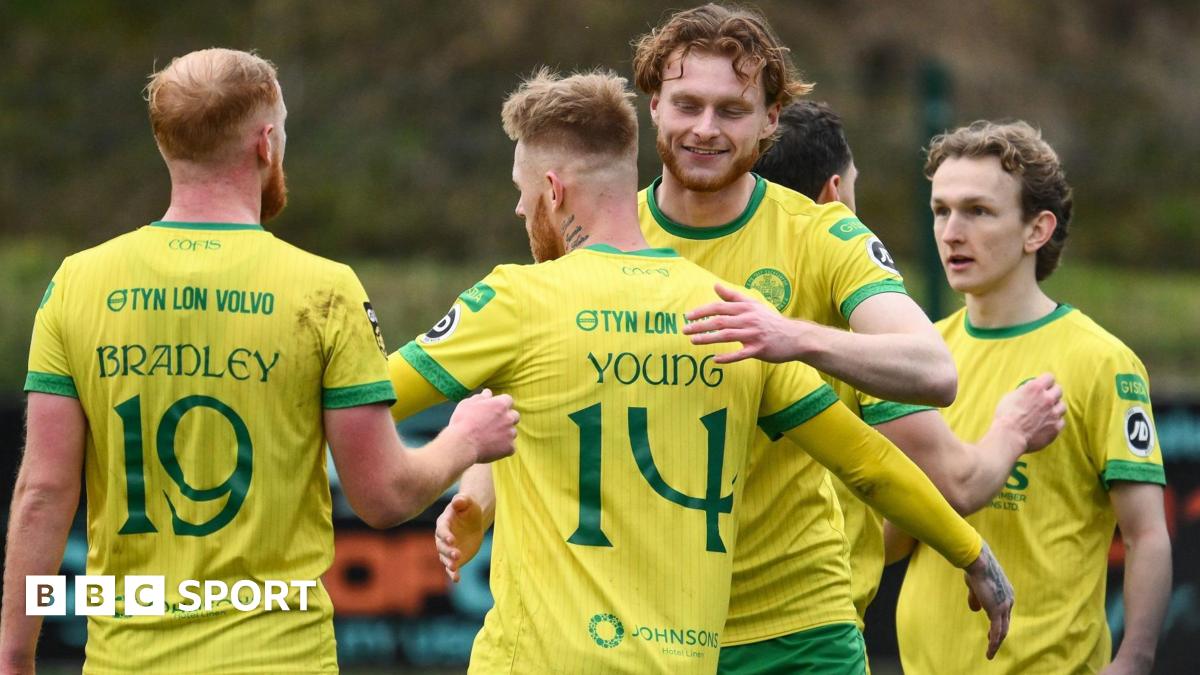
If you aren't paying attention to the JD Welsh Cup final this weekend, you're officially missing out on the purest form of football drama left on these islands. Forget the multi-billion dollar corporate slog of the Champions League for a second. We're talking about Caernarfon Town. The Cofis. A club that lives and breathes on the passion of a town that treats every match like a holy war.
On Sunday, the Cofi Army will descend upon Newport's Rodney Parade for the first time in their history with a major trophy on the line. It’s been a long, winding road for manager Richard Davies and his squad. For a club that has spent decades punching above its weight, this isn't just a game. It's a coronation of everything they’ve built at The Oval over the last few years.
Davies is looking to create history, and he’s doing it with a team that actually represents its community. In an era where top-flight clubs feel like hedge funds with grass, Caernarfon remains gloriously, stubbornly local. They aren't just eyeing the trophy; they’re looking to prove that the heart of Welsh football still beats strongest in the north.
The weight of a first-ever final
Let’s be real for a minute. Caernarfon Town reaching their first-ever Welsh Cup final is the kind of story that usually gets buried under news about Mo Salah’s contract or whatever tactical whiteboard Pep Guardiola is obsessing over this week. But in the Cymru Premier, this is our Super Bowl. It is the culmination of years of gritty performances and a fan base that travels better than most Championship sides.
Richard Davies has done a remarkable job keeping this group focused. There’s a specific grit to this team that mirrors the town itself. They don't just beat you; they outwork you. They make every second on the ball feel like a chore for the opposition. Seeing them finally break through that semi-final glass ceiling is a relief for anyone who appreciates the grind of semi-professional football.
But with that history comes a crushing amount of pressure. Being the first generation to potentially bring the silver back to Gwynedd is a heavy mantle. We’ve seen teams freeze in these moments before. The bright lights of Rodney Parade and the S4C cameras can turn reliable legs into jelly. The question isn't whether they have the talent — they clearly do — it’s whether they can handle the psychic weight of a town's expectations.
Flint Town United and the ghost of 1954
Across the pitch stands Flint Town United, a team that hasn't seen this stage since the days when people still thought cigarettes were a health supplement. The last time Flint reached a Welsh Cup final was 1954. That is a 72-year drought that would make even a Tottenham fan feel a twinge of sympathy. They won it back then, but the grainy black-and-white memories don't do much for the current squad.
Flint’s run to the final has been just as impressive, if not more surprising. They’ve played the role of the spoiler all season, upsetting the established order and proving that the gap between the mid-table and the elite in Wales is shrinking. They aren't coming to Newport to be a footnote in Caernarfon’s history book. They want their own chapter, one that doesn't involve a history lesson from the fifties.
This matchup is a fascinating clash of styles. You have the emotional momentum of Caernarfon against the disciplined, clinical approach of Flint. It’s the kind of game that usually ends in a 1-0 scrap where someone scores off a set piece in the 84th minute and everyone loses their minds. Don't expect a tiki-taka masterclass; expect a battle of wills that leaves both teams exhausted by the hour mark.
The Rodney Parade factor
Holding the final at Rodney Parade is an interesting choice, to say the least. It’s a ground that has seen its fair share of mud, blood, and tears over the years, mostly from Newport County or the Dragons. It’s a proper, old-school stadium that feels right for a Welsh Cup final. It’s not some sterile neutral ground with overpriced hot dogs and no soul.
However, the travel is a nightmare for the Caernarfon faithful. Dragging a few thousand people from the north-west tip of Wales down to Newport on a Sunday is no small feat. But if I know the Cofi Army, they’ll turn that stadium into a home game within ten minutes of kickoff. The atmosphere is going to be hostile, loud, and probably involve a fair amount of singing that the S4C commentators will have to ignore.
The pitch at Rodney Parade can be a bit of a lottery too. If it rains — and this is Wales, so it probably will — we’re looking at a surface that favors the brave over the technical. This isn't the Emirates. You have to earn every yard of space. For a manager like Richard Davies, that’s exactly what he wants. He wants a scrap. He wants to see who blinks first when the challenges start flying in.
The European golden ticket
Let's talk about the elephant in the room: the UEFA Conference League. Winning this trophy isn't just about the silverware; it's about the massive financial windfall that comes with European qualification. For a club like Caernarfon or Flint, the prize money from a single round in Europe can fund the entire operation for a year. It is life-changing money for this level of the pyramid.
We saw Caernarfon get a taste of Europe recently, and the impact on the club was massive. The chance to do it again, but as cup winners, is the ultimate goal. It allows for better recruitment, better facilities, and a higher profile. The stakes are higher than ever because the gap between those who get European money and those who don't is widening every season.
This financial pressure is the hidden narrative of the final. The players know it. The board knows it. The fans know it. It adds a layer of desperation to the match that you don't get in the bigger leagues where everyone is already flying on private jets. Here, a missed penalty could literally cost the club a new training pitch or a couple of key signings in the summer. No pressure, right?
A critical eye on the scheduling
As much as I love the Welsh Cup, we have to talk about the scheduling. Playing a major national final on a Sunday afternoon in Newport when both teams are from the North is a logistical middle finger to the fans. The FAW loves to talk about supporting the grassroots, but making a five-hour round trip on a Sunday is a big ask for families.
It’s a classic case of TV requirements overriding fan convenience. We see it in the Premier League every week, and it’s disappointing to see it creeping into the domestic Welsh game too. The cup deserves better. The fans deserve better. But knowing the Cofi Army, they’ll show up anyway, probably in even greater numbers just to prove a point to the suits in Cardiff.
Despite the hurdles, the buzz around this match is real. There is a sense that the JD Welsh Cup is regaining some of its old luster. For years, it felt like a foregone conclusion that The New Saints would just waltz away with it. Having two clubs like Caernarfon and Flint in the final is a breath of fresh air. It’s proof that the rest of the league is catching up, and the monopoly on Welsh silverware is finally being challenged.
The Verdict: Who takes it?
Predicting a cup final is a fool's errand, but since I'm already in the sports bar with a pint in hand, I’ll give it a go. Caernarfon Town have the momentum of a runaway freight train right now. The belief in that squad is something you can't quantify. Richard Davies has them playing with a fearlessness that is hard to bet against.
Flint will make it difficult. They’ll sit deep, frustrate the Cofis, and look to hit them on the break. If they can weather the initial storm and keep the crowd quiet for twenty minutes, they have a real chance. But I just can't see the Cofi Army letting their team lose this one. The collective will of that town is going to pull them over the line.
I’m calling it now: Caernarfon Town wins their first-ever Welsh Cup in a match that will be remembered for the noise in the stands more than the quality on the pitch. It’s going to be a 2-1 thriller with a late winner that sends Gwynedd into a week-long party. If you see a sea of yellow and green heading south on the A470 this weekend, just get out of the way. History is being made.
Whatever happens, this final is a win for the domestic game. It’s a reminder that football doesn't start and end with the Premier League. It exists in places like Caernarfon and Flint, where the result actually matters to the people walking down the high street. Sunday can't come soon enough.