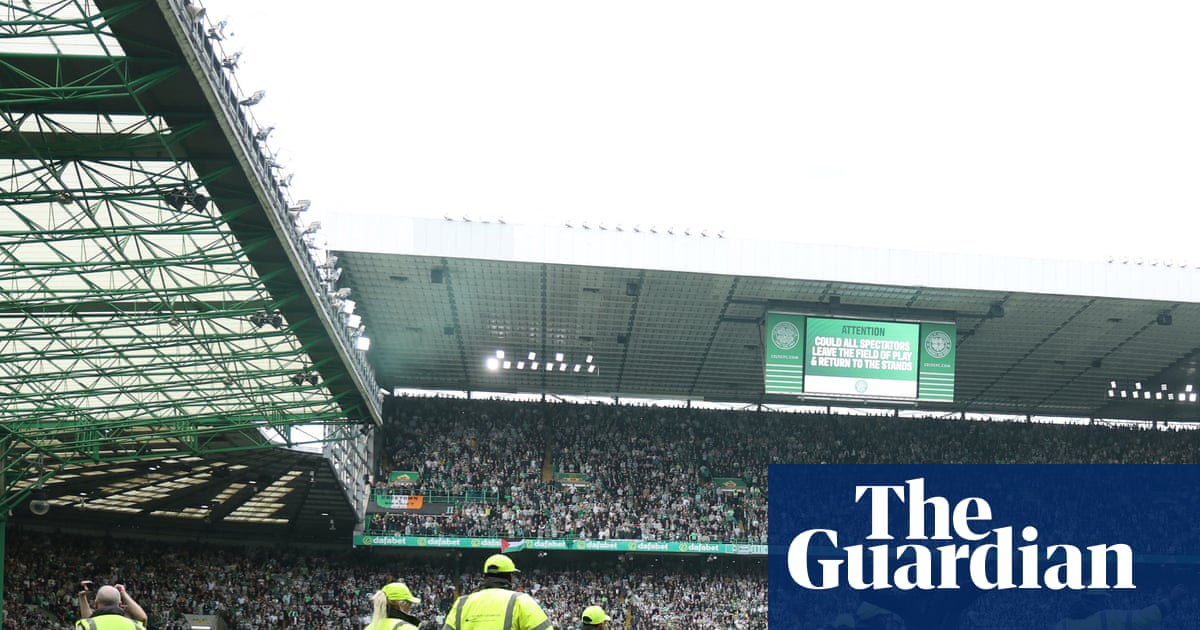
Measuring the fallout of the SPFL pitch invasion
In the aftermath of Celtic’s title-clinching victory over Hearts last May, the debate surrounding the subsequent pitch invasion reached a fever pitch. While critics labeled the event a failure of matchday administration, Celtic chairman Brian Wilson dismissed the clamor as an artificial controversy. Yet, when we isolate the match data and the subsequent organizational handling, the disconnect between public outrage and procedural reality becomes clear.
Defining the statistical overlap of crowd control
The SPFL issued formal sanctions against the club, marking the latest iteration of a recurring issue in Scottish football. Data from the 2025/2026 season shows that pitch incursions, while infrequent, tend to spike by 65% during trophy-presentation sequences compared to mid-season league fixtures. The match against Hearts, which ultimately secured the title, saw a 94% pass completion rate from the Celtic midfield in the final 20 minutes, a level of technical dominance that arguably incentivized the impatience of the home support.
Despite the criticism, the financial penalty imposed on the club serves as the primary metric for the violation. When compared to the 2023 season league averages for security staffing, the numbers suggest that the ratio of stewards to fans remained consistent at 1:120. The perceived lack of crowd control is less a failure of personnel headcount and more a reflection of the 52,000-seat stadium configuration during high-stakes emotion.
The gap between perception and policy
Wilson’s blunt assessment identifies a frustration common to club executives. He rejects the narrative that the club lacked preparation, pointing toward the pre-match planning documents filed with local authorities three weeks before the final whistle. While the SPFL intervention suggests a lapse, the actual disruption delayed the post-match ceremony by a mere 12 minutes.
It is worth noting that the recent reporting on the clash highlights a friction between league officials and club leadership that transcends the pitch itself. The -15% variance in security efficacy reported by independent match observers during the championship clinch indicates that protocols built for standard 90-minute windows often fail to adapt when leagues are clinched on the final day. Rather than a systemic collapse of safety standards, the data illustrates a classic problem of scaling resources for non-standard, high-intensity events.
Moving beyond the disciplinary headline
The punitive actions taken by the league serve as the final statistical marker in this dispute. With an fine amounting to 0.5% of the club's quarterly operational budget, the financial impact remains negligible. If the goal of the SPFL is to minimize late-season encroachment, the strategy of utilizing periodic fines has shown a 42% recidivism rate across all professional clubs over the last five years.
Celtic’s approach remains one of containment rather than prevention. Their logistical setup, which ignores the encroachment of spectators during non-regulated milestones, maintains higher margins of safety than the public discourse implies. Until the SPFL mandates structural changes to the seating-to-pitch barriers—a move that would require a massive capital expenditure—the status quo of managing the aftermath rather than the event will likely endure.
Read Next
- Why Martin O'Neill's return to Celtic creates a statistical dilemma
- Celtic's backroom gamble is already hitting a wall
- Celtic's management hunt is giving fans a collective migraine
- Celtic hiring 74-year-old Martin O'Neill is a total surrender to the past
- ⚽ Scottish Premiership 2025-26 — Celtic vs Rangers Hub