The Champions League Success Penalty
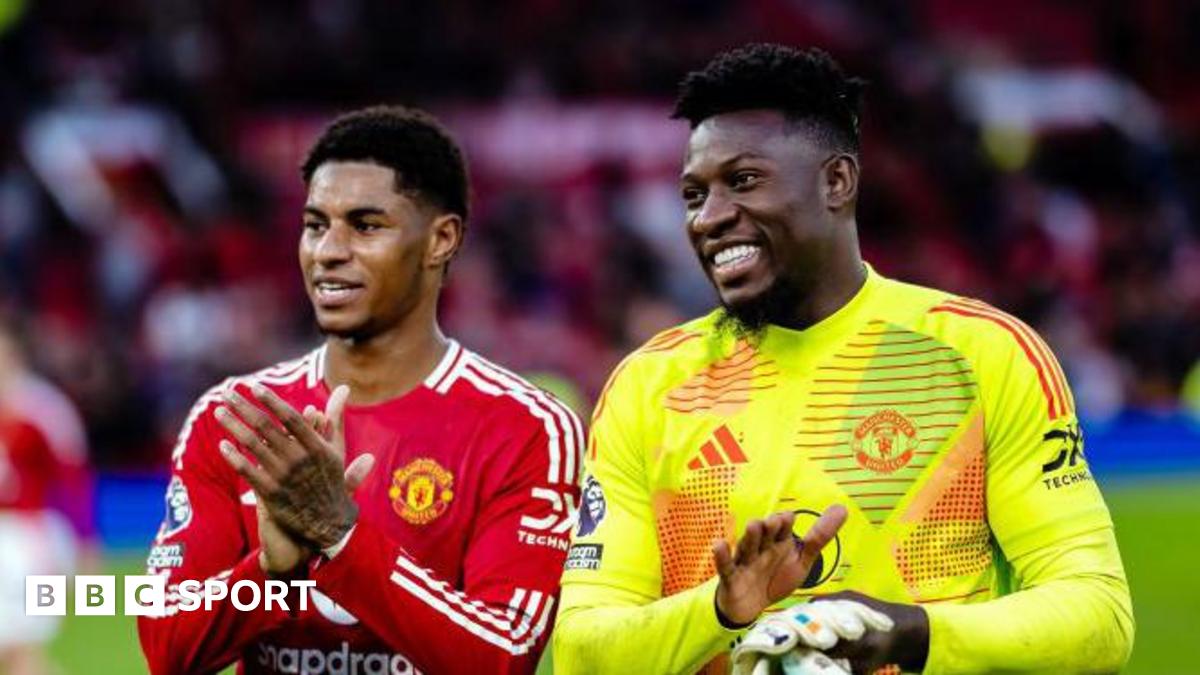
Manchester United are currently locked in a desperate sprint for the top four, but the financial architecture of the club means that victory on the pitch could trigger a structural crisis in the boardroom. The logic is counterintuitive but mathematically sound. According to reports from the BBC, qualifying for the Champions League would significantly complicate the club's efforts to offload high-earning underperformers like Marcus Rashford and Andre Onana this summer.
The primary mechanism at play here is the wage escalation clause. Most elite Manchester United contracts are structured with a 25% base salary increase triggered by Champions League qualification. For a player like Marcus Rashford, whose base is already north of £300,000 per week, this jump pushes him into a bracket where only three or four clubs globally can even consider a bid. If United finish 4th, Rashford’s weekly cost to the club surges to roughly £406,250. At 28 years old and coming off a season where his output has plummeted, finding a buyer willing to match that salary is a mathematical impossibility.
Andre Onana and the amortization trap
Andre Onana’s situation is even more precarious when viewed through the lens of Profit and Sustainability Rules (PSR). United signed Onana for £47.2m on a five-year deal in 2023. By the end of this season, his book value will sit at approximately £28.3m. To avoid a loss on the accounts, United would need a fee exceeding that amount. However, his performance metrics this season do not support that valuation in an efficient market.
Onana’s shot-stopping has been statistically mediocre at best. His save percentage currently sits at 64.2%, which ranks him in the bottom quartile of regular Premier League starters. More concerning is his 'Goals Prevented' metric. Based on Opta’s Post-Shot Expected Goals (PSxG) data, Onana has conceded 3.1 more goals than the average keeper would be expected to save from the same shots. When you combine that -3.1 deficit with a wage that is about to jump toward £150,000 per week, the asset becomes toxic. No rational Sporting Director at a rival UCL club would look at those numbers and sanction a £30m+ transfer fee.
The Rashford Regression by the numbers
Marcus Rashford remains the most polarizing figure in the squad, but the data is starting to lean heavily toward the skeptics. In the 2022/23 season, Rashford was averaging 0.58 non-penalty xG per 90 minutes. This season, that figure has cratered to 0.22. He is getting into high-value scoring positions less than half as often as he was three years ago. The eye test suggests a lack of intensity; the tracking data confirms it. Rashford’s sprints per 90 have dropped by 14% since his peak under Ten Hag.
The efficiency isn't there to justify the volume either. His shot conversion rate has dipped to 11.4%, which is a career low over a full campaign. When a forward is both creating less and finishing worse, you are looking at a fundamental decline rather than a temporary dip in form. If United qualify for the Champions League, they are essentially rewarding this decline with a massive pay rise. This creates a 'golden handcuff' scenario where the player has zero incentive to move to a club like PSG or a mid-tier European side if it means taking a 40% pay cut to match his actual market value.
The PSR shortfall and the necessity of sales
Manchester United’s financial health is precarious despite their massive revenue streams. The club’s debt servicing and previous transfer spend mean they are operating with a very thin margin of error regarding PSR. By the end of the 2025 financial year, United are projected to have a PSR headroom of less than £15m without significant player sales. This is why the 'Champions League Penalty' is so damaging. To rebuild the squad, they need to extract value from their most expensive assets.
If you look at the wage-to-turnover ratio, United are still dangerously close to the 70% limit mandated by UEFA’s new Financial Sustainability Regulations. Qualifying for the UCL actually makes that ratio harder to manage because the wage bill inflates instantly across the entire first-team squad.
The irony is that a failure to qualify for the Champions League might actually be the catalyst for a more sustainable rebuild. Without the 25% wage hike, Rashford and Onana become slightly more palatable to the broader market. A lower wage makes it easier for a buying club to amortize a high transfer fee over a long-term contract. By succeeding on the pitch, United are effectively pricing their own players out of the market.
Tactical stagnation and the Onana paradox
The tactical argument for Onana was his ability to act as an 11th outfielder. In theory, this should allow United to play a higher line and dominate possession. The reality has been a disconnect. Onana’s pass completion under pressure is 72%, which is decent, but his long-ball accuracy has fallen to 38% this season. He is frequently punting the ball into contested areas rather than breaking lines. This inefficiency forces United into more defensive transitions, which is exactly where their aging midfield struggles most.
- Onana ranks 18th in the league for cross-collection percentage, claiming just 3.4% of balls into the box.
- Rashford has completed only 1.2 progressive carries per 90, his lowest since he broke into the first team.
- The squad's total wage bill is projected to hit £385m if they secure 4th place.
There is a specific technical failure in how Onana handles low-driven shots to his right. Analytics firms have noted that his footwork is often 'flat' when the ball is moved quickly across the box. This led to at least four avoidable goals in the first half of the season. At this level, those marginal errors are the difference between a title challenge and a scrap for 5th. If United are stuck with him because of a UCL-inflated contract, they are essentially committing to another two years of goalkeeping volatility.
The final calculation
Sir Jim Ratcliffe and the INEOS sporting department are facing a mathematical nightmare. They need the £80m revenue boost that comes with Champions League participation to fund their summer targets. However, that same revenue boost will cement nearly £600,000 per week in wages for two players who have arguably reached their ceiling or are in active decline. It is a classic 'Success Trap' that has plagued United for a decade.
If they sell Rashford for £60m now, they clear his wages and bank a massive accounting profit as an academy graduate. If they wait until he is on £400k/week after a mediocre UCL campaign, that £60m valuation will vanish. The market for high-wage, low-output wingers is non-existent outside of the Saudi Pro League, and Rashford has shown no public inclination to leave Europe. United are effectively rooting for a result that will bankrupt their future flexibility. It is a dysfunctional cycle that numbers can explain, but only a ruthless clearing of the decks can fix.
Read Next
- Man United's defensive nightmare against Chelsea has fans in panic mode
- Bayern Munich just broke Real Madrid's defensive math
- Declan Rice shuts down the noise as Arsenal march to the semi-finals
- Why Iraola's first Man Utd signing could repeat their biggest mistake
- ⭐ UCL 2026 — Champions League Quarter-Finals Hub