The shadow tactician steps into the light
For years, the narrative surrounding the Ancelotti coaching dynamic has been frustratingly simplistic. Carlo is the raised eyebrow, the elite man-manager, the vibes guy who keeps the dressing room harmonious. Davide is the guy with the iPad. But as we sit 38 days out from the 2026 World Cup kickoff, that reductive view is finally breaking apart.
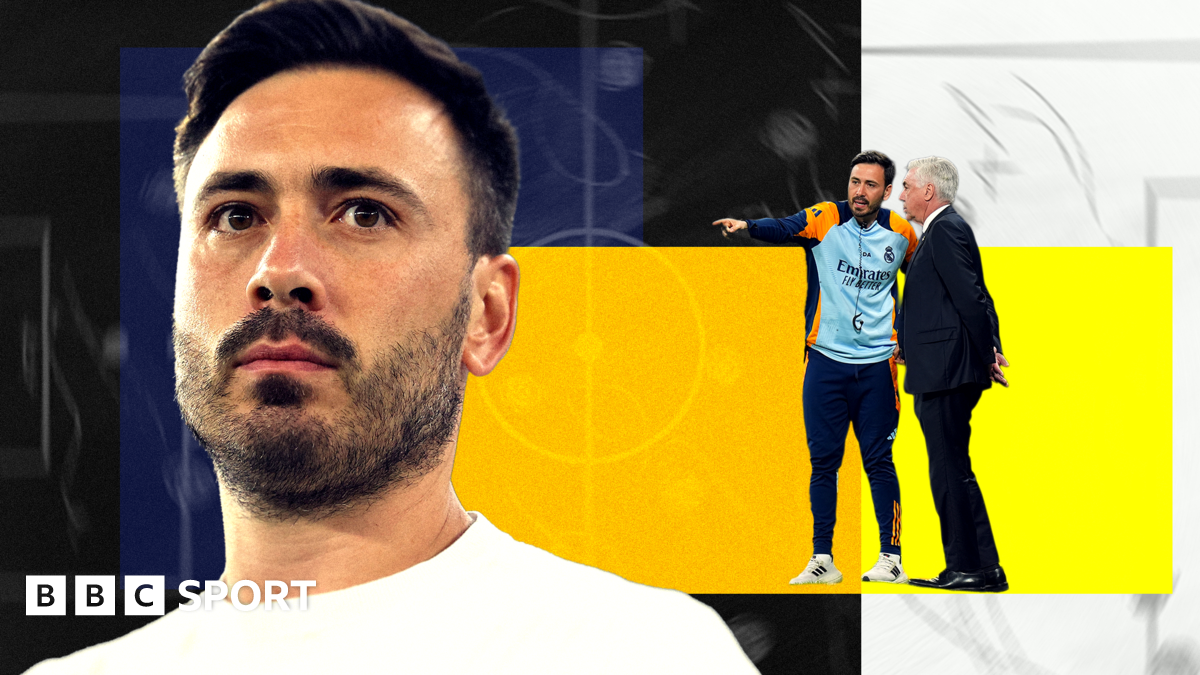
In his recent sit-down with BBC Sport's tactics analyst Umir Irfan, Brazil assistant manager Davide Ancelotti didn't just discuss his coaching ideals. He effectively laid out the tactical blueprint for how the Seleção plan to end a 24-year drought in North America. It was a fascinating glimpse into the mind of a coach who operates entirely outside the traditional Brazilian footballing ethos.
The transition hasn't been entirely smooth. When the Brazilian federation pulled the trigger to bring the Ancelotti operation across the Atlantic, purists worried about a clash of cultures. They expected a massive tactical shock. The reality is far more pragmatic. Davide's influence on the training pitch has been absolute.
He is the one running the defensive shape drills. He is the one barking orders about pressing triggers. He is demanding a level of structural discipline that was often missing during the Tite and Fernando Diniz eras. The interview with Irfan confirmed what the tape has shown for months. This isn't Carlo's unstructured approach from his early Real Madrid days. This is a highly systematized machine wearing yellow shirts.
You can see it clearly in how they manage the opening 15 minutes of matches. Gone is the chaotic, emotional surging forward that cost them against Croatia in Qatar. Instead, Davide has installed a methodical buildup phase that looks borrowed directly from his time studying modern European pressing systems. The emphasis is on ball retention in the middle third. They are utilizing short, angled passes to provoke the opposition press, pulling midfielders out of their designated slots before striking the vacated space.
Fixing the midfield spacing
The most glaring tactical fix under the Ancelottis has been the midfield spacing. Under previous regimes, Brazil routinely suffered from a disconnected double pivot. You would see Casemiro dropping deep while his partner pushed up, creating massive acreage for European sides to counter-attack through. It was a structural nightmare that routinely cost them control of the tempo. It effectively split the team into a defending block of five and an attacking block of five, with nothing but open grass in between.
Davide has completely scrapped that setup. He prefers an asymmetric 4-3-3 that effectively morphs into a 3-2-4-1 in possession. This shape ensures numerical superiority in the center of the park. It allows them to bypass the first line of pressure without resorting to long, hopeful diagonals from the center-backs. By keeping the passing distances under 15 yards, the risk of a rapid counter-attack upon a turnover is heavily mitigated.
Bruno Guimarães is the primary beneficiary of this system. Instead of being tasked with breaking up play and starting attacks simultaneously across massive distances, he is now anchored centrally. His pass completion rate in the opponent's half has spiked to 89.2% over the last five fixtures.
Why the sudden improvement? The structure around him is tighter. When Brazil loses the ball, the counter-press is immediate. The triggers are strictly defined. If the ball is lost on the flanks, the nearest wide player and the central midfielder apply immediate pressure while the defensive line steps up high to squeeze the pitch.
The vulnerabilities of the high line
But it's not perfect. In fact, it's highly flawed. The insistence on this aggressive high line has exposed some glaring weaknesses in their transition defense. When teams manage to bypass that initial counter-press, the center-backs are often left sprinting toward their own goal in complete isolation. The spacing between the defensive line and the goalkeeper often exceeds 40 yards, effectively daring the opposition to play the ball over the top.
We saw it explicitly in the March friendlies against European opposition. Simple balls played over the top caused sheer panic. Éder Militão was repeatedly dragged out of position, forced into awkward recovery sprints against fresh attackers. If a team with elite transitional speed gets past that first wave of pressure, Brazil looks incredibly fragile. You can mask these issues against CONMEBOL teams that lack elite sprinting speed, but you cannot hide them from the likes of France or England.
It is a tactical gamble that Davide seems willing to take. He is clearly prioritizing territorial dominance over deep defensive solidity. But in knockout football, prioritizing possession over transition defense is a fast track to elimination. You only need to look at Bayern Munich's domestic struggles this season to see how easily a high line is dismantled by coordinated runners targeting the half-spaces.
Furthermore, the physical toll of their high-intensity counter-pressing is a major concern for a summer tournament in North America. The humidity and travel will inevitably drain the squad. The pressing data shows a massive drop-off in intensity after the 70th minute. When the legs get heavy, the distances between the midfield block and the forward line widen rapidly. The concerted team press degrades into isolated, individual sprints.
That is precisely the space where a clever number 10 will operate. They have the depth to make substitutions, but the cohesion of the pressing unit is rarely the same once the starting trio is broken up. Teams will simply wait out the initial storm, absorb the pressure, and strike late in the second half when the Brazilian structure inevitably sags.
Overloading the left channel
If the midfield is about control, the attacking third is about engineered isolation. The Ancelotti playbook has heavily relied on overloading one side of the pitch to isolate a dangerous winger on the opposite flank. For Brazil, this means congesting the left channel heavily. It is a systematic approach to breaking down low blocks.
Vinícius Júnior is obviously the focal point. But he is no longer just hugging the touchline waiting for a switch of play like a traditional winger. Davide has implemented a fluid rotation on the left side involving Vinícius, Rodrygo, and an overlapping full-back. The numerical advantage forces the opposition to shift their defensive block horizontally. The defending team is forced to double-team the ball, leaving the far side exposed.
Once the defense commits to the left, the switch is triggered. The ball is recycled quickly through the midfield and sprayed out to the right winger. This player usually finds himself in a pure one-on-one situation with a scrambling fullback, with at least 15 yards of green grass ahead of him. Raphinha has feasted on these exact scenarios in recent matches, punishing isolated defenders who receive zero help from their central midfielders.
The interview with Irfan touched on this exact mechanism. Davide explained his philosophy of creating artificial transitions against low blocks. The goal isn't just to hold possession to inflate completion stats. The goal is to manipulate the opponent's shape until they are unbalanced, simulating a counter-attacking scenario even when Brazil has the ball against a set defense. You move the ball to move the opponent.
It requires extreme technical precision. When it works, it is visually stunning. Watch their recent qualifiers: 15 to 20 passes on the left, a sudden injection of pace, and a diagonal ball that cuts out four defenders at once. It forces teams to pick their poison. Shift over and get killed on the switch, or stay compact and let Vinícius run at you all day.
The set-piece disaster class
Despite the offensive improvements, I remain highly skeptical of their out-of-possession structure. The most critical issue lies in how they defend set pieces and wide free-kicks. During the Tite era, Brazil was actually quite robust in the air. Marquinhos and Thiago Silva marshaled the penalty area brilliantly, attacking the ball at its highest point.
Now, employing a strict zonal marking system dictated by Davide, there is a recurring sense of confusion when crosses are whipped into the corridor of uncertainty. Center-backs are tracking zones rather than tracking runners. Dynamic forwards are easily exploiting that split-second hesitation. The lack of clear accountability is glaring when the ball enters the six-yard box.
This was brutally apparent against Uruguay in qualifying. Two goals conceded from set pieces, both identical in execution. The front post was left completely unoccupied, allowing a flick-on to cause absolute chaos in the center. For all of Davide's tactical sophistication in the buildup phase, the fundamentals of defending dead balls seem surprisingly neglected. It feels like an afterthought in training.
In a knockout tournament format, where margins are agonizingly tight, these are the granular details that send teams home early. You can dominate 85 minutes of a quarter-final, generate 3.0 xG, and still get on a plane home because you couldn't clear a late corner kick. The tactical purity of their pressing system means nothing if they cannot win the first contact on a 40-yard set piece.
What to watch in the final warm-ups
As we enter the final month before the World Cup, the upcoming friendlies will serve as the ultimate stress test for this system. The tactical tweaks are mostly finalized. Now it is about execution and minimizing the structural flaws that elite teams will inevitably target. The laboratory phase is over; this is the final polish.
I will be watching the spacing between the center-backs and the single pivot very closely. If they can compress that space and prevent teams from playing through the lines during transition, they are genuine contenders. If the gap remains, they will be punished repeatedly. The midfield must act as an effective shield, dropping quickly when the initial press is beaten.
Also, pay attention to the fullbacks. The traditional Brazilian flying fullbacks are a thing of the past in this system. They are instructed to tuck inside and act as auxiliary midfielders to prevent counters. It demands a level of tactical discipline that doesn't come naturally to a squad raised on overlapping runs down the touchline. How they adapt to this restrained role will dictate the tempo of Brazil's entire buildup phase. They are the tactical glue holding the system together.
The verdict
The Ancelotti experiment with Brazil is objectively fascinating. They have successfully hybridized South American attacking flair with rigorous European structural principles. Davide Ancelotti is proving he is far more than just his father's assistant. He is the architect of a highly modern, complex tactical system designed to maximize the specific profiles within the squad.
But tactics alone do not win World Cups. Flaws are magnified under the immense pressure of knockout football. If the tournament started tomorrow, I wouldn't back them to lift the trophy. The attacking upside is immense, but the defensive frailties against elite transition teams are simply too severe to ignore. You cannot win a modern international tournament with a leaky defensive transition structure.
I expect them to comfortably navigate the group stages and provide some of the most aesthetically pleasing football of the tournament. However, when they inevitably collide with a tactically astute European heavyweight in the quarter-finals or semi-finals, those structural gaps will be their undoing. My call: a brilliant, chaotic quarter-final exit. They will score plenty, but they will eventually concede the fatal goal on the counter.
Read Next
- Hearts and Rangers face a true title decider at Tynecastle
- Arsenal's ultimate test requires Arteta to trust his weekend gamble
- Top 10: The Defining Moments of the 2025/26 Season So Far
- Bournemouth's tactical efficiency is putting top-half clubs to shame
- 🏆 World Cup 2026 — Full Coverage Hub
- 🇧🇷 Brazil World Cup 2026 — A Seleção Hub