
De Zerbi's Tottenham: Controlled Chaos and the Sunderland Blueprint
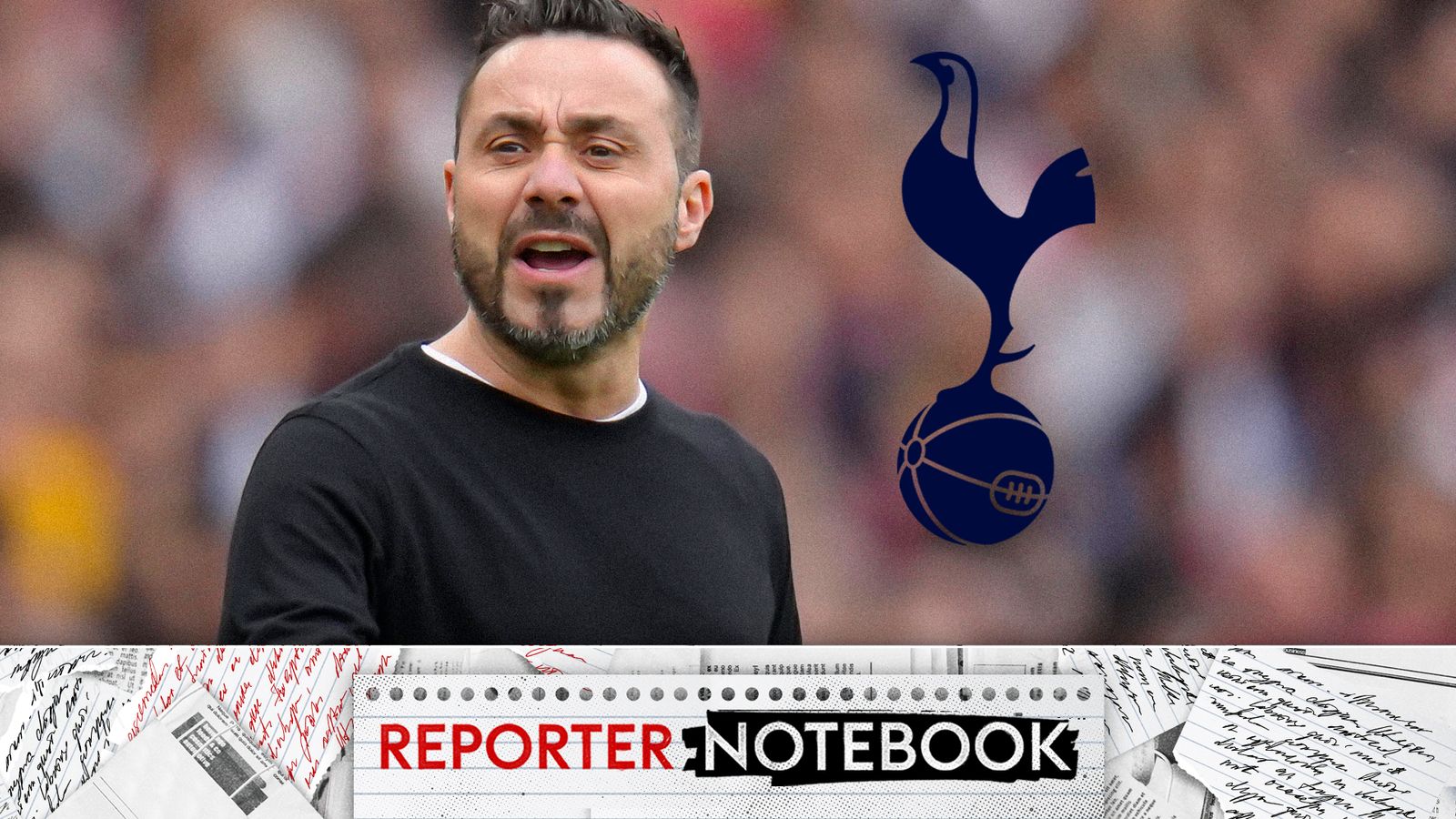
The De Zerbi Dynamo Arrives at N17
The murmurs around North London are turning into a roar. Roberto De Zerbi, the orchestrator of Brighton's intoxicating brand of football, is heavily linked with the Tottenham hot seat. This potential move isn't just a managerial change; it signals a profound tactical shift, promising a dizzying blend of audacious possession and calculated risk.
Spurs fans, accustomed to various stylistic iterations, could be on the cusp of witnessing a truly unique approach. De Zerbi’s philosophy transcends simple attacking football; it’s a meticulously designed system built on unsettling opponents from the first touch. The anticipation is palpable – and perhaps, a little terrifying.
Brighton's Blueprint: Controlled Chaos and Tactical Audacity
De Zerbi's work at Brighton wasn't merely about winning games; it was about imprinting a distinct identity. His teams build from the back with a deceptive patience, often inviting the opponent's press deep into their own territory. The goalkeeper, a primary playmaker, distributes with pinpoint accuracy, drawing opposition forwards out of position.
This intricate dance with danger is central to his methodology. The defensive line often forms a narrow block, creating passing lanes for the initial phases of play, almost daring opponents to engage. It requires an extraordinary level of trust and communication amongst the back five, knowing that a single moment of indecision can unravel the entire scheme. Yet, when executed perfectly, it provides the platform for rapid, vertical progression.
This 'baiting' phase is crucial. Once an opponent commits, Brighton rapidly shifts gears, exploiting the newly created spaces. Inverted full-backs tuck into midfield, overloading central areas and creating passing triangles. This intricate web of movement disorients defensive structures, opening avenues for sharp, incisive passes into the final third.
The dynamic of the inverted full-back is not merely aesthetic; it serves a functional purpose, creating numerical advantages in midfield and freeing up wingers to stay wide and attack the penalty area. This constant shapeshifting, from a seemingly static backline to a fluid attacking unit, is a hallmark of De Zerbi's genius. It's football designed to keep the opponent guessing, forcing reactive decisions rather than proactive defense.
The central midfield pair operates with relentless intensity, constantly scanning for opportunities to break lines or recover possession. Their ability to switch play quickly and accurately is fundamental. This isn't possession for possession's sake; every pass has a purpose, aiming to manipulate the opponent's shape.
Upon losing the ball, the immediate counter-press is ferocious. Players swarm the ball carrier, attempting to win possession back within seconds and often in advanced positions. This high-octane recovery ensures that attacking momentum is rarely lost and keeps the defensive burden on the opposition high. The physical output required to sustain this for 90 minutes is immense, demanding peak athletic conditioning.
Under De Zerbi, even defenders are integral to attacking sequences. They often step into midfield, pushing the line higher and compressing the play. This aggressive posture allows for immediate counter-pressing upon losing the ball, suffocating opponents and winning back possession in dangerous areas.
The tactical responsibilities extend beyond typical defensive duties. Centre-backs are expected to carry the ball into midfield, breaking the first line of an opponent's press, initiating attacks from deep. This adds another layer of complexity and requires defenders with exceptional close control and decision-making under duress, challenging traditional perceptions of their role.
His system demands exceptional technical proficiency under pressure. Players must be comfortable receiving the ball in tight spaces, executing quick one-touch passes, and making intelligent off-the-ball runs. The tactical discipline required to maintain this structure, particularly when inviting pressure, cannot be overstated.
It is a brave football, bordering on reckless at times, but always with a calculated intent. The margin for error is consistently narrowed, but the rewards—in terms of overwhelming opponents and creating clear scoring opportunities—are significant. It’s a delicate balance between artistic expression and ruthless efficiency.
Assembling the New Spurs Machine: A Positional Puzzle
How would Tottenham's current squad adapt to such a demanding, yet exhilarating, system? James Maddison immediately stands out as a prime beneficiary. His vision, press resistance, and ability to unlock defences with a single pass make him an ideal number ten in De Zerbi's framework, thriving in the pockets of space created.
Maddison’s ability to operate between the lines and his natural inclination to turn and drive forward are perfectly aligned with De Zerbi’s desire for rapid progression. He would be instrumental in turning defensive solidity into offensive thrust, providing the killer pass after the deep build-up has drawn opponents in. His creative output would likely flourish.
Heung-min Son's pace and clinical finishing would be lethal on the left wing, providing a constant threat over the top once the intricate build-up draws defenders out. Dejan Kulusevski, with his strength and ability to drive inside, offers a different but equally effective option on the right, providing crucial width and an outlet.
Son would need to refine his defensive tracking in a high-pressing system, but his explosive bursts are perfectly suited for breaking lines. Kulusevski's physical presence and ability to hold up play, combined with his left-footed delivery, offer a robust solution on the right. Both wingers would be expected to not only score but also contribute significantly to the team's defensive intensity from the front.
In midfield, Yves Bissouma's ball-winning capabilities and composure could be foundational as a deep-lying orchestrator, shielding the defense while initiating attacks. Partnering him would require another midfielder capable of shuttling, pressing, and joining the attack, perhaps a more advanced role for a player like Pape Matar Sarr or the acquisition of a new profile.
Bissouma's work rate and technical security would be vital in controlling the midfield battles and sustaining possession under pressure. The second midfield role is complex: it needs someone with the engine to cover ground, the tactical intelligence to fill spaces during rotations, and the attacking instinct to support the front four. Sarr shows promise, but the role demands consistent, elite-level performance.
The defensive line presents the most intriguing challenge. Cristian Romero's aggression and ball-playing ability make him a natural fit for one center-back spot, comfortable stepping out. His partner would need similar composure under pressure and excellent recovery pace. Destiny Udogie, already adept at pushing high and inverting, seems tailor-made for De Zerbi’s left-back role, offering attacking thrust and tactical flexibility.
Romero's aggressive nature could be both a blessing and a curse; while his tackles are often perfectly timed, the high line requires immense discipline to avoid being caught out. Van de Ven's recovery pace would be crucial alongside him. Udogie’s seamless transition between defense and midfield would be a key tactical weapon, allowing for numerical advantages to be formed on the left flank.
A First XI Against Sunderland: Tactical Setup
Imagining a first competitive lineup under De Zerbi, perhaps against a team like Sunderland as implied, provides a fascinating tactical exercise. The core tenets would remain: a high defensive line, fluid positional rotations, and an emphasis on controlling the tempo through intelligent possession.
A match against a Championship side like Sunderland offers an ideal proving ground for De Zerbi to instill his philosophy without the immediate pressure of a top-tier opponent. This game would be less about raw result and more about establishing patterns, testing tactical instructions, and building confidence in the audacious build-up play.
In goal, a 'sweeper-keeper' like Guglielmo Vicario would be tasked with precise distribution, initiating the build-up under pressure. The central defensive partnership of Romero and likely Micky van de Ven would need iron nerves, ready to bait the opposition press while maintaining a high line.
Vicario's ability to remain calm under pressure and accurately distribute the ball over various distances will be constantly tested. His role isn't just shot-stopping, but actively starting attacks. Romero and Van de Ven would be expected to not only defend their goal but also dictate the tempo of the initial possession phase, making precise passes to break lines.
Full-backs, Udogie on the left and potentially Pedro Porro on the right, would function as inverted playmakers, pushing into midfield to create numerical superiority. Their ability to defend wide channels after inverting would be crucial, demanding exceptional stamina and tactical awareness.
Porro, while more attack-minded, would need to quickly grasp the defensive responsibilities of an inverted full-back, tracking opposition wingers who aim to exploit the wide areas. Both he and Udogie would frequently be seen influencing play centrally, adding extra bodies to the midfield battle, before sprinting back to their defensive posts.
The midfield pivot would likely feature Bissouma anchoring, tasked with breaking up play and dictating tempo. Alongside him, a more dynamic midfielder – perhaps Sarr or a new acquisition – would operate as a box-to-box presence, pressing high and supporting attacks. Maddison would be the creative hub at number ten, linking midfield to attack.
Bissouma’s discipline in holding position and screening the defense would be paramount, allowing the other midfielders more freedom to venture forward. Maddison, as the primary creative spark, would be afforded significant license to roam, seeking out spaces to receive the ball and orchestrate through balls or combination play with the forwards. His role is to accelerate play once the ball has progressed past the initial press.
Upfront, Son on the left and Kulusevski on the right would provide width, pace, and goal threat. The central striker, perhaps Richarlison or a new focal point, would need to be adept at dropping deep to link play, occupying defenders, and making intelligent runs into the box. This hypothetical XI, while potent, highlights the fine margins De Zerbi operates within.
The striker’s role would be particularly nuanced, requiring not just goals but also excellent link-up play and selfless movement to create space for the wide players and Maddison. Richarlison's work rate would be invaluable in leading the press, but his technical output would need to be consistently high in the intricate passing sequences. The fluidity of the front three would be key to unlocking stubborn defenses.
The Perilous Path: Defensive Risks and Adaptation Curve
While the attacking potential is undeniable, De Zerbi's system is not without its significant vulnerabilities. The high defensive line, a cornerstone of his aggressive philosophy, leaves teams susceptible to quick transitions and long balls over the top. Opponents with rapid forwards and precise passers can punish any momentary lapse in concentration or pressing intensity.
The risk profile of this system is perhaps its most defining characteristic. There will be moments, particularly early in the tenure, where opponents find joy exploiting the space behind the defense. The mental fortitude of the players to stick to the plan, even after conceding, will be severely tested. It’s a marathon, not a sprint, to fully grasp and execute such a demanding tactical framework.
Brighton often conceded chances from these scenarios, relying on their offense to outscore opposition. For Tottenham, this could be a steep learning curve, especially in the physicality and ruthlessness of the Premier League. The margin for error is razor-thin; one misplaced pass in the defensive third can lead to a direct goal-scoring opportunity for the opposition.
The transition from a more pragmatic, direct style of play to De Zerbi’s intricate build-up cannot be underestimated. It fundamentally alters how players view their positions, their responsibilities, and their relationship with the ball. This isn't just about learning a new formation; it's about re-wiring ingrained footballing instincts. The Premier League offers no grace period, and results will be scrutinised from day one.
Furthermore, the demands on every player, particularly in terms of fitness and tactical intelligence, are immense. It will require a full pre-season and potentially several transfer windows to truly embed the De Zerbi-ball principles. Players not fully committed or unable to grasp the intricate positional play could become liabilities, leading to frustrating performances and inconsistent results. This initial adaptation period will be a severe test of patience for both the squad and the Spurs faithful.
Specific transfer market targeting will be essential. Spurs would need defenders with supreme pace and composure, midfielders capable of extraordinary work rates and technical security, and attackers who are not only clinical but also tireless in their pressing duties. Without the right personnel additions, the system risks fracturing under pressure, leading to more defensive fragility than offensive brilliance. The club's hierarchy must fully commit to the vision, both financially and structurally.
Transformation or Tactical Tangle?
Roberto De Zerbi's arrival at Tottenham would represent a bold, potentially transformative, statement. His football is mesmerizing to watch, demanding technical brilliance and tactical courage from every individual. It promises a thrilling spectacle, a deviation from the pragmatic approaches that have sometimes defined Spurs.
However, the journey will be fraught with challenges. The defensive vulnerabilities inherent in such an aggressive system, coupled with the significant adaptation period required for a new squad, present a high-wire act. Success will hinge on rapid player buy-in, shrewd transfer dealings to secure specific profiles, and a collective resilience to navigate the inevitable stumbles. If it clicks, Tottenham could become one of the most exciting teams in Europe; if not, the beautiful chaos could easily descend into a tactical tangle.
Adidas Trionda League Soccer Ball
Bring the magic of the 2026 World Cup to your local pitch with this match-grade
Frequently Asked Questions
What is Roberto De Zerbi's "controlled chaos" football philosophy?
How does De Zerbi use goalkeepers in his tactical system?
What role do inverted full-backs play in a De Zerbi team?
What are the main defensive risks of De Zerbi's tactics?
How does De Zerbi's team react immediately after losing possession?
More Coverage

Anthony Gordon to Barcelona marks a high-stakes gamble
an hour ago
Arsenal's 104 million gamble on Julian Alvarez is pure chaos
an hour ago
Arsenal and PSG are locked in a tactical chess match for the trophy
2 hours ago
Top 10: The Definitive Arsenal Moments of the 2025/26 Season
2 hours ago
Michael Skubala takes the hot seat at Ashton Gate
3 hours ago
Newcastle are burning the furniture to keep the house warm
3 hours agoMore Analysis

De Zerbi at Spurs is a high-stakes gamble destined to backfire
1 month, 4 weeks ago
Tottenham and De Zerbi are a tactical powder keg waiting to explode
1 month, 4 weeks ago
De Zerbi at Spurs is a tactical gamble with a massive PR headache
1 month, 4 weeks ago
Tottenham are betting everything on De Zerbi’s high-wire tactical act
1 month, 4 weeks ago
De Zerbi to Spurs: A Tactical Revolution on the Horizon?
1 month, 2 weeks ago