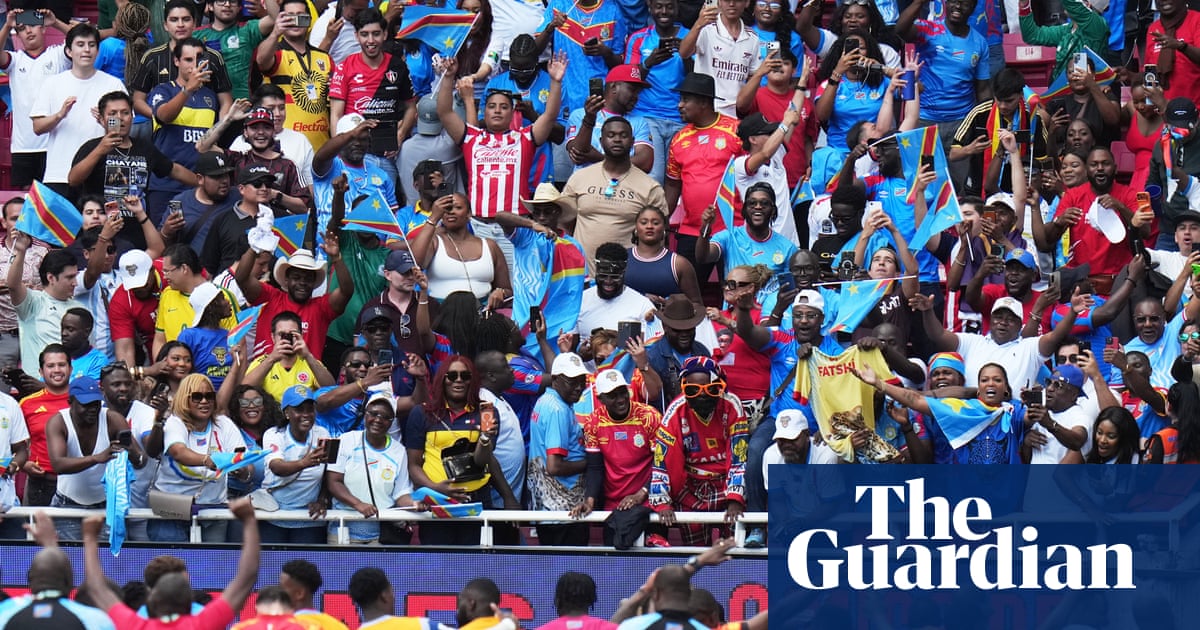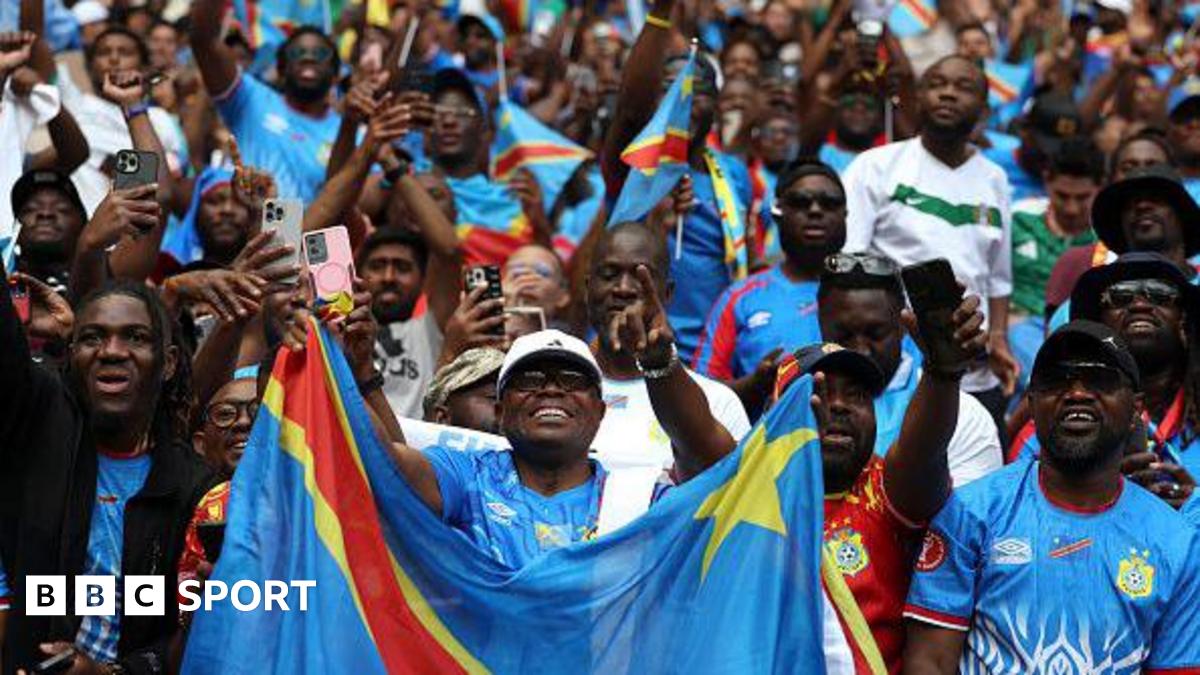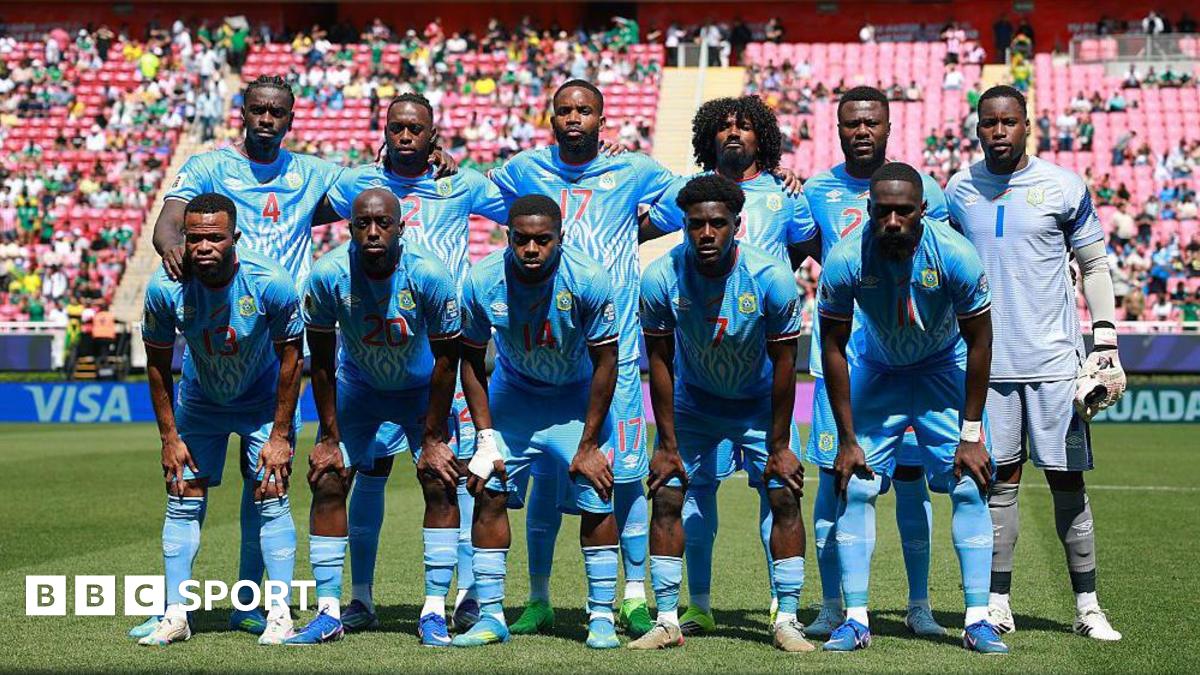
The United States government has dropped a hammer on the 2026 World Cup. According to a report by BBC Sport, the Democratic Republic of Congo's national football team has been ordered to undergo a mandatory 21-day isolation period before entering the country. The directive stems directly from a severe Ebola outbreak in the region, creating an unprecedented logistical nightmare just nineteen days before kickoff.
The math that spells disaster for the Leopards
Let's look at the calendar because the numbers do not lie. Today is May 23, 2026. The World Cup begins on June 11. That gives the Democratic Republic of Congo exactly 19 days to get their squad onto American soil. A 21-day mandatory isolation period means that even if every player and staff member entered a strict bubble today, they would not be cleared to travel until June 13 at the earliest.
That is two days after the tournament officially kicks off. It is a mathematical impossibility for the Leopards to arrive on time under the current guidelines. FIFA is currently locked in emergency talks with the US Centers for Disease Control and Prevention (CDC) to find a resolution, but the US government has shown zero willingness to compromise on public health protocols.
This is a devastating blow for a nation that fought tooth and nail to secure their spot in this expanded tournament. DR Congo's football federation (FECOFA) is reportedly scrambling to set up an isolation camp in a neutral country. However, moving players from their European clubs directly into a high-security quarantine facility will take days to coordinate, pushing their potential arrival date even further back.
The physical cost of three weeks in a bubble
Professional athletes cannot simply stop training for 21 days and then compete against the best in the world. A three-week quarantine is not just a travel delay. It is a physical regression that will strip players of their match fitness. Yoane Wissa and Chancel Mbemba have spent the last nine months playing grueling European seasons. Forcing them into inactive isolation will completely undo their physical conditioning.
Football at this level is decided by the thinnest of margins. A squad that spends three weeks in hotel rooms without access to a pitch or tactical drills will be sitting ducks. FECOFA officials are privately calling the ruling a death sentence for their tournament ambitions. They are right to be angry, as the sporting balance of their group is now completely compromised.
There are also massive questions about where this isolation will take place. If the squad isolates in Kinshasa, US authorities might still reject their entry. If they attempt to isolate in Europe, European nations may impose their own travel restrictions on players arriving from the DRC. FIFA's failure to establish a pre-approved protocol is shocking.
FIFA's hosting oversight and the venue loop-hole
This crisis exposes a massive blind spot in the design of the 2026 World Cup. FIFA chose to award the hosting rights to a three-nation coalition: the United States, Canada, and Mexico. Yet, the governing body apparently failed to coordinate uniform health and immigration policies across all three borders. The US CDC has laid down the law, but Canada and Mexico have not yet announced similar restrictions for the DR Congo squad.
This discrepancy has led to wild speculation about relocating matches. FECOFA has reportedly requested that their group stage fixtures be shifted entirely to Canadian or Mexican venues. Vancouver, Toronto, Monterrey, and Mexico City are all hosting matches. If the US government refuses to budge, moving the matches is the only way to keep DR Congo in the tournament.
But shifting matches is easier said than done. Ticketing, broadcasting, team base camps, and security are already locked in. Relocating group stage games at the eleventh hour would trigger multi-million dollar lawsuits from sponsors. The organizational chaos would completely overshadow the start of the tournament.
A history of quarantine controversies
This is not football's first brush with quarantine chaos, but the stakes have never been this high. During the pandemic, we saw players forced to miss international matches due to club-imposed travel bans. But a full-scale ban on an entire nation's squad due to an active epidemic is unprecedented in modern World Cup history. The closest parallel was the 2015 Africa Cup of Nations, which was moved from Morocco due to Ebola fears.
In that instance, Morocco pulled out of hosting to protect its population. Now, the United States is refusing entry to a qualified nation to protect its own borders. Critics are already accusing the US government of heavy-handedness, pointing out that other nations with active health issues have not faced similar restrictions. The geopolitical tension is rising by the hour.
For the players, the uncertainty is agonizing. They are caught in a crossfire between national pride, international diplomacy, and public health guidelines. Many spent their entire careers dreaming of representing their country on the biggest stage. Now, that dream is being crushed by bureaucratic red tape and mathematical realities.
The impact on Group Stage integrity and potential replacements
If DR Congo is forced to withdraw, the sporting integrity of the tournament will take a massive hit. FIFA's regulations state that if a qualified team withdraws before the tournament begins, they must be replaced. But who takes their place with less than three weeks to go? The logical choice would be the highest-ranked African team that failed to qualify, but the logistical hurdle of preparing a replacement squad in nineteen days is near-impossible.
Furthermore, the opponents in DR Congo's group are left in complete limbo. They do not know who they are preparing to play. Coaching staffs have spent months analyzing the tactical setups of the Leopards, studying Wissa's runs and Mbemba's defensive positioning. Now, all that preparation might be thrown out the window.
This uncertainty is highly damaging to the credibility of the competition. The 2026 tournament was supposed to be a grand celebration of the expanded 48-team format. Instead, the narrative is being dominated by border closures and disease control. It is a public relations disaster that FIFA desperately wanted to avoid.
FECOFA's furious response and the road ahead
Behind the scenes, FECOFA is putting up a fierce fight. They are arguing that their European-based players have not been in the DRC for months and should be exempt from the isolation order. Players like Yoane Wissa have been living in London, while Chancel Mbemba has been based in Marseille. Forcing them to isolate based purely on their nationality is, in FECOFA's eyes, a discriminatory policy that lacks scientific backing as the original report outlines.
However, the US State Department remains firm. The policy applies to anyone traveling on a DR Congo passport or who has visited the country in the last thirty days. Since the team scheduled a pre-tournament training camp in Kinshasa, the coaching staff and domestic players are fully blocked. The European-based players who skipped the camp might be allowed in, but they cannot play a tournament without their manager or teammates.
The next forty-eight hours will be critical. If FECOFA cannot secure an exemption or negotiate a compromise where the squad isolates in a high-performance bubble in the US under strict CDC supervision, the Leopards will be out. The clock is ticking down, the math is brutal, and the football world is watching this administrative trainwreck unfold in real time.
Read Next
- The bloated World Cup is a mess, but the Round of 16 will be pure cinema
- Why the USMNT are heading into a Group Stage disaster class
- Mexico's World Cup opener is a trap and South Africa are ready to spring it
- The USMNT will survive Group D, but it's going to be a bloodbath
- 🏆 World Cup 2026 — Full Coverage Hub