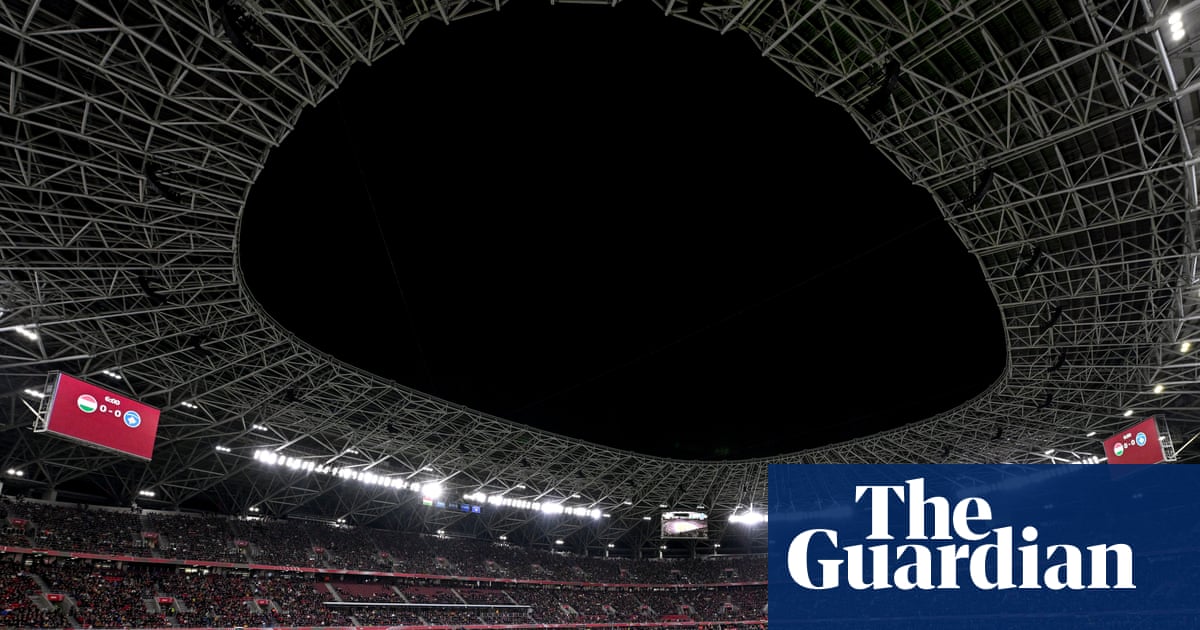
England’s youth setup is suffering from a terminal identity crisis

The disconnect between youth promise and tournament output
The recent failings of England’s youth groups are not merely blips in a development curve. They indicate a structural collapse in how the Football Association translates individual technical gifts into collective cohesion. Watching talents like Max Dowman and Rio Ngumoha exit high-stakes matches empty-handed draws a sharp parallel to the perennial frustration felt toward senior setups.
Technical proficiency exists in abundance. The problem remains the absence of a tactical framework that prepares players for the rigid demands of tournament football. When rosters stacked with elite academy products fail to navigate their respective qualifiers, the coaching staff cannot blame the talent pool. These players are navigating top-tier environments, yet they look lost the moment an opponent implements a mid-block or a sustained high press.
Tactical rigidity at the academy level
England’s failure to secure tournament spots for youth squads this summer proves that flair is secondary to decision-making. Developing stars who perform well in domestic circuits is worthless if they lack the discipline to handle game state fluctuations. As Nathan Salt noted for the Daily Mail, these young stars falling short is becoming a concerning pattern rather than a one-off anomaly.
We see a lack of nuance in how these sides transition from defense to attack. The reliance on individual drives rather than structured passing lanes leaves them vulnerable to counters. It mirrors the mistakes seen in senior international matches, where high-possession stats mask a lack of vertical threat during the 90th minute of a tight contest.
Learning from the global transition
Contrast this stagnant development with the growth of international players within the Premier League. Daichi Kamada’s recent role in Japan’s victory over England shows how international experience—and effective tactical systems—can dismantle even the most promising defensive units. Japan’s disciplined approach, as highlighted in recent reporting on Palace updates, provided a blueprint for dismantling domestic defensive structures.
Similarly, Thiago’s debut goal for Brazil in their win over Croatia serves as a reminder of how high-intensity exposure forces adaptation. While Brentford’s scouting, reflected in these live updates, identifies players with elite transition mechanics, the FA continues to rely on a stagnant pedagogy that emphasizes physical dominance over spatial intelligence. By the time many of these English youngsters reach the 18th birthday milestone, their tactical ceiling is already lower than their international peers.
The cost of complacency
The FA is currently failing its most marketable assets. If the goal is to win trophies, they must shift away from the obsession with academy aesthetics and focus on defensive transitions. Players are coached to play as if they have an extra two seconds on the ball; in international football, that time is never there.
We are watching a generation of strikers and playmakers who excel at the 1-v-1 duel but fail to understand low-block penetration. Until the coaching staff changes the approach, England will continue to produce high-value talents who disappear whenever the pressure ramps up. The lack of tournament experience this summer will only exacerbate this gap between potential and execution.
Amazon Fire TV Stick 4K Max
The ultimate streaming companion for catching every Premier League and World Cup
Frequently Asked Questions
Why are England's youth teams failing in tournaments?
What is the primary tactical weakness of English youth players?
How does the FA's training approach affect young players?
How do international teams outperform English youth setups?
What changes are needed for England to achieve tournament success?
More Coverage
Arsenal and England breathe sigh of relief as Bukayo Saka manages training load
8 hours ago
Glenn Hoddle questions Thomas Tuchel's logic on England's World Cup squad
1 day, 5 hours agoEngland are bottling the 2026 World Cup before it even starts
1 day, 6 hours agoEngland’s 2026 World Cup Group: A familiar recipe for disaster
1 day, 6 hours ago
Aitana Bonmati returns to Spain squad for high-stakes England qualifier
1 day, 6 hours ago
England's World Cup squad misses a beat by snubbing Adam Wharton
1 day, 20 hours agoMore Analysis
Why the FA's 3v3 push is a reality check for England's youth development
3 days, 8 hours ago
Thomas Tuchel's England project is hitting a performance wall
1 month, 4 weeks agoEngland’s tactical paralysis against Japan is a serious red flag
1 month, 4 weeks ago
England's new World Cup kits are here, but the midfield is still a mess
2 months ago
England are repeating the same old mistakes ahead of the 2026 World Cup
2 months ago