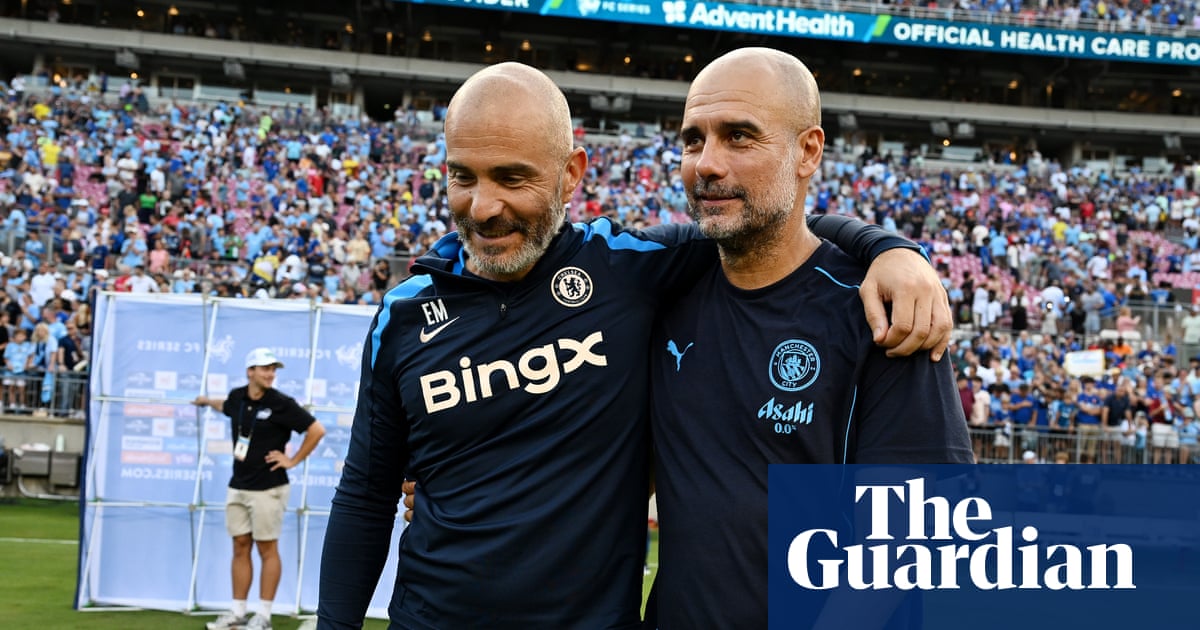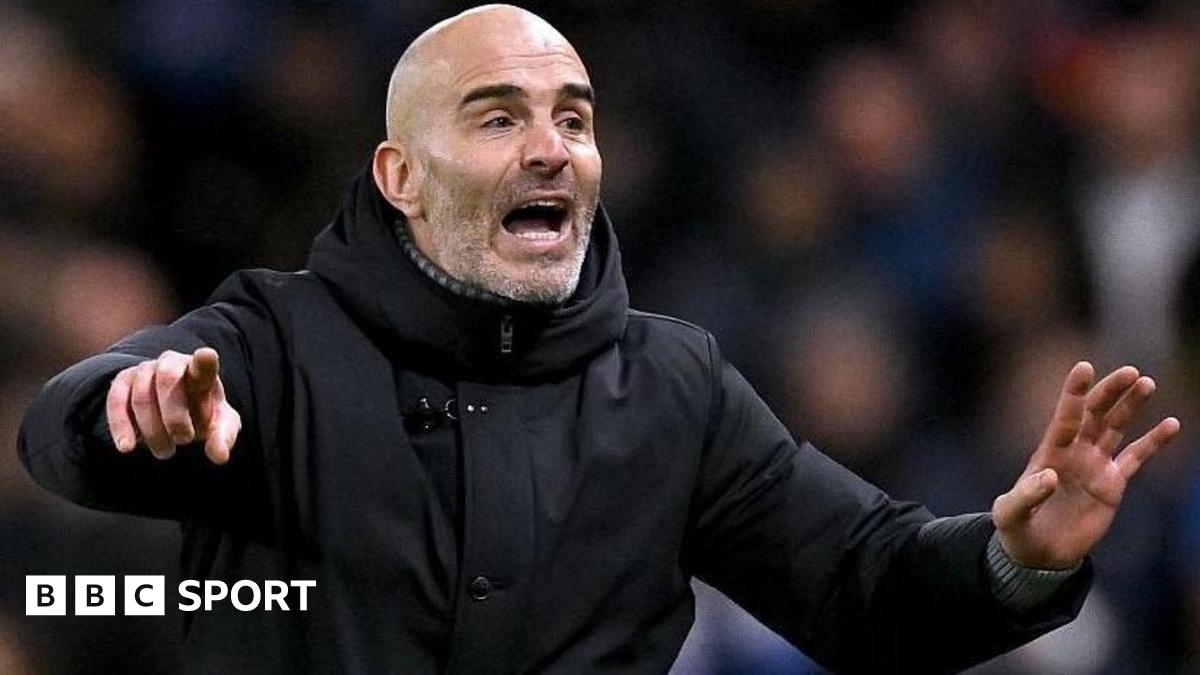
The news dropped with the subtlety of a sledgehammer. According to the BBC, Enzo Maresca is set to replace Pep Guardiola as Manchester City manager before next season. The Guardiola era at the Etihad, an epoch of unprecedented domestic dominance, is drawing to a close.
We always knew the succession plan would be a delicate operation. Replacing the architect of modern English football is a near-impossible task. But to hand the keys to the kingdom to a former assistant whose top-flight managerial resume remains remarkably brief? That is a massive, structural gamble by Txiki Begiristain and Ferran Soriano.
The logic from the boardroom is transparent. They want absolute continuity. They want the academy, the recruitment department, and the first team speaking the exact same tactical language. Maresca knows the building. He knows the granular details of the training sessions.
On paper, the transition is frictionless. The players will recognize the drills, and the terminology will remain unchanged. But football is played on grass, not on a whiteboard. Let's break down what Maresca actually brings to the touchline, where his tactical blueprint diverges from Guardiola's, and why this appointment could backfire spectacularly.
The Tactical Blueprint: Dogma vs. Adaptation
Maresca is fundamentally a Guardiola disciple. He views the pitch in zones and half-spaces. He builds his teams around positional play, demanding structural discipline to create numerical superiorities. When you watch Maresca's teams operate, the influence of his mentor is blindingly obvious.
He organizes his attacking structures in five distinct vertical lanes. The positioning of the players is dictated by the location of the ball. This is the very definition of Juego de Posición. But the execution is entirely different.
While Guardiola has evolved into a ruthless pragmatist over the last three years — deploying four traditional center-backs to create an impenetrable defensive shell — Maresca remains heavily wedded to a more dogmatic interpretation of the 4-3-3 turning into a 3-2-4-1 in possession. When his teams build from the back, the structure is rigid. One fullback inverts alongside the defensive midfielder, creating a double pivot. The other tucks inside to form a back three.
Guardiola leaves with an unprecedented 73.3% win rate across his Premier League tenure because he knew exactly when to abandon this structure. Maresca does not yet possess that tactical elasticity. If the opposition is pressing man-to-man, Guardiola will direct Ederson to hit a long pass directly to the striker's chest, completely bypassing the midfield zones. Maresca, however, frequently demands his defenders solve the puzzle on the ground, even when heavily outmatched.
This leads to my biggest criticism of Maresca's philosophy. Possession often looks like an end in itself rather than a mechanism to score goals. When his teams face a disciplined low block, they have a tendency to suffocate their own attacks. The ball moves in a predictable U-shape around the penalty area. The tempo drops to a walking pace, and the opposition defense is allowed to settle.
Guardiola solved this exact problem by empowering individual brilliance. He allowed Phil Foden and Kevin De Bruyne to break the structural script when required. Maresca historically demands total obedience to the pattern. Will he allow Foden to drift off the left flank and dismantle defenses purely on instinct? If he forces the newly crowned FWA Player of the Year to rigidly hold the touchline just to stretch a back five, it will be a massive waste of attacking potential.
The Haaland Conundrum
Then we have the most pressing issue of all: Erling Haaland. Haaland is a transitional weapon of mass destruction. He wants early service. He wants the ball played aggressively into the space behind the defensive line.
We saw how much Guardiola had to tweak his own philosophy to accommodate Haaland. City went from playing with Ilkay Gundogan or De Bruyne as a false nine to feeding a pure, traditional center-forward. It took an entire season of calibration to get the balance right. Guardiola realized Haaland's unique profile and slightly accelerated City's attacking transitions, sacrificing a fraction of control to feed the Norwegian striker.
Maresca prefers a totally different profile of center-forward. His ideal number nine drops deep, drags a center-back out of position, and links play with the midfield to create a numerical overload. He wants a facilitator, not a pure finisher.
Maresca is now walking into a situation where the team’s entire final-third approach is built around feeding Haaland’s runs. If he demands that Haaland starts dropping into the number ten space to play intricate one-touch combinations with Rodri, Manchester City will lose their sharpest edge. Haaland is not Roberto Firmino. Trying to jam him into a false-nine template to satisfy an ideological obsession would be tactical malpractice.
Defensive Vulnerabilities and Rest Defense
Defensively, Maresca's system carries inherent risks. Because he commits five players to the front attacking line and pushes his double pivot extremely high to apply a suffocating counter-press, the rest defense often consists of three isolated defenders covering vast expanses of turf.
If the initial counter-press fails — and against the transitional speed of Premier League attacks, it occasionally will — opponents are left sprinting into acres of unprotected space. We have seen this weakness exploited time and time again when Maresca’s press is bypassed. The center-backs are forced into desperate, retreating footraces.
Guardiola masked these transitional flaws by using elite 1v1 defenders like Kyle Walker and Nathan Ake. But Walker is aging, and the recovery pace that bailed out City's high line for years is fading. Maresca will inherit Josko Gvardiol, who is magnificent in possession but can occasionally struggle when dragged out wide into isolated defensive transitions.
If Maresca does not tweak his rest-defense structure, teams with elite transition forwards will tear them apart on the counter. The Premier League is too fast and too direct to survive with a fragile defensive transition. This stubbornness can lead to catastrophic turnovers on the edge of their own penalty area.
The Shift in Power
The timing of this transition is absolutely pivotal. We are barely weeks away from the 2026 World Cup kickoff on June 11, and the European domestic season is concluding. With the UCL Final looming on May 28, the leak of this appointment adds a bizarre layer of distraction to City's immediate goals.
More importantly, this appointment fundamentally alters the psychological dynamic of the Premier League. For the last several years, Guardiola carried an aura of absolute invincibility. Opposition managers were beaten in the tunnel. They overthought their own tactics out of sheer terror.
That aura leaves with Guardiola. Arsenal and Liverpool have been waiting for this exact moment. The Premier League is undergoing a massive changing of the guard. Mikel Arteta has meticulously assembled a squad with the physical robustness and tactical intelligence to dominate the league. With Guardiola gone, the psychological barrier holding Arsenal back evaporates.
Furthermore, you have to consider the impact on player retention at the Etihad. Guardiola is the ultimate magnet for top-tier talent. Players sign for Manchester City primarily to work under his genius. Without that draw, does Begiristain find it significantly harder to recruit the next wave of elite European talent?
Maresca will walk into a room of serial winners. Treble winners. Centurions. When things go wrong in November — when the system looks stagnant, when the results dip, and when the media turns up the heat — does Maresca have the gravitational pull to keep that dressing room from fracturing? That soft power is earned, not given.
The prediction here is bold but necessary. Maresca will start strong. The tactical familiarity will ensure a smooth opening two months. The passing networks will look incredibly sharp. But when the winter schedule hits, and elite opposition managers start aggressively targeting the spaces behind his inverted fullbacks, the cracks will show.
Manchester City will not win the Premier League next season. The transition will be too bumpy, the tactical rigidities too pronounced, and the loss of Guardiola's in-game problem-solving will be too much to overcome. They are replacing a genius with a student, and in this league, the test is simply too hard.