The impossible succession
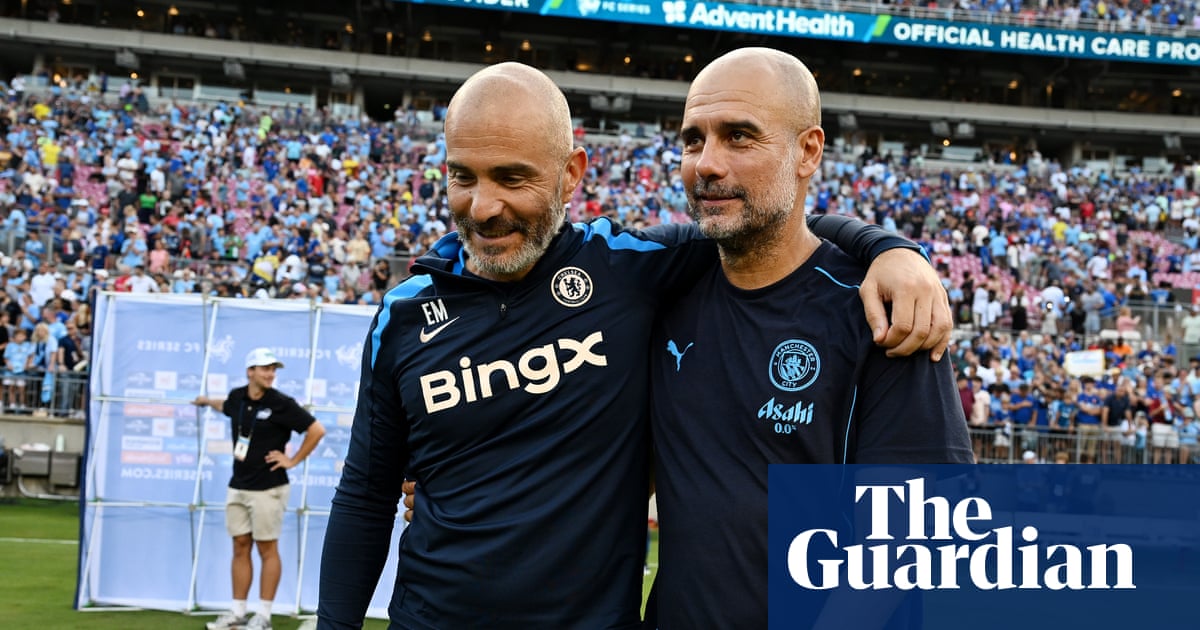
Replacing Pep Guardiola was always going to be the most terrifying job in European football. You don't just replace the manager. You replace the architect, the disciplinarian, and the tactical compass of an entire footballing operation.
Sir Alex Ferguson cast a shadow over Old Trafford that Manchester United are still trying to escape. Arsene Wenger left a void at Arsenal that took half a decade to fill. Now, Manchester City are staring down that same cliff edge.
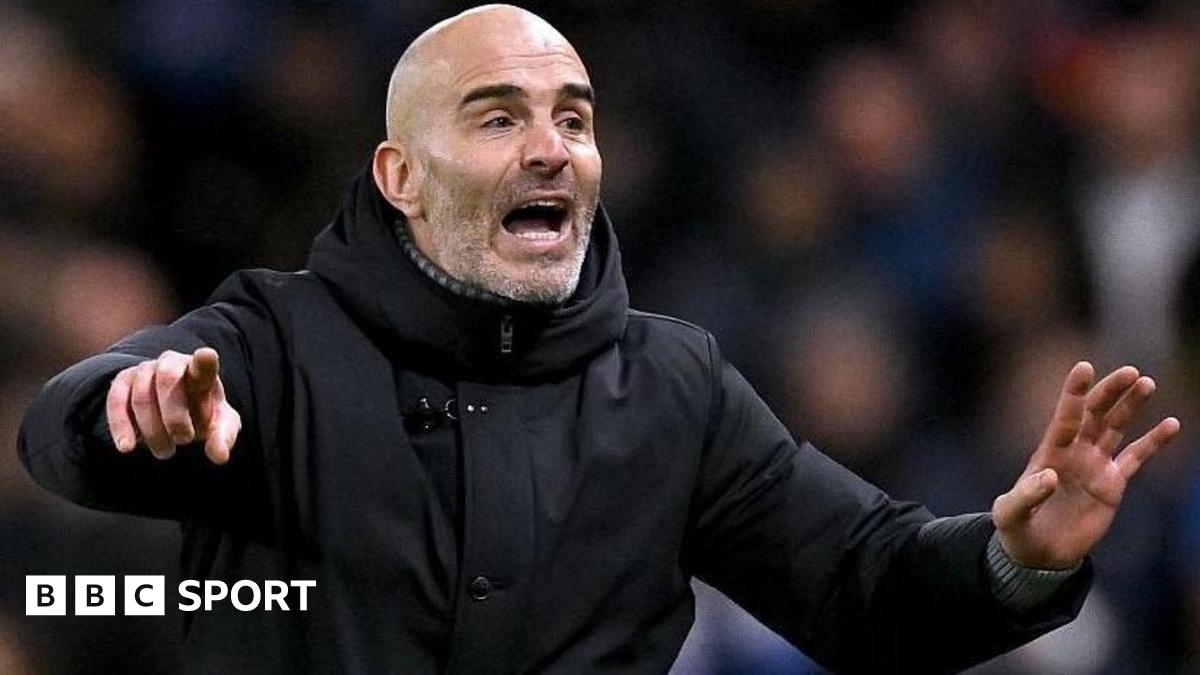
The paper talk has crystallized into something far more concrete. As Sky Sports reported this morning, Enzo Maresca is the expected choice to take over when Guardiola walks away this summer.
It feels jarring. A club with unlimited resources and global pull isn't chasing Xabi Alonso or aggressively courting Mikel Arteta. They are looking at a manager who represents a massive leap of faith.
Maresca knows the building. He knows the academy. He knows the sporting directors. But knowing the system and running the machine are entirely different concepts.
City executives clearly value continuity above all else. They want someone who speaks the same tactical language. They want positional play, inverted fullbacks, and dominant possession metrics. Maresca provides that, but he provides a very specific, almost dogmatic version of it.
The Maresca blueprint
To understand what City will look like next season, you have to dissect how Maresca sets up his teams. He is a strict disciple of the Juego de Posicion principles. During his time at Leicester City, he demanded a slow, methodical buildup from the back.
His preferred shape in possession is a rigid 3-2-5. He achieves this by dropping a midfielder alongside the holding player, or by asking a fullback to invert centrally. The wingers are instructed to hold the touchline with chalk on their boots.
The central attacking midfielders push high into the half-spaces. Sound familiar? It should. It is the exact framework Guardiola used to conquer the Premier League between 2017 and 2021.
But football moves fast. Guardiola himself moved on from that rigid interpretation. He adapted. He started using four natural center-backs across his defensive line.
He turned John Stones into a hybrid midfielder who drifted into the number ten spaces. He sacrificed the wide, chalk-hugging wingers for players who could operate in tighter central areas.
Maresca, by contrast, has shown far less flexibility. His teams can look robotic. When the opposition sits in a low block and cuts off the central passing lanes, a Maresca side will recycle possession endlessly in a U-shape around the penalty area.
The Chelsea and Leicester evidence
We do not have to guess what an Enzo Maresca team looks like. We have hard data. He took over a relegated Leicester City squad and immediately imposed his will.
The transition was brutal for the first few weeks, but eventually, the sheer quality of the squad overwhelmed the Championship. But the cracks were visible even then. Leicester fans frequently voiced their frustration at the lack of verticality.
When they were chasing a game, Maresca refused to throw a big man up top and send crosses into the box. He wanted to pass the ball into the net. It was admirable in theory, but exasperating in practice. When Plan A failed, there was no Plan B. There was just a slightly more aggressive version of Plan A.
Then came the move to Chelsea. Taking over the chaos at Stamford Bridge was a poisoned chalice. The squad was bloated, the ownership was erratic, and the expectations were entirely detached from reality.
Maresca tried to instill his positional play principles into a group of players who had been operating without a cohesive tactical identity for two years. The results were mixed.
He managed to clean up the buildup phase, turning Chelsea into a team that could reliably play out from the back. However, the final third was a disaster area. His strict positional demands stifled the creativity of players like Cole Palmer.
Instead of allowing Palmer to roam and find the game, he anchored him to specific zones. The attack became predictable. Defenses figured out that if you stayed compact and denied space between the lines, Chelsea had no counter-punch.
This is the manager City are reportedly handing the keys to. A coach who values control over chaos to such an extreme degree that he actively suppresses individual flair. Guardiola loves control, but he understands that the final third belongs to the players.
He gives them the structure to reach the opponent's box, and then he lets their talent take over. Maresca tries to micromanage the finish.
Where the system fails
This is where the skepticism creeps in. City fans have grown accustomed to watching the most adaptable team on the planet. If an opponent presses high, Ederson bypasses them with a 60-yard ping.
If an opponent sits deep, Kevin De Bruyne finds an angle that violates the laws of physics. Under Maresca, the tempo drops. The possession stats look great on a spreadsheet. The team will regularly hit 70 percent of the ball. But the underlying threat often falls flat.
There is a stubbornness to his approach that borders on naive. If a team presses his build-up with aggressive man-to-man coverage, Maresca refuses to go long. He demands his center-backs play through the pressure, even when the angles aren't there.
It results in cheap turnovers and high-xG concessions. You can get away with that in the Championship when you have a massive talent advantage. You cannot get away with it in the latter stages of the Champions League.
Real Madrid and Bayern Munich will tear that predictable buildup to shreds. Furthermore, Maresca lacks the sheer force of personality that Guardiola uses to keep a squad of superstars hungry.
Pep drops key players without hesitation. He picks fights to create siege mentalities. Maresca is more of a technician. He is a brilliant coach on the training pitch, but managing the egos of a treble-winning dressing room requires a different set of political skills.
The squad transition
Maresca will inherit a squad that is caught in a generational shift. De Bruyne is aging. The core group that defined the early Guardiola years is either gone or entering their twilight.
This is arguably the worst possible time to bring in a manager who relies on strict system adherence rather than individual brilliance. Erling Haaland, for example, is not a system striker. He is an anomaly.
Guardiola had to bend his own tactical rules to accommodate Haaland's directness and lack of involvement in the buildup. Will Maresca be willing to make those same compromises? Or will he try to force Haaland into a false-nine role, dropping deep to link play?
If he tries the latter, City are going to drop points early and often. Look at the wide areas. Phil Foden has evolved into a central menace. He thrives when given the freedom to drift and find pockets of space.
Maresca's system typically demands wingers stay wide to stretch the defensive block. Forcing Foden back out to the touchline would be a massive regression for England's best attacking talent.
The defensive vulnerability
Let's talk about the transition defense. City under Guardiola have mastered the art of the tactical foul and the immediate counter-press. When they lose the ball, they swarm.
It is a terrifying, coordinated effort to win possession back within five seconds. If they fail, they drop into a compact shape. Maresca's teams counter-press, but they do so with less intensity and poor spacing.
Because he commits so many bodies forward into the 3-2-5 structure, the spaces left behind the wing-backs are massive. City's current defenders are athletic, but they are not immune to being dragged out of position.
If Maresca pushes Rico Lewis or another fullback high into the midfield, and the ball turns over, the remaining three defenders are left exposed. In the Premier League, you give Bukayo Saka or Mohamed Salah that much grass to run into, and you are retrieving the ball from your own net.
A predictable risk
Txiki Begiristain and the City hierarchy are betting that the system is bigger than the manager. They believe the foundation they have built is so robust that an elite tactician can slot in and keep the gears turning.
It is a fascinating experiment. They are trusting a manager with a very defined, unbending philosophy to take over a team that thrives on structural fluidity.
The margins in the Premier League are too tight for a slow adaptation period. Arsenal and Liverpool are ready to pounce the second City show weakness. Maresca will win games.
The sheer concentration of talent at the Etihad guarantees a baseline of success. They will dominate possession, they will pin teams back, and they will look like a functional Manchester City side on paper.
But football is played on grass, and against elite opposition, functional is not enough. When the system fails, you need a manager who can tear up the script at halftime.
Maresca hasn't proven he can do that. He builds excellent machines, but he doesn't know how to fix them when the engine floods in the middle of a race.
Prediction: City will struggle to adapt to Maresca's rigid pacing. The buildup will look labored, and they will drop points against high-pressing teams. They will finish third in the Premier League next season, failing to mount a serious title challenge as the post-Guardiola hangover hits hard.