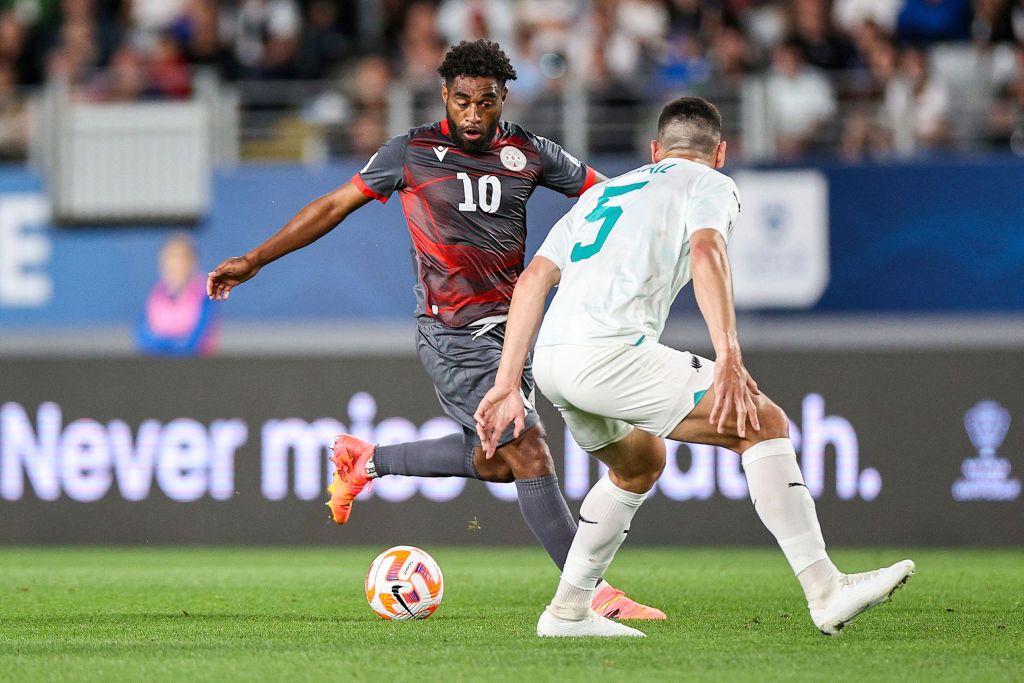
Fikayo Tomori finally gets the Bielsa stress test he needs to save his England career
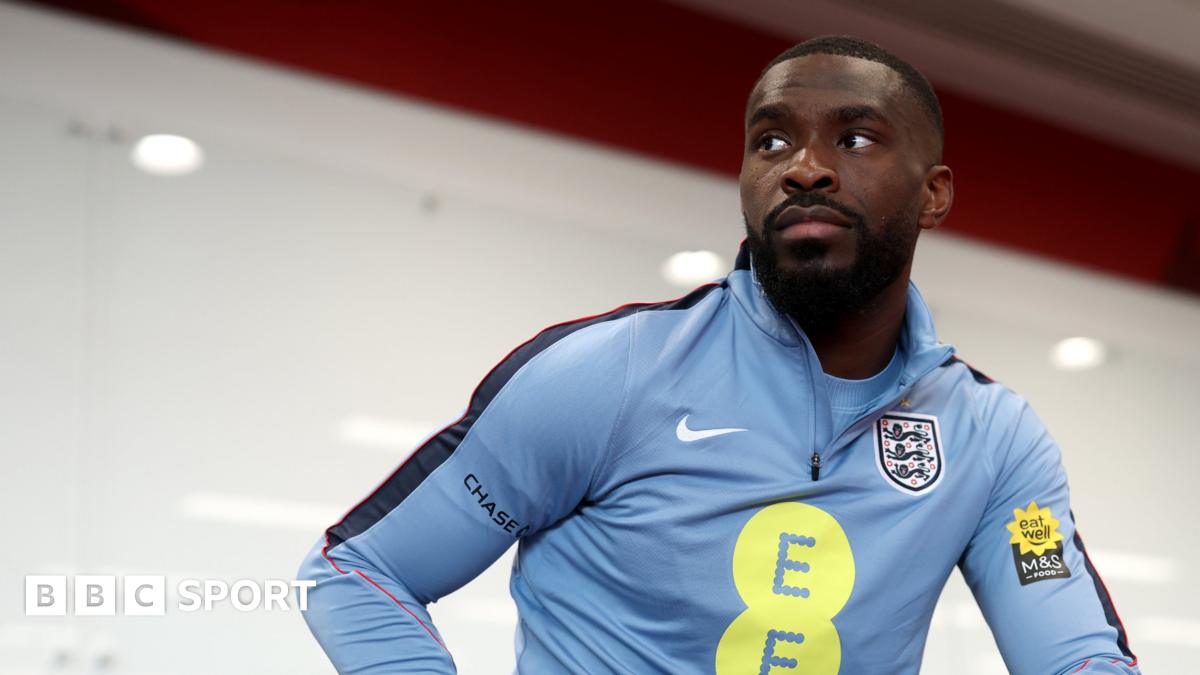
The Stones vacuum and the San Siro recovery specialist
John Stones is the structural heartbeat of this England side. When he doesn't play, the entire tactical scaffolding of the build-up phase tends to wobble. On this Friday, March 27, as England prepare to face Uruguay, the news that Stones is a major injury doubt has forced a long-overdue conversation to the surface.
Fikayo Tomori is reportedly in line to start in his place. For a defender who has spent the better part of three years being the most consistent performer at AC Milan while simultaneously being a peripheral figure for his country, this isn't just a friendly. It is a 90-minute interrogation of his suitability for the 2026 World Cup.
The contrast between Stones and Tomori is stark. Stones is a playmaker masquerading as a center-back, a man who thrives in the 8-yard pockets of space between the lines. Tomori is a recovery specialist, a defender whose primary currency is closing down 40 yards of green grass in the blink of an eye. Without Stones, England lose their primary progressive passer from the first phase of play.
Uruguay under Marcelo Bielsa do not allow you the luxury of a slow build-up anyway. They are a vertical hurricane, designed to punish any hesitation on the ball with a coordinated, high-intensity press. In many ways, the loss of Stones might actually force England into a defensive profile that is better suited to surviving the Bielsa gauntlet, provided Tomori can handle the mental load of a frantic Wembley atmosphere.
The Bielsa chaos and the high-line gamble
Playing Uruguay in 2026 is a miserable experience for any defender who lacks elite lateral mobility. Bielsa has turned them into a side that ignores the traditional nuances of midfield control in favor of direct, punishing transitions. With Darwin Núñez leading the line and Federico Valverde ghosting into half-spaces, the threat is constant and unpredictable.
Tomori’s greatest asset is his ability to play in a suicidal high line. At Milan, he is often left as the lone sentinel while the full-backs bomb forward, relying on his 34.8 km/h top speed to bail out his teammates. This is exactly the kind of physical profile England will need tonight if they are to avoid being gutted on the counter-attack by Núñez’s diagonal runs.
The problem for Tomori has never been his physical data. It’s the perception of his decision-making under the specific tactical constraints of the England setup. In Serie A, the defending is often about individual duels and aggressive front-foot interventions. In an England shirt, there is a demand for a more sedentary, zone-oriented approach that often feels like it's dampening Tomori's natural instincts.
If Tomori tries to hunt the ball against Uruguay, he risks leaving a gaping hole for Valverde to exploit. Bielsa’s system is designed to bait aggressive defenders into leaving their stations. Tomori must prove he has the discipline to stay tethered to his partner—likely Harry Maguire—while still utilizing the recovery pace that makes him a 99th percentile athlete in European football.
The Serie A disconnect and the burden of proof
There is a historical bias in the England camp against players who ply their trade outside of the Premier League. We saw it with Tammy Abraham, and we have seen it repeatedly with Tomori. Despite winning a Scudetto and performing in high-stakes Champions League knockout ties, he is often treated as a break-glass-in-case-of-emergency option rather than a core component.
Tonight’s start is a direct result of the 87th minute injury scare for Stones earlier this week. It is a reactive selection, not a proactive one. This puts an immense amount of pressure on Tomori to be perfect. If he makes one positional error that leads to a Uruguay goal, the narrative will immediately shift back to his 'unsuitability' for the international stage.
The irony is that Tomori’s game has matured significantly since his move to Italy. His aerial duel success rate has climbed to 68 percent this season, and his long-range passing, once a weakness, has become a reliable tool for Milan’s transitions. He is a more complete player than the one who left Chelsea, yet he is still fighting for the same basic level of respect within the national team hierarchy.
Uruguay will test his concentration. They don't just run at you; they rotate positions with a frequency that can make a defender's head spin. Tomori will need to communicate constantly with Jordan Pickford and the midfield pivot to ensure the distances between the lines don't become chasms. It is a test of leadership as much as it is a test of tackling.
The Maguire partnership and the World Cup countdown
With only 76 days remaining until the 2026 World Cup kicks off, the defensive hierarchy behind John Stones is surprisingly unsettled. Harry Maguire remains the preferred partner due to his aerial dominance and tournament experience, but the lack of a complementary 'speed' partner has often left England vulnerable to quick attackers. Marc Guéhi and Levi Colwill are in the mix, but neither possesses Tomori's raw acceleration.
A Maguire-Tomori partnership is an interesting experiment on paper. Maguire provides the box-defending and the headed clearances, while Tomori provides the coverage for Maguire’s lack of turning speed. It is a classic 'big man, fast man' dynamic that many successful club sides utilize. However, in the international game, partnerships are built on hundreds of shared minutes, something these two simply do not have.
If the experiment fails tonight, it likely seals Tomori’s fate as a squad filler rather than a starter. The margin for error is non-existent. We have seen Southgate (and the current coaching staff) prioritize 'safe' options over 'ceiling' options in the past. Tomori is a high-ceiling player, but his floor can be erratic when he loses focus on his positioning.
The absence of Stones is a blow to England’s aesthetic, but it is a massive opportunity for the tactical evolution of the back four. Relying on one man for the entire build-up phase is a dangerous strategy for a month-long tournament. England need a plan B that involves athletic, proactive defending, and Tomori is the only player in the pool who truly fits that description at an elite level.
The critical eye on Southgate's rigidness
There is a recurring frustration with how this England era handles players who don't fit the 'Premier League mold.' Tomori has been arguably the best English center-back not named Stones for the last two seasons, yet he has fewer caps than several players who struggle to make their club’s starting XI. This rigidness in selection is a flaw that could haunt England in North America this summer.
Uruguay will not show Tomori any mercy. Bielsa has his team playing with a chip on their shoulder, desperate to prove they are the best side in South America heading into the June kickoff. They will press Pickford, they will squeeze the full-backs, and they will leave Tomori as the free man on the ball, daring him to find a pass that breaks their lines. It is a psychological trap as much as a tactical one.
If Tomori can finish tonight with a clean sheet and a pass completion rate above 90 percent, it will be impossible to ignore him. But if he struggles with the physicality of Núñez or the tactical fluidity of the Uruguayan midfield, he will be the convenient scapegoat for an England side that always looks a little lost when Stones is in the treatment room.
This is the loneliest position for a footballer. You are playing for your place in history against a team that specializes in making you look foolish. The lights at Wembley are bright, but for Fikayo Tomori, the shadow of John Stones is even bigger. He has to step out from it tonight, or he might find himself watching the World Cup from a villa in Tuscany rather than a pitch in New Jersey.
The final verdict on the Stones insurance policy
The reality is that no one can truly replace John Stones. His ability to step into midfield and create a 3-box-3 structure is unique in world football. England have spent years building a system that relies on that specific rotation. Expecting Tomori to do the same would be a tactical error of the highest order.
Instead, England must adapt to Tomori. They should use his presence to push the defensive line ten yards higher, squeezing the space where Valverde and Ugarte like to operate. If you have a recovery specialist, use him. Don't ask him to be a second-rate Stones; ask him to be a first-rate Tomori. That means aggressive interceptions and using his pace to kill counter-attacks before they reach the penalty area.
Uruguay are the perfect opponent to expose a lack of tactical flexibility. They are the ultimate 'litmus test' team. They won't let you settle, and they won't let you hide. As the clock ticks down to kick-off at Wembley, the focus shouldn't be on who is missing, but on what the man coming in can actually offer. Tomori is a different weapon, but in the right hands, he could be just as lethal as the man he is replacing.
The 2026 World Cup is 76 days away. Tonight, we find out if England have a genuine defensive rotation or if they are just one John Stones hamstring away from a tactical collapse. Tomori has the physical tools, the European pedigree, and the motivation. Now, he just needs to survive 90 minutes of Bielsa's beautiful, vertical madness.
Read Next
- Ben White's return and the tactical puzzle facing Thomas Tuchel
- Top 10: Defining Moments of the 2026 World Cup Cycle
- Thomas Tuchel is turning England training into a 35-man Battle Royale
- Italy’s Bergamo blueprint is the ultimate warning for Haaland’s Norway
- 🏴 England World Cup 2026 — Three Lions Hub
EA Sports FC 26 - PlayStation 5
The world's game goes deep with more tactical control and realistic movement tha
Frequently Asked Questions
Why is Fikayo Tomori starting for England against Uruguay?
How does John Stones' absence affect England's tactics?
What makes Marcelo Bielsa's Uruguay a difficult opponent?
What are Fikayo Tomori's main strengths as a defender?
Why has Tomori struggled to secure a regular spot for England?
More Coverage

Why England must fear Panama's disciplined low block
18 minutes ago
Arsenal vs PSG: Why tactical rigidity will determine the European champion
an hour agoLincoln City just entered the weirdest experiment in League One history
3 hours ago
Arsenal’s title win has changed the math for London football
5 hours ago
Arsenal and England breathe sigh of relief as Bukayo Saka manages training load
9 hours ago
Emily Cassap represents a shift in Northern Ireland's tactics
9 hours agoMore Analysis
England's build-up faces the ultimate Bielsa stress test
2 months agoWhy Uruguay's chaotic press will expose the flaws in Tuchel's England
2 months agoUruguay is the exact nightmare Thomas Tuchel's England needs right now
2 months ago
Ben White's return and the tactical puzzle facing Thomas Tuchel
2 months ago
Why Thomas Tuchel's England are walking into a World Cup disaster
2 months ago