The 26-Man Reality
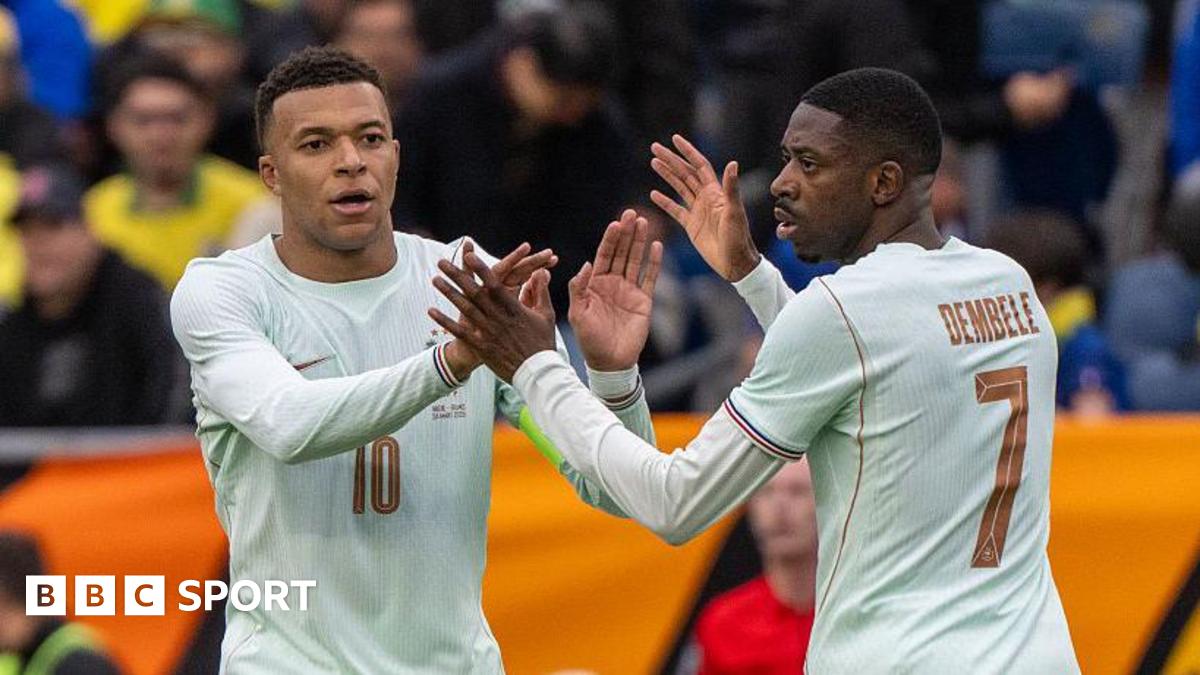
Didier Deschamps has officially announced his 26-man squad for the 2026 World Cup. The headline is obvious, as the BBC confirmed, Kylian Mbappe and current Ballon d'Or holder Ousmane Dembele will lead a star-studded attack. But beneath the names on the sheet lies a severe medical and physical tightrope. We are looking at a squad heading into an expanded 48-team tournament spread across three massive countries. The travel alone is a physiological nightmare. The physical toll on these players is going to dictate who lifts the trophy in July.
The modern football calendar has reached a breaking point. The Champions League final is set for May 28. The World Cup kicks off on June 11. That leaves exactly two weeks for players involved in the latter stages of European competition to transition from club duty to international tournament mode. There is no real off-season. There is no extended training camp to build base fitness. Medical departments are essentially operating as triage units. They are not building fitness; they are desperately managing fatigue.
The Dembele Transformation
Seeing Ousmane Dembele listed as a Ballon d'Or winner leading the line for France is a remarkable medical story. Early in his career, his hamstrings were a constant source of frustration. He suffered repeated muscle tears. His biomechanics, relying on explosive lateral changes of direction and sheer acceleration, put immense strain on his lower body.
Now, he enters the most demanding tournament in sports as the best player in the world. This is not an accident. It is the result of years of tailored conditioning, strict load management, and a complete overhaul of his physical preparation. But the risk remains. Tournament football asks a player to peak every four or five days. For a fast-twitch athlete like Dembele, recovery windows are dangerously short. The sprint volume required to play Deschamps' transition-heavy style means Dembele will be pushing into the red zone repeatedly.
The French medical staff will have him on a strict protocol. Ice baths, compression garments, and sleep tracking are standard. But you cannot cheat the physiological cost of a 60-game season followed immediately by a World Cup. Muscle fibers need time to repair. When that time is compressed, the risk of a Grade 1 or Grade 2 tear spikes dramatically.
Mbappe's Explosive Burden
Kylian Mbappe presents a different kind of physical profile. He is robust. He has generally avoided the chronic soft tissue injuries that plague many elite sprinters in football. But his game is built entirely on sudden acceleration. He routinely hits top speeds that stress the posterior chain to its absolute limit.
In a 26-man squad, Deschamps has options, but there is no direct replacement for what Mbappe does. The issue is cumulative load. By the time France reaches the knockout stages, Mbappe will have played thousands of high-intensity minutes over the preceding ten months. The human body is not a machine. Tendons stiffen. Cartilage absorbs shock until it simply refuses to do so anymore.
We saw what happened in previous tournaments when key players broke down. France lost Paul Pogba and N'Golo Kante before a ball was even kicked in Qatar. Deschamps has to carefully manage Mbappe's minutes in the group stage. If he plays every single minute of every match, the risk of a catastrophic muscle failure in a quarter-final or semi-final increases exponentially.
Historical Context of Tournament Injuries
We have seen this exact scenario play out before. Look back at the 2002 World Cup, when Zinedine Zidane tore his thigh muscle in a pre-tournament friendly against South Korea. France, the defending champions, rushed him back for the final group game, but he was a shadow of his former self. They crashed out without scoring a single goal. The human body does not care about your reputation or your tactical setup. A torn muscle fiber is a hard stop.
Or consider the buildup to the 2014 World Cup, where players like Radamel Falcao and Franck Ribery missed out entirely due to severe injuries sustained in the grueling months leading up to the tournament. Ribery's lower back issues forced Deschamps to alter his entire attacking shape. In 2026, the physical demands are significantly higher than they were a decade ago. The speed of the game has violently increased. The pressing structures require more high-speed running. The data shows that the average distance covered at speeds above 20 kilometers per hour has skyrocketed.
For France to succeed, they need Dembele and Mbappe to consistently hit those top speeds. But every sprint is a roll of the dice. The hamstring is a delicate mechanism. During the swing phase of a full sprint, the hamstring works eccentrically to decelerate the lower leg. This is the exact moment when the muscle is most vulnerable to tearing. If a player is fatigued, the neuromuscular firing patterns can become slightly delayed. That millisecond of delay is all it takes for the muscle to snap.
The Anatomy of Fatigue
What does fatigue actually look like at the elite level? It is not just about feeling tired. It is a measurable decline in force production. The central nervous system struggles to recruit muscle fibers as efficiently. When Mbappe looks to explode past a defender in the 80th minute, his brain is sending the signal, but the fatigued muscles cannot generate the same peak power.
This is where the 26-man squad becomes an absolute necessity. Deschamps cannot afford to run his wingers into the ground in the group stages. If France establishes a comfortable lead, he has to pull them off. Every minute saved is a small deposit in the physical bank for the knockout rounds. The substitute wingers are going to be just as important as the starters. They are the insurance policy against physical collapse.
The French medical staff will be constantly monitoring creatine kinase levels in the players' blood. Elevated levels indicate muscle damage. If Dembele shows a sharp spike after a match, he will be restricted to the exercise bike and the massage table for 48 hours. There is no room for bravado. A player insisting he feels fine cannot overrule the biochemical data.
The American Climate Challenge
The environmental factors of a North American World Cup add another layer of physical stress. The tournament kicks off on June 11. Depending on the venue schedule, France could find themselves playing in the stifling humidity of Miami, the dry heat of Dallas, or the high altitude of Mexico City.
Heat management is a vital aspect of sports science. Core body temperatures will skyrocket during afternoon kickoffs. The body sweats to cool down, leading to rapid fluid loss. If a player loses even two percent of their body weight in sweat, cognitive function and physical performance drop significantly. The French team will employ aggressive cooling strategies. We will see ice vests during warm-ups, specialized hydration formulas with exact electrolyte ratios, and cold-water immersion immediately following the final whistle.
But acclimatization takes time. The 14-day window between the Champions League final and the World Cup kickoff does not allow for full physiological adaptation to these extreme climates. Teams that adjust their pacing and manage their exertion levels will survive. Teams that try to play a high-intensity pressing game for 90 minutes in 95-degree heat will break down entirely.
The Negative Reality of the Calendar
Here is the uncomfortable truth about this squad announcement. Deschamps has picked his best players, but football authorities are running them into the ground. The schedule is completely unsustainable. Asking Dembele and Mbappe to carry the attacking load after a brutal club season is a gamble with their long-term health.
Player unions have repeatedly warned about the physical and mental consequences of an uninterrupted calendar. Yet, the governing bodies keep adding matches. A 48-team World Cup following an expanded club season format is a recipe for an injury crisis. The quality of football in the latter stages of this tournament will likely suffer. We are going to see heavy legs, sluggish reactions, and an increase in soft tissue injuries. The governing bodies have prioritized broadcast revenue over player safety, and the players are the ones absorbing the physical damage.
The Medical Triage
Fans will obsess over the tactical shape Didier Deschamps deploys and the raw talent of Mbappe and Dembele. But the unseen battle is happening in the hotel recovery rooms and the medical tents. It is a daily fight led by physiotherapists, sports scientists, and fitness coaches against the brutal reality of an unforgiving calendar.
The expanded format means a longer path to the final. Seven intense, high-stakes matches in less than six weeks. It is a war of attrition. The winner on July 19 might simply be the squad left standing with the fewest torn hamstrings and sprained ankles.
France has the firepower. The selection of Mbappe and the Ballon d'Or holder Dembele guarantees they will be one of the most dangerous attacking sides in the tournament. But their success hinges entirely on a fragile physical foundation. If the medical department can keep these two explosive athletes out of the red zone and off the treatment table, France has a clear path to glory. If they push them too hard, the entire campaign will violently derail.
Read Next
- France's World Cup squad just dropped and the timeline is a complete mess
- Why Palace's French duo forced their way into Deschamps' World Cup squad
- Mateta's shock France call-up changes everything for their World Cup hopes
- New Zealand are bringing a relegated non-league defender to the World Cup
- 🏆 World Cup 2026 — Full Coverage Hub
- 🇫🇷 France World Cup 2026 — Les Bleus Hub
- ⚽ La Liga 2025-26 — Title Race Hub