The geometry of isolation
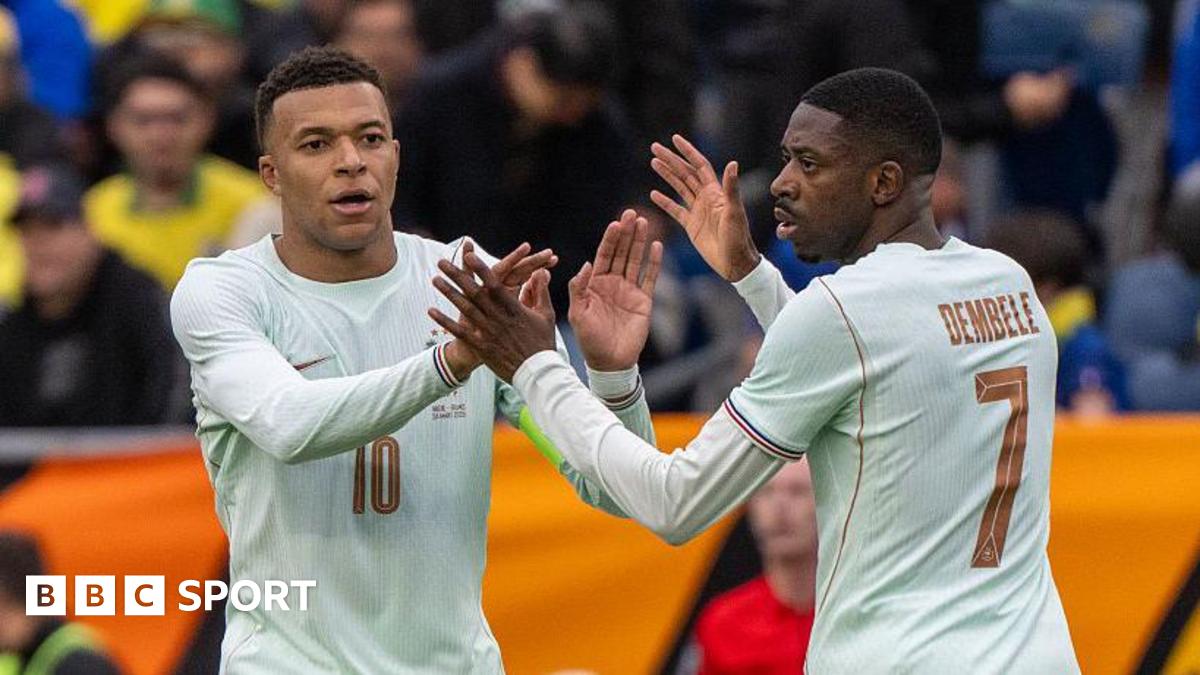
Didier Deschamps released his squad for the World Cup this morning, and the headline was immediately written for him. Kylian Mbappe and Ousmane Dembele are the undisputed focal points of the French attack. The announcement confirms what we have watched build over the last twelve months. France is travelling to North America to play a brand of football built entirely around offensive isolation.
You do not just throw the two most explosive transitional attackers in world football onto the pitch and expect structural harmony. There is a cost to deploying both Mbappe and Dembele in the same forward line, and Deschamps knows it. He has built a career on pragmatic risk mitigation. But with Dembele arriving at this tournament as the reigning Ballon d'Or holder, the manager's hand has been forced.
Dembele's evolution over the past two seasons is the tactical fulcrum of this squad. He is no longer just a raw runner who occasionally flashes brilliance. He has become a dominant, high-volume creator. When he receives the ball wide on the right, he forces defensive lines to make impossible choices. If the opposing left-back steps tight to deny him space to turn, Dembele uses his two-footedness to beat him on the outside or cut inside. If the defense sags off, he delivers inswinging crosses from the half-space.
The left flank imbalance
While Dembele controls the right, Mbappe operates with near-total autonomy on the left. This creates a terrifying prospect for opposition managers, but it also creates a significant imbalance in the French shape when they lose possession.
Think back to the team that won it all in Russia. Deschamps deployed Blaise Matuidi as a false left-winger. Matuidi tucked inside to form a midfield three, protecting the left-back and allowing the attack to flow through the center and right. It was an asymmetric, defensive masterpiece. Today, that safety net is gone.
Mbappe does not track back. He operates high and wide, waiting for the defensive clearance to spark a counter-attack. This forces the French left-back to operate on an island against overlapping runs. When France faces a team that uses quick switches of play to overload wide areas, that left channel is entirely exposed. You can already see the tactical blueprint opposing coaches will use: draw the French press to the right side, isolate the left-back, and exploit the space Mbappe vacates.
This is where the tactical analysis reveals the cracks in the armor. France wants to play in transition, but to do so, they must absorb pressure. Absorbing pressure requires a cohesive defensive block. With two wingers essentially exempt from heavy defensive duties, France defends with eight outfield players. Against elite possession teams, that is a math problem you eventually lose.
The central void and the passing problem
To accommodate this wide threat, the central striker in Deschamps' system must play a completely selfless role. They are not there to score. They are a battering ram, designed to occupy two center-backs and create one-on-one matchups for the wingers.
Whoever starts through the middle will spend the tournament making decoy runs to clear the half-spaces. They will drop deep to drag a center-back out of the defensive line, opening a channel for Mbappe to dart into. It is exhausting, ugly work. If the striker fails to occupy the center-backs, the opposition can simply double-team Dembele and Mbappe, completely nullifying the French attack.
The reliance on this front three masks a glaring weakness in the midfield. France lacks a true controller. Without a player capable of dictating the tempo and bypassing the first wave of pressure with precise vertical passing, the ball simply does not reach the wide areas efficiently. The transition from defense to attack is often disjointed, relying on long diagonals rather than sustained central progression.
Deschamps has consistently ignored this issue. He prefers a double pivot of aggressive ball-winners, prioritizing defensive solidity over progressive passing. Players like Aurelien Tchouameni or Eduardo Camavinga are elite disruptors, but they are often asked to execute line-breaking passes under extreme pressure. When they face a well-drilled mid-block, throwing the ball long and hoping for individual magic is a flawed strategy. It leads to stagnant possession and forced turnovers in dangerous areas. A midfield built purely to destroy cannot sustainably feed an attack built purely to isolate.
Mbappe wants the ball played into space ahead of him, specifically in the left channel between the center-back and right-back. He thrives on early, direct balls that allow him to initiate his sprint before the defender has turned their hips. Dembele, conversely, increasingly wants the ball to his feet. He wants to isolate his fullback from a standing start, using hesitation moves to freeze the defender before exploding in either direction.
This dual requirement puts immense pressure on the French center-backs. They must act as the primary playmakers. When building from the back, the left-sided center-back is constantly scanning for the early ball over the top to Mbappe, while the right-sided center-back is looking for the low, driven pass to Dembele's feet. If the opposition presses the center-backs aggressively, cutting off these two distinct passing lanes, the French buildup completely stalls.
How to defend the un-defendable
So, how do you stop a team that fields Mbappe and a Ballon d'Or-winning Dembele? You cannot press them high. If you commit bodies forward and leave space behind your defensive line, France will destroy you in transition. The raw speed is unmatched. A cleared corner can turn into a goal in under 12 seconds.
The only viable strategy is the low block. Opposing teams will drop their defensive lines into their own penalty area, minimizing the space in behind. They will double-up on the flanks, forcing France to play through the congested central channel. By denying the wingers the space to accelerate, you force them into complex, tight-area combinations.
This is precisely where France struggles. When the game slows down, their lack of midfield creativity becomes glaringly obvious. They do not have the intricate passing patterns to dismantle a packed defense. They rely on set pieces, individual brilliance, or opposition mistakes. In a knockout tournament format, relying on those variables is a dangerous gamble.
The opening matches will be deceptive. France will likely blow past weaker group stage opponents who naively try to play expansive football. The highlight reels will be filled with Mbappe sprints and Dembele cutbacks. But the real test arrives in the knockout rounds.
The quarter-final ceiling
The tournament kicks off in exactly 28 days. Deschamps has assembled a 26-man squad that acts as the most frightening attacking arsenal in international football. The inclusion of the newly crowned Ballon d'Or holder alongside the most dangerous forward of his generation should make them unplayable.
But football is played on grass, not paper. The tactical disconnect between a passive, pragmatic midfield and an explosive, isolated forward line is too severe to ignore. You cannot win a modern World Cup defending with eight players while your stars wait for the counter-attack.
When they inevitably run into a tactically sophisticated side in the latter stages—a team that refuses to concede space in transition and expertly manipulates the ball in the central third—France will find themselves trapped. The wingers will be starved of service, the midfield will be overrun, and the defense will eventually crack under sustained pressure.
My prediction is firm. France will cruise through the group stage, generating massive hype. They will win their Round of 16 tie through a moment of individual brilliance. But their tournament ends in the quarter-finals. The structural flaws are too deep, and Deschamps' refusal to modernize his midfield setup will be their undoing. The best attack in the world is useless if you cannot get them the ball in the areas that matter.
Read Next
- Deschamps Built a Monster For The World Cup, But Can He Control It?
- France's World Cup squad hides a massive physical gamble on Mbappe and Dembele
- France's World Cup squad just dropped and the timeline is a complete mess
- Why Palace's French duo forced their way into Deschamps' World Cup squad
- 🏆 World Cup 2026 — Full Coverage Hub
- 🇫🇷 France World Cup 2026 — Les Bleus Hub